
US and Iran Enter Technical Talks to Secure Peace Deal, Shipping Restart

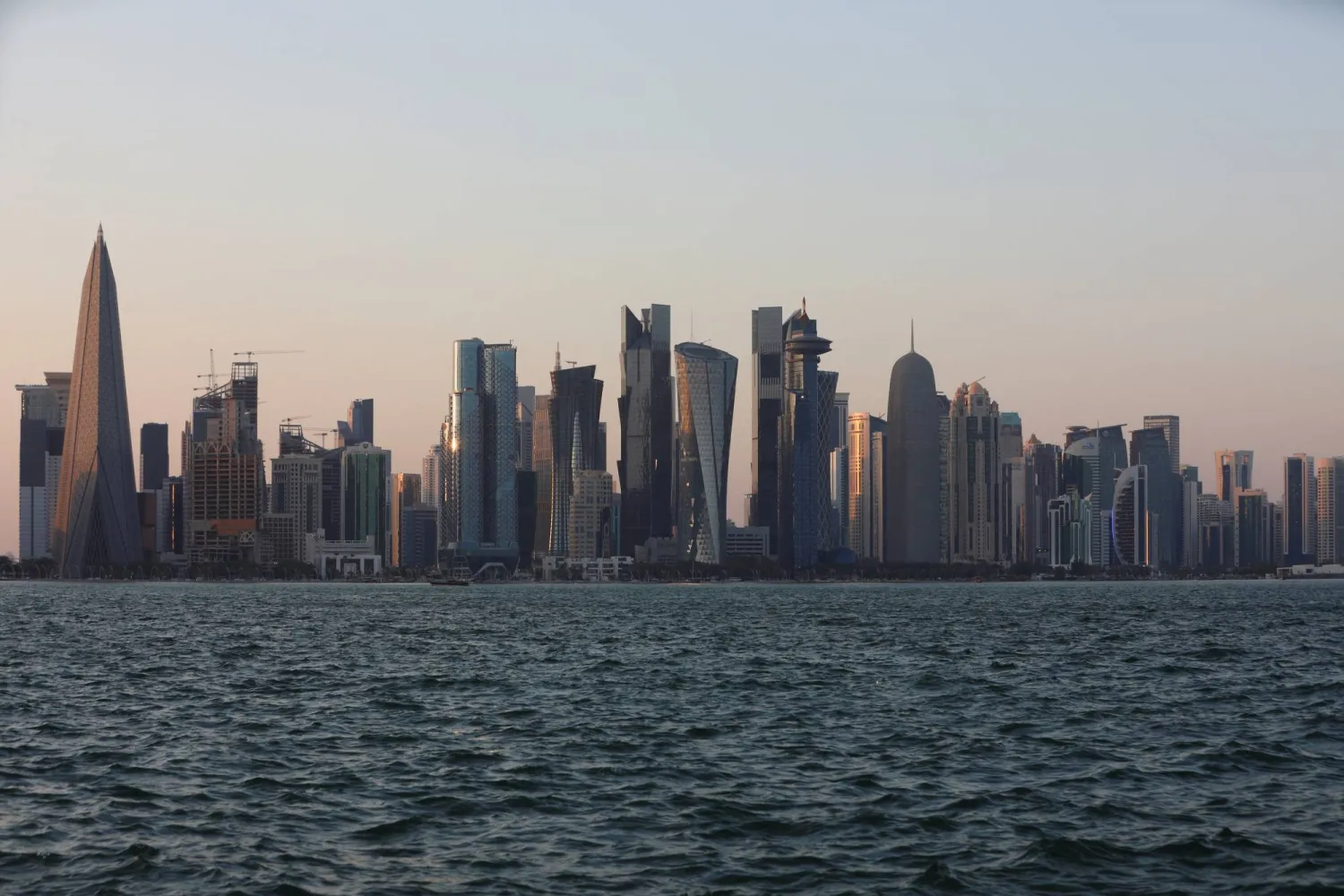
 A general view of the Doha skyline, Qatar, June 29, 2026. (Reuters)
A general view of the Doha skyline, Qatar, June 29, 2026. (Reuters)
TT

US and Iran Enter Technical Talks to Secure Peace Deal, Shipping Restart

 A general view of the Doha skyline, Qatar, June 29, 2026. (Reuters)
A general view of the Doha skyline, Qatar, June 29, 2026. (Reuters)

The US and Iran held indirect technical talks in Doha on Wednesday as they seek to agree on the flow of shipping through the Strait of Hormuz and secure a lasting ceasefire, a source with direct knowledge of the talks and an Iranian official said. 

The talks are based on a 14-point interim accord signed last month that was meant to halt the war that began with US-Israeli strikes on Iran in February and reopen the strait, while setting up 60 days of negotiations for a permanent peace deal.  

However, the US and Iran have sparred publicly over the meaning of the interim pact, leading to tit-for-tat military strikes over the past week and leaving little sign of progress on more complex issues, including on Iran's nuclear program. 

Iran is determined to ‌win international recognition ‌of its control over the strait and its ability to levy fees on ships entering or ‌leaving ⁠the Gulf, even ⁠if it has to do so by force, according to two senior Iranian sources. 

Traffic has partially resumed through the waterway, which handled one-fifth of global oil and liquefied natural gas trade before the war.  

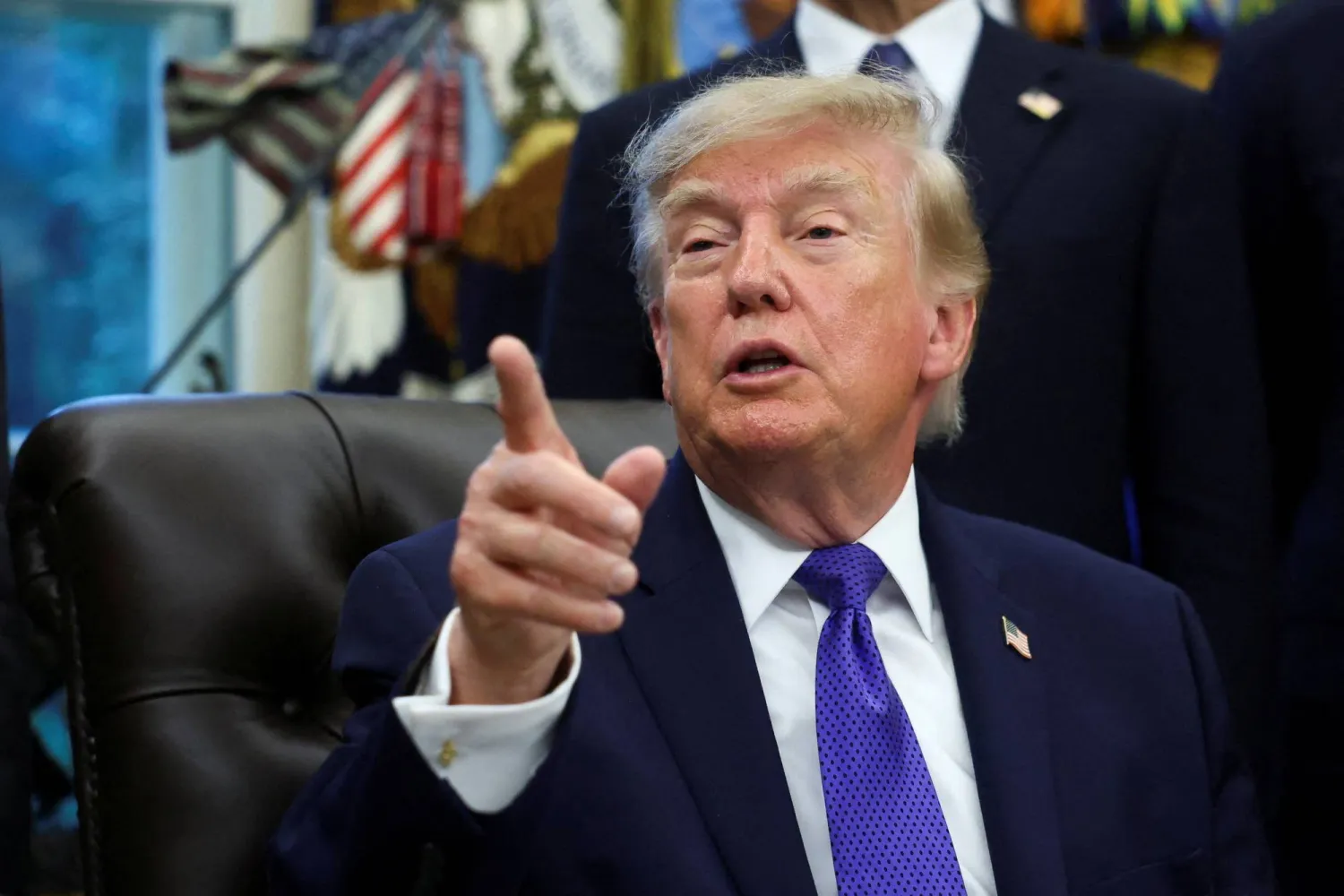
US President Donald Trump, who has said removing Iran's highly enriched uranium is a top priority, told reporters on Wednesday that "the denuclearization of Iran is moving along well", without giving details. 

"They've had very good meetings, and we'll see," he said of the talks in Doha, where there was no evidence the nuclear issue had yet been discussed. 

FOCUS ON HORMUZ, FROZEN ASSETS 

The indirect talks, mediated by Qatar and Pakistan, began on Tuesday night and were continuing on Wednesday, the ⁠Iranian official said.  

They are structured as sessions between chief negotiators and specialists, the source with knowledge ‌of the talks said, adding that Trump's son-in-law Jared Kushner and envoy Steve ‌Witkoff met Qatar's prime minister to lay groundwork for the talks but would not be attending.  

Kushner and Witkoff later met Qatar's emir to ‌discuss US-Iran negotiations and developments in Lebanon, where a parallel conflict between Israel and Iran-backed group Hezbollah erupted in early ‌March. 

Iran's Deputy Foreign Minister Kazem Gharibabadi headed a delegation of representatives from Iran's foreign ministry, central bank and agriculture ministry, meeting Qatar's prime minister and holding talks with mediators. 

Iran has stated publicly that its priorities include agreeing on management of the strait and the release of $6 billion in Iranian frozen assets, and the Iranian official said the current round of discussions would focus on those two issues. 

The stated priority of the ‌US is to ensure the free flow of traffic through the strait, the source with knowledge of the talks said.  

Iran's state media said on Wednesday a foreign container ship had ⁠run aground in the Strait ⁠of Hormuz after entering shallow waters outside the shipping route designated by Iranian authorities. 

"Hormuz continues to reopen but it's patchy, unpredictable, and not fully transparent," said Vandana Hari, founder of oil market analysis provider Vanda Insights. 

INTENSIVE DIPLOMACY ON LEBANON 

The war triggered Iranian attacks on Gulf states hosting US military bases and killed thousands of people, mainly in Iran and Lebanon, as well as pushing up oil and fuel prices.  

Trump faces domestic pressure to contain the economic fallout from the war before midterm elections in November, as well as criticism from his own party that the interim deal leaves US objectives unmet.  

In Iran, the theocratic leadership survived the war but faces domestic anger over a shattered economy. 

Oil prices dipped further on Wednesday, with US West Texas Intermediate crude reaching its lowest since February 27 — a day before the war's outbreak — at just under $69 a barrel. 

The interim deal between the US and Iran also provides for an end to the conflict in Lebanon.  

The US has backed a separate track of talks between Israel and Lebanon's government, which produced a framework security deal that Hezbollah has dismissed and analysts warn could entrench Israel's occupation of Lebanon's south. 

There had been intensive diplomatic activity on Lebanon between parties including the US up to Tuesday evening, the source with knowledge of the talks said. 


Five Dead in Turkish Wedding Party Road Crash

File picture for illustration only shows a Turkish ambulance on an emergency call. (AFP)
TT

Five Dead in Turkish Wedding Party Road Crash

File picture for illustration only shows a Turkish ambulance on an emergency call. (AFP)

A Turkish minibus taking a family to a wedding party overturned Saturday killing five people, including two children, and injuring 11, authorities said.

The vehicle, transporting a family to a wedding in the southeastern city of Mus, was at Lice in Diyarbakir province when a tire burst and the driver lost control, NTV television reported.

The dead children were aged 10 and four, while three of the injured were in a critical condition, authorities said.


Xi Calls for Improving Disaster Prevention as Floods, Landslides Batter China

Scooters pass by a tree fallen during the hit of Typhoon Dolphin in Wenzhou, Zhejiang province, China, 10 August 2026. EPA/Yu Riqian CHINA OUT
TT

Xi Calls for Improving Disaster Prevention as Floods, Landslides Batter China

Scooters pass by a tree fallen during the hit of Typhoon Dolphin in Wenzhou, Zhejiang province, China, 10 August 2026. EPA/Yu Riqian CHINA OUT

Chinese President Xi Jinping called for improving the country's ability to prevent, mitigate and respond to natural disasters, after a string of deadly floods and landslides this summer.

Xi's remarks, published on Saturday in Qiushi, a journal central to Communist Party messaging, follow China's strongest typhoon this year and a series of landslides that killed dozens, underscoring the growing toll of extreme weather on the world's second-largest economy.

"As global warming continues, extreme weather events and disasters such as torrential rains, floods, typhoons, and droughts are ⁠increasing significantly, exacerbating ⁠their destructive impact," Xi said, according to the article.

Xi urged a shift towards pre-disaster prevention, stronger monitoring and early-warning systems, and efforts to close gaps in flood-control and drainage infrastructure in northern China, the article said.

His remarks were drawn from a speech ⁠delivered at a Politburo study session on April 28, Reuters reported.

China's strongest typhoon this year battered the capital with bouts of intense rain that flooded key roads and stranded vehicles, while lashing wide swathes of the country.

Last month, landslides triggered by flash floods in northwestern Gansu province killed 25 people, and another landslide in Chongqing in the southwest caused by a collapsed mountain left 51 dead.

China is increasingly battling destructive weather that scientists link to ⁠climate ⁠change, especially this year, as an emerging El Niño pattern boosts temperatures and fuels more frequent and intense typhoons.

China will "continuously improve our ability and level of prevention and response to various natural disasters, and effectively safeguard the lives and property of the people and social stability," Xi said.

Xi said disaster risks must not be allowed to spill into economic, energy, food and social security, and urged the use of technologies including artificial intelligence, drones and satellite remote sensing in rescue efforts.


Japan's Takaichi Skips Controversial Yasukuni Shrine Visit on Anniversary of WWII Surrender

Visitors carry Japanese flags and a rising sun flag at Yasukuni Shrine, which honors Japan's war dead, including convicted war criminals, as the country marks the 81st anniversary of the end of World War II Saturday, Aug. 15, 2026, in Tokyo. (AP Photo/Eugene Hoshiko)
TT

Japan's Takaichi Skips Controversial Yasukuni Shrine Visit on Anniversary of WWII Surrender

Visitors carry Japanese flags and a rising sun flag at Yasukuni Shrine, which honors Japan's war dead, including convicted war criminals, as the country marks the 81st anniversary of the end of World War II Saturday, Aug. 15, 2026, in Tokyo. (AP Photo/Eugene Hoshiko)

Japanese Prime Minister Sanae Takaichi stayed away from Tokyo's controversial Yasukuni Shrine, apparently to prioritize diplomatic relations with China and South Korea, but did not mention her country’s wartime past in Asia or remorse over it in an address Saturday as Japan marked the 81st anniversary of its surrender in World War II.

Takaichi mourned the victims of major devastation in Hiroshima Nagasaki and Okinawa, as well as those who perished in overseas battlefronts, and thanked them for their sacrifice as the “foundation of Japan's peace and prosperity today.” She did not mention Japanese atrocities in Asia or apologize.

“Japan, since the end of the war, has consistently contributed to global peace and prosperity. We will never let the tragedy of the war be repeated," she said, adding that Japan can play a key role in addressing global challenges as “a dependable nation" in the region.

Visits by Japanese politicians to the Yasukuni Shrine, which also commemorates World War II war criminals, have been criticized by China and South Korea. They see it as showing a lack of remorse over Japan’s wartime atrocities.

Japanese Defense Minister Shinjiro Koizumi, another Cabinet minister and three executives from Takaichi's governing party showed up at the shrine earlier Saturday, The Associated Press reported.

Koizumi has regularly visited the controversial shrine to mark Japan's anniversary of the end of the war on Aug. 15 and other occasions. But as a defense minister pushing to increase Japan’s military capability and weapons sales under Takaichi’s hawkish government, his visit Saturday is seen as more contentious.

The previous shrine visit by a defense minister was in 2024 by Minoru Kihara, the current chief secretary and top government spokesperson for Takaichi’s government.

Japan’s Defense Ministry prohibits group visits by service members of the Self-Defense Forces, on grounds of constitutional separation of religion and state. Koizumi said in October it is natural for anyone in any country to pay respect for those who sacrificed their lives for their nation.

Koizumi did not comment on the visit Saturday and walked past journalists at the shrine.

He is the son of popular former Prime Minister Junichiro Koizumi, who outraged China when he visited Yasukuni as a serving leader in 2006.

Three executives from Takaichi’s governing Liberal Democratic Party also prayed together Saturday at the shrine and brought offerings in a rare joint visit on the prime minister's behalf that is seen as a move to make up for Takaichi’s absence and appeal to her right-wing supporters.

Party secretary-general Shunichi Suzuki told reporters he prayed while keeping in mind the prime minister's thoughts for “the spirits of the war dead” and that he brought Takaichi’s cash offerings in her capacity as party leader.

For Takaichi, appealing to right-wing voters is key at a time when her support is seen as rapidly falling, presumably over delayed economic measures addressing rising prices as well as scandals that include alleged negative election campaign videos and unpopular revisions to Japan's imperial family succession rules.

Takaichi has not visited the shrine since taking office but has sent offerings twice for the shrine’s biannual festivals.

Tensions between Japan and China escalated in November when the Japanese leader said a Chinese attack on Taiwan could constitute “a survival-threatening situation” for Japan requiring the use of force. The comments enraged Beijing.

Attention this week was on whether Takaichi, who has repeatedly said she would pray at the shrine on Aug. 15 despite the controversy, would keep her pledge and show up at Yasukuni on Saturday.

Earlier this week, Kihara said Takaichi would make an appropriate decision, followed by Japanese media saying she would not visit the shrine to keep Japan’s already difficult ties with Beijing from worsening and maintain good ties with Seoul.

Takaichi has repeatedly resisted acknowledging Japan's wartime aggression and atrocities, and denied that coercion was used against Korean laborers and women held as sex slaves for Japanese troops. She was previously part of a campaign to remove references to wartime sexual slavery, euphemistically known as “comfort women,” from school textbooks.

She has said she is from the postwar generation who has no responsibility for Japan's past actions and that she has no intention to apologize.

The country has faced revisionist pushbacks since the 2010s under nationalistic former Prime Minister Shinzo Abe, who pushed to correct a “self-deprecating view” of Japan’s wartime history and regain national pride. Takaichi considers Abe a mentor.

Since 2013, Japanese prime ministers have stopped apologizing to Asian victims for wartime atrocities, under a precedent set by Abe. Last year, however, former Prime Minister Shigeru Ishiba expressed “remorse” over the war and called it a mistake, though he fell short of mentioning Japan's aggression across Asia or apologizing.