Gulf Stocks Little Changed as Markets Await Outcome of US-Iran Talks

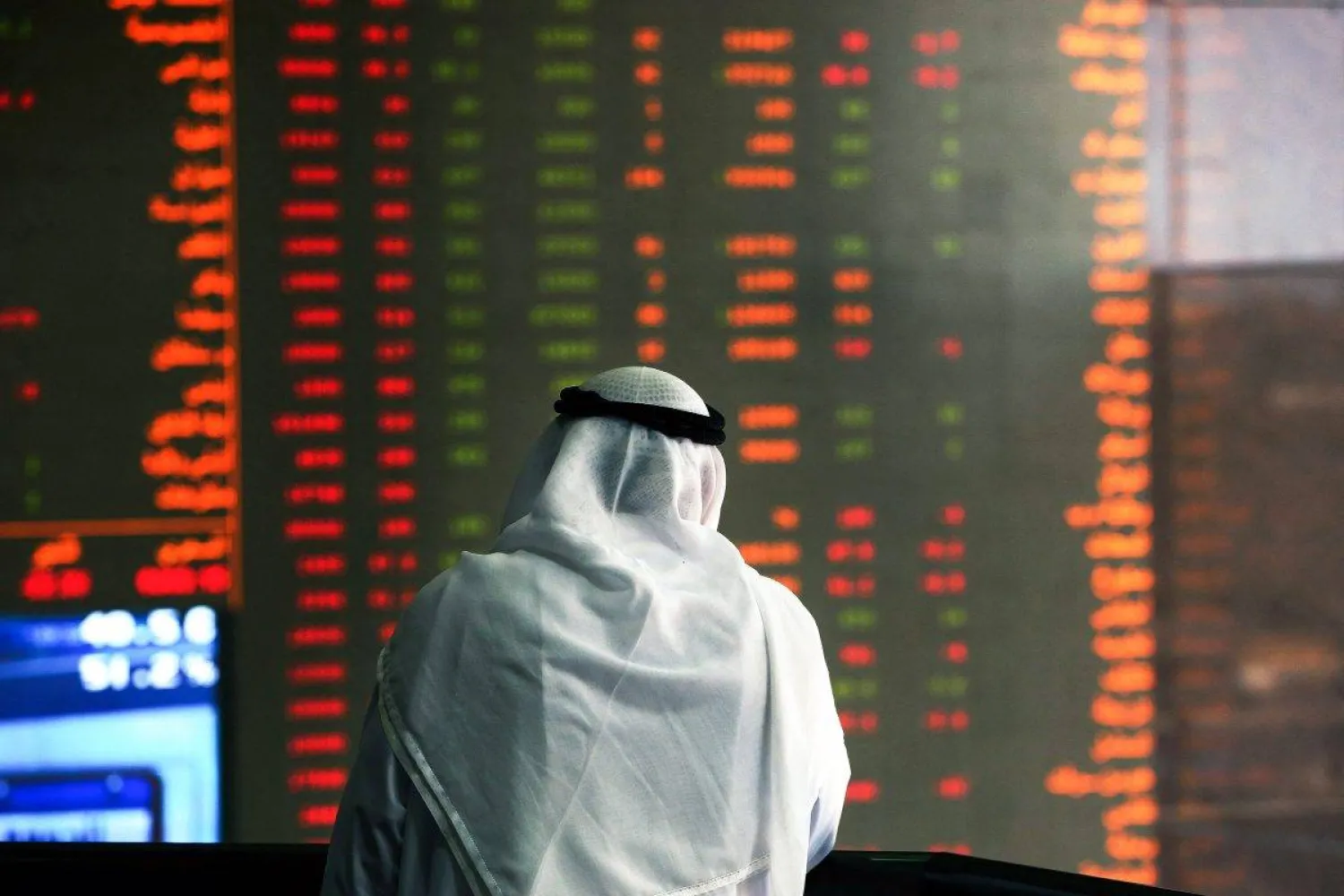
A man looks at a stock screen at the Kuwait Stock Exchange (AFP)
TT

Gulf Stocks Little Changed as Markets Await Outcome of US-Iran Talks

A man looks at a stock screen at the Kuwait Stock Exchange (AFP)


Most Gulf stock markets saw limited trading early on Thursday, after the United States and Iran concluded a new round of indirect talks in Doha with no signs of progress towards a lasting peace agreement.

According to sources familiar with the matter who spoke to Reuters, the two-day talks focused on maritime traffic through the Strait of Hormuz and the release of frozen Iranian assets, two of the main issues covered by the preliminary agreement between the two sides.

Qatar's Ministry of Foreign Affairs stated that the next round of negotiations would be held after the funeral of Iranian Supreme Leader Ali Khamenei, scheduled for July 9.

In Saudi Arabia, the main TASI index fell by 0.1 percent in early trading, amidst mixed performance of leading stocks.

Speaking in Washington, US President Donald Trump said talks on possible restrictions on Iran's nuclear program were making progress, adding that the latest meetings had been positive and that negotiations were continuing.

In the United Arab Emirates, Dubai's main stock index was little changed in choppy trading, while Abu Dhabi's benchmark index rose 0.2%.

Qatar's benchmark index fell 0.3%, weighed down by a 0.9% decline in shares of Qatar National Bank.


Chinese Ship Sets off for Europe Through Arctic, Halving Travel Time

This handout photo taken and released on August 15, 2026 by the Ningbo Zhoushan Port Group shows the Dubai Tower container ship, operated by Chinese shipowner Sea Legend, setting sail from the port of Ningbo headed to the port of Felixstow, England. (Handout / Ningbo Zhoushan Port Group / AFP)
TT

Chinese Ship Sets off for Europe Through Arctic, Halving Travel Time

This handout photo taken and released on August 15, 2026 by the Ningbo Zhoushan Port Group shows the Dubai Tower container ship, operated by Chinese shipowner Sea Legend, setting sail from the port of Ningbo headed to the port of Felixstow, England. (Handout / Ningbo Zhoushan Port Group / AFP)

A Chinese container vessel has set sail for Europe through the Arctic, part of new weekly service on a route that cuts shipment times in half but which environmental groups warn could speed up the melting of polar ice.

The "Dubai Tower" left the eastern port city of Ningbo on Saturday evening heading north, where it will pass through the Bering Strait, then turn west through the frigid waters along Russia's northern coast.

It is expected to reach Felixstowe in the United Kingdom on September 7, followed by stops in Hamburg, Germany and Gdynia, Poland later that week, according to a timetable published by Sea Legend.

The Northern Sea Route (NSR) from China to Europe is significantly faster than that through the Suez Canal and allows vessels to avoid the Red Sea, where shipping has been targeted by Iran-backed Houthis in Yemen.

But the route is only accessible during the time of the year when the ice is melted enough to allow transits without icebreakers.

Global shipping is heavily disrupted by war in the Middle East, sparked by US-Israeli strikes on Iran in late February.

Other shipping companies have transited the Arctic passage before, with Denmark's Maersk the first to do so in 2018.

Last year, 23 container ships transited through, up from 15 in 2024, according to shipping analysis from business insurer Allianz Commercial.

Environmental groups warn that increasing numbers of ships transiting the shorter NSR could accelerate loss of Arctic sea ice -- already made vulnerable by rising global temperatures.

Major shipping companies including France's CMA CGM, Switzerland-headquartered MSC and Germany-based Hapag-Lloyd have pledged to "avoid Arctic trans-shipment routes".

But analysts say the Arctic could serve as an important future trade route, particularly for China, which has outlined plans for greater access to the region through a "Polar Silk Road".


Algeria Begins Exporting First Jet Fuel Shipments to Niger

Sonatrach stated that delivering the jet fuel shipment to Niger reflects its efforts to enhance direct cooperation with African oil and gas companies (X)
TT

Algeria Begins Exporting First Jet Fuel Shipments to Niger

Sonatrach stated that delivering the jet fuel shipment to Niger reflects its efforts to enhance direct cooperation with African oil and gas companies (X)

Algeria’s Sonatrach has started delivering its first shipments of Jet A1 aviation fuel to Niger from Adrar refinery (RA1D), Sonatrach group announced on Saturday.

The move is part of implementing the sale and purchase agreement signed with Niger's national oil company "SONIDEP," it said in a statement.

Sonatrach stated that delivering the jet fuel shipment to Niger reflects its efforts to enhance direct cooperation with African oil and gas companies.

Sonatrach has launched drilling of an exploration well in Niger.

The start of operations was formalized on Thursday during a ceremony presided over by Algerian Prime Minister Sifi Ghrieb and his Nigerien counterpart, Ali Mahaman Lamine Zeine.

In June, Algeria delivered a 40-megawatt power plant to Niger to supply Niamey and its surrounding area.


Saudi Arabia Reshapes the Future of the Digital Economy Through Advanced Digital Infrastructure, Global Partnerships

File photo of the Saudi capital Riyadh - File/AAWSAT
TT

Saudi Arabia Reshapes the Future of the Digital Economy Through Advanced Digital Infrastructure, Global Partnerships

File photo of the Saudi capital Riyadh - File/AAWSAT

Saudi Arabia has leveraged its advanced digital infrastructure and partnerships with leading global technology companies to establish its position as a global hub for artificial intelligence investment, underpinned by competitive advantages that include reliable energy, vast land availability, and a strategic geographic location.

The Kingdom has made rapid strides in the data center sector, with capacity increasing from 68 MW in 2021 to more than 467 MW in the first quarter of 2026, supported by investments exceeding SAR56.2 billion in data centers and digital infrastructure. The sector has grown more than sixfold since the launch of Saudi Vision 2030, as part of a national data and AI strategy that contributes to economic diversification and strengthens the Kingdom’s readiness for the knowledge economy.

Saudi Arabia has further strengthened its position as a global destination for technology investment by attracting some of the world’s largest cloud service providers. The Kingdom hosts operations for Oracle, Alibaba Cloud, and Google Cloud, alongside an SAR11 billion strategic partnership between HUMAIN and Blackstone, reflecting growing global confidence in Saudi Arabia’s digital investment environment, SPA reported.

This investment appeal is underpinned by a comprehensive set of competitive advantages, including abundant energy resources, extensive land available for data center expansion, and a geographic location connecting Asia, Africa, and Europe, positioning the Kingdom second globally in data center market attractiveness.

Saudi Arabia’s leadership has extended to helping shape the future of the global digital economy. As one of the leading G20 countries in the communications and technology sector, the Kingdom led G20 consensus on a roadmap for defining and measuring the digital economy and the adoption of human-centered, trustworthy AI principles. It also contributed to transforming the Digital Economy Task Force into a permanent working group, reinforcing its role as an international partner in advancing digital policies and strengthening global cooperation in technology.

As part of its efforts to bridge the global digital divide, the Kingdom has led pioneering initiatives, including a 5G trial using High-Altitude Platform Systems (HAPS), which demonstrated the ability to cover nearly half a million square kilometers in remote areas. Saudi Arabia also conducted the first-of-its-kind trial integrating non-terrestrial networks (NTN) with terrestrial networks, offering a future solution for expanding connectivity and accelerating access for unconnected communities.

These achievements have been reflected in the Kingdom’s performance across international indicators. Saudi Arabia ranked first globally twice in the International Telecommunication Union’s (ITU) 2026 ICT Development Index, outperforming 159 countries, reflecting the strength of its integrated digital infrastructure, widespread connectivity, and high levels of digital adoption. The Kingdom also ranked second among G20 countries in the ITU’s ICT Regulatory Tracker and second among G20 countries in digital competitiveness according to the European Center for Digital Competitiveness, while digital infrastructure coverage reached approximately 99% of the Kingdom’s population.

Saudi Arabia has continued to strengthen its standing across global AI indices, ranking first in the Arab world and 14th globally in the Global AI Index. The Kingdom also ranked first globally in AI security, privacy, and encryption; first in women’s empowerment in AI; third globally in the development of advanced AI models; and third in the share of specialized AI talent, while recording the world’s highest growth rate in specialized talent. It also ranked fourth globally in attracting international talent.

The impact of this progress has extended to empowering people and improving quality of life. Saudi Arabia launched the world’s largest virtual hospital, leveraging artificial intelligence technologies to deliver advanced healthcare services. The Kingdom has also made significant strides in empowering women in the technology sector, with their participation rising from 7% to 35%, surpassing the averages of both the G20 and the European Union. This reflects the success of investing in human capital alongside investment in digital infrastructure.

Saudi Arabia’s readiness has also received recognition from independent international institutions. JLL, as reported by Bloomberg, expects Riyadh to lead the growth of AI-related data centers in the Middle East, further underscoring the Kingdom’s growing position as one of the world’s leading destinations for investment in artificial intelligence and digital infrastructure.