
World Cup Heat, Humidity ‘Virtually Impossible’ without Climate Change, Says Study

 Belgium's Romelu Lukaku (9) returns to the pitch after a hydration break during the World Cup round of 32 match between Belgium and Senegal in Seattle, Wednesday, July 1, 2026. (AP)
Belgium's Romelu Lukaku (9) returns to the pitch after a hydration break during the World Cup round of 32 match between Belgium and Senegal in Seattle, Wednesday, July 1, 2026. (AP)
TT

World Cup Heat, Humidity ‘Virtually Impossible’ without Climate Change, Says Study

 Belgium's Romelu Lukaku (9) returns to the pitch after a hydration break during the World Cup round of 32 match between Belgium and Senegal in Seattle, Wednesday, July 1, 2026. (AP)
Belgium's Romelu Lukaku (9) returns to the pitch after a hydration break during the World Cup round of 32 match between Belgium and Senegal in Seattle, Wednesday, July 1, 2026. (AP)

The extreme heat and humidity broiling swathes of the United States as it hosts World Cup matches and prepares to celebrate the Fourth of July would have been "virtually impossible" without climate change, a new study showed Friday.

"On America's 250th birthday, our study gives a clear reality check," said Theodore Keeping, an extreme weather and wildfire researcher at Imperial College London who co-authored the research for the World Weather Attribution group (WWA).

"The climate the country has today is fundamentally different to the one it had when the Founding Fathers signed the Declaration of Independence."

WWA, which comprises climate researchers from several leading institutions, examined the heat wave that is being driven by a strong "heat dome" high-pressure system trapping warm moist air like a lid over much of the central and eastern parts of the country, as well as southern Canada.

Although such weather patterns are commonplace, they now cause higher temperatures as a result of climate change.

Daytime temperatures in many of these areas are topping 100 degrees Fahrenheit (38 degrees Celsius) but feel even hotter when humidity is factored in.

Such heat stress is commonly measured by an index known as Wet Bulb Globe Temperatures (WBGT), which is more telling than temperature alone, with WGBT values set to hit record highs across much of the region that was studied.

Using climate models, WWA compared versions of the world today featuring human-induced heat trapping emissions, which have caused global temperatures to rise 2.5F (1.4C) since before the industrial age, and a world without.

They found that in a world free of climate change, forecast WBGT levels would have been so rare as to be virtually impossible. At most, they would have occurred once every 5,000 years.

Even in today's climate, such conditions are estimated to be exceedingly rare -- a one in 200-year event -- though there is a high degree of uncertainty given just how extreme the event is.

To rule out natural variability as a cause, the researchers tested the impact of developing El Nino conditions in the Pacific, but found its effect over northeastern North America was minor cooling.

World Cup matches including the July 4 clash between France v Paraguay in Philadelphia are forecast to be in excess of 82F WBGT at kick-off. These are levels at which FIFPRO, the players' union, has called for games to be delayed on grounds they are unsafe for players and fans.


Stubborn Vulture Reportedly Plucked from Plane's Wing before Greece Flight

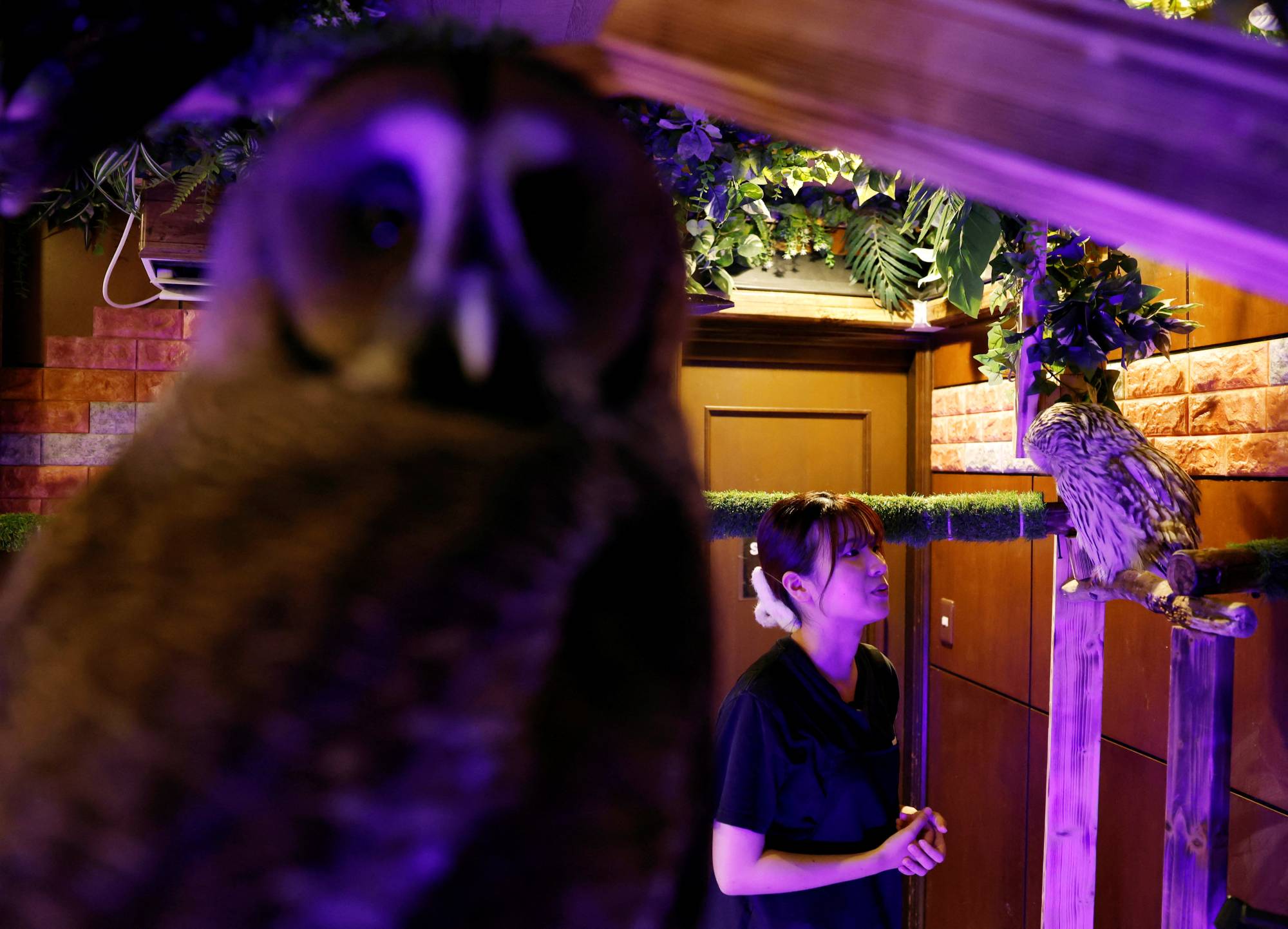
A vulture flies over the Iraty mountains, southwestern France on July 2, 2026. (Photo by Gaizka IROZ / AFP)
TT

Stubborn Vulture Reportedly Plucked from Plane's Wing before Greece Flight

A vulture flies over the Iraty mountains, southwestern France on July 2, 2026. (Photo by Gaizka IROZ / AFP)

A vulture who refused to budge had to be removed from the wing of a flight awaiting takeoff on the Greek island of Crete, in order to avoid potential damage to the plane, a local newspaper reported Monday.

The Patris daily said the incident occurred late Sunday at the island's Iraklio airport, when the fire service was called in to remove the large scavenger.

It pictured the bird tucked inside a jacket held by a firefighter. The report did not specify where the flight was headed.

Birds are routinely sucked into aircraft engines, occasionally causing serious accidents.

Last week, the US National Transportation Safety Board said bird remains had been found in the engine of a Ryanair plane that saw a blade break off on July 10, shattering a cabin window and partially sucking a passenger outside.

Four suspected bird strikes to the plane's engine had been reported by flight crews in the 12 months preceding the accident, but no damage was found in subsequent maintenance, the report said.


Indian Marble Waste Dump Becomes Unlikely Tourist Attraction

Tourists visit the marble-waste dumping yard in Rajasthan's Kishangarh city on August 16, 2026. (AFP)
TT

Indian Marble Waste Dump Becomes Unlikely Tourist Attraction

Tourists visit the marble-waste dumping yard in Rajasthan's Kishangarh city on August 16, 2026. (AFP)

A sprawling expanse of white marble waste in India is drawing tourists, filmmakers and social media enthusiasts to a landscape that looks more like a snow-covered valley than a dumping ground.

The site in Kishangarh, a major marble-processing hub in the northwestern state of Rajasthan, is blanketed in white slurry and discarded stone generated when marble and granite blocks are cut and polished.

Spread across 82 acres (33 hectares), it receives more than 5,500 tons of slurry every day from over 1,200 processing units, making it one of Asia's largest such disposal sites.

But the industrial wasteland has evolved into an unlikely attraction.

Couples pose among the chalk-white mounds for pre-wedding photographs, while filmmakers and music-video crews use the terrain as a backdrop.

Visitors ride horses across the undulating landscape, drawn by its unusual appearance.

Social media has fueled the site's popularity, with visitors comparing its gleaming surface to snowy alpine scenery.

After rainfall, water collects in depressions between the waste piles, forming vivid blue pools that accentuate the illusion of a mountain vista.

Authorities have repeatedly warned about the environmental impacts of marble waste disposal in the region, citing risks ranging from airborne dust to groundwater contamination.

Studies have detected elevated levels of salinity, hardness and some heavy metals in water from the surrounding area.

India's top environmental court ordered a series of corrective measures in January, including guidelines aimed at promoting the reuse of slurry instead of uncontrolled dumping.

"There is no engineered liner system, no decanting wells, no dust suppression mechanisms, no monitoring of air or groundwater, and no protective green belt," the tribunal said in its order.

But those dangers have not yet deterred crowds of visitors from soaking in the striking, otherworldly scenery.


Food Safety Crackdown Snares Mumbai's Famed Restaurants

This photograph taken on July 30, 2026 shows Maharashtra's Commissioner of the Food and Drug Administration (FDA), Tukaram Mundhe speaking with AFP at his office in Mumbai. (Photo by Indranil MUKHERJEE / AFP)
TT

Food Safety Crackdown Snares Mumbai's Famed Restaurants

This photograph taken on July 30, 2026 shows Maharashtra's Commissioner of the Food and Drug Administration (FDA), Tukaram Mundhe speaking with AFP at his office in Mumbai. (Photo by Indranil MUKHERJEE / AFP)

When food safety inspectors raided a Mumbai dessert parlor famed for its ice cream sandwiches last month, they found rats, houseflies and expired flavoring agents.

At another beloved restaurant known for slow-cooked mutton and beef stews, they discovered meat stored in filthy containers, greasy floors and open windows that could let in insects and crows.

Both eateries were ordered shut in the toughest crackdown in years on restaurants in the megacity of more than 20 million people.

Residents of India's financial capital are fiercely protective of their food culture, but many have welcomed the closure of some of the best-known establishments over a lack of hygiene.

Much of the campaign has been driven by Tukaram Mundhe, the new head of Maharashtra state's food safety regulator.

"If they are abiding by the law... they have nothing to fear. And those who do not, they have no place to hide," Mundhe told AFP.

In July alone, his office inspected nearly 900 businesses and temporarily suspended more than 100 licenses.

The sweep has targeted everything from top eateries and luxury hotels to canteens at elite institutions, including the nearly century-old Cricket Club of India.

Mundhe, who has 2.6 million Instagram followers, said he was surprised by how many owners lacked knowledge of even basic food safety rules.

"How to receive the raw material, how to store it, how to process it... whether there should be (special) flooring. Many of the things they are unaware (of)."

India has a robust food safety framework on paper, but enforcement remains weak.

Government data from 2022 to 2025 shows roughly one in six food samples tested by the federal regulator failed to meet key standards.

While Indians are used to street food carts that use grimy rags or rancid cooking oil, they have higher expectations for established restaurants.

Mundhe's no-holds-barred approach has won support from residents who believe some operators routinely bribe officials to overlook violations.

"Every department must have an officer like Mundhe," said Mumbai resident Pramod Shinde.
"Corruption and adulteration can be contained only through the strict actions of such officers."

But the campaign is also facing resistance from hotel lobby groups, who have criticized it as too heavy-handed.

"The sudden suspension or termination of licenses without prior notice or opportunity for corrective action is a matter of grave concern," three industry associations said in a statement, adding that they had appealed to Prime Minister Narendra Modi.

This photograph taken on August 1, 2026 shows a cyclist riding past the 110 year-old Parsi Dairy Farm which reopened after being closed down for food safety norms violation by Maharashtra's Food and Drug Administration (FDA) in Mumbai. (Photo by Indranil Mukherjee / AFP)

Courts have also begun weighing in.

In one case, local media reported that Mumbai's high court had overturned the suspension of a hotel's license, telling regulators to tone down their approach given "we're in India".

Anxiety has also spread among roadside vendors, many of whom fear they could be next.

"If the smaller street-food stalls are closed down, where will we go? We have a family and kids to support," said Ashok Verma, who runs a sandwich shop.

Mundhe, who took over in May, says much of the criticism he has faced is unfair since only a small share of inspections have led to license suspensions.

"(But) we don't compromise on unhealthy or unsafe food which is likely to go in the stomach of the person."

Experts say India's food safety problems are structural and cannot be fixed through inspections alone.

A shortage of personnel is among the biggest challenges. Maharashtra's regulator has fewer than 400 officers, despite rules requiring more than twice that number.

"They ideally need 2,000 for proper functioning," said food safety consultant Sanjay Indani.

Many residents worry Mundhe may not stay long enough to complete the overhaul, given India's reputation for frequently transferring bureaucrats who upset powerful interests.

Mundhe has reportedly been moved 20 times during a career spanning more than two decades.

He has received some backing from the rich and influential, including billionaire Harsh Goenka.

"Nothing restores public faith faster than seeing the powerful treated like everyone else. Nothing destroys it faster than transferring the officer who made that happen. Let's hope this time it's different," Goenka wrote on social media.

Mundhe himself is unfazed by the prospect of reassignment.

"I do not look at it as a hanging sword on me. I just look at my role where I am posted. I try to do it in the best possible manner," he said.