
Inside ‘Operation Dawn Strike’: The Covert Mission to Separate Iraq from Iran's Influence

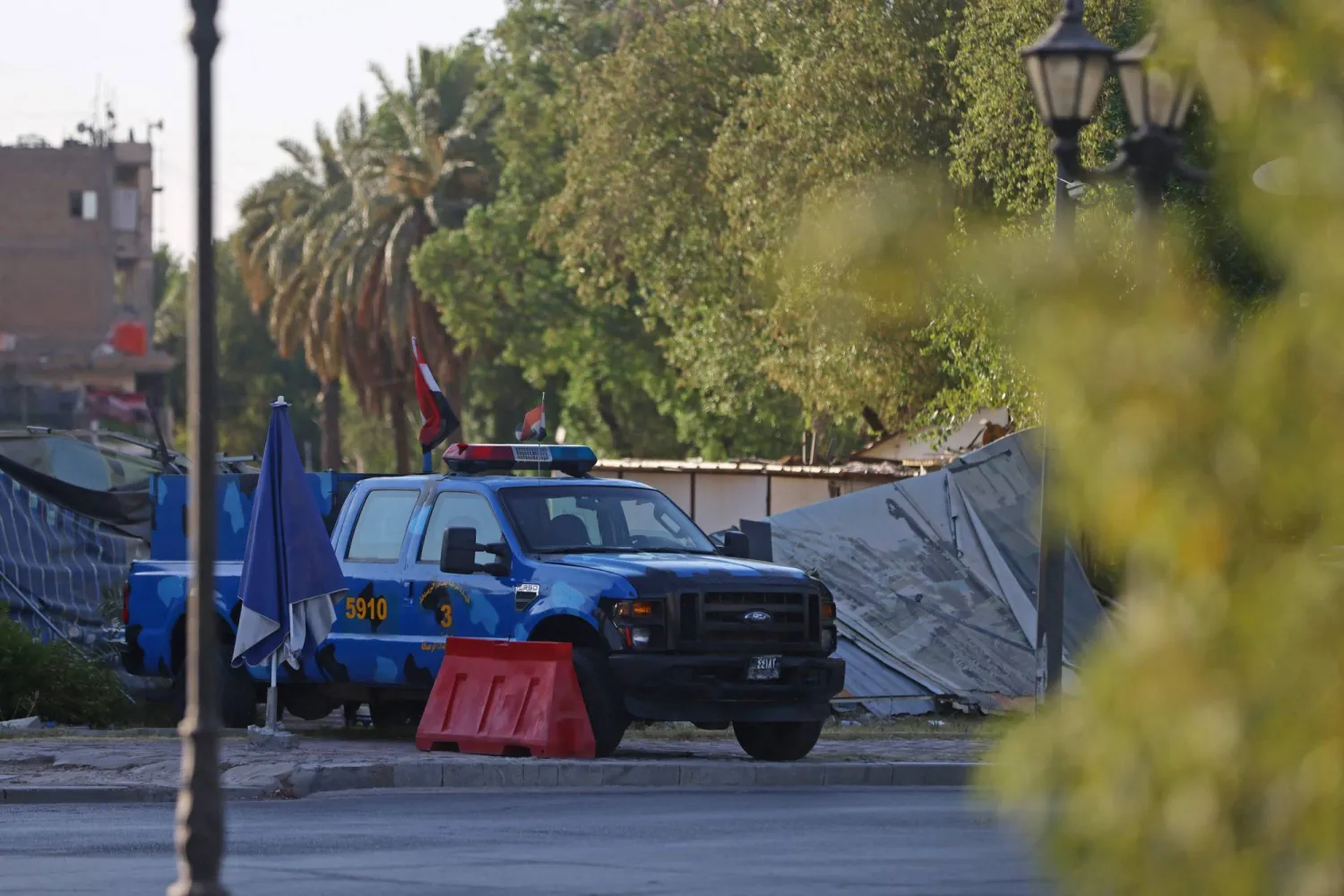
Iraqi security personnel in their vehicle guard the street in Baghdad on June 28, 2026. (AFP)
TT

Inside ‘Operation Dawn Strike’: The Covert Mission to Separate Iraq from Iran's Influence

Iraqi security personnel in their vehicle guard the street in Baghdad on June 28, 2026. (AFP)

Government and security sources have revealed that the wave of arrests carried out by Iraqi authorities last Sunday unfolded along two parallel tracks. One targeted suspects accused of embezzling public funds, while the other — a highly classified operation — aimed at what sources described as “separating the twins”: severing the links between figures tied to Tehran within armed factions and oil-smuggling networks and Iraqi state institutions.

According to the sources, Prime Minister Ali Al-Zaidi discussed the plan in strict secrecy with a small circle of senior military officers two weeks before its launch, deliberately excluding leaders of the ruling Coordination Framework alliance. The decision reportedly triggered tensions during the coalition’s latest meeting in Baghdad and reignited questions over the balance of power within Iraq’s governing bloc.

A former US official described the covert operation as “major surgery whose success is too early to judge,” calling it “a bold move by a young prime minister who emerged from relative obscurity.” He cautioned, however, that “Iran’s response has yet to come.”

While the public phase of the operation focused on targets inside Baghdad’s heavily fortified Green Zone, special forces simultaneously moved against homes and headquarters elsewhere in the capital and southern Iraq belonging to figures with direct ties to Iran.

Sources said pro-Iran factions initially suggested that a military coup was underway. One source revealed that members of the armed factions heard the word “coup” repeated over their communications networks for a short period before the true nature of the operation became clear.

The government has publicly disclosed the outcome of the campaign, officially dubbed Operation Dawn Strike, announcing the arrest of dozens of suspects accused of embezzling public funds.

Iraq’s Integrity Commission has pledged to continue making arrests while investigations into those detained proceed.

The operation was carried out by elite units from the Iraqi army, the Counter Terrorism Service, and the Special Division. According to sources, the release of images showing large sums of cash hidden inside suspects’ homes and farms, along with footage of a tank conducting a conspicuous maneuver inside the Green Zone, was intended to generate momentum for the covert phase of the operation while discouraging any immediate response from pro-Iran armed groups.

A senior figure in a Shiite faction told Asharq Al-Awsat that Operation Dawn Strike could ultimately serve as cover for dismantling Iraq’s armed “resistance” factions, describing such a strategy — if true — as “smart.”
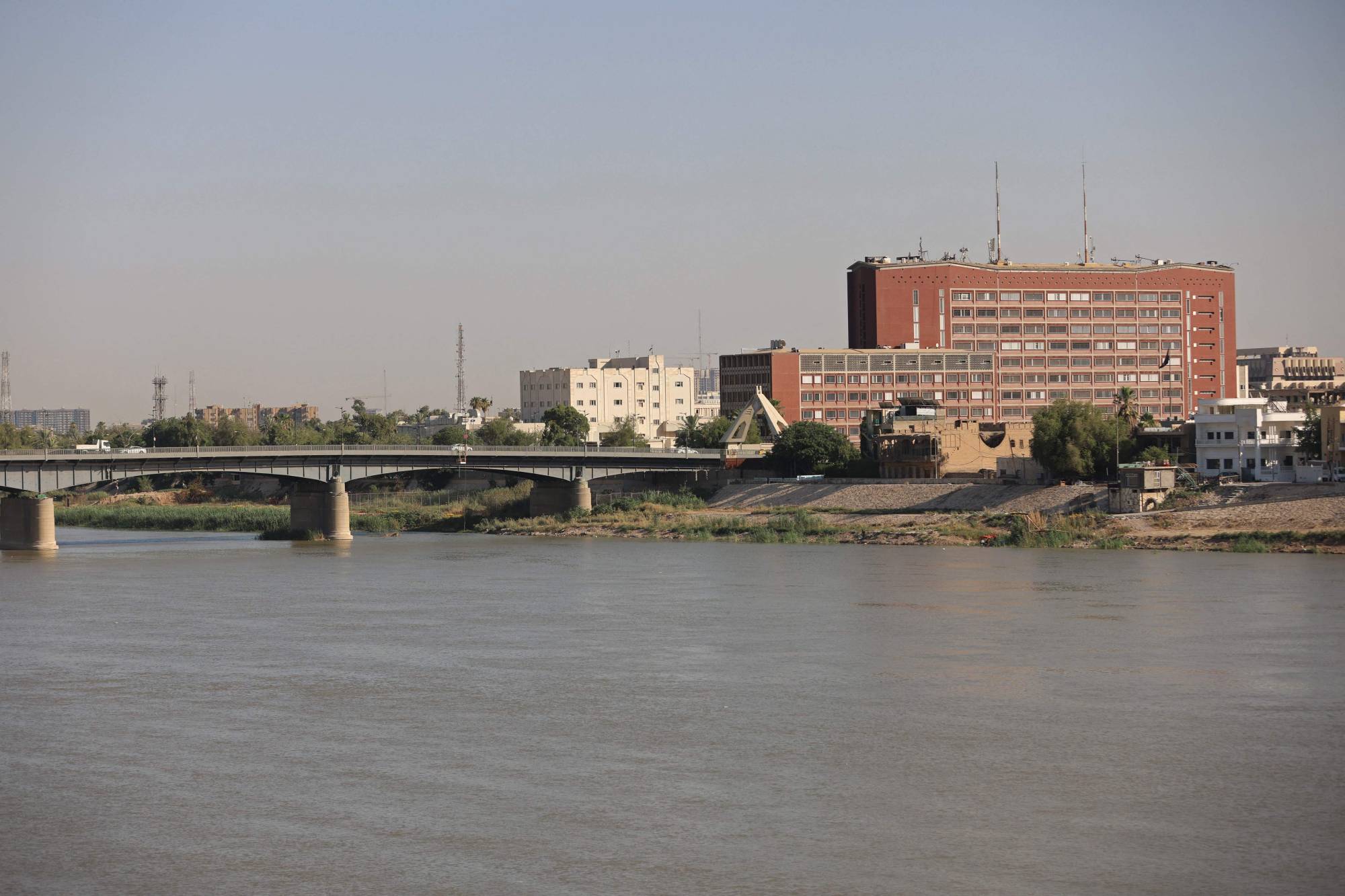
The building of the Ministry of Planning is pictured in the Green Zone, in Baghdad on June 28, 2026. (AFP)

Zero hour

People familiar with the arrest plan said the operation’s execution was conducted under extraordinary secrecy across both tracks.

They told Asharq Al-Awsat that planning had begun two weeks earlier and that Al-Zaidi restricted discussions to four senior security commanders, excluding party leaders within the Coordination Framework — the ruling coalition that nominated him for office in April.

Authorities set 2 a.m. on June 28 as “zero hour.”

According to informed sources, the operation began with the closure of the Green Zone, the sealing of Baghdad’s entry and exit points, and the deployment of forces around Baghdad International Airport. Simultaneously, however, the covert phase was already underway elsewhere in Baghdad and in southern Iraq.

Two security sources said special forces raided locations in eastern Baghdad, where Iran-aligned armed factions maintain headquarters.

Elite units searched homes and offices for high-value suspects, weapons, and documents, but several wanted individuals escaped shortly before security forces arrived, according to two informed sources.

Last-minute leak

Sources said Iraqi security forces deployed armored vehicles, troop carriers, tanks, and hundreds of personnel to give the operation overwhelming force and deter any armed resistance from faction-linked gunmen.

They added that one wanted individual was protected by an elite security detail from the Popular Mobilization Forces (PMF).

Officials said authorities maintained strict secrecy over both the planning and execution of the operation. Nevertheless, some suspects reportedly received last-minute warnings from executive and political figures.

“Yes, some managed to flee because personal connections alerted them that they had become targets, even less than an hour before security forces were due to arrive,” one source revealed.

For years, groups aligned with Iran have built extensive influence inside Iraqi state institutions by placing figures regarded as absolutely loyal to Tehran in key positions.

If confirmed, these accounts would suggest that Iranian-linked networks have penetrated Iraq’s law enforcement institutions, posing perhaps the greatest challenge yet to government efforts to curb Iranian influence and dismantle the corruption networks associated with it.

Iraqi politician Hamed Al-Sayyed said the campaign’s success depended on preventing information leaks that allow suspects to escape.

Law enforcement officers involved in Operation Dawn Strike reportedly received their deployment orders only hours before the operation and were sent to targets without being told exactly who or what they were pursuing.

“There were only very brief phone calls,” one security source told Asharq Al-Awsat.

According to two sources, the operation’s public track was designed to arrest an initial group of politicians long suspected of corruption and widely resented by the public. The covert track, meanwhile, focused on figures accused of facilitating the expansion of Iran’s Revolutionary Guard Corps (IRGC) inside Iraq’s security and oil institutions.

One political official described that second track as “the real prize.”
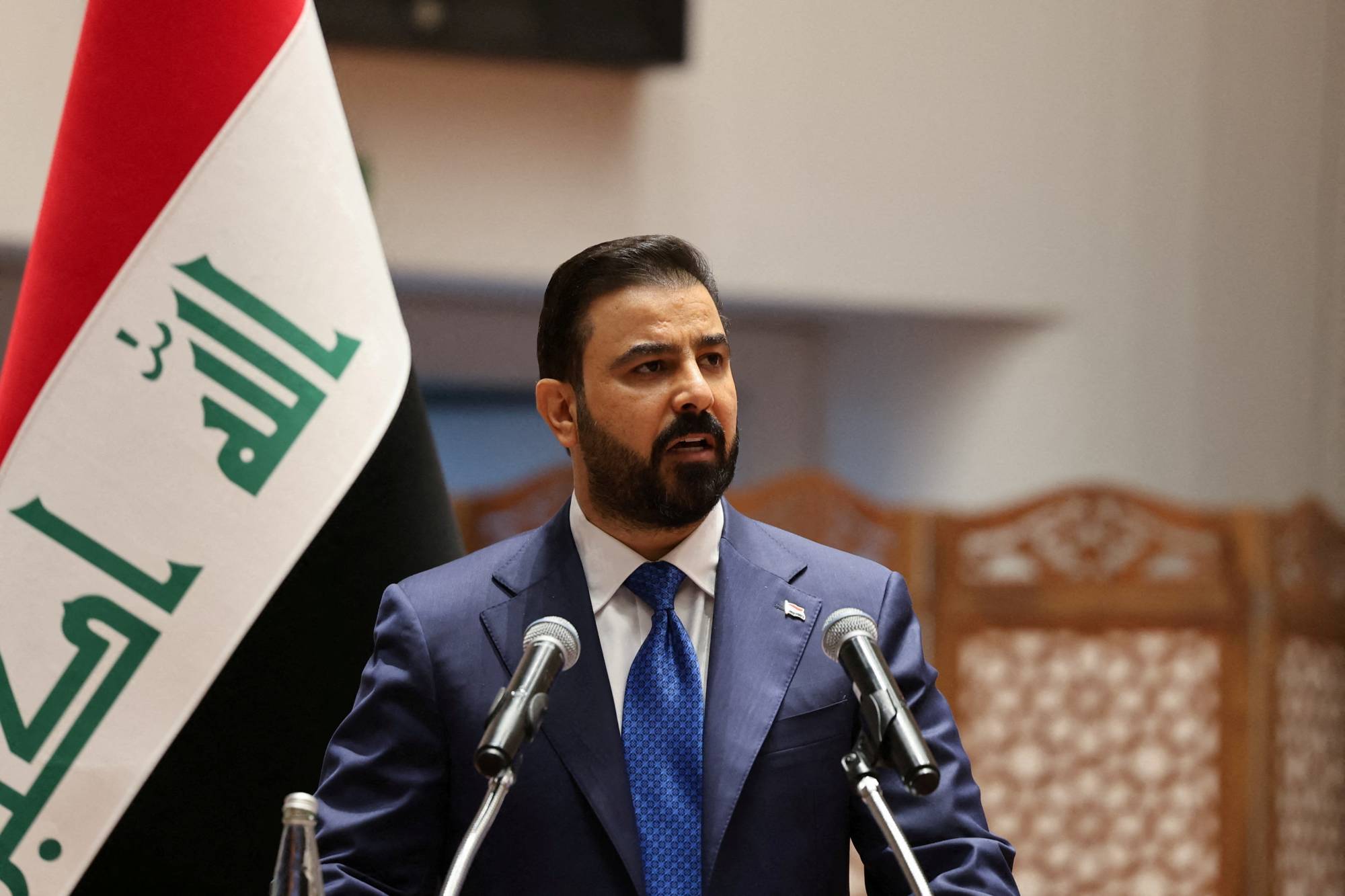
Iraqi Prime Minister-designate Ali Al-Zaidi speaks during a parliamentary session at the parliament headquarters in Baghdad, Iraq, May 14, 2026. (Reuters)

‘Big catch’

Authorities have so far arrested dozens of executive officials, but Deputy Oil Ministers Ali Maarij and Adnan Al-Jumaili may prove to be the “big catch” capable of exposing a deeply entrenched network in Baghdad accused of facilitating the smuggling of Iranian oil under Iraqi cover.

According to officials, the smuggling networks use forged documents to move Iranian oil through Iraq. Their methods reportedly include blending Iraqi fuel oil with Iranian petroleum products before exporting the mixture as Iraqi oil, allowing Tehran to circumvent US sanctions while generating revenue for Iran-aligned Iraqi armed factions and affiliated networks.

On May 7, the US Department of the Treasury sanctioned Maarij, accusing him of exploiting his official position to facilitate oil shipments benefiting Iran and Iraqi factions loyal to Tehran. Baghdad denied the allegations.

Political circles in Baghdad widely believe the sanctions ended Maarij’s hopes of becoming oil minister. His nomination had been viewed by many as “a valuable gift” symbolizing the growing influence of the IRGC in Baghdad.

A former US diplomat, speaking anonymously, described the operation as “major surgery to separate the twins — the representatives of Iran in Iraq from the country’s official institutions.”

“It is too early to judge whether it will succeed,” he said. “But the boldness of the operation is impressive and suggests a different mood is emerging in Baghdad.”

A political official told Asharq Al-Awsat that authorities are assessing both the limits of their power and the risk of confrontation before deciding whether to resume the operation.

Al-Sayyed argued that retreating now would come at a high price.

“Al-Zaidi has left himself with only one option,” he said. “He must pursue political leaders accused of corruption.”

Another political official suggested, however, that “the second phase may already be underway, even as we speak, but in secret.”
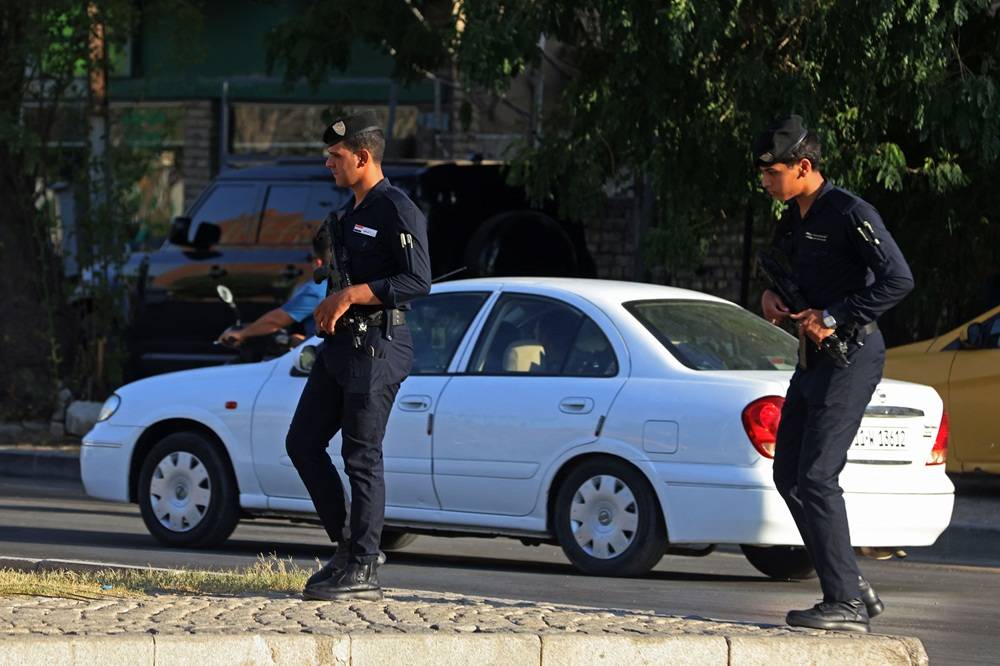
Iraqi security personnel patrol along a street in Baghdad on June 28, 2026. (AFP)

A stormy meeting

On Monday, one day after Operation Dawn Strike, the ruling coalition held its regular meeting with Al-Zaidi in attendance.

Political officials said coalition leaders told the prime minister they supported anti-corruption efforts but argued that they had long agreed to coordinate such operations.

According to sources, the meeting quickly turned contentious, with many coalition leaders believing Al-Zaidi had acted behind their backs.

One senior coalition figure reportedly told him: “It would have been better to involve us in the plan to preserve the stability of the political process.”

Al-Zaidi replied: “What guarantee did I have that the information would not leak if I had informed you?”

The exchanges grew more heated after one coalition member accused the campaign of targeting his bloc’s influence in parliament.

According to sources, he objected to security forces surrounding the home of a senior figure in his political alliance, calling it “an intimidating measure.”

The debate reflected shifting dynamics within Iraq’s ruling coalition.

A senior member of an influential Shiite party said the latest meeting “felt unusual, as though the coalition was losing its monopoly over the political dynamics and decision-making process.”

Two members of the ruling alliance said Al-Zaidi remained composed throughout the meeting.

Even so, the prime minister appears intent on restoring political equilibrium to ensure the campaign can continue.

Sources described the operation as having entered “halftime.”

According to a Kurdish political leader, Al-Zaidi — who is said to enjoy unprecedented backing from US envoy Tom Barrack — hopes to strengthen his political standing ahead of an expected visit to Washington later this month.

The former US diplomat said Al-Zaidi may hope to become “the star of the evening” when he meets President Donald Trump at the White House.

He cautioned, however, that wielding this degree of authority in Iraq’s fragmented political system could prove a double-edged sword if not exercised with caution.

China's Memories of Mao Fade to Nostalgia 50 Years after His Death

The Great Helmsman, who died September 9 1976, is still very much a fixture in central Henan province's Nanjie -- often dubbed "China's last Maoist village". Pedro PARDO / AFP
TT

China's Memories of Mao Fade to Nostalgia 50 Years after His Death

The Great Helmsman, who died September 9 1976, is still very much a fixture in central Henan province's Nanjie -- often dubbed "China's last Maoist village". Pedro PARDO / AFP

The crimson flags on Nanjie village's "East is Red" Square hang limp in the sweltering summer heat as a trickle of tourists take photos with a towering statue of Chairman Mao Zedong, still gleaming white almost 50 years after he died.

The Great Helmsman, who died September 9 1976, is still very much a fixture in central Henan province's Nanjie -- often dubbed "China's last Maoist village", said AFP.

Nostalgia for Mao's egalitarian ideals is growing in China as memories of his turbulent rule fade and the country grapples with a slowing economy and inequality.

Mao, who led the 1949 communist revolution against the ruling nationalists, ushered in an era of collectivized ownership he argued would drive industry and unite the country, but his drastic policies are also blamed by historians for mass starvation and millions of deaths.

While the ruling Chinese Communist Party maintains Mao was a revolutionary hero, it publicly acknowledged after his death that his devastating Cultural Revolution was a "grave mistake" -- a verdict upheld by subsequent leaders.

In Nanjie, countless murals of the former Chinese leader are plastered around the village.

Residents still live under Maoist principles of shared ownership, while the rest of the country moved on from that economic model.

"I still revere him very much," Xie Kaiyue, a 22-year-old local university student, said of Mao, who died almost three decades before she was born.

"I think young people in the village and, actually, myself, aren't as strong-spirited as in the past... People were purer," she said.

Nearby, electric carts whisked visitors past uniform apartment blocks plastered with socialist slogans as guides explained how cooperative ownership in local enterprises funds free housing for residents.

- Party line -

Around 500 kilometers (310 miles) north, in the mountain village of Dazhai in Shanxi province, once promoted by Mao as a national model after locals terraformed its arid hills into irrigated fields, tourists reminisce about an era when the Great Helmsman dominated political and social life.

"(People) didn't have enough to eat or to wear," Li, a 64-year-old tourist from Xi'an, said of his childhood.

"But... the whole country was full of vigor, and there was a spirit of struggling with heaven, earth, and people to change every aspect of China," the retiree said.

"Of course I miss it."

Now, Dazhai is overflowing with shops selling items that support Mao's personality cult -- posters, playing cards, and crockery emblazoned with his image, and the "Little Red Book" of his quotations.

Still, references to dark chapters of his decades in absolute power are tightly censored in public discourse.

The decade-long episode instigated by Mao in 1966 saw intellectuals brutally targeted as "class enemies" and schools shuttered, setting China back for years in education and development.

Private property and land were collectivized, while economic management pushed the country to the Great Famine, which the government says killed around 15 million people, while historians estimate around 20-43 million.

In one museum, text mentioning the Cultural Revolution had been crudely scraped off signage.

"Everything you see in the public domain... is the party line. No one is allowed to deviate from this," said scholar Xu Chenggang, who was targeted as a child in Beijing during the Cultural Revolution because his father was labelled a "rightist".

Mao's face is printed on banknotes, his portrait overlooks Tiananmen Square, and his body is preserved in a mausoleum.

Every year new movies and TV shows dramatizing Mao's life beam the message of his great deeds to public.

Public discussion has been squeezed further under current leader Xi Jinping, who warns against "historical nihilism", or narratives contradicting the party's own.

"The Communist Party told people there were mistakes, but what's the meaning of 'mistake'? No one knows," Xu said.

- 'Great figure' -

The sanitized history has left space for romanticized interpretations among youths frustrated by long working hours and intense competition in education and the job market.

In December, a viral video series on Bilibili -- a platform popular with those under 30 -- argued that the 2017 movie 'Youth', which follows young performers in a military dance troupe during the 1970s, was a subtle ode to the Cultural Revolution.

The videos, which praised Mao and blamed capitalist elites for crushing the movement, were removed after gaining over 35 million views in less than a week.

"Today, there is more of a sense that the Cultural Revolution was a period of idealism, where society was fired by ideals and not by the relentless pursuit of money and material goods," said to Kerry Brown, head of the Lau China Institute in London and author of a recent book on Mao.

"This is, of course, a total fabrication," he said.

Many also credit Mao with laying the foundation for China to become a modern, technologically advanced nation, said Mobo Gao, professor of Chinese studies at Adelaide University.

"They ask, where did (today's China) come from? It came from the establishment of the PRC," said Gao, who lived through the Mao era in rural Jiangxi province.

"Who was the one who really established the PRC? It must be Mao."

In Shijiazhuang, an industrial city of seven million northeast of Dazhai, 20-year-old Wang Zhihao and his classmates posed with a giant Mao statue opposite the municipal government.

"We admire and revere Chairman Mao very much. He is a great figure," Wang said, as the sound of elderly residents singing songs praising the Communist Party drifted over from the nearby square.

"He led the founding of New China."


Is US Military Cooperation with Ethiopia Driven by Anger over Egypt-China Rapprochement?

US President Donald Trump during his meets with Egyptian President Abdel Fattah al-Sisi on the sidelines of the 73rd session of the UN General Assembly in September 2018. (Egyptian Presidency)
TT

Is US Military Cooperation with Ethiopia Driven by Anger over Egypt-China Rapprochement?

US President Donald Trump during his meets with Egyptian President Abdel Fattah al-Sisi on the sidelines of the 73rd session of the UN General Assembly in September 2018. (Egyptian Presidency)

A US defense agreement with Ethiopia was announced days before an important visit by Chinese President Xi Jinping to Cairo that saw agreements and memorandums of understanding signed in several fields and coincided with joint Egyptian-Chinese air exercises.

The timing raised questions over whether Washington’s military cooperation with Addis Ababa was driven by “US anger at Cairo” and what objectives it serves amid tensions in the Horn of Africa.

The United States and Ethiopia signed a defense agreement on Aug. 21 during an official visit by an Ethiopian military delegation to Washington. Both sides described it as a strategic framework aimed at strengthening military and security cooperation, protecting national interests and securing mutual benefits.

Raafat Mahmoud, head of the African Affairs Research Unit at the Egyptian Cabinet's Information and Decision Support Center (IDSC), told Asharq Al-Awsat that Washington was seeking to rebuild ties with Addis Ababa after years of tension, particularly over the Tigray war and US criticism of Ethiopia’s human rights record.

He argued that the agreement showed Ethiopia had become part of broader US calculations involving Red Sea security, countering Chinese and Russian influence and combating armed groups in the Horn.

Ethiopian lawmaker Mohammed Al-Arusi noted that Washington views the Horn as directly linked to Red Sea security, international trade and maritime routes, while also facing terrorist threats.

“Ethiopia lies at the heart of this geography, with its demographic, political and military weight across a broad region, and it hosts the permanent headquarters of the African Union,” he told Asharq Al-Awsat. Washington, he added, was not seeking a temporary stance but it is “rebuilding its position in a region where the balance of power is changing.”

US Republican and strategic affairs expert Adolfo Franco cautioned that the agreement lacks formally binding treaties and direct financial funding, adding that future defense exports remain subject to strict restrictions and case-by-case assessments, including human rights considerations.

Al-Arusi pointed to a US-Ethiopian dialogue launched in May covering economics, trade, investment, defense and security. The defense track advanced just three months later, a sequence he said showed Washington was approaching Ethiopia with long-term considerations.

Mahmoud said growing US support could strengthen Ethiopia’s negotiating position not only on water but also in its efforts to secure maritime access and expand its presence in the Red Sea region.

Recent media reports have portrayed the US-Ethiopian rapprochement as Washington’s response to Egypt’s growing ties with China, highlighted by Xi’s visit to Cairo this week.

Mahmoud countered that Egyptian-Chinese rapprochement was not new, although recent developments naturally raised sensitivities in Washington, particularly amid expanding economic and security cooperation.

In January 2026, Ethiopia and China elevated their relations to an “all-weather strategic partnership,” nearly two years after Egypt and China upgraded their ties to a “strategic partnership” in 2024.

Al-Arusi argued that Washington’s expanding partnership with Addis Ababa should not be viewed as replacing one partner with another, but rather as evidence of Ethiopia’s growing strategic value.

Former US diplomat Henry Ensher told Asharq Al-Awsat that Washington wants a security partner in the Horn and that Ethiopia is the best option given its capabilities.

While China and the United States compete in Africa, Egypt is the more important partner, he said, making it unlikely that Washington would use this approach to confront or punish Cairo.


Syrian Official to Asharq Al-Awsat: Integration Process Following SDF Dissolution Is Moving Toward Completion

A convoy of Syrian security forces and Special Operations Forces enters the headquarters of the “Vanguards Camp” Regiment in Hasakah (Hasakah Media)
TT

Syrian Official to Asharq Al-Awsat: Integration Process Following SDF Dissolution Is Moving Toward Completion

A convoy of Syrian security forces and Special Operations Forces enters the headquarters of the “Vanguards Camp” Regiment in Hasakah (Hasakah Media)

Ahmad al-Hilali, deputy governor of Hasakah, told Asharq Al-Awsat on Friday that the integration process stipulated in the “January 29, 2026 Agreement” has moved, following the dissolution of the Syrian Democratic Forces (SDF) and the former Kurdish Autonomous Administration, from “the stage of understandings and negotiations to actual implementation, whether in civilian institutions or in the security and military sectors.”

He described the security situation as “much better” and said “stability is gradually strengthening,” stressing that the process “is moving toward completion, and what we want is for it to take place calmly.”

Since SDF commander Mazloum Abdi announced from the presidential palace in Damascus on August 25 the dissolution of the SDF and the Autonomous Administration, Hasakah has witnessed a series of developments and changes signaling the emergence of a new phase in the governorate. Its defining features are the restoration of state authority across all sectors, stronger security and stability, the unification of institutions, and the end of administrative duplication, in accordance with the January 29 Agreement.

In his remarks, al-Hilali said that “the integration process is not simply a matter of transferring buildings or changing names. It is about reunifying institutional authority, administrative decision-making, and security and military command under the umbrella of the Syrian state.”

He said significant steps had already been completed in this direction, while work was underway to address the remaining files in an orderly manner that would prevent any institutional or security vacuum and preserve stability in the governorate.

Before the announcement of the SDF's dissolution, most cities and areas in Hasakah had experienced security disorder involving the Revolutionary Youth. Such incidents increased after the signing of the January 29 Agreement, when members of the group prevented the handover of institutions to the government. That situation, however, has now disappeared.

Al-Hilali attributed the disappearance of the previous unrest primarily to the fact that “the phase has changed.”

“Previously, there were attempts to obstruct the process of transferring state institutions, and some activities emerged aimed at disrupting this course. But as implementation of the agreement progressed and the direction toward ending institutional and security duplication became clear, these manifestations declined significantly,” he said.

According to al-Hilali, “There is now a growing conviction among everyone that state institutions should not be a subject of conflict or confrontation, and that the integration process is moving toward completion.”

“What we want is for this process to take place calmly, away from provocation and tension, and for all residents of the governorate to feel that the return of state institutions means the return of services, the rule of law and stability, and is not directed against any component of society,” he said.

Asked when the integration of military, security and civilian institutions would be fully completed, the deputy governor said: “I do not want to set an artificial date for a process of this scale and complexity, because some files require technical, administrative and security procedures before they can be formally closed.”

He added: “But I can say that we are at a very advanced stage and that the overall direction is clearly toward completing the integration as soon as possible.”

He noted that “the bulk of the work is now in the implementation phase, while what remains consists of detailed files requiring the completion of arrangements, verification and coordination among the ministries and relevant authorities.”

Women fighters from the Women's Protection Units (YPJ) take part in military traning in Hasakah, Syria, August 22, 2026. REUTERS/Orhan Qereman

Pending Files

Al-Hilali said: “What matters most to us is that the integration be complete, genuine and sustainable, rather than merely a political announcement whose impact fades after a short period.”

Asked about the main outstanding issues preventing the completion of the integration process, al-Hilali said the remaining files could be divided into three main tracks.

“First is the military and security file, involving the completion of the restructuring of personnel and cadres and the integration of those who meet the requirements into the Ministries of Defense and Interior in accordance with the established procedures,” he said.

“The second is the administrative and civilian file, particularly the status of employees and staff, the mechanisms for confirming their positions and paying their entitlements, and the integration of institutions and departments whose transfer to the state has not yet been completed.”

“The third involves a number of service-related, technical and administrative files linked to the transfer of powers and the reunification of operating systems, databases and resources.”

Al-Hilali said these issues “do not represent an obstacle to the integration process so much as they are implementation files that need to be completed.”

“The political decision is clear and the overall direction has been settled: state institutions will be unified, authority will rest with the Syrian state, and the rights of all citizens and components of the governorate will be preserved,” he said.

The rise of the Autonomous Administration

The first foundations of the Kurdish Autonomous Administration, which sought to establish a “Kurdish project in Syria,” emerged through the formation of the Kurdish Supreme Committee. It was established by Syria's Kurdish Democratic Union Party (PYD) and the Kurdish National Council following the signing of the Erbil Agreement on July 12, 2012.

A military wing was subsequently established for the committee, comprising the People's Protection Units (YPG), the Women's Protection Units (YPJ) and the Asayish security forces. The SDF was later formed in 2015, under predominantly Kurdish leadership.

The geographic footprint of the Autonomous Administration expanded from three cantons in 2014 to six in 2016 and seven by 2023. This territorial expansion was accompanied by the growth of its military and security apparatus and civilian institutions, which collectively included tens of thousands of personnel.

The SDF subsequently lost a significant portion of its territory during armed clashes that erupted between its fighters and the Syrian army in late 2025 and early 2026. The fighting lasted about two weeks and was followed by the signing of the January 29, 2026 Agreement.

The agreement between the Syrian government and the SDF called for a ceasefire and the gradual integration into Syrian state institutions of the military and civilian institutions established by the Kurds during the years of conflict. It also called for the handover of border crossings and oil and gas fields, as well as the withdrawal of foreign fighters from the region.