


In the West Bank, Israeli Settlers Take Over Palestinian’s Dream Home

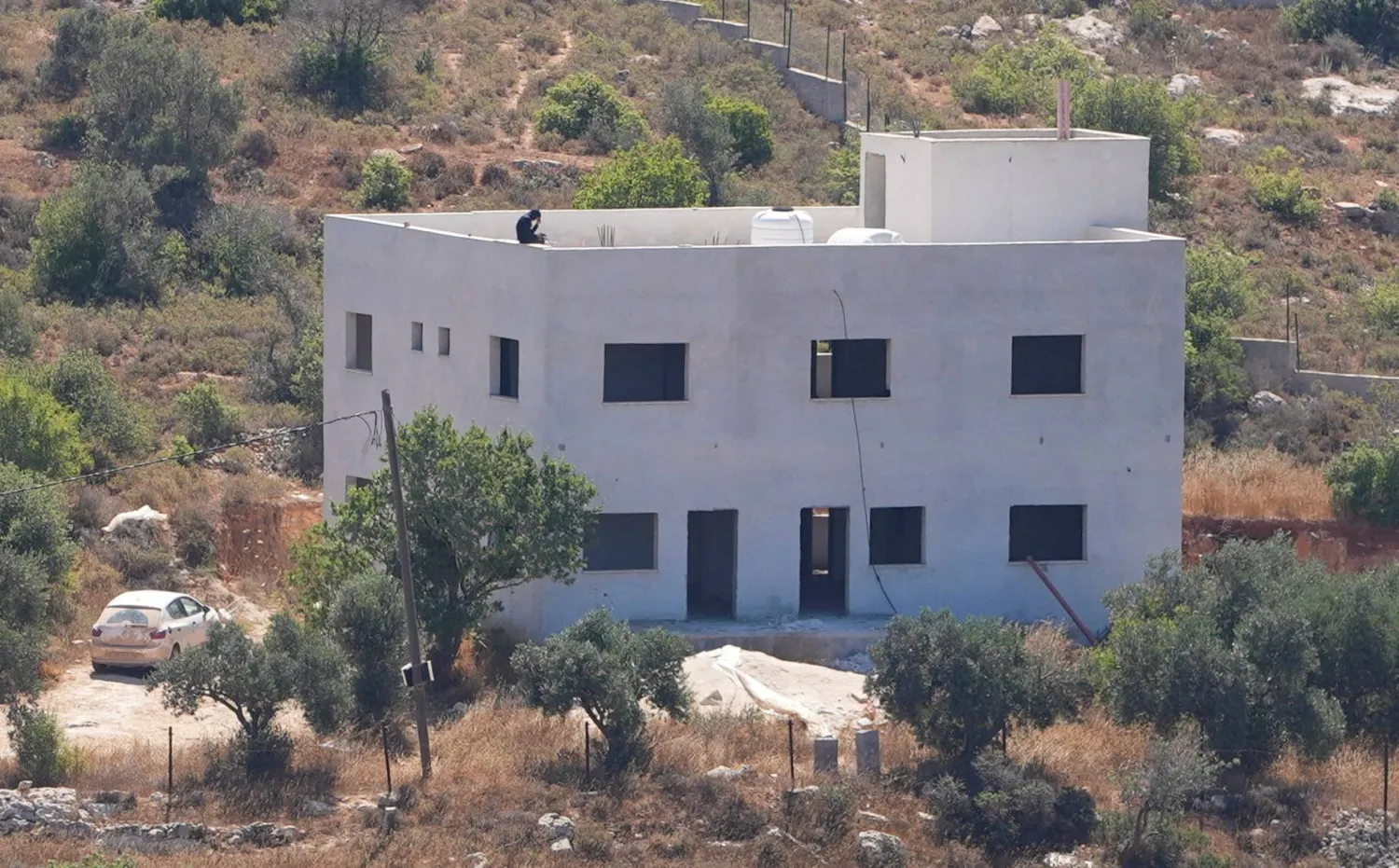
 An Israeli settler sits on the roof of the Palestinian Salameh family house, which was taken over by Israeli settlers in the village of Jalud in the Israeli-occupied West Bank July 2, 2026. (Reuters)
An Israeli settler sits on the roof of the Palestinian Salameh family house, which was taken over by Israeli settlers in the village of Jalud in the Israeli-occupied West Bank July 2, 2026. (Reuters)
TT

In the West Bank, Israeli Settlers Take Over Palestinian’s Dream Home

 An Israeli settler sits on the roof of the Palestinian Salameh family house, which was taken over by Israeli settlers in the village of Jalud in the Israeli-occupied West Bank July 2, 2026. (Reuters)
An Israeli settler sits on the roof of the Palestinian Salameh family house, which was taken over by Israeli settlers in the village of Jalud in the Israeli-occupied West Bank July 2, 2026. (Reuters)

Palestinian Mohammad Salameh was building a home for his family in the Israeli-occupied West Bank, where his recently engaged son was meant to start married life. Instead, before construction was complete, a group of Israeli settlers seized the property.

Video filmed earlier in the week and verified by Reuters showed at least six settlers moving around on the roof of the two-storey house, which sits below a nearby hill.

Salameh said appeals to the Israeli military and police brought no help.

Now he fears his home, which like many others in the Palestinian territory is surrounded by Israeli settlements and smaller outposts, is lost forever.

Other houses in the area could suffer the same fate, ‌he said.

"Only God ‌knows, if there is law and order then they will leave," Salameh ‌said. "If ⁠they succeeded with ⁠taking one, then the rest will follow."

Reuters was unable to reach the settlers for comment. One of them could be seen walking on the house's roof on Thursday.

The Israeli military said it was checking Reuters' request for comment, but had not responded by Friday. The Israeli police did not immediately respond to a request for comment.
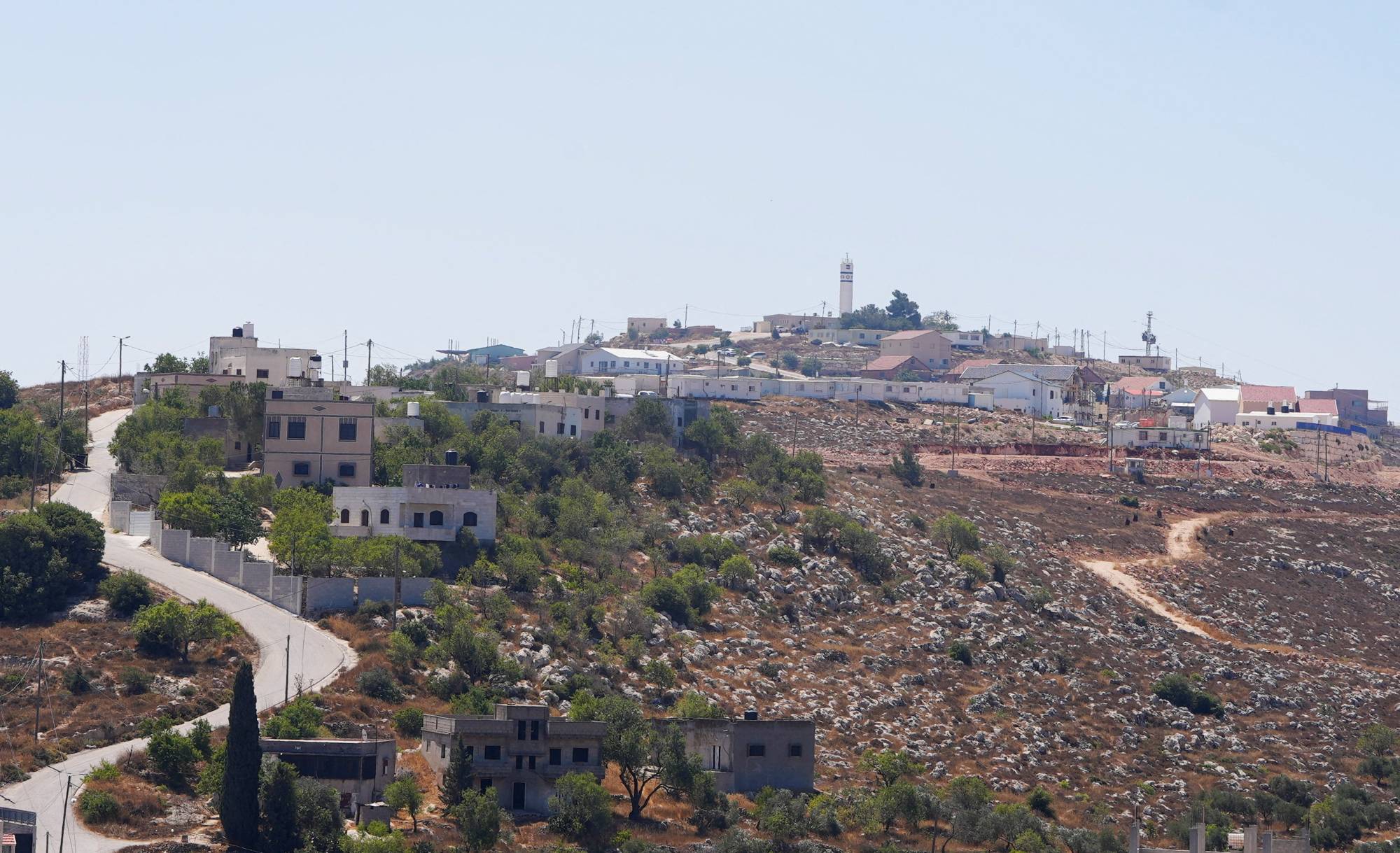
Jewish settlement of Shilo in the Israeli-occupied West Bank as seen from the Palestinian village of Jalud July 2, 2026. (Reuters)

SETTLEMENTS, SETTLER ATTACKS WIDEN UNDER NETANYAHU GOVERNMENT

The seizure of Palestinian land by settlers is a longstanding feature of life in the West Bank, where about 500,000 ⁠Israelis live among roughly 3 million Palestinians.

Palestinians have for years reported damage ‌to farmland, vandalism and attacks linked to settlement expansion.

A ‌UN inquiry reported last month that Israeli settler attacks on Palestinian villages and agricultural land had surged since 2023, ‌rising by 130%.

Residents of Jalud, Salameh's village, say this week's incident marks another troubling escalation ‌because the settlers seized a house that was still under construction.

"They have now moved down to within no more than 100 meters from the last house in Jalud, which is also a house under construction belonging to a resident," said Raed al-Haj Mohammad, head of the village council.

Jalud has faced five major settler ‌attacks, he said, including the burning of homes, damage to vehicles and the uprooting of trees.

Most countries and the United Nations regard Israeli ⁠settlements in the West Bank ⁠as illegal under international law, citing the Fourth Geneva Convention's prohibition on transferring a civilian population into occupied territory.

Israel rejects that position, saying the West Bank is disputed territory where there has been a Jewish presence for thousands of years.

Palestinians consider the West Bank, together with Gaza and East Jerusalem, as part of a Palestinian state.

Settlement building and settler violence have long been among the biggest obstacles to peace efforts between Israel and the Palestinians.

Even Israel's staunchest allies, including the United States, have condemned settler actions.

Nevertheless, settlement expansion has accelerated under Prime Minister Benjamin Netanyahu's government, which relies on hardline pro-settlement parties to maintain its parliamentary majority.

For Salameh, the dispute is painfully personal.

Construction on the house stalled after the Gaza war erupted in 2023, when his son could not find work and the family's finances came under strain.

"The neighbor close by has built a two-story house, which they will probably take too, if we lose this house (his) they will lose theirs," he said.



Human Rights Catastrophe Unfolding in Sudan’s Al-Obeid, Says UN’s Turk

Women and children queue to receive free food being distributed in al-Mohayra camp for displaced people, near the city of al-Obeid in the southern Kordofan region, on June 29, 2026. (AFP)
TT

Human Rights Catastrophe Unfolding in Sudan’s Al-Obeid, Says UN’s Turk

Women and children queue to receive free food being distributed in al-Mohayra camp for displaced people, near the city of al-Obeid in the southern Kordofan region, on June 29, 2026. (AFP)

The United Nations human rights chief on Friday said another human rights catastrophe was unfolding in Sudan, in the city of al-Obeid in North Kordofan, and urged the world to act.

"The signs from al-Obeid are clear and unmistakable: Another human rights catastrophe is unfolding in Sudan, this ‌time in ‌the capital of the strategic ‌state ⁠of North Kordofan," ⁠the UN high commissioner for human rights Volker Turk told delegates in Geneva during an urgent debate at the UN human rights council on the situation in the region.

The urgent debate ⁠was called by Britain, whose ‌envoy previously warned ‌of the risk of large-scale atrocities following reports ‌that Sudan's paramilitary Rapid Support ‌Forces and allies are massing forces around the city of al-Obeid, which could result in an escalation of the conflict.

Turk told delegates ‌that civilians have been subjected to siege-like conditions for 18 ⁠months, ⁠with shortages of clean water reaching a critical point in al-Obeid amid relentless drone strikes as the Sudanese Armed Forces and the RSF battle for control over areas surrounding the city.

At least 45 civilians were killed and 41 injured in 15 drone strikes in al-Obeid and surrounding areas between June 6-28 recorded by the UN human rights office.


Christian Villages in Southern Lebanon Face Occupation, Isolation as Residents Wait in Limbo

A view of the Christian town of Ain Ebel in southern Lebanon (Ain Ebel Municipality Facebook page)
TT

Christian Villages in Southern Lebanon Face Occupation, Isolation as Residents Wait in Limbo

A view of the Christian town of Ain Ebel in southern Lebanon (Ain Ebel Municipality Facebook page)

The Christian border villages in southern Lebanon, particularly Debel, Ain Ebel, and Rmeich, are experiencing difficult humanitarian and security conditions, despite the signing of a framework agreement between Lebanon and Israel aimed at achieving "lasting peace."

Residents affirm that their reality does not reflect any signs of stability, given the continued Israeli military presence and restrictions imposed on their movement, in addition to the widespread destruction that has affected neighboring villages and towns, according to a report by the French newspaper "Le Figaro."

Israeli vehicles and tanks are deployed at the entrances to some villages, while large areas of the South have been reduced to rubble after military operations, with homes, infrastructure, and agricultural fields destroyed.

Life Under Restrictions and Humanitarian Aid

Residents of the village of Debel rely almost entirely on humanitarian aid convoys that are allowed in only intermittently, following the collapse of the public electricity supply and severe restrictions on bringing in essential goods. Several residents describe life as being "like a prison," saying they are unable to leave the village freely, while many fear that if they flee, their homes could be destroyed and the village itself could cease to exist.

Residents also recount tragic incidents, including the killing of civilians while traveling between villages, despite having obtained transit permits, which has heightened their sense of insecurity.

Economic Crisis and Lack of Income Sources

In Ain Ebel, security restrictions have prevented farmers from accessing their lands, depriving many of their primary source of livelihood. Commercial activity has also significantly declined.

Despite the slowdown in military confrontations in the region, residents continue to live in a state of anxiety and anticipation, with ongoing ambiguity regarding the future of the border villages and the possibility of resuming schooling and normal life.

Absence of the State and Demands for the Army's Return

Residents of Rmeich and neighboring villages express their dissatisfaction with what they perceive as the absence of the Lebanese state, noting that local security now relies on municipal police forces, while they demand the return of the Lebanese Army to assume its responsibilities in the region.

Residents also affirm that they feel their suffering does not receive sufficient attention, and that the Church has become the primary entity providing them support amid the ongoing crisis.

Conversely, the security agreement links the withdrawal of Israeli forces from the region to the disarmament of Hezbollah, while Israel asserts that it will maintain its forces as long as Hezbollah poses a security threat, which raises residents' fears of the current situation continuing for a long time.


Drone-Making Equipment Bound for Houthis Seized in Bab el-Mandeb

The boat was transporting equipment used to manufacture drones and explosive-laden boats (Giants Forces) 
TT

Drone-Making Equipment Bound for Houthis Seized in Bab el-Mandeb

The boat was transporting equipment used to manufacture drones and explosive-laden boats (Giants Forces) 

Yemen’s Southern Giants Brigades announced they had intercepted a boat carrying equipment allegedly intended for manufacturing Houthi drones and explosive-laden boats as it attempted to reach the Red Sea coast of Hodeidah province, home to ports controlled by the Iran-backed group.

According to the forces, the seized cargo included equipment used in the production and operation of drones and suicide boats, including a hydraulic drilling machine, servers, electronic control chips, GPS devices for target guidance, engines, and other specialized components.

The interception took place Monday evening following an intelligence-led surveillance operation. Three sailors allegedly affiliated with the Houthis were arrested aboard the vessel, which was reportedly transporting equipment intended for manufacturing drones used in the group’s attacks.

Col. Adel al-Mahwali, head of operations for the 17th Giants Brigade, said the operation reflected the forces’ “high level of vigilance.” He added that all seized materials had been secured and that legal procedures were underway.

Al-Mahwali revealed that the operation was part of the Giants Forces’ broader efforts to secure Yemen’s coastline and vital shipping lanes, in line with directives from Presidential Leadership Council member and Southern Armed Forces commander Abdul Rahman Al-Mahrami, widely known as Abu Zaraa, who has made combating smuggling a priority.

Al-Mahrami, for his part, praised the operation and called for intensified efforts to combat smuggling, tighten oversight of Houthi supply routes, and prevent the trafficking of weapons and equipment that, he said, threaten Yemen’s security and regional stability.

Information Minister Muammar al-Eryani also welcomed what he described as a significant security success, saying the interception demonstrated a high level of professionalism, readiness, and vigilance in protecting Yemen’s coastline and maritime corridors, according to the official Saba News Agency.

Al-Eryani said the seizure provided fresh evidence that Iran continues to supply the Houthis with advanced weapons and military components in violation of UN Security Council resolutions and the arms embargo imposed on the group. He stressed that the interception underscored Tehran’s continued use of the Houthis to advance its regional agenda and threaten Yemen’s security, regional stability, and international shipping.