
Christian Villages in Southern Lebanon Face Occupation, Isolation as Residents Wait in Limbo

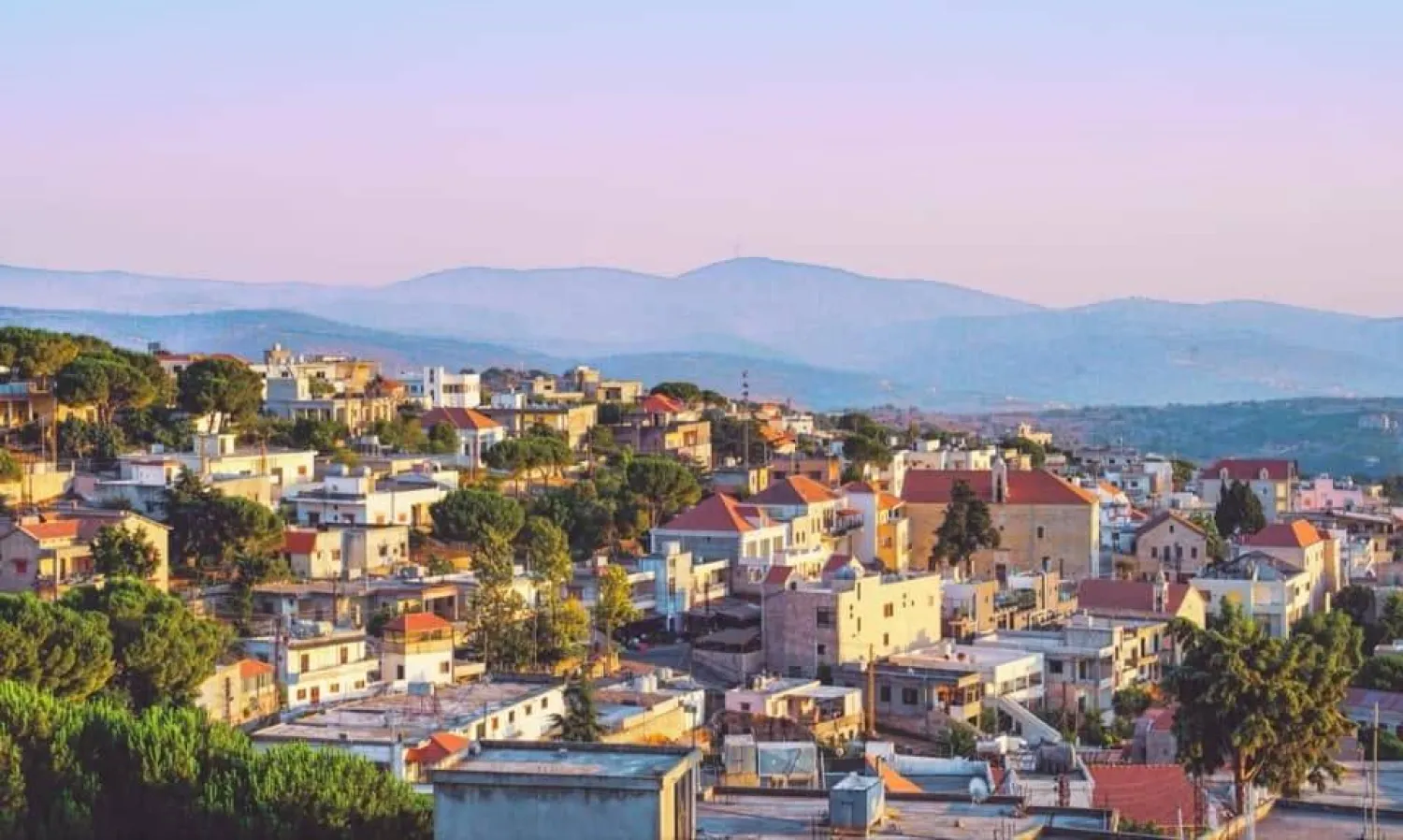
A view of the Christian town of Ain Ebel in southern Lebanon (Ain Ebel Municipality Facebook page)
TT

Christian Villages in Southern Lebanon Face Occupation, Isolation as Residents Wait in Limbo

A view of the Christian town of Ain Ebel in southern Lebanon (Ain Ebel Municipality Facebook page)

The Christian border villages in southern Lebanon, particularly Debel, Ain Ebel, and Rmeich, are experiencing difficult humanitarian and security conditions, despite the signing of a framework agreement between Lebanon and Israel aimed at achieving "lasting peace."

Residents affirm that their reality does not reflect any signs of stability, given the continued Israeli military presence and restrictions imposed on their movement, in addition to the widespread destruction that has affected neighboring villages and towns, according to a report by the French newspaper "Le Figaro."

Israeli vehicles and tanks are deployed at the entrances to some villages, while large areas of the South have been reduced to rubble after military operations, with homes, infrastructure, and agricultural fields destroyed.

Life Under Restrictions and Humanitarian Aid

Residents of the village of Debel rely almost entirely on humanitarian aid convoys that are allowed in only intermittently, following the collapse of the public electricity supply and severe restrictions on bringing in essential goods. Several residents describe life as being "like a prison," saying they are unable to leave the village freely, while many fear that if they flee, their homes could be destroyed and the village itself could cease to exist.

Residents also recount tragic incidents, including the killing of civilians while traveling between villages, despite having obtained transit permits, which has heightened their sense of insecurity.

Economic Crisis and Lack of Income Sources

In Ain Ebel, security restrictions have prevented farmers from accessing their lands, depriving many of their primary source of livelihood. Commercial activity has also significantly declined.

Despite the slowdown in military confrontations in the region, residents continue to live in a state of anxiety and anticipation, with ongoing ambiguity regarding the future of the border villages and the possibility of resuming schooling and normal life.

Absence of the State and Demands for the Army's Return

Residents of Rmeich and neighboring villages express their dissatisfaction with what they perceive as the absence of the Lebanese state, noting that local security now relies on municipal police forces, while they demand the return of the Lebanese Army to assume its responsibilities in the region.

Residents also affirm that they feel their suffering does not receive sufficient attention, and that the Church has become the primary entity providing them support amid the ongoing crisis.

Conversely, the security agreement links the withdrawal of Israeli forces from the region to the disarmament of Hezbollah, while Israel asserts that it will maintain its forces as long as Hezbollah poses a security threat, which raises residents' fears of the current situation continuing for a long time.


Seven Migrants Dead, 50 Rescued off Libya

FILE - Migrants are brought to shore after being intercepted by the Libyan coast guard on the Mediterranean Sea, in Garaboli Libya, on Oct. 18, 2021. (AP Photo/Yousef Murad, File)
TT

Seven Migrants Dead, 50 Rescued off Libya

FILE - Migrants are brought to shore after being intercepted by the Libyan coast guard on the Mediterranean Sea, in Garaboli Libya, on Oct. 18, 2021. (AP Photo/Yousef Murad, File)

An Italian rescue charity said on Monday it pulled 50 people to safety from a double-deck wooden boat in international waters off Libya, and recovered seven bodies.

Emergency said it spotted the "overcrowded wooden boat" in the early hours and began the rescue operation.

"Halfway through the rescue, our team noticed nine people lying on the deck," Jonathan Nani La Terra, the mission leader on board Emergency's Life Support search and rescue vessel, said in a statement.

The nine "had been moved there by other survivors who had recovered them from the hold where they had spent the entire journey", he said.

"Nothing could be done for seven of them. Two are in a critical condition due to suffocation," he said.

The migrants, who hail from Somalia and Egypt, said the boat had set off from Zuwara in Libya early on Sunday.

The International Organization for Migration said last week that the number of known migrant deaths in the central Mediterranean has increased drastically, even as migrant numbers fall because of harsher European policies.

This was partly due to a bout of severe weather in January and journeys growing longer with migrant boats departing further away from European shores.

Some 17,800 migrants have arrived in Italy so far this year, compared to 39,116 during the same period in 2025, according to interior ministry data.


Iraqi Kurdistan Prime Minister Condemns Iranian Drone Attack Targeting His Office

Kurdistan Region Prime Minister Masrour Barzani
TT

Iraqi Kurdistan Prime Minister Condemns Iranian Drone Attack Targeting His Office

Kurdistan Region Prime Minister Masrour Barzani

The office of Kurdistan Region Prime Minister Masrour Barzani and the headquarters of the region’s local intelligence director were targeted on Monday by two explosive-laden drones.

Barzani described the attack on his personal office as “a dangerous escalation and a direct threat to the security and stability of the region.”

“Based on information and investigations conducted by the Kurdistan Region’s Counter-Terrorism Directorate, it has been established that my personal office and the residence of the head of the Parastin Agency were targeted today by Iranian drones,” Barzani said.

“I strongly condemn these reckless and unacceptable attacks and affirm that they constitute a dangerous escalation and a direct threat to the security and stability of the region. Such attacks will not deter us from continuing to carry out our duties and protect our citizens,” he added.


Drones from Iran Attack PM’s Office in Iraqi Kurdistan

The attacks happened with Two Hadid-110 type explosive-laden drones. Reuters file photo
TT

Drones from Iran Attack PM’s Office in Iraqi Kurdistan

The attacks happened with Two Hadid-110 type explosive-laden drones. Reuters file photo

Two drones launched from inside Iran attacked the office of the Kurdistan Regional Government's prime minister in ⁠Iraq and the home of the autonomous region's intelligence chief overnight, authorities said Monday.

"Two Hadid-110 type explosive-laden drones were launched from across the Iranian border toward the private office of the Kurdistan region prime minister and the residence of the Parastin Agency director," the regional Counter-Terrorism Directorate said.

“Fortunately, no casualties were reported,” it added.