



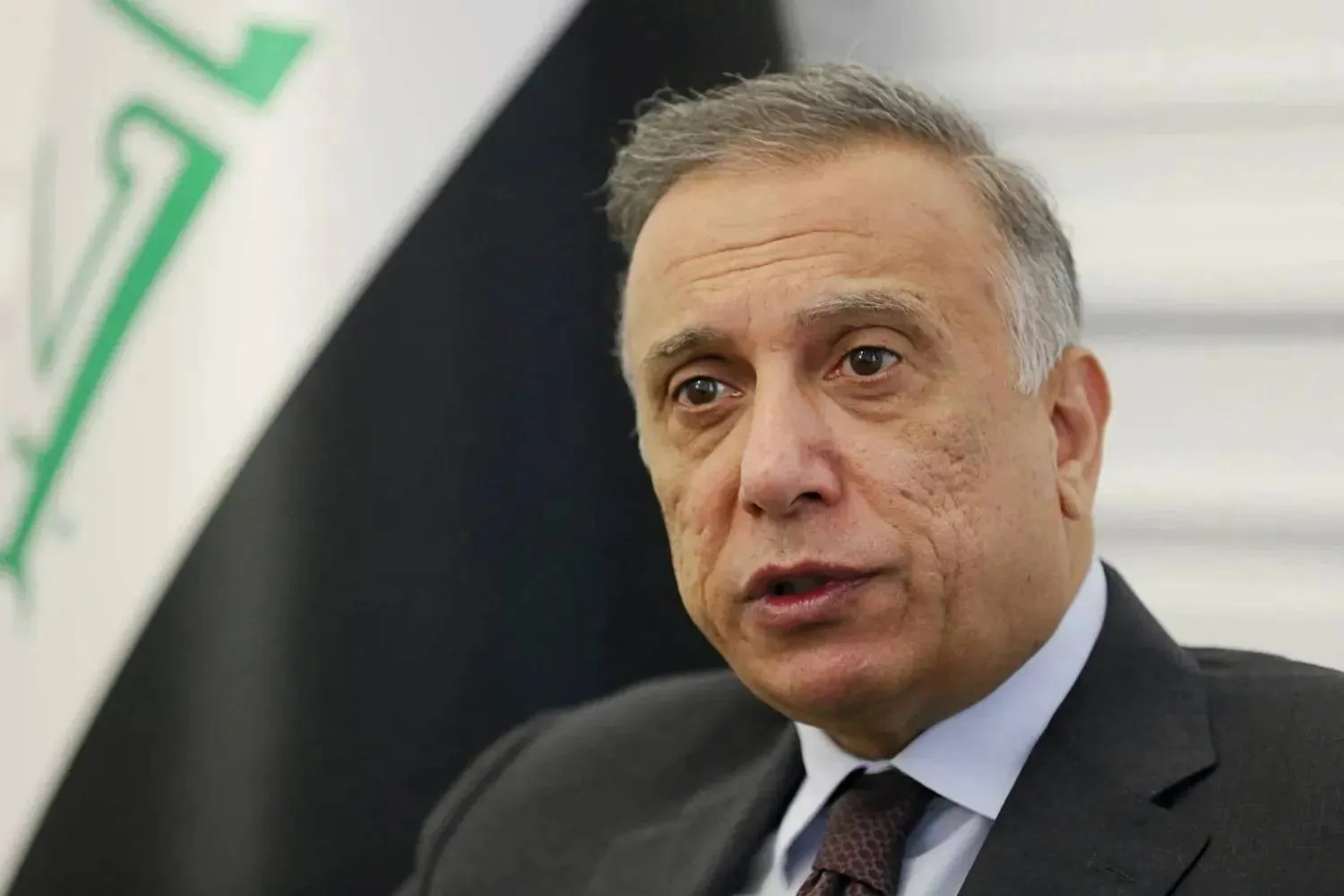

After years of facing political and media accusations of corruption, former Iraqi Prime Minister Mustafa al-Kadhimi is witnessing an unusual development in Iraq’s political scene: a wave of public apologies from media and political figures who had accused him and his government of corruption or helped promote those allegations.
The apologies came after a "legal battle" that ended with court rulings in Kadhimi’s favor in several lawsuits he filed against his accusers, after the judiciary concluded that no evidence had been presented to substantiate the allegations against him. The rulings have reopened debate over his government’s record, coinciding with a broad anti-corruption campaign led by Iraq’s current government.
In the years following his departure from office, Kadhimi faced a widespread campaign accusing his government of involvement in corruption and mismanagement. The campaign included political figures, media personalities and social media activists.
Those close to Kadhimi, however, argued that much of the campaign was an extension of the political struggle that accompanied the transfer of power rather than being based on fully substantiated judicial cases.
“Legal battle”
Kadhimi’s lawyer, Amir al-Daami, said the defense team turned to the courts after what he described as a surge in direct accusations linking Kadhimi and his government to corruption without evidence.
He said the “fair legal battle,” as he called it, “ended with justice for the former prime minister,” adding that “the judiciary treated those cases as direct criminal accusations, not merely political opinions or expressions of positions.”
“All those who were sued were unable to prove what they attributed to Kadhimi, leading to court rulings in his favor,” Daami told Asharq Al-Awsat. He said the judiciary “drew a line between the right to political criticism and making corruption accusations without legal basis.”
The issue did not stop at court rulings. It also led some of Kadhimi’s most prominent critics to publicly reassess their positions.
Journalists, politicians and former lawmakers have apologized to the former prime minister, saying they “were wrong to treat circulated accusations as facts without possessing conclusive evidence,” according to recent statements.
Journalist Iyad al-Samawi, once one of Kadhimi’s fiercest opponents, said: “The facts that emerged prompted him to review his position, and fairness requires admitting error when facts change.”
He said, “Political disagreement should not lead to adopting accusations without proof.”
Observers say the apologies, whether they grow or remain limited, point to a shift in how Kadhimi’s time in office is being judged, especially after a legal process ended without specific accusations being proven in court. Others described the apologies as “a wave of changes and a new political mood in the country.”
A source close to the former prime minister told Asharq Al-Awsat that “more than 14 Iraqi figures” have so far reviewed their positions on Kadhimi and apologized to him.
Kadhimi took office at one of the most difficult moments in Iraq’s modern history. He came to power amid mass protests, an economic crisis, the broad influence of armed factions and the pressure of the COVID-19 pandemic.
During his term, his home was targeted in a drone assassination attempt. The Green Zone also saw demonstrations by armed factions that reached the perimeter of the government palace, reflecting the intensity of political polarization in the country at the time.
Supporters of Kadhimi’s government say it managed a sensitive transitional phase. They also say the state benefited from the Emergency Support for Food Security and Development Law, which provided major financial resources to cover spending when passing the general budget was not possible.
Some observers say those resources gave the following government financial room to maneuver. Kadhimi’s critics, however, say any assessment of that period should remain tied to a broader review of the economic and administrative policies his government pursued at the time.
Al-Zaidi and the corruption campaign
The debate comes as Iraqi Prime Minister Ali al-Zaidi leads a broad anti-corruption campaign, during which he has repeatedly said he is prepared to pay with his life to continue on this path.
The campaign has reached senior officials and opened files described as among the most sensitive in years, amid public calls for investigations to continue without political or partisan considerations.
Al-Zaidi’s government is facing mounting political pressure as the investigations widen.
A drone spotted near the government palace in Baghdad has drawn wide attention. Security authorities said they handled the incident without incurring losses.
But an informed political source told Asharq Al-Awsat that some circles interpreted it as a warning from parties harmed by the anti-corruption campaign. There has been no official confirmation of that interpretation.
Sadrist movement leader Moqtada al-Sadr on Friday affirmed “the firmness of his position on reform and fighting corruption,” declaring full support for the government’s reform campaign while warning against targeting “reformers,” in a reference to al-Zaidi.
Al-Zaidi has appeared among citizens in a Baghdad shopping center in recent days, a move observers saw as an attempt to underscore his reliance on public support.
He has also repeatedly said he does not intend to establish a political party or run in the next elections, reinforcing the image of his campaign as a government project rather than an electoral one.
Ihsan al-Shammari, head of the Political Thinking Center, told Asharq Al-Awsat that any future settlements in corruption cases should remain within legal frameworks and differ from the political deals seen in previous stages.
He said recovering funds and holding those involved accountable should take place under the law and after all those responsible are exposed, not through political understandings.


