
Lebanon Enters Conflict Management Phase as End Remains Elusive

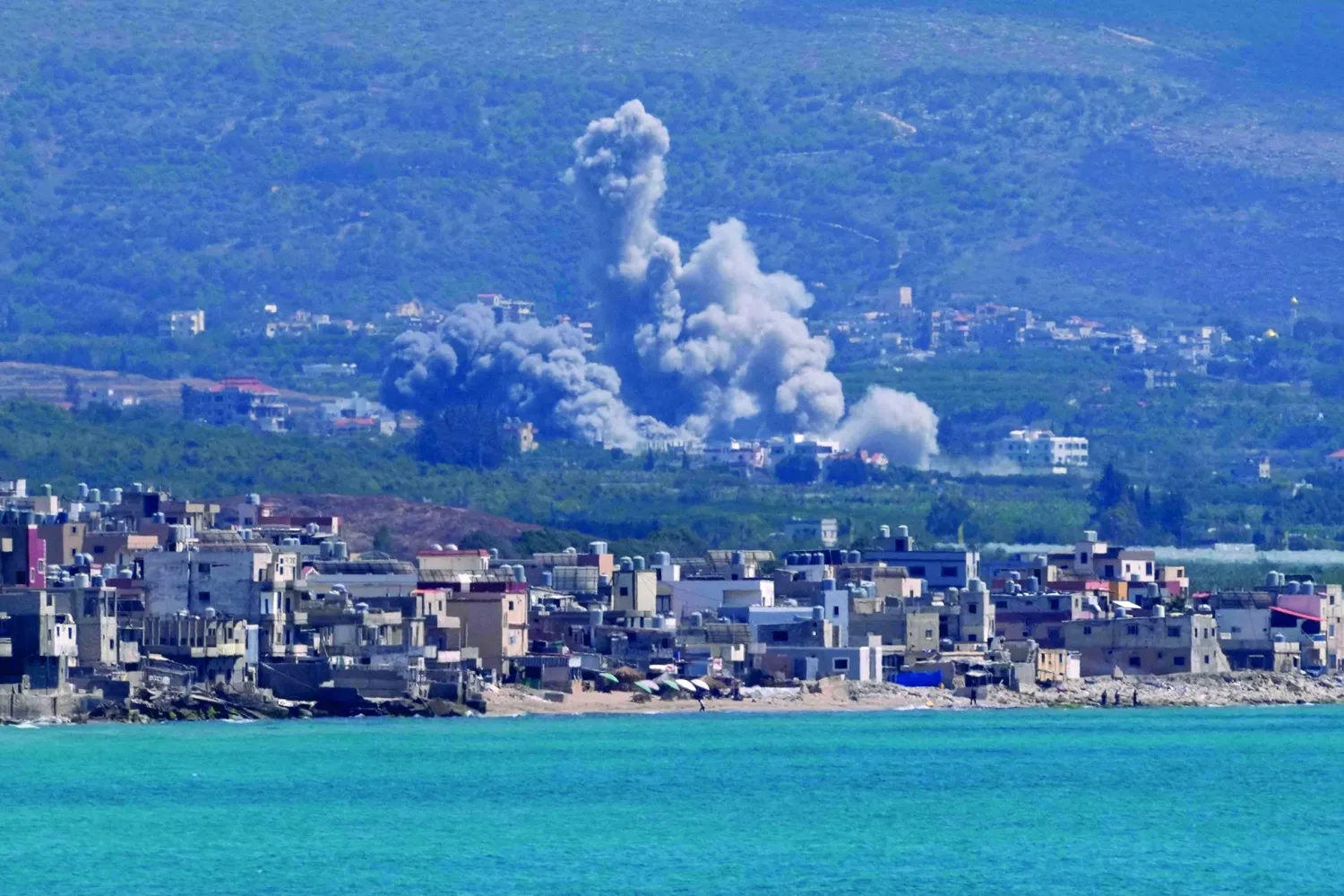
The aftermath of a bombing in the Eastern sector of south Lebanon Fronts (AP)
TT

Lebanon Enters Conflict Management Phase as End Remains Elusive

The aftermath of a bombing in the Eastern sector of south Lebanon Fronts (AP)

Negotiations to cement the ceasefire in southern Lebanon, alongside talks on the future of the south, the role of the Lebanese army and international guarantees, are raising a central question: Is Lebanon heading toward a repeat of the model that followed the July 2006 war, or has the latest conflict pushed it into a wholly different phase?

Nearly two decades after the 2006 war led to UN Resolution 1701, the deployment of the Lebanese army south of the Litani River and a long effort to regulate the confrontation between Israel and Hezbollah, today’s conditions look starkly different. The scale of destruction in the south is deeper, and the international approach to what comes next appears more forceful.

Speaking to Asharq Al-Awsat, university professor and lawyer Ali Mourad said the reality on the ground, away from “point-scoring speeches and declarations of victory,” demands a new reading of the war and the future of the south.

The south, he said, remains occupied, devastated on an unprecedented scale, and trapped in a displacement crisis likely to drag on.
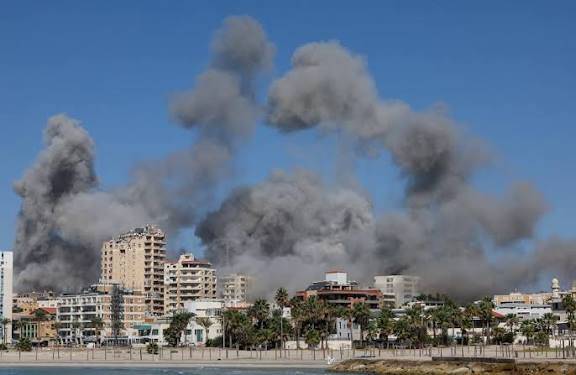
Israel targets Tyre (Reuters)


“Talk of ending the conflict in Lebanon can only be achieved through a set of basic goals: ending the war definitively, withdrawing Israeli forces from occupied Lebanese territory, returning prisoners, launching reconstruction and securing the safe and sustainable return of displaced people to their areas,” Mourad said.

Mourad, who comes from the southern border town of Aitaroun, said the main fear was “Iran’s attempt to take hold of the Lebanese file.” Such a move, he said, could prolong the management of the conflict rather than end it, keeping the roots of tension alive and blocking a final, stable settlement.

Hezbollah’s weapons at the heart of the deadlock

Mourad said there would be “no real end to this conflict without a clear and decisive handling of Hezbollah’s weapons.”

Leaving the issue unresolved, he said, would place Lebanon before a model entirely unlike the one that followed the 2006 war. Comparing the two phases is no longer realistic, he added, given the changes now in place.

“The south today is destroyed on an unprecedented scale, while the battlefield and military realities clearly show that the existing equations are difficult to overturn in the foreseeable future,” he said.

That reality, Mourad said, requires sustainable political solutions that address the roots of the crisis, rather than simply managing it. Ending the conflict, he added, depends on resolving the core unresolved issues, not merely halting military operations or containing current tensions.

“Any approach that does not address the causes of the crisis will lead to its reproduction in one form or another,” he said.
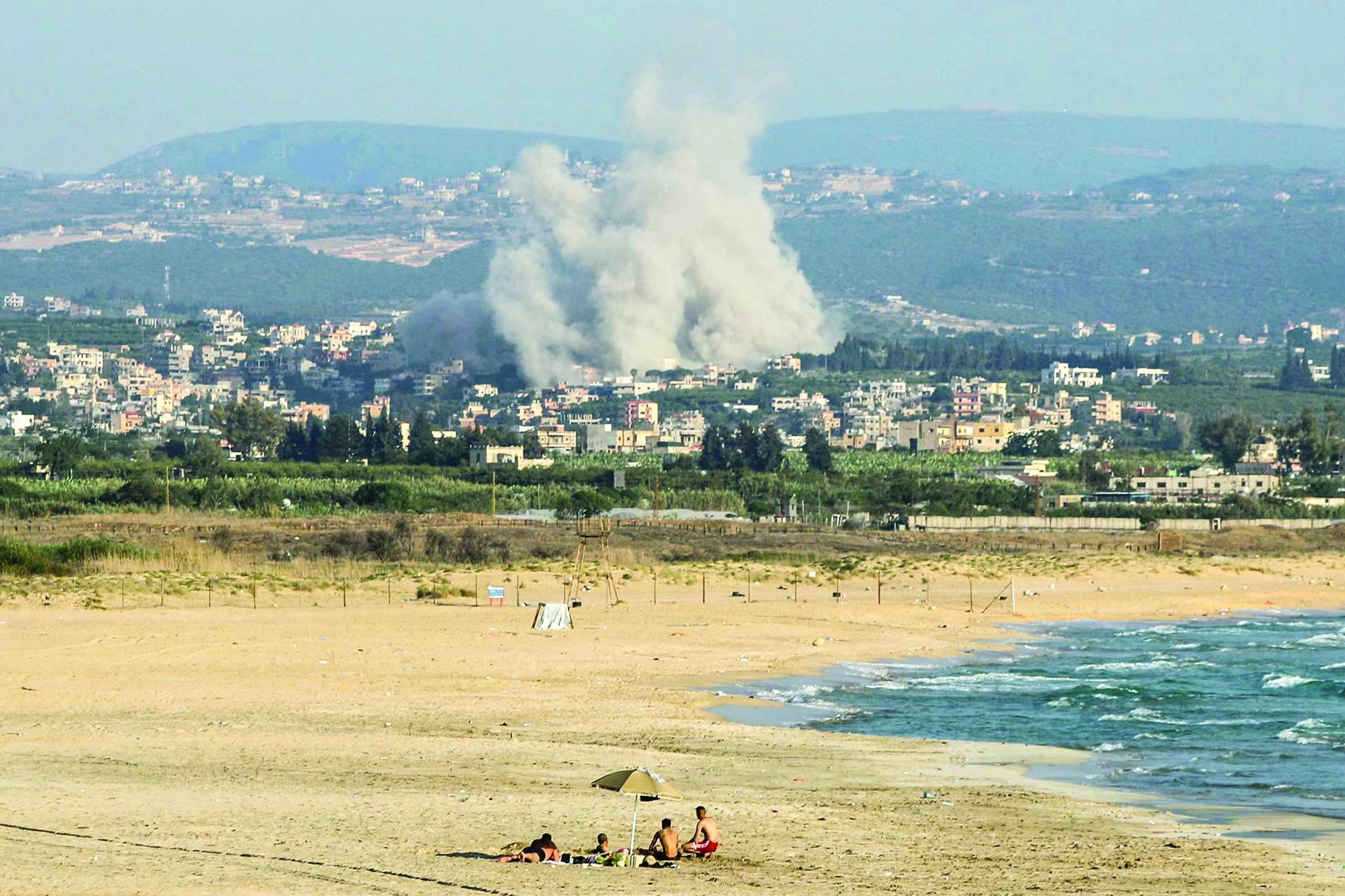
 

Israel targets Tyre (AFP)


The post-2006 phase is over

Retired Maj. Gen. Hisham Jaber, head of the Middle East Center for Studies, said the situation in southern Lebanon “differs radically from the phase that followed the July 2006 war.”

Talk of returning to the formulas of Resolution 1701 as applied then is no longer realistic, he said, given the military and political changes produced by the latest war.

“What happened after 2006 is completely different from what is happening today,” Jaber told Asharq Al-Awsat. “At that time, Israel quickly withdrew from the Lebanese territory it had occupied, and political and diplomatic tracks were launched with broad Arab and international support. Today, Israel is holding on to the areas it occupies and does not seem ready to give them up easily.”
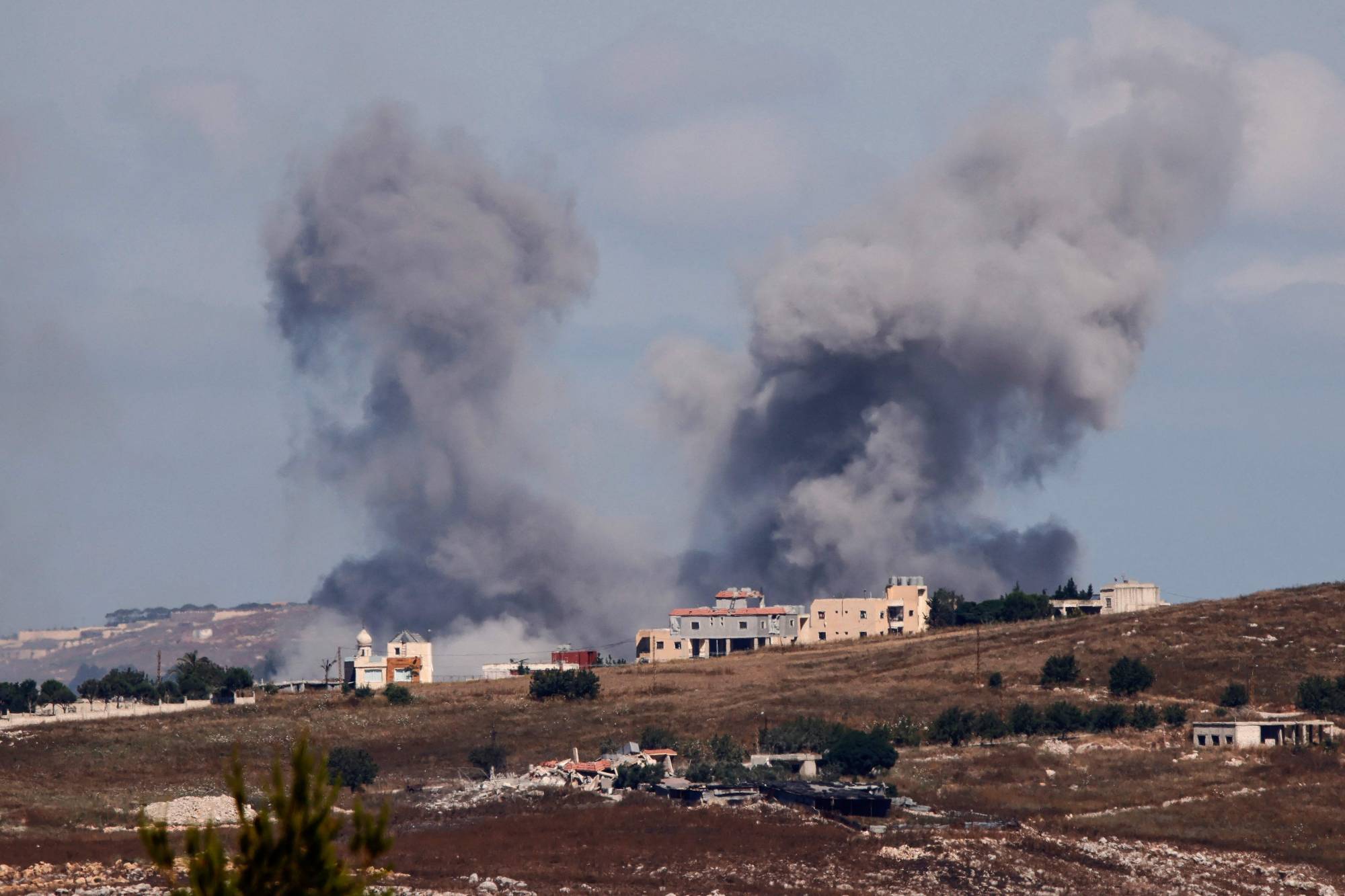
 

A photograph taken from the southern Lebanese region of Marjayoun shows smoke rising following an Israeli airstrike on the village of Choukine on June 19, 2026. (Photo by AFP)


Jaber said Israeli Prime Minister Benjamin Netanyahu faces domestic pressure that pushes him to keep the war going and avoid concessions.

“Netanyahu cannot appear as someone who fought a long war that ended without clear gains,” he said. “Continuing military pressure is therefore a way for him to improve negotiating terms and force the Lebanese position into submission.”

A pause, not an end to war

Jaber, who is from Nabatieh, said the current situation does not amount to a comprehensive end to the war. Rather, he called it “a temporary halt to some military operations.”

Israel, he said, still claims the right to strike whenever and wherever it chooses against targets it considers linked to Hezbollah.

“The Israelis say clearly that they retain freedom of military action in Lebanon,” he said. “So we cannot speak of an end to the war as much as we can speak of managing the conflict and controlling the level of confrontation.”

Jaber said the comparison with 2006 no longer stands.

“The post-2006 phase is over,” he said. “We are facing a completely different new reality, and Israel will not accept a return to the previous equations or to the situation that existed before the latest war.”

Washington manages the conflict

Jaber said the United States is managing the conflict more than trying to end it.

“If it wanted to end it completely, it would have applied sufficient pressure to stop the war definitively,” he said. “What we are seeing today is conflict management and an attempt to prevent it from exploding, nothing more.”

Israel, he said, is treating the border strip and destroyed villages as “a buffer security zone.”

“There are dozens of villages that are almost completely destroyed, and their residents cannot return because of the scale of destruction and the absence of reconstruction capacity, making the crisis likely to continue for a long time,” he said.
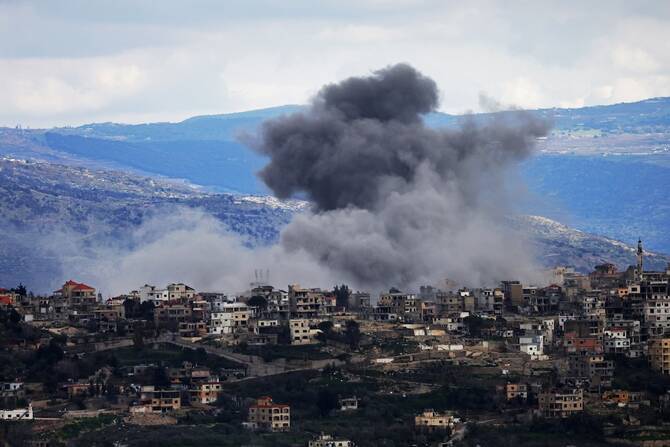
The aftermath of a bombing in the Eastern sector of South Lebanon Fronts (AFP)


A difficult test for Lebanon’s army

On the Lebanese army’s role, Jaber said the military faces challenges that exceed its current capabilities.

Some proposals under discussion, especially those related to moving Hezbollah fighters away from areas south of the Litani, cannot be carried out without a full Israeli withdrawal and clear security guarantees, he said.

“The army cannot be asked to carry out unilateral measures while Israeli occupation continues and attacks persist,” he said. “This is unrealistic, and the army cannot resolve the problem alone in this way.”

Jaber said the next phase would remain governed by mutual attrition.

“We are facing a phase of managing the conflict, not ending it,” he said. “I do not expect a major breakthrough in the foreseeable future. The war has effectively turned into a low-intensity war of attrition between Israel and Hezbollah, but the real price is being paid by the Lebanese people, especially the people of the south, who have been drained by war, displacement and destruction.”

Talks unlike any earlier phase

While Jaber’s view starts from the military and field realities created by the latest war, Brig. Gen. Khaled Hamadeh, a researcher in security and political affairs, links the future of this phase to the negotiations themselves.

He said the talks differ radically from all previous rounds, and that their success remains tied to US-Iranian understandings.

Hamadeh told Asharq Al-Awsat that the current negotiations between Lebanon and Israel are unlike the 2000, 2006 or 2024 arrangements linked to Resolution 1701.

“The military, political and regional circumstances have completely changed, while the outcome remains tied to the path of US-Iranian dialogue,” he said.

“In 2000, indirect negotiations took place between Hezbollah and Israel with German mediation to implement Resolution 425. Israel withdrew without conditions, and the border was demarcated. Today, the scene is completely different because the Lebanese state is conducting the negotiations, not the party.”

After the 2006 war, he said, Resolution 1701 called for UNIFIL to deploy alongside the Lebanese army south of the Litani, with a mechanism to monitor implementation and prevent any armed presence outside the state in that area.

“But this mechanism later proved ineffective, and war returned and fighting resumed,” he said.

Hamadeh said the current process is not a new international resolution, but understandings based on Resolution 1701. The difference, he said, is that they are being built through negotiations led by the Lebanese state, with security responsibility gradually shifting to the state after earlier monitoring mechanisms failed.

“The main difference today is that the negotiations are moving toward ending the conflict,” he said.

The latest US memorandum, he added, speaks for the first time of ending the state of war between Lebanon and Israel and addressing border issues between the two states — points not included in Resolution 1701.

From Resolution 1701 to the armistice agreement

“If we compare the current texts with the 1949 armistice agreement, we find a great similarity,” Hamadeh said.

The armistice agreement, he said, was based on a commitment by Lebanon and Israel not to use regular or irregular forces in military action against the other side. Today, he added, the principle being established is that the Lebanese state alone should assume responsibility for security, and that no weapons should remain outside its framework.

Hamadeh also pointed to a major difference on the ground.

“In the 2006 war, Israeli military achievements were limited, and Israeli forces did not penetrate deep into Lebanese territory in the way that has happened today,” he said. “In the latest confrontation, Israeli forces went beyond southern Litani and reached deeper areas, while Hezbollah suffered major field losses, making the balance of power completely different from what it was in 2006.”

US-Iranian understanding remains decisive

Hamadeh said the current agreement is also unfolding “under a US-Iranian understanding,” a factor that was absent in earlier phases. Iran’s role in the Lebanese file, he said, has become deeper and more influential than before.

On the chances of success, Hamadeh said it was “far too early” to speak of definitively ending the conflict, because the Lebanese negotiations cannot be separated from the US-Iranian track.

“We must wait to see where those talks lead, and only then can we judge their repercussions for Lebanon,” he said. “If the US-Iranian negotiations fail, Iran may return to using the Lebanese arena again. Therefore, the most influential element in the scene has not yet stabilized, and no final results can be built before the picture becomes clear.”

Hamadeh said any disruption in implementing the proposed understandings — whether on cementing the ceasefire, full withdrawal, or Hezbollah’s weapons — would lead to another round of fighting.

“Any agreement that is not completed through the implementation of all its stages will not be viable,” he said.


Death of Al-Amin Khalifa Fhimah: The Libyan Who Escaped the Noose of the Lockerbie Case

A photo shows late Libyan President Muammar Gaddafi with Al-Amin Khalifa Fhimah (second from left) upon the latter's arrival in the capital Tripoli, a day after his definitive acquittal in the plane bombing case (Tripoli, February 1, 2001) (Getty Images)
TT

Death of Al-Amin Khalifa Fhimah: The Libyan Who Escaped the Noose of the Lockerbie Case

A photo shows late Libyan President Muammar Gaddafi with Al-Amin Khalifa Fhimah (second from left) upon the latter's arrival in the capital Tripoli, a day after his definitive acquittal in the plane bombing case (Tripoli, February 1, 2001) (Getty Images)

On August 25, 2026, in a quiet corner of the Libyan capital Tripoli, the life of Libyan citizen Al-Amin Khalifa Fhimah came quietly to an end at the age of nearly 70.

His death officially closes one of the most mysterious and compelling chapters in the history of the diplomatic and intelligence conflict between East and West. It also closes a living chapter in the case of the bombing of Pan Am Flight 103, which was traveling from Frankfurt to New York via London when it exploded over the Scottish town of Lockerbie in 1988, an incident that reshaped international politics for decades.

For an entire decade, the name of this man, who began his career as a low-ranking airline employee, echoed through the corridors of the United Nations Security Council. His photograph appeared on television screens around the world and in newspapers for years as the "second suspect" in the most horrific act of aerial terrorism of the 20th century.

Fhimah was an unwilling participant in a unique legal and political saga in which the details of his everyday life on the island of Malta became the basis of an international case that nearly brought an entire country to the brink. He later stood behind the glass of the historic Camp Zeist courtroom in the Netherlands and heard the word "acquitted" pronounced by Scottish justice at the dawn of the new millennium. He returned home carrying an acquittal that politics had been unable to grant him for years.

His death has reopened the memories of the era of crippling sanctions and international isolation, reminding the world of the story of a man who lived at the heart of the storm and died in complete seclusion, far from the political turmoil that had nearly consumed him.

Forgotten Beginnings: From Tripoli to Luqa Airport

Al-Amin Khalifa Fhimah was born in 1956 in the Souq al-Jumaa area on the outskirts of the Libyan capital, Tripoli. He progressed through his career until he joined Libyan Arab Airlines. In the mid-1980s, he was sent to work as an airline official, dispatcher, and station manager for the company at Luqa Airport in Malta.

The position appeared routine for the young employee, had it not intersected with the intense intelligence conflict unfolding across the Mediterranean between the former Libyan regime and the United States and its Western allies.

At the time, Fhimah did not know that his signature on cargo documents and the timing of his shifts at the Mediterranean airport would later become key evidence cited in the international indictment prepared by senior investigators in Washington and London.

The Night the Plane Fell and the International Storm Began

On December 21, 1988, the sky over the Scottish town of Lockerbie was torn apart when a Boeing 747 operated by Pan Am, Flight 103, exploded while traveling from Frankfurt to New York, killing 270 people.

After three years of complex joint investigations by the US Federal Bureau of Investigation (FBI) and Scottish police, two Libyan nationals were formally accused in November 1991: Abdelbaset al-Megrahi and Al-Amin Khalifa Fhimah.

At the time, Western investigators alleged that Fhimah had used his position and contacts at Malta's airport to facilitate the passage of a bomb-laden brown Samsonite suitcase. The suitcase contained a timed bomb concealed inside a cassette recorder and was allegedly placed aboard a Libyan Airlines flight bound for Frankfurt, from where it was transferred to the doomed Pan Am flight.

Historic Handover and Trial on Neutral Ground

Tripoli initially refused to hand over its citizens, placing Libya under severe international sanctions and an air and economic blockade imposed by the UN Security Council in 1992.

Libya endured a decade of deep isolation and economic paralysis until difficult diplomatic efforts led by Arab and African parties produced a unique legal and historic settlement.

Under the settlement, Libya agreed in 1999 to hand over the two suspects for trial before a special Scottish court, but on neutral ground at Camp Zeist, a former US military base near Utrecht in the Netherlands, under Scottish criminal law.

Camp Zeist Shock: Historic Acquittal and Return

On January 31, 2001, the world held its breath as Scottish judges delivered the verdict millions had been awaiting. While his associate Abdelbaset al-Megrahi was convicted and sentenced to life imprisonment, the court definitively acquitted Al-Amin Khalifa Fhimah of all charges and ordered his immediate release from behind the bulletproof glass enclosure.

The judges based his acquittal on insufficient evidence and major gaps in the witnesses' account, particularly that of Maltese clothing merchant Tony Gauci. The defense also conclusively established that Fhimah was not in Malta but was in Sweden on a business trip when the bomb-laden suitcase was checked in.

Voluntary Seclusion Until His Final Days

Following his acquittal, Fhimah returned immediately to Libya, where he received a hero's welcome in Tripoli from both officials and the public. He was portrayed as living proof that Western justice itself had established the innocence of the Libyan state from the full American account of events.

Yet the man, exhausted by years of fear, uncertainty, and detention, made a firm decision to stay completely out of the spotlight and politics. He lived the rest of his life as an ordinary citizen among his family in Tripoli, refusing to give press interviews that might reveal the secrets of that era.

The announcement of his death and the official mourning that followed brought a complete chapter of the bitter Libyan-Western conflict to a close.


Gaza’s Children Lose Simple Joy as Israel Warns Against Kite-Flying

Boys fly a kite against the backdrop of smoke rising from the Gath shelter, that houses displaced Palestinians, after an Israeli air strike in the west of Khan Younis, southern Gaza Strip on January 31, 2026. (AFP)
TT

Gaza’s Children Lose Simple Joy as Israel Warns Against Kite-Flying

Boys fly a kite against the backdrop of smoke rising from the Gath shelter, that houses displaced Palestinians, after an Israeli air strike in the west of Khan Younis, southern Gaza Strip on January 31, 2026. (AFP)

There are few joys left for 10-year-old Ahmed Hamdouna, whose childhood has already been scarred by years of war and displacement in Gaza.

Now, what little reprieve he found playing with scraps of plastic and sticks has also been torn away, as Israel warns it will step up military operations in the territory if kites continue to land on the Israeli side of the border.

"My father stopped me from flying my kites because of the occupation's threats," said Ahmed, who has been displaced to Deir el-Balah in the central Gaza Strip.

"I felt heartbroken after spending so much time collecting sticks and nylon, only for the occupation to prevent us from playing with them," he told AFP.

"We are just young children. They destroyed our home and our whole neighborhood -- what more do they want?"

Israel accuses Hamas of cynically using children and says the kites could pose a threat, years after a wave of incendiary kites and balloons sparked fires in Israeli farmland.

A series of kites have flown in recent days across the border into southern Israel, communities shaken by the Hamas-led attacks of October 7, 2023.

Hamas has denied responsibility. No explosives were detected, but at least one kite had a political message on it.

On Wednesday, an official of the US-led Board of Peace supervising the ceasefire plan in the territory said: "All militant activity in Gaza must stop, including the flying of kites."

"Israel, too, must comply with the ceasefire," a board official said.

Hamas spokesman Hazem Qassem said the popular committees in Gaza's displacement camps were trying to prevent children from flying kites, over fears they could be targeted by the Israeli military.

Ahmed said he was now scared of playing, but couldn't understand why the Israeli military was "afraid of kites when they are just paper and string".

"I don't want to hurt anyone. I just want to play like children everywhere else," he said.

- 'Sense of freedom' -

For Gaza's children, building kites was a simple way to find joy among the ruins of war.

"There are no toys here, no amusement parks, not even a football to play with. The kite is the only thing we can make with our own hands that makes us happy when we fly it in the sky," said 11-year-old Yamen al-Mubayyed, who has also been displaced to Deir el-Balah.

"My friends and I get together and make them using pieces of wood we collect from destroyed houses, along with paper and string. We glue them together using flour and water, then go to the sea to fly them," he told AFP.

Yamen said even the buzz of Israeli surveillance drones didn't put him off flying his kites.

"It is the only thing that makes us feel that we children are alive and gives us a sense of freedom," he said.

Israel has kept up attacks in Gaza, saying it is targeting gunmen, despite a US-backed ceasefire which came into effect in October.

Israeli army chief Lieutenant General Eyal Zamir on Tuesday vowed to push on with demilitarizing Gaza "using all necessary means".

- 'Kill the joy in their hearts' -

For parents in Gaza, the once-harmless activity now carries immense worries.

Akram Abu Shurkh, 30, said he had forbidden his children from making kites but felt he had "killed the joy in their eyes" in doing so.

"These are children who do not understand military calculations. They only see it as a game and a way to release their energy," he told AFP.

"But I see death in the touch of the string and the flying of the kite."

In southern Gaza, 34-year-old Umm Moaz Huwayla said her heart raced from worry every time her children went outside with their kites, but felt she couldn't stop them from playing.

"The occupation wants to kill the joy in their hearts," she told AFP.

"They are not asking for much, only to live their childhood, even with a piece of string and a sheet of paper."


From UNIFIL to Verification Committees... Will Int’l Force in Lebanon Have Expanded Powers?

UN peacekeepers (UNIFIL) vehicles drive in the Lebanese village of Wazzani near the border with Israel, southern Lebanon, July 6, 2023. (Reuters)
TT

From UNIFIL to Verification Committees... Will Int’l Force in Lebanon Have Expanded Powers?

UN peacekeepers (UNIFIL) vehicles drive in the Lebanese village of Wazzani near the border with Israel, southern Lebanon, July 6, 2023. (Reuters)

With UNIFIL’s departure now all but certain, the question is no longer whether the UN force will remain in southern Lebanon, but who will replace it, and with what powers.

A European-led force and verification committees are under discussion, potentially expanding the international role from monitoring UN Security Council resolution 1701 to verifying exclusive state control over weapons south of the Litani River.

European-led force

Abbas Daher, director of the Center for Media Foresight, told Asharq Al-Awsat that a decision not to renew the UN Interim Force in Lebanon’s (UNIFIL) mandate was now “virtually certain,” despite recent attempts involving Italy to revive efforts for an extension.

“However, President Joseph Aoun’s visit to Italy and the current visit by Lebanese army Commander Gen. Rodolphe Haykal to continue discussions on implementation have effectively opened debate over the force that could succeed UNIFIL, whether in the form of verification committees or a force with a predominantly European composition,” Daher said.

“Discussions are now underway, and European countries, led by Italy, France and Spain, and perhaps Germany, are considering establishing a primarily European force to continue the mission,” he added.

“Efforts are also being made to gain international support for this arrangement.”

As for the verification committees, Daher said there was a proposal for the United States to play a role, particularly in verifying that weapons were under the state’s exclusive control and monitoring implementation. Discussions with Washington remain open, he added.

Italian proposal

Separately, local media reported having reviewed a four-page Italian proposal for the post-UNIFIL phase. The plan calls for a smaller, but more effective international presence focused on supporting the Lebanese army, protecting civilians and backing the mechanism monitoring the ceasefire.

The force could play a role in the disarmament measures, conditional on political approval.

Force’s mission

The debate over the force’s composition is closely tied to questions about its jurisdiction, mission and powers.

Asked how the new force would differ from UNIFIL, Daher said: “UNIFIL’s duties were defined by an international mandate and resolution 1701.”

“Lebanon will insist on replicating the experience or substance of the resolution in defining the nature of its work. The question, however, is whether that will succeed or whether amendments will be imposed, because Washington, under Israeli pressure, wants any committee to have greater executive powers.”

Retired Brig. Gen. Fadi Daoud agreed that the most important issue in the next phase was not limited to which party would replace UNIFIL. Rather, he said, it concerned a change in the nature of the international mission itself and the potential redefinition of the relationship between the new force and the Lebanese army.

“The process of ending UNIFIL’s mission has effectively become a reality, despite Lebanese efforts to secure an extension,” Daoud told Asharq Al-Awsat.

“The central question has therefore become: Who will replace it? The alternative arrangement will be the one that receives US approval,” he added.

“We are moving from peacekeeping forces to verification committees — from a mission linked to resolution 1701 to a different mechanism suited to a post-1701 phase, at least in the form in which we have known it over the past years.”

“Lebanon has no problem with any mechanism for verifying exclusive state control over weapons south of the Litani because it is committed to this issue,” Daher said.

“But the fundamental question is whether Israel will withdraw or remain an occupying force. If verification committees carry out their work, the army reaches certain areas and confirms that they are free of weapons, will Israel uphold its end of the arrangement and withdraw?”

“There must be a clear framework for an Israeli withdrawal, just as there is a clear framework for ensuring exclusive state control over weapons in the south.”

Powers of the verification committees

From a military perspective, Daoud said the scope of the committees’ powers lay at the heart of the debate. The distinction between verifying that the army had completed its mission and helping oversee its implementation could determine whether any new arrangement was viable.

“Will the verification committees’ role be limited to confirming that the Lebanese army has completed the task required of it, or will they take part in overseeing how it is carried out? There is a very significant difference between the two,” he stressed.

“For example, if information is received about a weapons depot at a particular location and the Lebanese army raids the site, will the committee merely receive a report confirming that the mission was completed and verify its outcome? Or will it accompany the military force and monitor the search on the ground using personnel, cameras and communications equipment?” he added.

“This is not a technical detail. It could be the most dangerous issue in any new arrangement because the Lebanese army cannot easily accept a foreign party or an entity outside its military chain of command exercising such close oversight over how it performs its duties or directing it during search operations,” he continued.

“An international body can verify that a mission has been carried out and confirm its results. But moving toward direct supervision of its implementation could create serious and sensitive problems,” Daoud said.