


India Says Will Keep Expanding Oil Refining Capacity

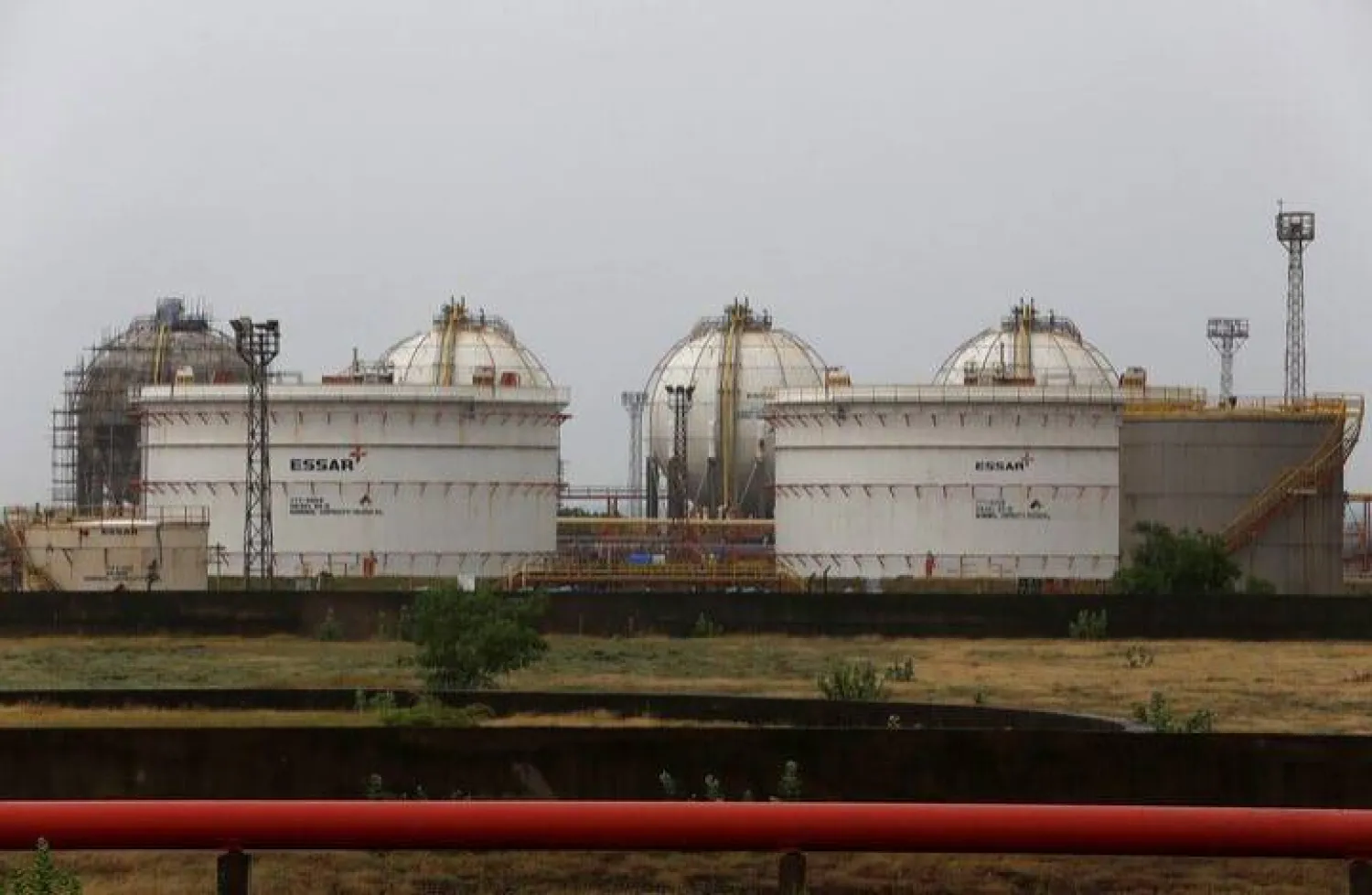
File photo: Storage tanks of an oil refinery of Essar Oil, which runs India's second biggest private sector refinery, are pictured in Vadinar in the western state of Gujarat, India, October 4, 2016. REUTERS/Amit Dave/File photo
TT

India Says Will Keep Expanding Oil Refining Capacity

File photo: Storage tanks of an oil refinery of Essar Oil, which runs India's second biggest private sector refinery, are pictured in Vadinar in the western state of Gujarat, India, October 4, 2016. REUTERS/Amit Dave/File photo

India will continue to build new crude oil refineries in order to ensure supply chain security even as Western nations shut processing units, Prime Minister Narendra Modi said.

“No new refinery has come up in the US in the last five decades and capacity in Europe has also been constantly declining,” Bloomberg quoted Modi as saying on Saturday, as he inaugurated the country’s first new refinery in a decade. He said India will continue to expand capacity.

The 180,000-barrels-a-day greenfield refinery in the heart of Rajasthan’s Thar desert, which has 2.4 million tons a year of petrochemical capacity and was built at a cost of $8.3 billion, is likely to be the only new refinery commissioned globally this year, according to BloombergNEF analysts.

The facility expands India’s refining capacity at a time when much of the West is shutting plants and investment elsewhere has slowed, highlighting New Delhi’s strategy of betting that robust domestic fuel demand, slower-than-expected electric-vehicle adoption and exports of refined products will continue to justify billions of dollars in new oil-processing infrastructure.

Meanwhile, traders have sold gasoline produced by Indian refiner Nayara Energy to Russia, which is grappling with fuel shortages triggered by Ukrainian attacks on its energy infrastructure, two sources with direct knowledge of the matter said on Thursday.

Reuters reported on Wednesday that Russia had begun seaborne imports of gasoline from India, without naming the supplier.

Reuters said that at least ⁠60,000 ⁠metric tons of gasoline had been dispatched from India to Russia, citing an industry source, with another source saying that two tankers, carrying 30,000 to 40,000 tons each, had been sent.



White House Releases List of Products US, China Could Tax Less

The White House is photographed, Sunday, Sept. 27, 2026, in Washington. (AP Photo/Allison Robbert)
TT

White House Releases List of Products US, China Could Tax Less

The White House is photographed, Sunday, Sept. 27, 2026, in Washington. (AP Photo/Allison Robbert)

The White House released Sunday lists of products that could benefit from lower tariffs under an arrangement with China affecting $30 billion in goods in each direction, without specifying the rates or timetable.

US President Donald Trump and his Chinese counterpart Xi Jinping concluded a summit on Friday, with their talks covering matters including trade.

The United States and China will review the lists "with a view toward providing reduced tariff treatment to those goods in a reciprocal manner," according to the terms released by the White House.

The US could reduce tariffs on 77 categories of Chinese goods including fireworks, Christmas ornaments, household goods and sports equipment, AFP reported.

China's import list includes more than 1,600 categories of American goods, including meats, grains, dairy, coal and timber.

The White House announced on Friday an agreement on "recommendations" for more favorable tariff treatment for these "non-sensitive goods," following Xi's visit to Washington.

Beijing confirmed the agreement on Saturday.

China also agreed to import at least 10 million metric tons of coal from the US in 2027 and 2028, the White House said.

Xi and Trump agreed to a trade truce last year during a meeting in South Korea, after a tit-for-tat fight that saw tariffs soar over 100 percent at one point.

The pact was originally due to expire in November but both sides have agreed to extend it until January 10, according to US Treasury Secretary Scott Bessent.


Oil Prices Spike after Trump Rejects Iran Truce Offer

Oil rigs operate in a field on the shores of the Caspian Sea in Azerbaijan's capital, Baku (Reuters)
TT

Oil Prices Spike after Trump Rejects Iran Truce Offer

Oil rigs operate in a field on the shores of the Caspian Sea in Azerbaijan's capital, Baku (Reuters)

Oil prices spiked with bond yields Monday as Donald Trump's rejection of an Iranian offer of a seven-day truce stoked inflation concerns, while stocks were mixed as traders look ahead to the release of key US data.

Tehran last week set out a plan at the UN General Assembly for a halt in hostilities that would see the Strait of Hormuz reopened, which would ease a crippling supply crisis that has jacked up costs around the world, said AFP.

The waterway is key to the world's energy supply and is now central to the conflict between the US and Iran, particularly with Houthis seizing Yemen's entire Red Sea coast, including the Bab al-Mandab Strait, a vital shipping lane.

However, the US president told reporters outside the White House "I reject their proposal".

Still, he told Axios that he expects negotiations to resume.

"They want to make a deal, but it is not the deal that I want to make," he told the news platform. "It is what we would have maybe agreed to a year ago."

"They overplayed their hand," Trump added, in the interview published Sunday.

Citing sources familiar with the matter, Axios reported that indirect talks between Washington and Tehran could take place as early as Monday.

Iran was still standing by its conditions for reopening the Strait, including the release of frozen assets, the lifting of sanctions on its oil and an end to the US naval blockade.

Oil prices, which fell more than two percent Friday on news of the offer, bounced back at the start of the new week, with Brent back above $106 a barrel.

That stoked inflation concerns again, and weighed on stock markets.

Seoul shed more than two percent as it reopened after a long break, while Tokyo, Shanghai, Manila, Bangkok and Jakarta also dropped.

There were gains in Hong Kong, Sydney, Singapore and Wellington.

Bond yields climbed, with the average on a gauge of world bonds topping four percent last week for the first time since 2007, according to Bloomberg.

The rise in prices puts the focus back on the Federal Reserve ahead of its next policy meeting at the end of October, with CME's FedWatch tool putting the chances of a second successive interest rate hike at more than 65 percent.

Before that decision is made, investors will see the release of the bank's preferred gauge of inflation this week as well as a key jobs report that could play a vital role in policymakers' thinking.

"Middle East tensions have flared again after President Donald Trump rejected Iran's latest proposal to reopen the Strait of Hormuz," wrote Stephen Innes at Quintex Intel.

"Oil has pushed higher, Asian equities are softer, and suddenly the brief Friday reprieve in global fixed income looks more like an intermission than the end of the show."

Still, he added: "The market is still pricing some probability that everyone eventually finds their way back to the table, even if they continue to spend the next few weeks shouting across it first."


Qualcomm, Tarjama Team Up to Expand Arabic AI Applications

A smartphone with a displayed Qualcomm logo is placed on a computer motherboard in this illustration taken March 6, 2023. REUTERS/Dado Ruvic/Illustration 
TT

Qualcomm, Tarjama Team Up to Expand Arabic AI Applications

A smartphone with a displayed Qualcomm logo is placed on a computer motherboard in this illustration taken March 6, 2023. REUTERS/Dado Ruvic/Illustration 

Qualcomm Technologies and Tarjama, an Arabic language and AI solutions provider, signed a memorandum of understanding (MoU) at LEAP 2026 in Riyadh to explore the deployment of enterprise-ready Arabic artificial intelligence (AI) solutions across the region.

The collaboration will focus on combining Tarjama’s Arabic AI expertise with Qualcomm Technologies’ AI optimization and deployment capabilities to help organizations move AI applications from experimentation into production environments.

AI Challenges in Arabic

As organizations move beyond AI pilots and experimentation, demand is growing for localized and sovereign AI solutions capable of operating effectively across government and enterprise environments.

Arabic requires models and applications that can navigate linguistic nuance, dialectal variation, cultural context and industry-specific terminology, all while meeting enterprise-grade requirements for performance, reliability and scale.

The MoU came amid growing investment and momentum around Arabic AI development across the region. Tarjama’s Arabic.AI platform has recently attracted a strategic investment and collaboration from HUMAIN.

Optimizing Arabic AI Models

Under the MoU, the two companies plan to explore onboarding and optimizing selected Arabic AI models on Qualcomm Dragonfly AI infrastructure technologies, evaluate their performance and deployment readiness, and advance applications spanning generative AI, conversational AI, reasoning, and agentic AI.

Tarjama’s Experience and Qualcomm’s Expertise

Tarjama will contribute its Arabic.AI platform, Arabic-native models, and enterprise AI applications developed for Arabic-speaking markets, while Qualcomm Technologies will provide expertise in AI acceleration, inferencing performance, scalability, and deployment optimization.

The companies also plan to explore technical collaboration, benchmarking, and model optimization across sectors including government, telecom, financial services, healthcare, and education.

Charles Chebli, Managing Director of UAE and Head of AI Cloud Middle East Africa at Qualcomm Technologies, said the collaboration aims to support the deployment of high-performance, efficient, and scalable Arabic AI solutions for enterprise and government applications.

For her part, Nour Al Hassan, Founder and CEO of Tarjama, said the partnership aims to help organizations move from Arabic AI experimentation to production by combining linguistic expertise with AI optimization and deployment capabilities.

Government and Finance Sectors

The companies also intend to evaluate opportunities for technical collaboration, benchmarking, and model optimization across enterprise, government, telecom, financial services, healthcare and education sectors, supporting the development of culturally relevant, Arabic-first AI experiences for organizations and end users across the region.

As demand for localized and sovereign AI continues to grow, Qualcomm Technologies and Tarjama share an ambition to help organizations move beyond AI experimentation, offering a practical pathway for Arabic-first AI to operate reliably, efficiently and at scale in production environments.