


Saudi Arabia’s Non-oil Private Sector Grows in June, New Orders at Four-month High

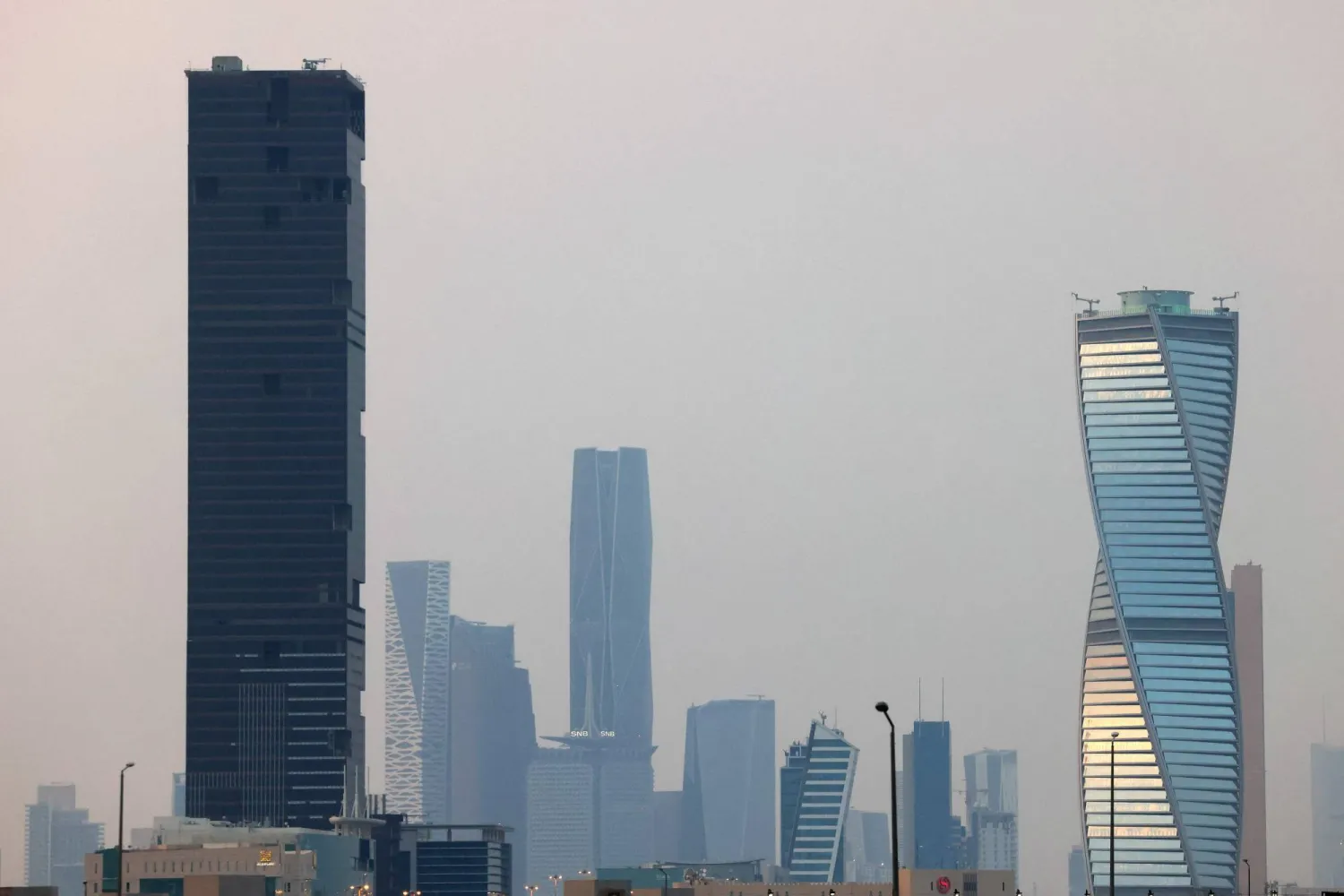
General view of the Saudi capital Riyadh (AFP)
TT

Saudi Arabia’s Non-oil Private Sector Grows in June, New Orders at Four-month High

General view of the Saudi capital Riyadh (AFP)

The latest Riyad Bank Purchasing Managers' Index (PMI), released on Sunday, showed that growth in Saudi Arabia's non-oil private sector accelerated markedly at the end of the second quarter.

The improvement was driven by the strongest increase in new orders and new business in four months, helping business activity regain strong momentum despite continued challenges from weak export demand and mounting inflationary pressures.

The seasonally adjusted headline index rose to 53.3 in June from 52.8 in May, remaining above the 50.0 threshold that separates growth from contraction and signaling a solid improvement in overall operating conditions and the domestic business environment.

Domestic demand rebounds

The report attributed the latest upturn to stronger inflows of new business and higher domestic spending, supported by companies securing approvals for new projects and the resumption of previously delayed sales activity as concerns over regional tensions eased. This helped bolster confidence among both investors and consumers across the kingdom.

The data showed sustained growth in output, with around 18% of surveyed firms reporting higher activity levels, while only 2% recorded a decline in output during June.

Commenting on the survey, Riyad Bank Chief Economist Naif Alghaith said: "Strong output growth, alongside the fastest increase in new orders in four months, indicates that business activity regained positive momentum at the end of the second quarter. These results once again demonstrate the resilience of the domestic economy and the non-oil sector's ability to provide a solid foundation for the kingdom's broader economic growth."

Alghaith added, highlighting companies' operating strategies: "Operationally, firms maintained strict discipline, with employment levels broadly unchanged, while backlogs of work declined for the first time in a year. This suggests companies were able to absorb rising workloads without creating capacity constraints, while prioritizing operational efficiency and measured expansion."

Exports weaken

On the other hand, the report said the rebound in the domestic market contrasted with export performance, as new orders from overseas clients declined for a fourth consecutive month, weighed down by regional logistical disruptions and intensifying competition in external markets.

Price pressures also remained the biggest challenge facing businesses. Input costs recorded their strongest quarterly increase in 15 years, driven by higher fuel, freight and wage costs. The sustained cost pressures prompted around 22% of surveyed firms to raise prices for their goods and services, resulting in the second-fastest increase in output charges in nearly six years.

Alghaith commented on how firms are managing these challenges, saying: "Despite continued cost pressures, companies appear able to manage them prudently without materially affecting overall optimism or the level of activity. This in turn reflects the underlying resilience of businesses and their strong ability to strike a careful balance between maintaining profitability and pursuing sustainable expansion in the market."



Kuwait’s Non-Oil Business Activity Contracts amid Regional Tensions

The "Al-Riqqa" oil tanker sails in the Arabian Gulf waters, off the coast of  Kuwait City on June 27, 2026. (AFP)
The "Al-Riqqa" oil tanker sails in the Arabian Gulf waters, off the coast of Kuwait City on June 27, 2026. (AFP)
TT

Kuwait’s Non-Oil Business Activity Contracts amid Regional Tensions

The "Al-Riqqa" oil tanker sails in the Arabian Gulf waters, off the coast of  Kuwait City on June 27, 2026. (AFP)
The "Al-Riqqa" oil tanker sails in the Arabian Gulf waters, off the coast of Kuwait City on June 27, 2026. (AFP)

Kuwait’s non-oil private sector came under renewed pressure in June, as regional tensions and rising prices weighed on demand. The result was a sharper contraction in both business activity and new orders.

The latest Purchasing Managers' Index (PMI) reading, released Sunday by S&P Global, showed a clear decline in operational and employment levels as the first half of the current year concluded.

Kuwait’s headline PMI declined to 46.4 in June, down from 47.2 in May. The index remained below the neutral 50-point threshold for the fourth consecutive month, signaling a continued and marked deterioration in business conditions across the non-oil private sector.

Participating companies attributed the decline in new orders mainly to a smaller customer base and greater caution among buyers in response to rising prices.

The weakness was not confined to the domestic market. External demand also came under significant pressure, with regional conflict and border-related issues with Iraq contributing to a sharp fall in new export orders.

Excluding the complete lockdown period during the COVID-19 pandemic in April 2020, new business from abroad registered its sharpest decline in June since the study began in September 2018.

Analyzing Kuwait's economic landscape, Andrew Harker, Economics Director at S&P Global Market Intelligence, said that companies in Kuwait continued to feel the impact of regional tensions throughout June, despite some recent positive signs that the conflict could move toward resolution.

Higher prices and intense competition for scarce new orders, especially from abroad, are currently curbing growth opportunities and leaving businesses in a position of retrenchment, he added.

Looking ahead to the second half of the year, he said businesses hope that the signing of the memorandum of understanding to cease hostilities between the US and Iran will help create a more stable market environment and improve overall business conditions.

Within Kuwait, weaker output prompted companies to reduce staffing levels for the fourth consecutive month, at a pace broadly in line with the decline recorded in May.

Lower workloads also led firms to scale back input purchasing sharply. The contraction was the fastest since April 2020, while inventories fell at the quickest rate since the series began.

At the same time, companies continued to face rising operating costs, including higher expenses for electricity, marketing, and transportation.

To protect profitability and offset these pressures, firms again raised the selling prices of their products and services. As a result, output price inflation accelerated to its fastest pace since September 2021, reaching its highest level in nearly five years.


Iraq Approves Preliminary Agreements to Study Strategic Oil Export Pipeline Projects

Workers walk across pipelines at the Rumaila oil field in Basra, Iraq (Reuters)
TT

Iraq Approves Preliminary Agreements to Study Strategic Oil Export Pipeline Projects

Workers walk across pipelines at the Rumaila oil field in Basra, Iraq (Reuters)

Iraq's cabinet approved Basra Oil Company signing "a heads of agreement", or preliminary agreement, and a non-disclosure agreement with a consortium including US companies Capital TI ‌and Chevron ‌and Qatar's ‌UCC ⁠to study strategic oil ⁠export pipeline projects, according to a cabinet statement.

The consortium will prepare technical and ⁠financial feasibility studies comparing ‌proposed ‌routes including Basra-Haditha-Kirkuk-Ceyhan and ‌Basra-Haditha-Baniyas. The cabinet said ‌the agreements would not create any final financial or contractual ‌obligation for the Iraqi oil ministry.

It also ⁠authorized ⁠Basra Oil Company to sign a consultancy services contract with KBR for a Basra-Haditha oil pipeline project.


India Eyes Oil Exploration Expansion After Middle East War Shortages

Minister of Petroleum and Natural Gas Hardeep Singh Puri (C) gestures during his visit at the Golden temple in Amritsar on May 15, 2023. (AFP)
TT

India Eyes Oil Exploration Expansion After Middle East War Shortages

Minister of Petroleum and Natural Gas Hardeep Singh Puri (C) gestures during his visit at the Golden temple in Amritsar on May 15, 2023. (AFP)

Hit by the biggest energy supply shock in decades during the Middle East war, import-dependent India is expanding domestic crude exploration, its oil minister says.

India, the world's third-largest importer of oil and the second-largest buyer of liquefied petroleum gas, faced major disruptions due to restrictions on the Strait of Hormuz during the conflict between the United States and Iran.

With a temporary US-Iran deal in place to pause hostilities, oil and gas shipments are flowing through the Gulf waterway again, and restrictions and price hikes in India are being rolled back.

But Minister of Petroleum and Natural Gas Hardeep Singh Puri said the energy crunch provided fresh impetus for India's expansion of domestic supplies.

"We are currently in the process... to bid out about 250,000 square kilometers (96,500 square miles) of unexplored area," Puri told AFP.

India is a modest producer in global terms.

Domestic crude production in 2025-2026 was 25.98 million metric tons, according to the oil ministry.

That meets just 10 percent of India's crude needs, equivalent to roughly 522,000 barrels per day (bpd) -- a figure well below its production peak of just more than 900,000 bpd in 2011.

India survived the energy crunch by expanding its crude suppliers from 27 to 41 countries, including Iran, Venezuela, greater purchases from Russia and several African nations.

New Delhi has previously been criticized by both the United States and Europe for its purchase of Russian oil, with critics arguing that it bankrolled Moscow's war against Kyiv.

But Puri said India had a "pragmatic approach" that put its energy needs above "ideological considerations".

- 'Ocean of energy opportunities' -

The country's domestic crude production is concentrated in the west -- in its Mumbai offshore fields, Rajasthan and Gujarat -- as well as the northeastern state of Assam.

But Puri has hailed what he calls an "ocean of energy opportunities" off India's Andaman and Nicobar archipelago, an 800-kilometer-long (500-mile) chain of environmentally sensitive islands in the seas bordering Thailand and Indonesia.

The vast Andaman Basin is geologically similar to hydrocarbon-bearing basins in Southeast Asia.

Puri posted a video on social media in June of a gas flare at an exploratory well drilled in the Andaman Sea by state-owned Oil India.

"Large number of deepwater and ultra-deepwater exploration wells are planned in our offshore basins to fully exploit our hydrocarbon reserves," Puri said when he released the video.

New Delhi is working with "deepwater exploration experts" including Petrobras, TotalEnergies, BP, Shell and ExxonMobil, he said.

In the same Andaman Sea, India is readying a $9 billion Great Nicobar Island Project to build a megaport, airport and city, creating a strategic base on what is, for now, a far-flung island covered in pristine forests and home to one of Earth's most isolated peoples.

- 'Exceptionally bullish' -

The push pre-dates the Middle East war.

Hindu-nationalist Prime Minister Narendra Modi launched the "Samudra Manthan" mission during a speech marking Independence Day in August 2025.

The name refers to a central event in Hindu mythology meaning the "churning of the ocean".

"We want to work in a mission mode towards finding oil reserves, gas reserves under the sea and hence India is going to start the National Deep Water Exploration Mission," Modi said at the time.

But India's bid to reduce dependence faces challenges.

Domestic demand in the world's most populous nation of 1.4 billion people is growing rapidly -- even as the government vows to achieve carbon neutrality by 2070.

India is also ramping up investments in renewables, nuclear energy and blending petrol with ethanol.

"India's energy consumption today is growing at three times the pace compared to rest of the world," Puri said.

"It has jumped from five million barrels per day in 2021 to about 5.6 million barrels today, and would soon touch six million barrels per day, on the back of the robust economic and per capita income growth."

Puri said he was "exceptionally bullish" for the future.

"I am happy with the knowledge that our E+P (exploration & production) is going up and, believe me, it's going to rise very fast," Puri said.

He noted it was "a very capital intensive and time-consuming" process, but said he had high hopes.

"We are putting fiscal resources into oil and gas exploration in a very big way -- with a $10 billion program," he added.

"With it, we are going into one million kilometers of unexplored area."