More Than 300 Children Killed in Sudan War in 6 Months, Mostly in Drone Strikes, UNICEF Says

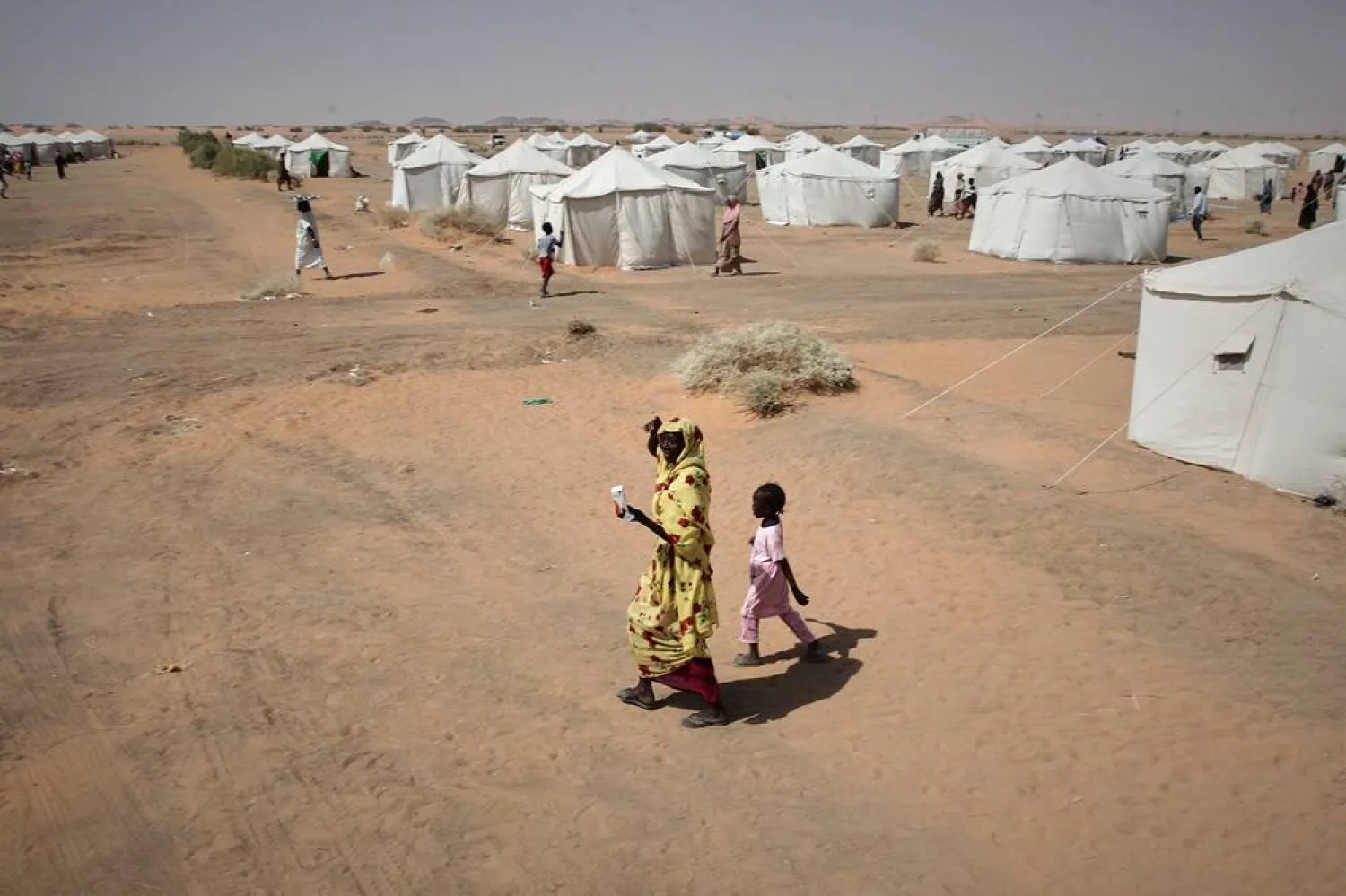
A woman and a child, displaced from North Darfur's capital, al-Fashiar or other conflict-affected areas walk in the newly established el-Afadh camp in al-Dabbah, in Sudan's Northern State, Sudan, Thursday, Nov. 13, 2025. (AP)
TT

More Than 300 Children Killed in Sudan War in 6 Months, Mostly in Drone Strikes, UNICEF Says

A woman and a child, displaced from North Darfur's capital, al-Fashiar or other conflict-affected areas walk in the newly established el-Afadh camp in al-Dabbah, in Sudan's Northern State, Sudan, Thursday, Nov. 13, 2025. (AP)

More than 300 children have been killed in the last six months in the war in Sudan, mostly from drone strikes, the UN children's agency said Monday.

Sudan has been mired in a war between the Sudanese military and the paramilitary Rapid Support Forces since April 2023.

The war is now concentrated in the Kordofan, Darfur and Blue Niles states, with drone warfare causing 60% of casualties, according to UNICEF.

The UN, US UK and others have expressed alarm about potential atrocities as the RSF and the military fight for control of the strategic city of el-Obeid, in North Kordofan.

The conflict has killed at least 59,000 people, displaced some 13 million and pushed many parts of Sudan into famine. More than 30 million people are in need of humanitarian assistance.

Drone strikes and shelling have targeted civilian infrastructure including schools, markets, fuel and water stations putting over 500,000 people at risk. Civilians have faced almost siege-like conditions for over a year.

“Children are being caught in a relentless cycle of violence, displacement and deprivation,” said Sheldon Yett, UNICEF Representative for Sudan.

The UN called on parties “to protect civilians and civilian infrastructure, allow and facilitate safe, rapid and unimpeded humanitarian access, and take all possible measures to protect children from harm.”


Israelis Return to Last West Bank Settlement Closed over 20 Years Ago

15 August 2026, Palestinian Territories, Hebron: Israeli soldiers deploy in the Old City of Hebron in the West Bank, as Israeli settlers tour the area under their protection after forces closed roads and alleys, restricting the movement of Palestinian residents. Photo: Mamoun Wazwaz/APA Images via ZUMA Press Wire/dpa
TT

Israelis Return to Last West Bank Settlement Closed over 20 Years Ago

15 August 2026, Palestinian Territories, Hebron: Israeli soldiers deploy in the Old City of Hebron in the West Bank, as Israeli settlers tour the area under their protection after forces closed roads and alleys, restricting the movement of Palestinian residents. Photo: Mamoun Wazwaz/APA Images via ZUMA Press Wire/dpa

Israelis began moving into the occupied West Bank settlement of Kadim on Thursday, the local settler council said, the last of four communities from which Israel withdrew more than two decades ago to be repopulated.

It came a week after Israel officially reopened neighboring Ganim, in a move emblematic of the current government's policy of rapid settlement expansion in the occupied Palestinian territory.

The Samaria regional council, which administers Israeli settlements in the northern West Bank, described the return to Kadim as a "historic milestone".

"At this very moment, the families of the pioneering settler core are moving into Kadim, a community that was uprooted during the disengagement," it said in a statement.

It said that 30 families were moving to live permanently in the settlement, accompanied on Thursday by far-right Finance Minister Bezalel Smotrich and head of the Samaria regional council, Yossi Dagan.

Kadim is one of four Israeli settlements in the occupied West Bank that Israel evacuated under former prime minister Ariel Sharon's disengagement plan in 2005, which also included abandoning all Israeli settlements in the Gaza Strip.

The move came partly because of their isolated location in the north of the West Bank, among many Palestinian cities and villages.

Under Prime Minister Benjamin Netanyahu's government, settlement construction and expansion have surged, including with the re-establishment of all four evacuated communities -- Ganim, Sa-Nur, Homesh and now Kadim.

"Twenty-one years after the crime of the expulsion from northern Samaria, today we have completed the rectification," Smotrich was quoted as saying in the statement on Thursday.

"These communities constitute a real security buffer for the entire State of Israel," he added, vowing to establish 19 settlements in the northernmost part of the West Bank.

Dagan said: "We have come home, and this time to stay and grow twentyfold."

"We are raising the flag again, closing the circle, and continuing to build Samaria with full force," he added, using the Biblical term for the northern West Bank.

Israel has occupied the West Bank since 1967. More than 500,000 Israelis live in settlements in the territory, which are illegal under international law, among some three million Palestinians.


Türkiye, Egypt, Qatar Condemn Israeli Attacks on Gaza, Call on Israel to Comply with Ceasefire Obligations

Palestinians carry the body of a person killed following an Israeli airstrike in Gaza City, 19 August 2026.EPA/MOHAMMED SABER
TT

Türkiye, Egypt, Qatar Condemn Israeli Attacks on Gaza, Call on Israel to Comply with Ceasefire Obligations

Palestinians carry the body of a person killed following an Israeli airstrike in Gaza City, 19 August 2026.EPA/MOHAMMED SABER

Türkiye, Egypt and Qatar on Thursday strongly condemned recent Israeli strikes in Gaza, saying in a joint statement that Israel must comply with its obligations under a ceasefire agreement and refrain from steps that could escalate tensions.

"The mediating countries underline that the intensification of Israeli attacks undermines regional and international efforts at a critical juncture, as intensive efforts are under way to implement the Comprehensive Plan to End the Gaza Conflict, including the meeting between the Board of Peace and Israeli officials, and constructive steps are being taken in the negotiation process," they said, Reuters reported.

The international community and Board of Peace must take the necessary steps to ensure compliance with the ceasefire and prevent further escalation, they added.


Vatican Says 'Serious Concerns' over Israel-Lebanon Deal Implementation

Lebanese Army soldiers monitor the movements of Israeli forces stationed in a neighboring village, in Zawtar al-Gharbiyah, Nabatieh Governorate, southern Lebanon, 31 July 2026, following a US-brokered security agreement between Lebanon and Israel.   EPA/STRINGER
Lebanese Army soldiers monitor the movements of Israeli forces stationed in a neighboring village, in Zawtar al-Gharbiyah, Nabatieh Governorate, southern Lebanon, 31 July 2026, following a US-brokered security agreement between Lebanon and Israel. EPA/STRINGER
TT

Vatican Says 'Serious Concerns' over Israel-Lebanon Deal Implementation

Lebanese Army soldiers monitor the movements of Israeli forces stationed in a neighboring village, in Zawtar al-Gharbiyah, Nabatieh Governorate, southern Lebanon, 31 July 2026, following a US-brokered security agreement between Lebanon and Israel.   EPA/STRINGER
Lebanese Army soldiers monitor the movements of Israeli forces stationed in a neighboring village, in Zawtar al-Gharbiyah, Nabatieh Governorate, southern Lebanon, 31 July 2026, following a US-brokered security agreement between Lebanon and Israel. EPA/STRINGER

The Vatican expressed "serious concerns" Thursday about problems implementing a US-brokered deal between Israel and Lebanon, following a meeting between Pope Leo XIV and Lebanese President Joseph Aoun.

During a private, 30-minute audience at the Vatican, Aoun had urged the pontiff to support Beirut's push to secure the withdrawal of Israeli forces from south Lebanon envisaged by the deal, the Lebanese presidency said.

"The Holy See, whilst welcoming the signing of the document, has expressed serious concerns about the difficulties being encountered in implementing it, and has pledged its support for efforts to that end," the Vatican said in a statement.

Lebanon and Israel launched US-sponsored direct talks after the Iran-backed militant group Hezbollah drew Lebanon into the Middle East war in March by attacking Israel.

Israel responded with airstrikes and a ground invasion.

The framework agreement reached in June calls for the disarmament of Hezbollah, a gradual withdrawal of Israeli forces and the deployment of the Lebanese army to the region, starting in "pilot zones".

Despite a weeks-long lull in fighting, Israel has kept up intermittent strikes and heavy demolition operations in south Lebanon.

Its forces are operating in a strip of territory around 10 kilometres (six miles) deep inside the Lebanese border.

At the Vatican, Aoun also met with the Holy See's second-in-command, Cardinal Pietro Parolin, and its top diplomat, Paul Richard Gallagher.

The "cordial talks" focused on the US-mediated deal, the Vatican said.

Aoun called on the head of the Catholic Church to "support Lebanon's efforts to achieve a full Israeli withdrawal from the occupied Lebanese territories, paving the way for the reconstruction of what Israel has destroyed," according to the Lebanese presidency.

He also urged the Pope and Vatican officials to "continue their diplomatic efforts" to ensure that Israel implements the terms of the deal and ends attacks against civilians, infrastructure, and villages, it said.

It was the second private audience between Pope Leo and Aoun at the Vatican.

The Chicago-born leader of the world's 1.4 billion Catholics visited Lebanon late last year, and has repeatedly urged de-escalation in the Middle East and a need for a diplomatic solution.

Aoun is also expected to meet Italian Prime Minister Giorgia Meloni on Friday.

Rome has hosted the last two rounds of Israel-Lebanon talks.

Italy and France said in June they wanted to set up a multinational coalition to succeed the United Nations peacekeeping force in south Lebanon, whose mandate ends this year.