
For First Time, NASA to Light Fire on Moon

NASA is planning an experiment to light a fire on the moon. That may sound weird, but researchers say it could improve mission safety for years to come (NASA)
TT

For First Time, NASA to Light Fire on Moon

NASA is planning an experiment to light a fire on the moon. That may sound weird, but researchers say it could improve mission safety for years to come (NASA)

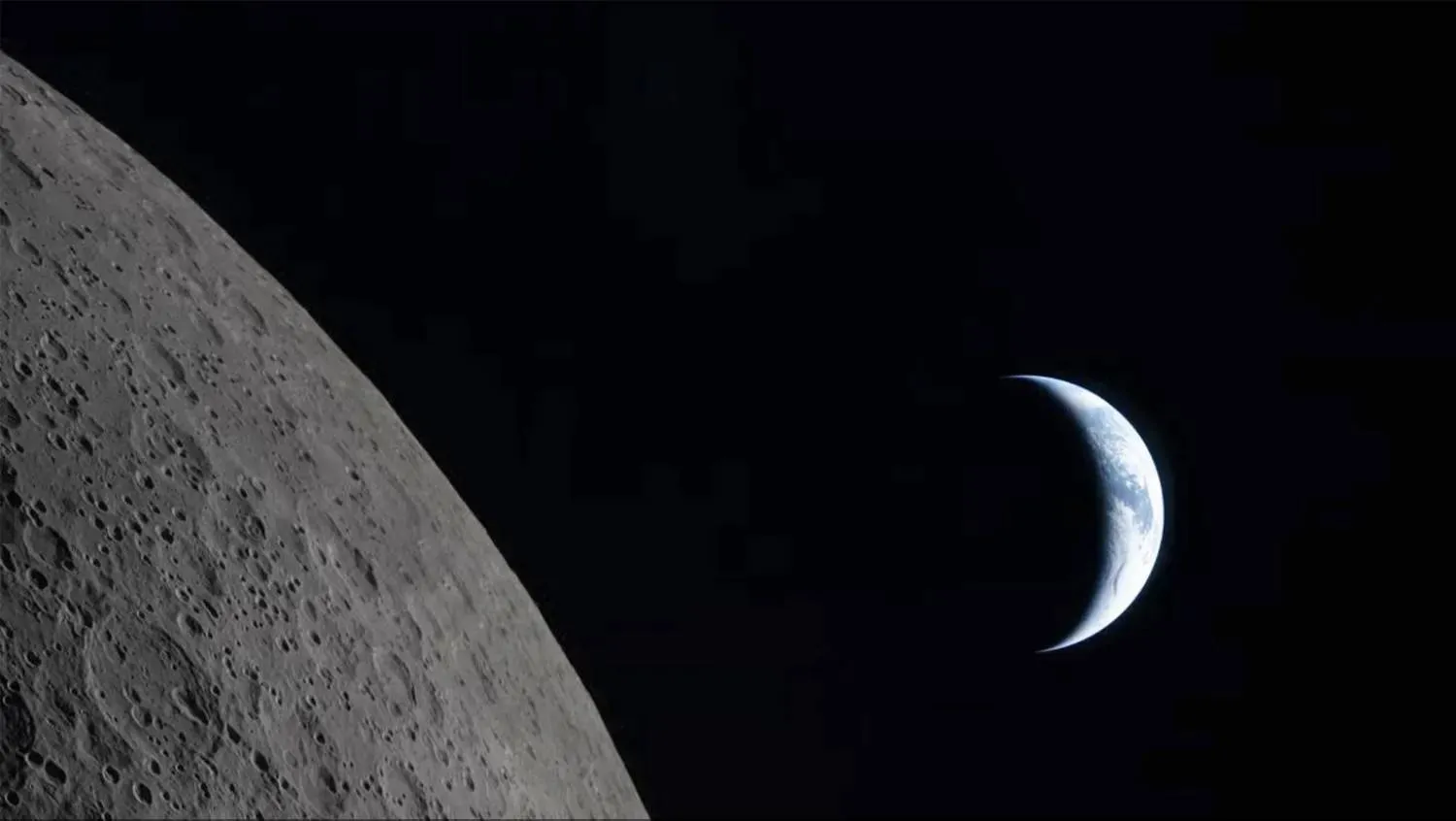
NASA wants to set fire to the moon. If conducted, the experiment would be the first time humanity has set fire to another planet, according to The Independent.

The goal is to better understand how flames could behave during emergency situations on future crewed Artemis program missions to Mars and beyond, according to the space agency.

Those missions will help to expand the reach of humanity and what we know about our solar system.

“Since fire can be a catastrophic hazard for spaceflight and extreme human exploration, FM2 is a critical step in determining material flammability and safety for future missions,” NASA says on the “Flammability of Materials on the Moon,” or “FM2,” experiment’s webpage.

One of the problems is that some materials that are not flammable on Earth could be flammable in space, NASA notes. That’s because the materials may burn at lower oxygen concentrations in lunar gravity than in our gravity.

“Like there are some materials that, as they’re burning, they tend to kind of like come off in clumps, almost like little tear drops. And you can imagine that, if you’re in a microgravity or partial-gravity environment, those little teardrops are basically turning into little fireballs that could float away and catch something else on fire,” Emily Johnson, the experiment’s project manager, explained in a 2025 podcast.

“So understanding the different properties of the different materials at the different scales of flames is also incredibly important,” she said.

Flames behave differently on the moon than on Earth. The classic shape of a flame on Earth is created when gravity pulls cooler and denser air to the bottom. That doesn’t happen to flames on the moon or in weightless microgravity on the International Space Station.

“In microgravity, this flow doesn’t occur and on the space station, low-momentum flames tend to be rounded or even spherical,” according to a NASA blog post from 2023.

In lunar gravity, which is around a sixth of Earth’s gravity, the flames are a little more rounded than those on Earth.

So, what will this experiment look like in reality? Well, good news, nobody is building a bonfire.

Instead, scientists are sending a robotic, self-contained combustion chamber – a cylindrical metal chamber – to the lunar surface on a mission carrying commercial payloads.

The chamber carries four test samples to light, which are made of cotton and fiberglass and acrylic rods.

It contains an oxygen sensor, an instrument that measures electromagnetic radiation and cameras that record how the fire behaves in lunar gravity, including how fast it spreads.

There have been plenty of microgravity fire tests on Earth over the last few decades, but tests have shown that NASA needs more information.

“Direct lunar access offers the best way to assess flammability of materials on the moon. An extensive materials qualification test series there would be ideal, but such tests will need to be put off until an extended human presence on the moon is established,” NASA researchers wrote in a paper published earlier this year.

The paper said the new experiment would help to fill critical knowledge gaps in spacecraft fire safety. New findings could lead to updated standards for spacecraft materials.

The mission could launch as soon as later this year, according to the paper.


French Firefighter Dies in Wildfire in Savoie Region, Minister Says

Firefighters work on a burnt area as a wildfire rages in the southern France department of Pyrenees-Orientales in the town of Ille-sur-Tet, near Perpignan on July 6, 2026. (AFP)
TT

French Firefighter Dies in Wildfire in Savoie Region, Minister Says

Firefighters work on a burnt area as a wildfire rages in the southern France department of Pyrenees-Orientales in the town of Ille-sur-Tet, near Perpignan on July 6, 2026. (AFP)

A 22-year-old ‌fireman died while fighting a wildfire in the Savoie region in the French Alps, the French interior minister said on Wednesday. Wildfires have raged across southern Europe since last week and in France have forced thousands to leave their homes.

"It was with deep sadness that I learned this morning of the death ‌of a ‌young volunteer firefighter from SDIS ‌73, ⁠aged 22, who died ⁠whilst on duty after spending part of the night fighting a forest fire in Savoie," Interior Minister Laurent Nunez said on X.

Heatwaves in France and across western Europe in May ⁠and June have parched vast areas ‌of land, ‌making them particularly vulnerable to wildfires this year.

Temperatures ‌are forecast to once again ‌hit 40 degrees Celsius (104 Fahrenheit) in southwest France this week.

The European Commission has pre-positioned a record 777 firefighters from 14 European ‌countries in high-risk areas across Cyprus, Greece, Italy, France, Spain and ⁠Portugal.

⁠Portugal and France activated the EU Civil Protection Mechanism over the weekend due to wildfires burning simultaneously and scorching thousands of hectares.

The Trevillach wildfire in France's Pyrenees-Orientales has burned 4,900 hectares (12,108 acres).

It did not advance overnight, the local prefect said on X, allowing residents of a dozen villages to return home. The blaze, however, is not fully contained.


With SpaceX Starship, Japan's ispace Provides Ride-share to the Moon

FILE PHOTO: SpaceX's Starship rocket prototypes are seen at the SpaceX Starbase in Brownsville, Texas, US, August 19, 2023. REUTERS/Veronica G. Cardenas./File Photo
TT

With SpaceX Starship, Japan's ispace Provides Ride-share to the Moon

FILE PHOTO: SpaceX's Starship rocket prototypes are seen at the SpaceX Starbase in Brownsville, Texas, US, August 19, 2023. REUTERS/Veronica G. Cardenas./File Photo

Japanese moon transport company ispace said on Wednesday it would start a new, lower-cost lunar cargo business using the Starship heavy rocket and moon lander developed by Elon Musk's SpaceX.

Tokyo-based ispace has bought 500 kg (1,102 lb) of capacity for $50 million on a Starship that would land on the moon as soon as 2030, and will build a lunar surface vehicle that can host payloads from clients worldwide sharing their ride on Starship to the moon, Reuters quoted it as saying.

The new "lunar access integrator" service provides moon-bound "buses" and can complement ispace's ongoing development of ⁠dedicated lunar landers, ⁠or "taxis", to the moon's surface, said ispace Executive Vice President Hideari Kamiya.

On previous trips to the moon, ispace used SpaceX's Falcon 9 rockets for unsuccessful lunar touchdown attempts in 2023 and 2025.

The Tokyo-based company now aims to soft-land three landers, called Ultra, onto the moon by 2030, including a mission that is part of ⁠NASA's Commercial Lunar Payload Services program.

While ispace carries on its Ultra missions, the tie-up with SpaceX will "exponentially" accelerate its growth in the lunar infrastructure market, Chief Executive Takeshi Hakamada said.

SpaceX welcomed the expansion of its relationship with ispace to fly missions on Starship, a reusable transportation system which, unlike Falcon 9, includes a spacecraft that Musk's company plans to take to the moon and eventually to Mars.

"Their integration services provide a valuable pathway for smaller payloads to secure a ride to the Moon today, ⁠and we ⁠look forward to supporting ispace and their customers as they help expand access to the lunar surface," Stephanie Bednarek, SpaceX's vice president of commercial sales, said in a statement.

The relationship is not exclusive. NASA plans to use Starship's first lunar landing in 2028 as part of its Artemis program to send astronauts back to the moon. US lunar rover startup Astrolab has also booked space on a future Starship flight.

"SpaceX approached us first" with the integrator business idea, Hakamada said.

"While we can't rule out other companies entering the market, few might be able to integrate cargo and keep providing services after touching down on the moon."


‘Unique Event’: Solar Eclipse Fever Fills Empty Spain

 A man holds eclipse-viewing glasses that are certified to the ISO 12312-2:2015 international safety standard, which specifies requirements for the direct observation of the sun, in a store in Burgos on July 2, 2026. (AFP)
A man holds eclipse-viewing glasses that are certified to the ISO 12312-2:2015 international safety standard, which specifies requirements for the direct observation of the sun, in a store in Burgos on July 2, 2026. (AFP)
TT

‘Unique Event’: Solar Eclipse Fever Fills Empty Spain

 A man holds eclipse-viewing glasses that are certified to the ISO 12312-2:2015 international safety standard, which specifies requirements for the direct observation of the sun, in a store in Burgos on July 2, 2026. (AFP)
A man holds eclipse-viewing glasses that are certified to the ISO 12312-2:2015 international safety standard, which specifies requirements for the direct observation of the sun, in a store in Burgos on July 2, 2026. (AFP)

As a child, Enrique Bordallo would gaze in awe at the starry night sky in rural Spain. Next month's solar eclipse has now made his passion a popular obsession.

"We're absolutely buzzing," Bordallo, president of the Burgos Astronomy Association, told AFP before explaining the workings of the celestial spectacle to dozens of excited locals in the northern village of Belorado.

"We're eager for this to happen now, to experience it, for the weather to be right, for everything to work," he said.

The total solar eclipse on August 12 -- the first in Spain since 1905 -- will only last around 90 seconds.

But the global attention and tourism could bring long-term benefits to often overlooked areas known as "empty Spain".

The "band of totality" where the eclipse will be fully visible is due to plunge into darkness swathes of rural regions suffering population decline, including Castile and Leon in the north.

"Castile and Leon isn't always in the news, and unfortunately the foreigners (tourists) stay more on the coast," said Belen Molinuevo Puras, a 51-year-old anthropologist who has family roots in Belorado.

"We're really excited that it (the eclipse) is in this area," she told AFP in a pitch-black field in the village, where the astronomy association was running a night-time star observation session.

- Stars align -

As the world's second most-visited country after France, Spain is already a tourism powerhouse.

But the government aims to diversify away from seasonally dependent beach holidays and places under strain from overtourism such as Barcelona.

After August 12, another two eclipses are due in 2027 and 2028, and rural areas are set to reap economic benefits, according to a May report commissioned by travel platform Airbnb.

The three eclipses are "an unprecedented opportunity to help rebalance tourist flows in Spain", the report said.

In the city of Burgos, a modest provincial capital that will offer excellent vantage points when the Moon covers the Sun, eclipse hunters have hoovered up accommodation options.

The United States, South America, Japan and other Asian countries have driven international eclipse tourism in Burgos, vice mayor Andrea Ballesteros told AFP outside the city's landmark 13th-century cathedral.

The hope is that foreign visitors "take away a good impression of our city, and later that can have a ripple effect", said Ballesteros, who heads the municipal entity responsible for coordinating activities around the event.

Burgos works to "attract external tourism, not just in the summer months", while the eclipse "will be a boost for tourism and culture" and "a major economic boost", she added.

Chinese guests are the largest group at Lucia Molina's hotel in Burgos, which is fully booked for August 12 and where reservations started up to 18 months in advance.

"Practically all rooms have sold out for very high prices, not only here, but in all hotels in Burgos," the receptionist said.

The rare spare rooms were going for up to 1,200 euros ($1,370) a night, Molina added.

- 'Unique event' -

Around 500,000 visitors are predicted to flock to Castile and Leon for the eclipse, including some 40,000 in Burgos -- more than one-fifth of the city's population.

But the prospect of thousands of visitors traipsing through fields and sweltering for hours in the summer heat has raised security, health and logistical concerns.

Droves of day-trippers from the rest of Spain and caravans from neighboring France are expected to amplify the anarchy on the roads.

Ballesteros conceded the "challenge" was bound to cause disruption but emphasized months of preparation between different levels of government and the emergency services, including the creation of specific observation points to manage the crowds.

As for potential health hazards, Marta Serrano, who works at an optical store in Burgos, insisted on the importance of wearing specially designed glasses to watch the eclipse.

"This is like going to the beach on a cloudy day. You say, 'today I won't put on cream because I won't burn,'" Serrano said.

"Then at night you realize that you did because the rays keep getting through. This will be the same," she said, warning of the risks for eyesight.

Demand for the glasses is now "very large" after "people were not too worried" initially, Serrano said.

Back in Belorado, astronomer Bordallo cannot wait to see decades of work culminating in his home region under the world's gaze.

"It's a unique event, it's a wonder, it's a free show within anyone's reach. And it will astonish them and delight them," he enthused.