
Hossam Hassan’s Messages of Support for Palestine Stir Anger in Israel

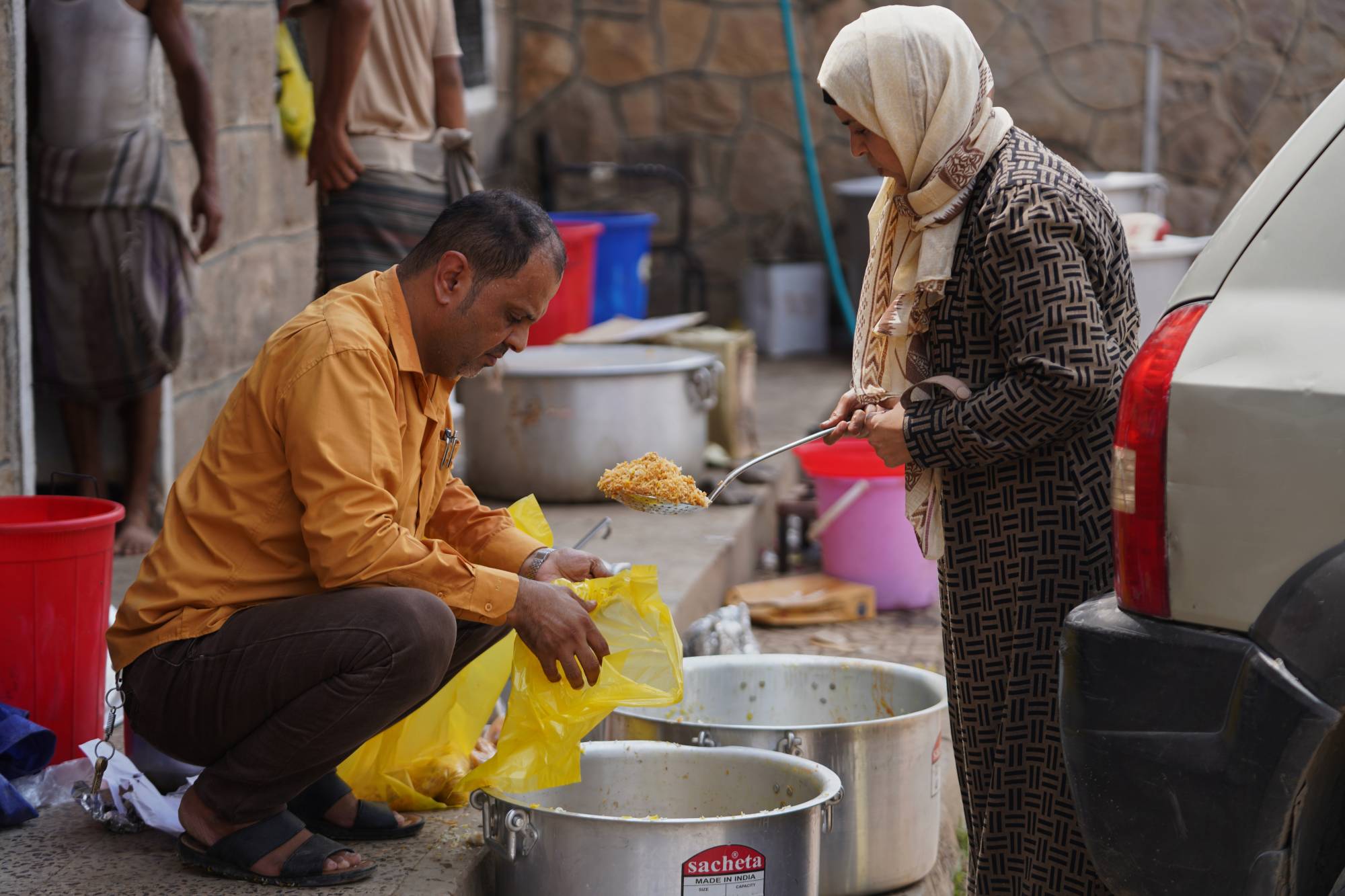
Egypt national team coach Hossam Hassan during a press conference ahead of the match against Argentina (Reuters)
TT

Hossam Hassan’s Messages of Support for Palestine Stir Anger in Israel

Egypt national team coach Hossam Hassan during a press conference ahead of the match against Argentina (Reuters)

A new message from Egypt national team coach Hossam Hassan has sparked widespread debate on social media after he once again voiced support for Gaza, just days after dedicating Egypt’s historic qualification for the Round of 16 at the 2026 FIFA World Cup to the Palestinian people and raising the Palestinian flag - moves that angered Israel.

The latest remarks drew criticism in Israel and prompted assessments from experts interviewed by Asharq Al-Awsat. Some argued that politics and sports should remain separate, while stressing that such a position does not mean ignoring Israel’s actions in Gaza.

Others said such separation is unrealistic in sporting, arguing that these messages anger Israel while encouraging oppressed peoples, foremost among them the people of Gaza.

Speaking at a late-night press conference in the United States on Monday, ahead of Egypt’s match against Argentina, Hassan said: “If there is anyone in this world who does not feel the suffering of the Palestinian people, they have lost an essential part of their humanity, regardless of their nationality, religion, or background - whether Arab, European, American, or from anywhere else.”

He added: “We all sympathize when an animal is harmed. Human rights organizations and animal welfare groups respond, and the entire world condemns it. So what should the response be when thousands of people are killed every day?”

“We live in safe homes, sheltered by air conditioning in the summer and warmth in the winter. We have food and water whenever we want. Meanwhile, children and families there live in tents through the summer heat and winter cold, without shelter to protect them. Children have nothing to eat, and families face illness, hunger, and fear every day.”

Hassan urged everyone “who holds authority or influence to imagine themselves or their children spending just one day in the conditions endured by the people of Gaza and Palestine, sitting out in the open under the scorching sun or in the rain and cold, without shelter or security.”

Calling the situation “a stain on the conscience of the entire world,” Hassan appealed for support for Palestine, saying: “Please, let your message be that the Palestinian people deserve to live.”

Israel’s Yedioth Ahronoth accused Hassan of using a global media platform to renew his support for the Palestinians. The Times of Israel noted that he had once again reaffirmed his position, while Israel Hayom reported Israeli anger over the Egyptian coach’s continued expressions of solidarity with Palestine.

By contrast, Hassan’s remarks were widely praised across Arab social media. Palestinian Facebook user Mahmoud Al-Amoudi wrote: “For the millionth time, thank you, Captain Hossam Hassan. You are truly a human being. You are Arab, you are Muslim, you are our brother.”

Israeli Army Radio correspondent Jacky Hugi described the comments as a natural extension of Hassan’s previous actions, including raising the Palestinian flag after Egypt’s victory over Australia in the previous round.

Hassan had earlier dedicated Egypt’s historic qualification for the World Cup Round of 16, following its victory over Australia, to the Palestinian people and expressed solidarity with them. Images of him waving the Palestinian flag on the pitch circulated widely, prompting Israeli social media users to attack him and call for support for Argentina.

Despite the widespread praise for Hassan’s remarks, political sociologist Dr. Said Sadek argued that every occasion has its own protocol. He said Hassan had gone to the World Cup to represent Egypt and, if victorious, should raise the Egyptian flag in accordance with protocol.

If he wished to express his personal views, Sadek said, he was entitled to hold a separate press conference to do so.

Sadek asked why, by the same logic, Hassan had not raised the Lebanese or Sudanese flags, since people there are also suffering. He argued that raising the Palestinian flag and dedicating the victory to Palestinians were populist gestures that generated publicity and social media momentum, noting that Hassan continued speaking about Gaza after receiving such widespread attention.

Sadek stressed that his reservations about Hassan’s actions “do not mean agreeing with Israel’s position toward the Palestinian people,” adding that Israel should be condemned for what it has done in Gaza. He also reiterated his opposition to bringing politics into football, as he believes former Egyptian footballer Mohamed Aboutrika previously did.

By contrast, Israeli affairs analyst Nizar Nazzal noted that politics cannot be separated from any sphere, particularly as sports have become a platform for competing narratives. He said Israel seeks to silence critical voices at every event, and that attempts to separate politics from sports ultimately work in Israel’s favor, while proving virtually impossible to enforce in stadiums regardless of calls to do so.

According to Nazzal, Israel would continue criticizing any narrative that exposes its actions in Gaza, whether voiced by Hassan or anyone else. As Egypt’s coach commands millions of followers, he added, Hassan’s messages are bound to reach a vast audience, as demonstrated on social media.

He continued that Israeli criticism was unlikely to extend beyond the media, unlike the response in May, when Israeli Defense Minister Israel Katz publicly attacked Lamine Yamal after the Barcelona star raised the Palestinian flag, accusing him of incitement and promoting hatred.

Syria Arrests Assad-era Officer who Fled Austria after Conviction

A man walks past heavily-damaged and destroyed buildings in the Jobar suburb northeast of Damascus on August 12, 2026. (Photo by LOUAI BESHARA / AFP)
TT

Syria Arrests Assad-era Officer who Fled Austria after Conviction

A man walks past heavily-damaged and destroyed buildings in the Jobar suburb northeast of Damascus on August 12, 2026. (Photo by LOUAI BESHARA / AFP)

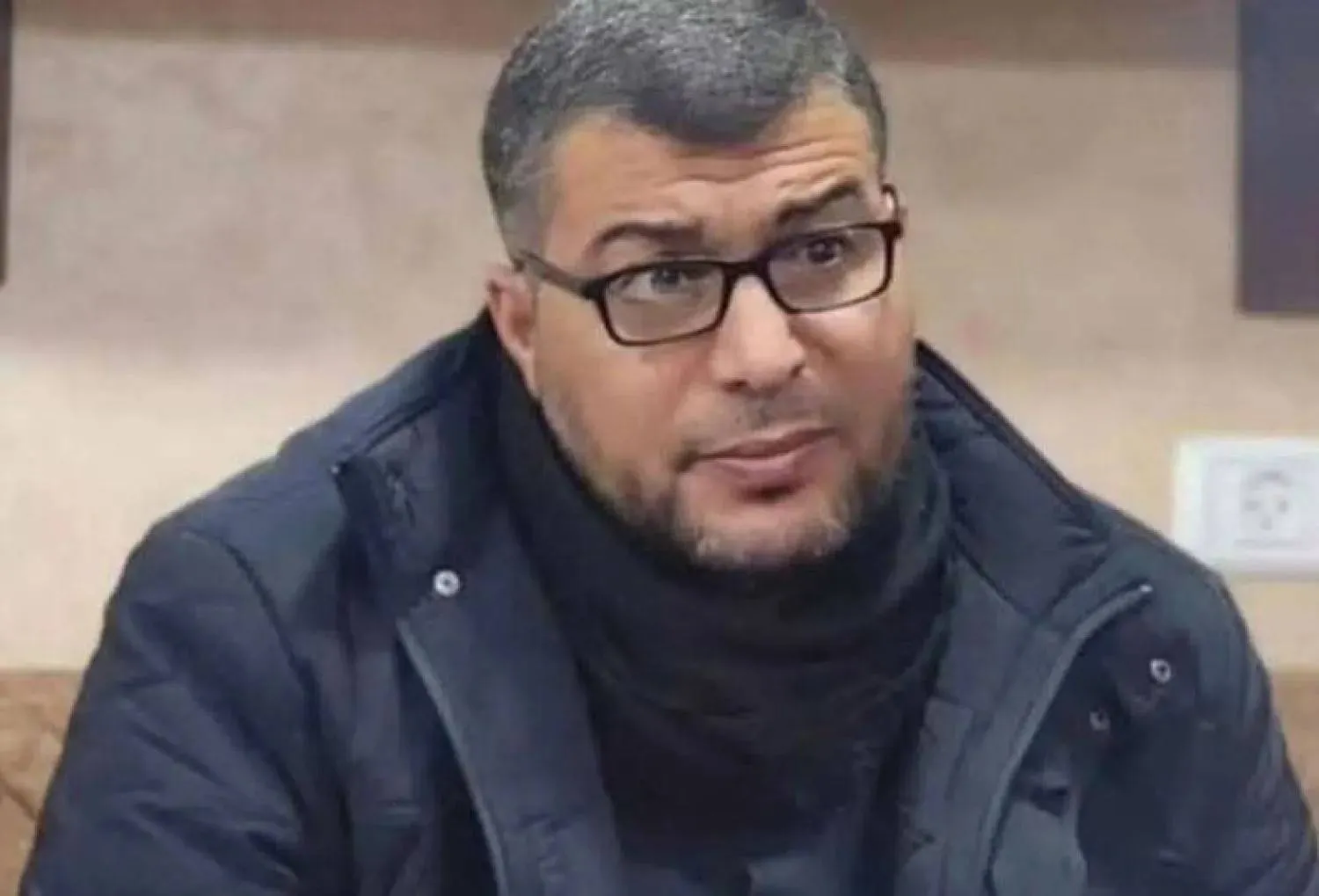
Syrian security forces have arrested a former Assad-era security officer who fled Austria after being sentenced to eight years in prison for abusing detainees and returned to his hometown in southern Syria, state news agency SANA said on Tuesday night.

Lieutenant Colonel Musab Abu Rukba was arrested in the city of Nawa in Daraa province by internal security forces in coordination ⁠with the counter-terrorism ⁠department, SANA said, citing the security forces.

Abu Rukba had been convicted by a Vienna court last month of bodily harm, aggravated coercion and sexual assault against detained opponents of former President Bashar al-Assad while he headed the police’s criminal investigations department in the northern city of Raqqa more than a ⁠decade ago.

He had pleaded not guilty.

Reuters reported on Friday that Abu Rukba had left Austria while challenging his eight-year sentence on appeal and arrived in Nawa in early August, where his family held a reception to celebrate his return.

SANA said on Tuesday that Abu Rukba had entered Syria illegally after fleeing Austria and that authorities had tracked him down in Nawa. He had been referred to the relevant authorities to complete legal procedures ahead of prosecution, it said.

It was ⁠not immediately ⁠clear what charges Abu Rukba could face in Syria or whether Austria had requested his arrest or extradition.

A spokesperson for the Austrian court that convicted him told Reuters at the time that Abu Rukba had not been considered a flight risk before his trial because he had lived in Austria since 2014 and was seeking asylum there with his family.

He was not held in custody during the trial or subjected to other restrictions, and his departure from Austria did not breach Austrian laws or court orders while the appeals process remained underway, the spokesperson said.


Israel Says It Recovered Remains of Soldier Killed in Lebanon in 1982

Destruction is pictured in the village of Arnoun as seen from nearby Marjeyoun in southern Lebanon on August 11, 2026. (AFP)
TT

Israel Says It Recovered Remains of Soldier Killed in Lebanon in 1982

Destruction is pictured in the village of Arnoun as seen from nearby Marjeyoun in southern Lebanon on August 11, 2026. (AFP)

The Israeli military said on Tuesday it had repatriated the remains of Sgt First Class Yehuda Katz, a soldier killed in Lebanon 44 years ago, in a joint operation with the Mossad intelligence agency.

Katz was the last Israeli soldier declared missing in the Sultan Yacoub battle against Syrian forces in eastern Lebanon in 1982.

"His return to Israel was made possible through efforts based on accurate intelligence... that lasted more than four decades," the military said in a statement.

It is not clear where his body was found.

Israeli Prime Minister Benjamin Netanyahu commended the security forces and said that "for many years, I approved numerous clandestine operations to locate the missing soldiers of Sultan Yacoub. I promised their families that we would never stop working to bring them home."

In a separate statement, President Isaac Herzog said that "the circle that remained an open and bleeding wound from the Battle of Sultan Yacoub is finally closed," and that he had kept a photograph of Yehuda Katz hanging in his office as "a daily reminder of our sacred duty to bring our sons home and leave no one behind".

Katz's remains were brought to Israel and identified at an institute for the identification of fallen soldiers under the military rabbinate, the military said.

Three Israeli soldiers had been missing for decades after the Sultan Yacoub battle. In 2019, the military announced the repatriation of the remains of Sgt First Class Zachariah Baumel, while in May 2025 it said it had recovered the body of Sgt First Class Tzvika Feldman "in the heart of Syria".


Lebanon Mulls Removing Restrictions Against 600,000 Syrians

Lebanese soldiers are seen at the Masnaa border crossing with Syria in wake of the collapse of the Syrian regime. (AP file)
TT

Lebanon Mulls Removing Restrictions Against 600,000 Syrians

Lebanese soldiers are seen at the Masnaa border crossing with Syria in wake of the collapse of the Syrian regime. (AP file)

Lebanese authorities began reviewing security restrictions against some 600,000 Syrians in the latest move that reflects Beirut’s desire to open a new chapter in relations with Damascus based on clear security and legal foundations.

The restrictions are among the thorniest issues in Lebanon and that emerged during the wave of Syrian displacement sparked by the civil war. The restrictions led to hundreds of thousands of Syrians being barred entry to Lebanon.

Addressing the issue would pave the way for Lebanese-Syrian relations that are based on security coordination and respect for the law.

Asharq Al-Awsat learned that Lebanon’s General Directorate of the General Security has kicked off the legal procedures to lift security restrictions against over 600,000 Syrians that barred their entry to Lebanon for years.

A prominent security source revealed that General Security chief Hassan Choucair has formed a committee that will study the file of Syrians who have security warrants against them that have prevented them from entering Lebanon.

The warrants are tied to residency or entry violations.

The source told Asharq Al-Awsat that authorities are now examining the file of every Syrian who has been barred entry to Lebanon over residency violations, such as entering Lebanon illegally or violating residency rules or exceeding the duration of their stay.

The source said the committee has already completed tens of thousands of files.

The General Security will issue a statement upon completion of the procedures. It will inform the Syrian authorities of its results.

The move is not limited to building trust between Beirut and Damascus, but it also aims to crack down on people smuggling across the Lebanese-Syrian border.

The latest procedures will allow Syrians to enter Lebanon with their identification papers or through travel agencies as long as they meet the necessary requirements.

Syrians wishing to work in Lebanon must obtain work and legal residency permits from the General Security.

“Lebanon welcomes anyone who wants to reside on its territory as long as they are doing so legally,” said the source.

“Syria is a sisterly country and organizing the movement of people in and out of both countries benefits them both,” he added.