
Two successive explosions struck one of Syria’s most sensitive locations at a particularly delicate moment for the country’s authorities, occurring about 10 kilometers (6 miles) from where French President Emmanuel Macron was staying during his visit to Damascus.
Sources close to the Syrian government told Asharq Al-Awsat that several parties could stand to benefit from the attack, foremost among them remnants of the former regime and those opposed to the growing French-Syrian rapprochement.
Other sources monitoring the security situation, however, said initial indications point more toward ISIS, which remains Syria’s foremost security challenge.
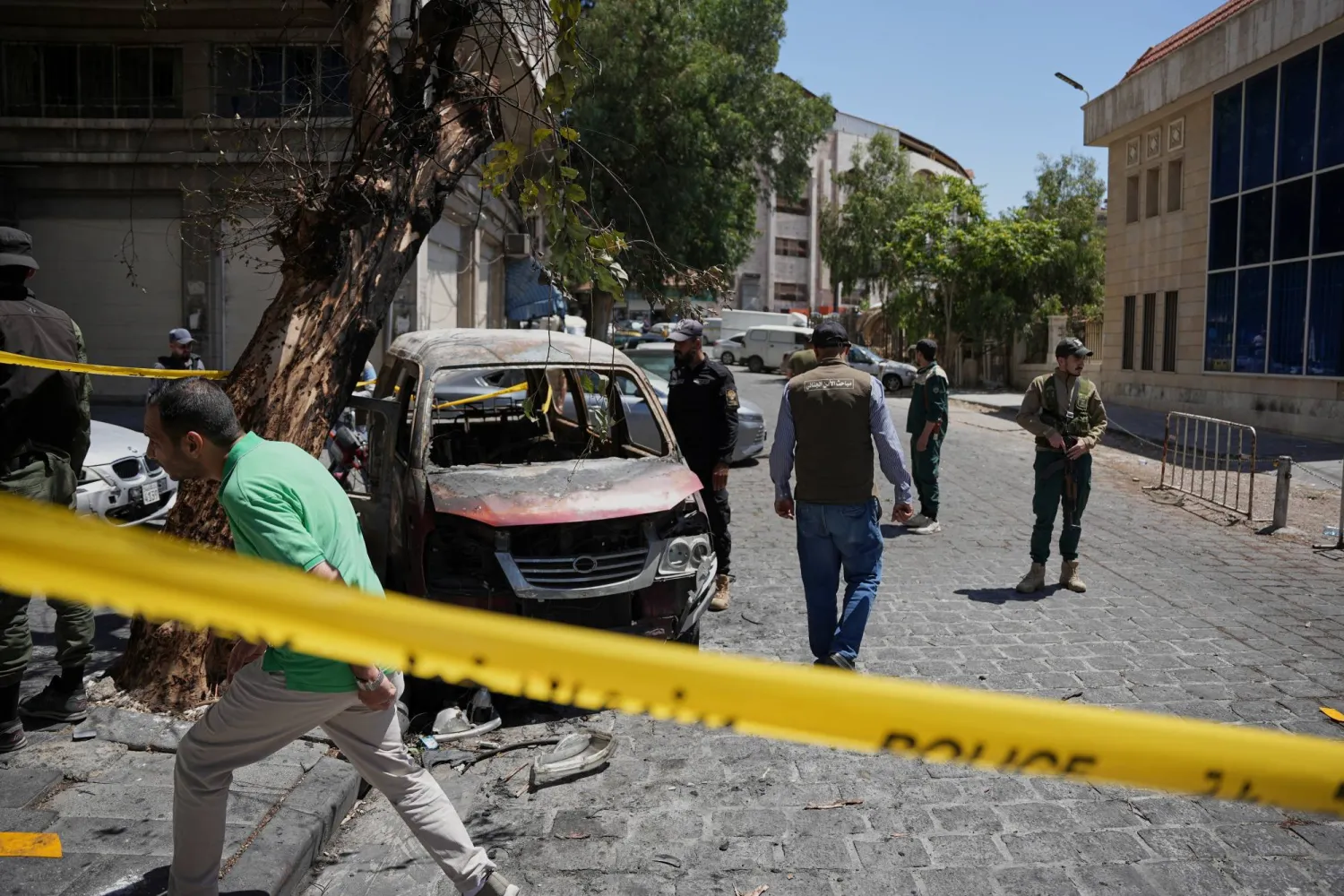
At least 18 people were injured, including the assistant tourism minister and four police officers, in twin explosions near the Ministry of Tourism, close to the Four Seasons Hotel Damascus, where Macron was staying.
The attack came less than a week after a bombing at a lawyers’ cafe near the Palace of Justice that killed 10 civilians and wounded about 20 others.
Security expert Abdullah Al-Najjar told Asharq Al-Awsat that the bombings bore the hallmarks of remnants of the former regime seeking to derail the transitional justice process, “which will certainly reach them.”
The attack also aims to portray Syria as unsafe. He said the improvised explosive devices were crude and indiscriminate, targeting civilians and security personnel alike. Their purpose was to create the impression of weak security control rather than expose a genuine collapse in security.
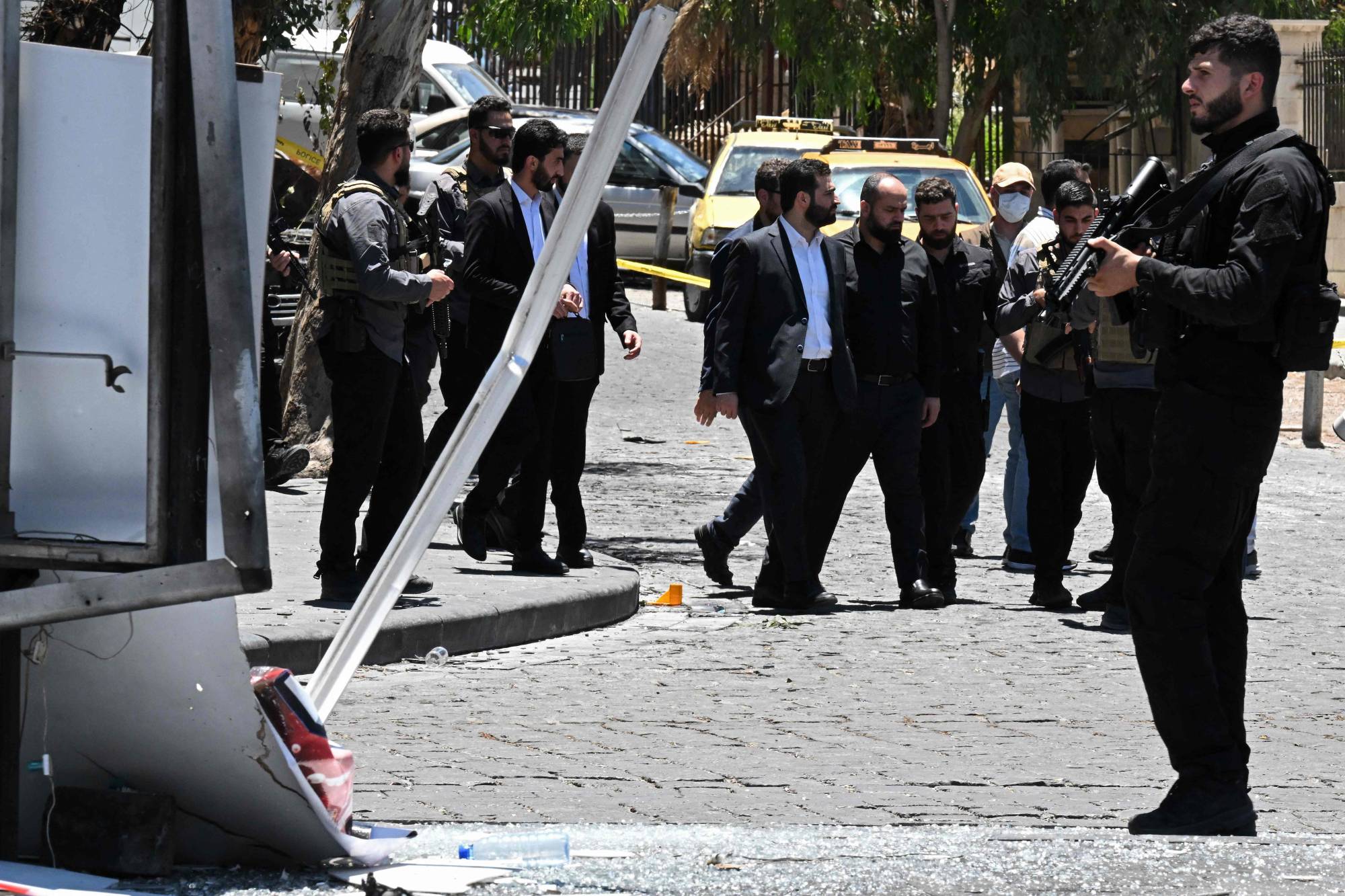
He noted that any criminal could plant a crude explosive device in a trash container and another in a parked vehicle, like what happened in Tuesday’s attack.
Former diplomat and political analyst Bassam Barabandi told Asharq Al-Awsat that whenever Syria shows “serious signs” of recovery, forces threatened by the country’s improving fortunes respond.
In his view, the interests of remnants of the former regime converge with those of ISIS, Hezbollah, Iran, and Israel.
Barabandi noted that many individuals who served under the former regime remain embedded throughout Syrian society, while state institutions are still being rebuilt and newly recruited security personnel have yet to acquire the experience needed to fully maintain security.
The scale of the bombings suggests either individuals or small groups seeking revenge, or an organization capable of mounting larger operations whose objective is not widespread destruction in a country already devastated by war, but rather to spread instability across Syria, he remarked.
Barabandi also stressed that international support for stabilizing Syria remains strong and is likely to translate into greater assistance for rebuilding the country’s security institutions.
Major investments are unlikely to be affected because they are driven largely by political considerations, although local economies and small businesses are expected to bear the brunt of the impact, he added.

Sources close to the government told Asharq Al-Awsat that crude explosive devices of this kind often evade explosives detection and are intended more for political messaging than military effect.
They added that preliminary assessments point more toward remnants of the former regime than ISIS, whose attacks typically target security personnel, soldiers, and those it considers apostates. ISIS operations also tend to inflict far greater casualties, unless the group has radically changed its tactics.
Security expert Diaa Qaddour described such assessments as speculative because so many parties could benefit from bombings at such a sensitive moment for Syria.
Nevertheless, he said it was impossible to ignore that ISIS remains “the largest and most prominent security challenge in Syria.”
Qaddour told Asharq Al-Awsat that Tuesday’s coordinated bombing resembled an attack in Damascus’ Bab Sharqi district in May near a Defense Ministry building that killed a soldier and wounded several civilians. ISIS claimed responsibility for that attack.
He stressed that the greater danger lies not only in the existence of an experienced ISIS cell operating in the heart of the capital and one of its most sensitive districts, but also in its ability to strike whenever it chooses despite extensive counterterrorism efforts by the Interior Ministry.
The recent rise in attacks has tarnished the image of the relative stability Syria had enjoyed in recent months, precisely the outcome sought by those behind the bombings, Qaddour said.
He urged the Interior Ministry and intelligence services to undertake a thorough review of their approach to security threats and develop a comprehensive strategy to eliminate or at least contain them.