


Middle East Bears Brunt of Tanker War as Saudi Arabia Weathers Crisis with Alternative Logistics Network

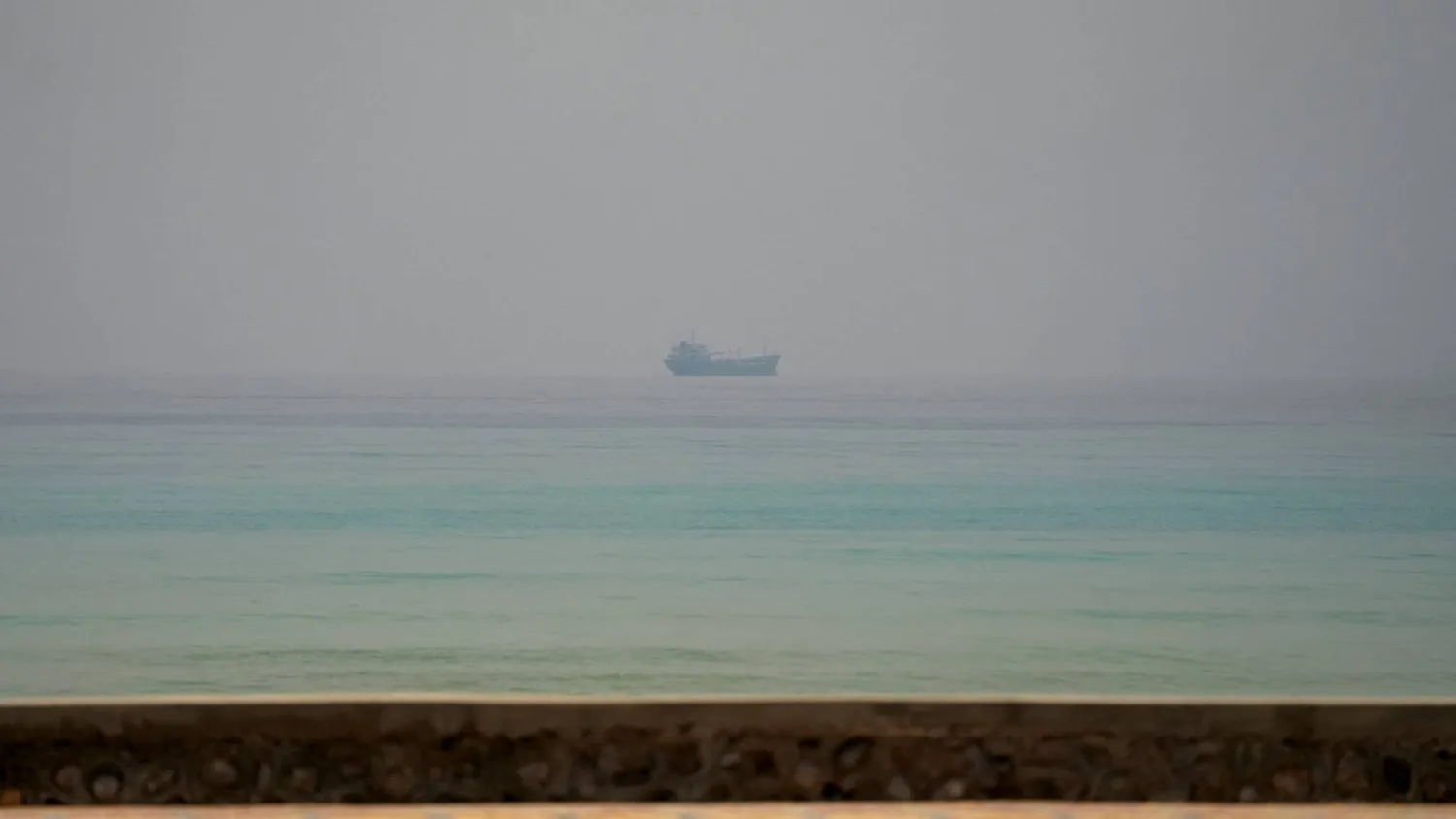
 A vessel at the Strait of Hormuz, as seen from Musandam, Oman, July 8, 2026. (Reuters)
A vessel at the Strait of Hormuz, as seen from Musandam, Oman, July 8, 2026. (Reuters)
TT

Middle East Bears Brunt of Tanker War as Saudi Arabia Weathers Crisis with Alternative Logistics Network

 A vessel at the Strait of Hormuz, as seen from Musandam, Oman, July 8, 2026. (Reuters)
A vessel at the Strait of Hormuz, as seen from Musandam, Oman, July 8, 2026. (Reuters)

At a time when the global economy is struggling to avoid a sharp recession, the International Monetary Fund’s updated World Economic Outlook showed a deeply divided picture.

A surge in artificial intelligence investment, productivity gains and US tax cuts helped keep global growth at 3% this year, slightly below the 3.1% forecast in April, absorbing part of the severe energy shock caused by the Iran war and the closure of the Strait of Hormuz.

But the regional cost was steep and unprecedented. The prolonged closure of the Gulf shipping artery prompted the IMF to sharply downgrade its outlook for the Middle East and North Africa, pushing the region into a 0.5% contraction, one of its worst annual performances since the start of the century.

Major oil producers were caught between lower output and disrupted supply logistics.

At the center of the turmoil, Saudi Arabia emerged as one of the most resilient economies.

Although the IMF cut its growth forecast for the Kingdom this year to 1.7%, it raised its projection for next year to 5.5%, defying the darker regional scenario.

The Kingdom was supported by alternative routes that protected its momentum, while major producers such as Iraq, Kuwait and Qatar face temporary contractions before a broad regional rebound in 2027.

Recent military developments delivered a severe logistics shock that paralyzed flows equivalent to one-fifth of global oil and gas. Although releases from strategic oil reserves and commercial production eased the crisis, prices remained 25% to 32% above pre-war levels.

The jump in energy costs directly froze two years of global progress against inflation.

The IMF raised its global inflation forecast by 0.3 percentage point to 4.7% in 2026, saying the monetary easing cycle had seen a “temporary pause, not a break in the broader trend.”

Regional growth map

The IMF’s new baseline scenario assumes the Strait of Hormuz will begin reopening gradually in mid-July and return to normal by March 2027. The prolonged closure redrew the region’s growth map as follows:

  • The Middle East and North Africa region is expected to contract. The IMF cut its 2026 estimate for the region for the second time in three months, forecasting a 0.5% contraction, down from 1.1% growth in its April update. That would make it the only region in the world expected to record a decline in gross domestic product, before a strong rebound in 2027 as exports recover and trade through the Strait of Hormuz returns to pre-war levels. Deniz Igan, head of the IMF’s research department, described the expected recovery as “V-shaped”.
  • Iraq, Kuwait and Qatar, among the commodity exporters most affected by transport disruptions and energy production constraints, are expected to face sharp, painful contractions this year, followed by a surge in expansion and double-digit growth in 2027.
  • Türkiye is also under pressure. The IMF cut its 2026 growth forecast for Türkiye for the second time this year to 2.9%, down from 3.4% in April, under pressure from weak domestic demand, higher energy prices and tighter financial conditions.
  • Iran, despite resilient oil exports early in the year and an upward revision to its forecast, remains weighed down by sanctions and war. Its economy is expected to contract sharply by 5.4% in 2026, pending the broader regional rebound in 2027.

Saudi resilience

At the center of the regional disruption, Saudi Arabia’s official indicators appeared more resilient. The IMF said the Saudi economy was “less affected” by the shock than its Gulf neighbors.

The Fund’s revisions to Saudi figures reflected recent geopolitical developments compared with its April report, lowering its 2026 growth forecast for the Kingdom by 1.2 percentage points to 1.7% this year.

By contrast, the outlook carried a more optimistic revision for 2027. The IMF raised its forecast for Saudi Arabia's growth by 1 percentage point from its April estimate, projecting growth of 5.5% as tensions ease and waterways reopen.

US and China hold up, Europe bears the cost

The IMF’s documentation showed a stark divergence among major powers, depending on their exposure to the technology boom and energy sources.

The United States stood apart. The world’s largest economy retained its strength, with its growth forecast steady at 2.3% in 2026. It was supported by a dual boost from massive investment in artificial intelligence, the effects of President Donald Trump’s 2025 tax cuts and strong stock markets.

China, the world’s second-largest economy, received a slight upward revision and is now expected to grow by 4.6%. Despite its property-sector crisis and the energy shock, Beijing was supported by public works spending, booming exports and a surge in high-tech manufacturing.

Asia seized the technology opportunity. The four major exporters of AI equipment and hardware — Taiwan, South Korea, Thailand and Malaysia — recorded strong and resilient growth, reflecting gains from the surge in technology demand.

Europe paid the price. The 21 eurozone countries were directly hit by rising prices, with their collective growth forecast falling to just 0.9%. France’s forecast retreated to only 0.6%, reflecting its direct exposure to the energy shock.

Conflict risks remain

Although the global economy proved more resilient than feared, the IMF ended its report with a sharp warning. Igan said renewed military conflict and the latest strikes between the United States and Iran in recent hours could leave the global economy in a “much worse position.”

The Fund warned that the depletion of countries’ strategic oil reserves would quickly narrow their room for maneuver, opening the door to sharp swings in commodity prices, disruption in global trade flows, or a sudden and painful correction in overblown expectations for technology and artificial intelligence markets.



Oil Rises as Risks of Prolonged Mideast Conflict Fan Supply Worries

A man rides a bicycle in front of abandoned oil wells in Maracaibo lake, Zulia state, Venezuela on September 7, 2026. (Photo by John Chacَn / AFP)
TT

Oil Rises as Risks of Prolonged Mideast Conflict Fan Supply Worries

A man rides a bicycle in front of abandoned oil wells in Maracaibo lake, Zulia state, Venezuela on September 7, 2026. (Photo by John Chacَn / AFP)

Oil prices extended gains to multi-week highs on Tuesday as risks of a prolonged conflict in the Middle East grew after Iran threatened to retaliate against any new US attacks on its assets, heightening worries over supply disruption.

Brent crude futures were up $1.25, or 1.3%, to $98.25 a barrel by 0630 GMT. US West Texas Intermediate crude was at $93.70 a barrel, up $2.22, or 2.4%, Reuters reported.

Brent earlier rose to as much as $98.79 a barrel, its highest since July 24, while WTI reached $94.21 a barrel, its highest since June 8.

Following ⁠Monday's Labor Day ⁠holiday in the US, WTI was playing catch-up to Brent, which absorbed the weekend's escalation a day earlier, said Suvro Sarkar, head of energy research at DBS Bank.

"Overall, we believe the recent uptick in hostilities between the US and Iran has the potential to materially change markets' reading of oil price related risks not only for the rest of 2026, but well into 2027 now," he said.

Iran threatened the ⁠US with "economic warfare" and said it fired an advanced missile at US warships.

On Saturday, US forces had struck three Iranian oil tankers, including one near Kharg Island, Iran's main oil export hub, according to US Central Command. The attacks followed strikes by Iran's Revolutionary Guards on US warships operating in the region.

Shipping traffic through the Strait of Hormuz also slowed at the start of this week, after Iran threatened on Monday to retaliate for any new US attacks.

Meanwhile, Goldman Sachs raised its Brent and WTI price forecasts by $5 to $85 and $80, respectively, for December 2026 and to $80 and $75, respectively, for 2027, reflecting its new assumption that Middle East shipping disruptions continue into 2027.


Global Diesel Supply to Stay Tight Through Winter, Industry Execs Say

Diesel prices are displayed at a gas station as prices hit a record high in the US, Friday, Sept. 4, 2026 in Minneapolis. (AP Photo/Ellen Schmidt)
TT

Global Diesel Supply to Stay Tight Through Winter, Industry Execs Say

Diesel prices are displayed at a gas station as prices hit a record high in the US, Friday, Sept. 4, 2026 in Minneapolis. (AP Photo/Ellen Schmidt)

Global diesel supply will remain tight due to a lack of spare refining capacity, Russia's ban on exports and the approach of peak winter demand, senior industry executives said on Tuesday.

The wars in Ukraine and Iran have impacted refineries in Russia and the Middle East, pushing diesel margins to record levels in Europe and the US, while reducing crude supplies to Asia.

"There's really a shortage of products because we're missing 2 million barrels a day from Russia, and we're missing nearly 2 million barrels a day ⁠from the Middle ⁠East," Vitol CEO Russell Hardy told the APPEC conference on Tuesday.

According to Reuters, Hardy said crude is in a better supply position than products as the Middle East is exporting about 9 million bpd of crude and 1 million bpd of products.

"We're still not running enough refining capacity to prevent those draws," he ⁠said.

"We keep eating into the surplus that exists around the world, and we're pretty much at the bottom of our stockpiles."

Mark Senn, senior vice president of global trading at Phillips 66, said most US refineries were already running flat out.

"When you're looking forward to a winter season coming where diesel stocks are quite deficit, you're setting up for an environment where that strength could continue in those markets," he added.

US diesel prices jumped to record highs late last week, while the product's ⁠crack spread, ⁠a measure of refining profitability, surged to a record intraday high of $108.02 a barrel on Wednesday.

Vitol's Hardy said high prices and the lack of available fuel supplies are expected to reduce global oil demand by about 1.5 million bpd in 2026 versus 2025.

He added that the gap between China's crude imports in 2025 and 2026 at 5 million to 6 million bpd is unsustainable and he expects the gap to narrow towards the end of the year so China will have sufficient fuel for winter.


Saudi PIF Launches Company to Develop Coastal Destination in Al-Khafji

Aerial view of Al-Khafji Governorate (King Abdulaziz Foundation)
TT

Saudi PIF Launches Company to Develop Coastal Destination in Al-Khafji

Aerial view of Al-Khafji Governorate (King Abdulaziz Foundation)

Saudi Arabia's Public Investment Fund (PIF) said it has launched a real estate company to create an integrated tourist and residential destination on the Al-Khafji coastline on the Arabian Gulf.

Gulf Coast Development Company will develop the project in partnership with the private sector and local and regional investors, PIF said in a statement on Monday.

The project, spanning around 20 ⁠square kilometers with a 10-km waterfront, is expected to accommodate more than 16,000 housing units alongside hotels and other commercial facilities.

“The Al-Khafji Governorate’s strategic location offers seamless access for residents and visitors from Saudi Arabia, Kuwait, and other Gulf Arab states and will contribute to creating both direct and indirect opportunities for the local community,” said the statement.

“Within its Urban Development and Livability ecosystem, PIF is investing in real estate projects in partnership with the private sector to maximize long-term value realization and advance urban innovation,” it said.

“Projects in this ecosystem will further enhance quality of life, modernize living, and create people-centered and sustainable cities through coordinated investments,” PIF added.

According to the statement, the project’s development will unfold in three phases. The first phase, which is scheduled for completion in 2030, will deliver three neighborhoods and lay the foundation for an integrated tourism-residential community.

"Through its local real estate projects, PIF continues to unlock the potential of strategic sectors, deepen their integration within the six ecosystems outlined in PIF’s 2026 2030 strategy, and strengthen the private sector’s role as an effective partner in economic growth,” said PIF’s Head of Local Real Estate Investments Saad Alkroud.

“The company’s project will generate new opportunities for the region’s residents, upgrade the city’s infrastructure and deepen private sector partnerships that maximize value and deliver sustainable returns,” he added.

PIF’s Urban Development & Livability ecosystem is one of six new ecosystems revealed in PIF’s 2026-2030 strategy.