
Lebanon's President to Asharq Al-Awsat: We Chose Negotiation to Limit the Occupation and the Suffering of Southerners

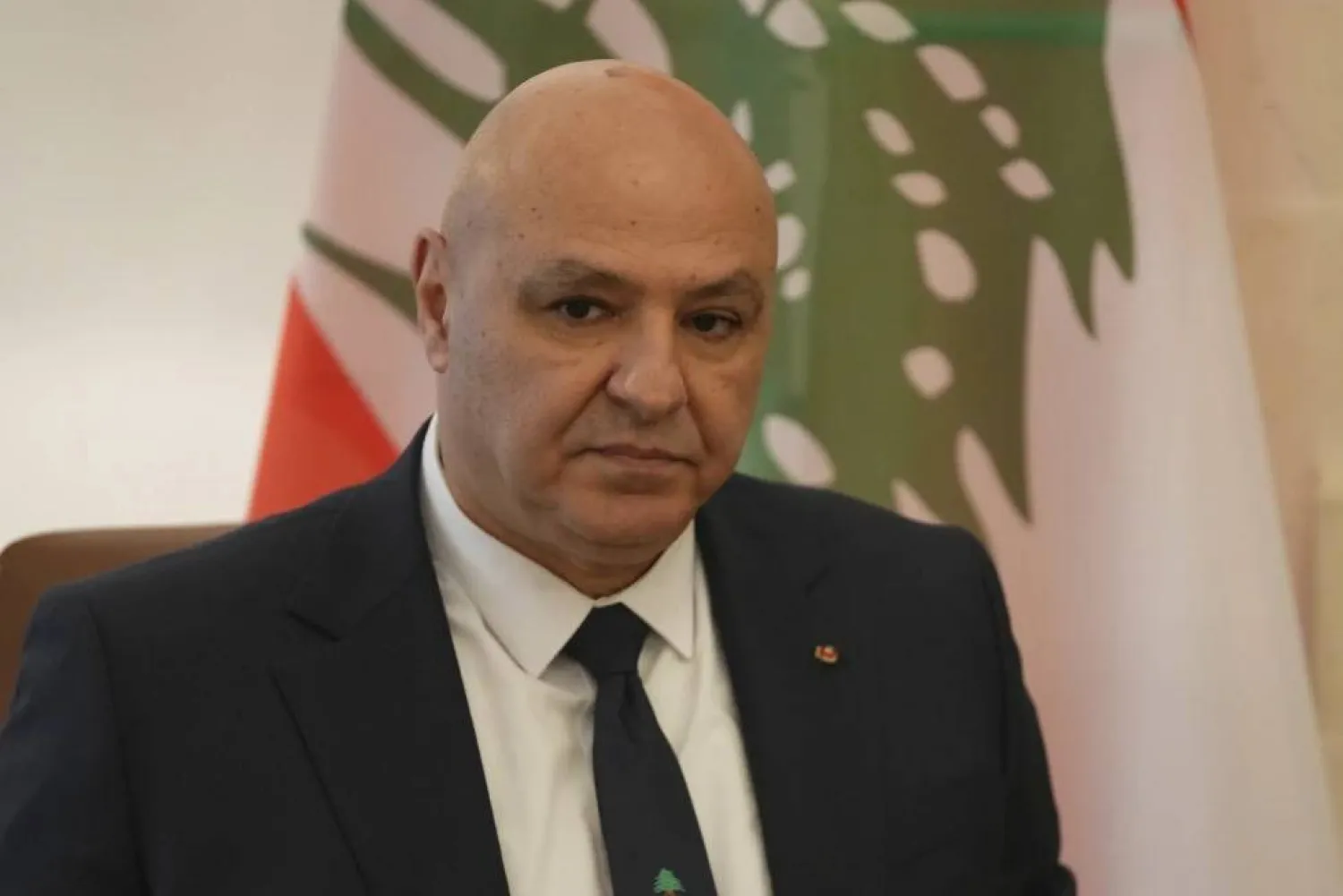
Lebanese President Joseph Aoun (AP)
TT

Lebanon's President to Asharq Al-Awsat: We Chose Negotiation to Limit the Occupation and the Suffering of Southerners

Lebanese President Joseph Aoun (AP)

With increasing military tension between the US and Iran in and around the Strait of Hormuz, Lebanese President General Joseph Aoun is trying to hold onto hope of emerging from the catastrophe that has afflicted his country.

Using the word "catastrophe" is not an exaggeration. The Israeli occupation in southern Lebanon has expanded, bringing with it destruction, exacerbating the suffering of displaced persons, and intensifying division over responsibility for the war and ways out of it.

Facing the Israeli military occupation of the South, Lebanon has no choice but to rely on American assistance, which it hopes will materialize further after the scheduled meeting at the White House on July 21 between the US and Lebanese presidents.

Aoun's Priorities for the Meeting with Trump

At Baabda Palace, Asharq Al-Awsat asked Aoun what Lebanon seeks from the White House meeting.

He replied: "First, we want Lebanon to remain on the American agenda ... There is no need to reiterate the importance of having a good relationship with the US and benefiting from President Donald Trump's expressed desire to help us; his role is vital, and we are counting on it."

"We face an extremely difficult and complex situation. We know well that the US is the only party capable of exerting pressure on the Israeli government to prevent it from targeting the southern suburbs (of Beirut), infrastructure, or expanding occupied areas in southern Lebanon. No other party can fulfill this role."

"We want the US administration to help us restore our entire land. We will not relinquish a single inch or a single citizen. The issue of our sovereignty is not subject to concession or interpretation. It is at the forefront of the national principles that we are keen to adhere to. We want the land to be returned and to be under the sole authority of the Lebanese army, meaning under the authority of legitimate Lebanese institutions," Aoun added.

He stressed that Lebanon is asking for its natural right to extend the authority of its legitimate institutions over all Lebanese territories. "We cannot leave southern Lebanon captive to regional developments, with its people paying heavy prices in lives and property."

"Lebanon's fate cannot be separated from the fate of its south, neither in security, nor in economy, nor in stability," Aoun added.
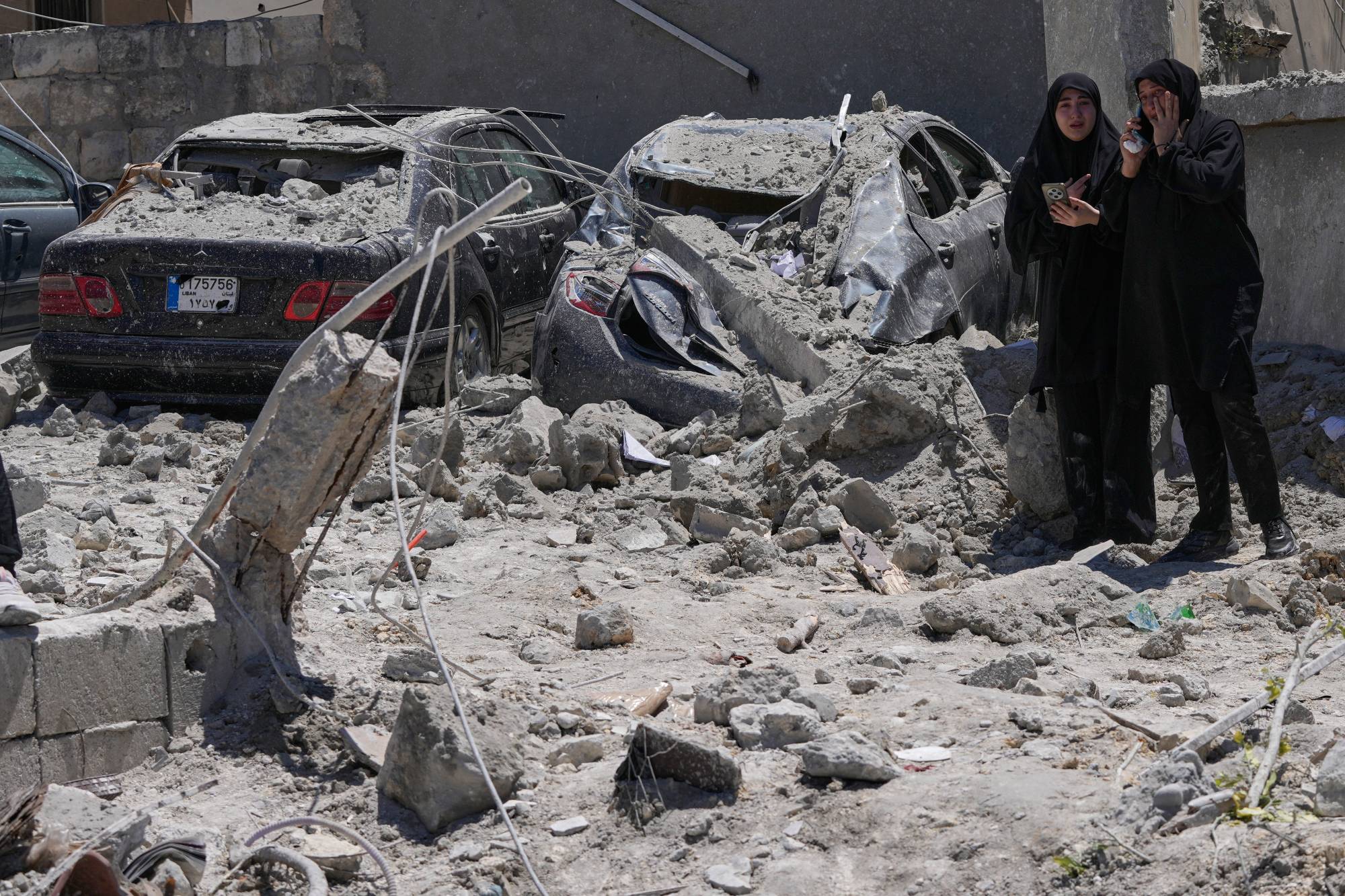
Relatives of missing victims weep, as they gather at the site of destroyed buildings that were hit in an Israeli airstrike in Qannarit village, southern Lebanon, Saturday, June 20, 2026. (AP Photo/Mohammed Zaatari)

"We want President Trump to support our legitimate demands for the restoration of our entire land, and he is expected to succeed in persuading Israel to withdraw from Lebanon. I want to inform him of the reality in southern Lebanon and the dangers of maintaining the current situation or returning to escalation," Aoun told Asharq-Awsat.

He also hoped for American support for the Lebanese army, which is tasked with difficult missions, and for the reconstruction of what the war has destroyed and assistance to stimulate the Lebanese economy after the significant losses it has suffered.

Calculations of Direct Negotiation with Israel

Regarding the division over the method of direct negotiations with Israel, Aoun said: "We were not in a situation that allowed for ideal choices. The war threatened to expand, along with Israel threatening to occupy more territory. The scenes of displacement were harsh, as were the scenes of destruction."

"There was a risk of widespread destruction to Beirut and its infrastructure. We were effectively faced with a single option, especially given the significant imbalance of power. We had no choice but to seek assistance from the US. Direct negotiations were the only available option for us to make a serious attempt to shorten the period of occupation of our land, alleviate the suffering of the displaced, open the door for their return to their villages, and strive to rebuild what was destroyed."
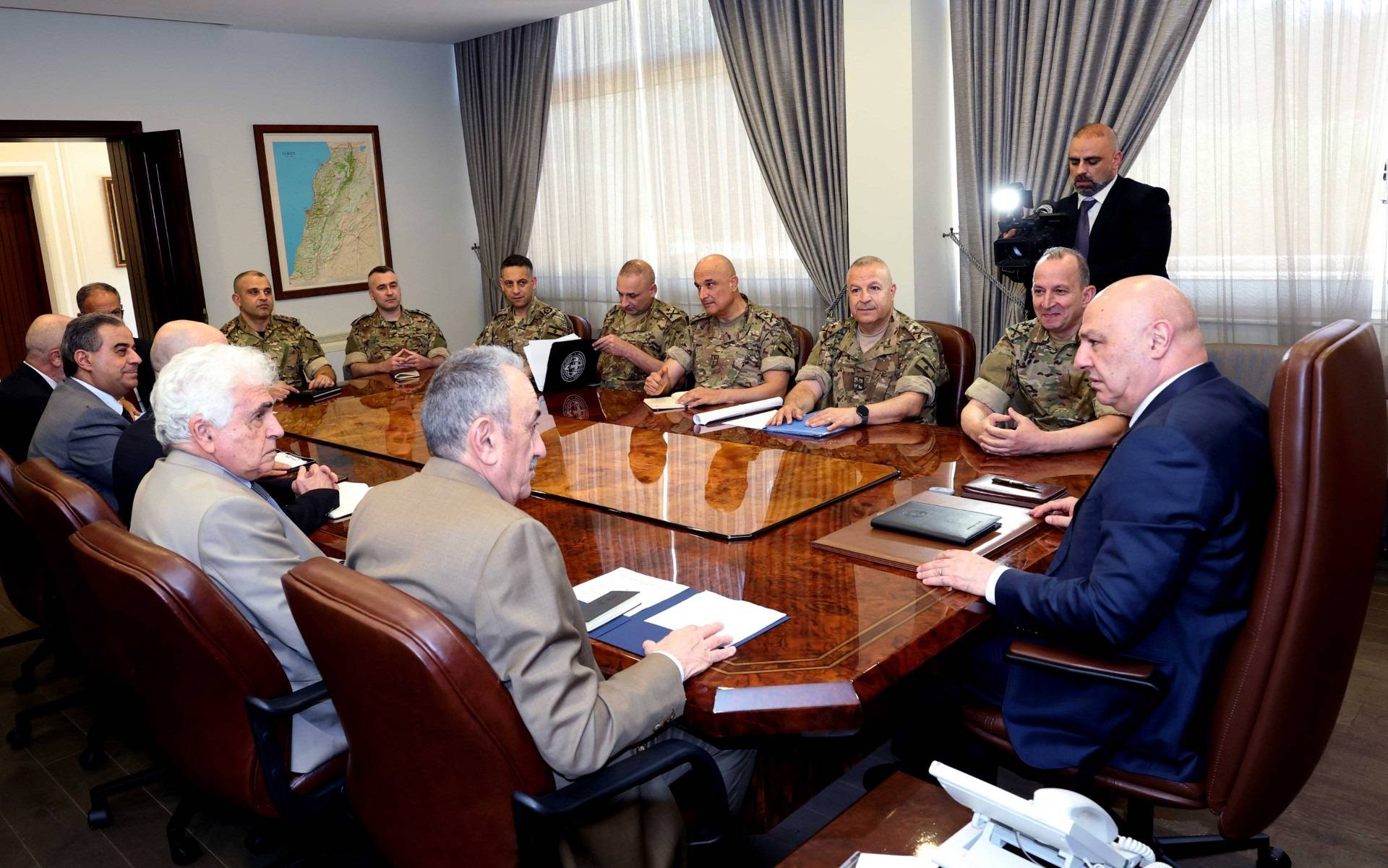
President Joseph Aoun meeting with the Lebanese negotiating delegation before heading to Washington (Lebanese Presidency)


Aoun pointed out that "the state is responsible for the fate of every inch and every citizen. There is no distinction between one inch and another, or one citizen and another. We made difficult decisions based on our national responsibilities. We cannot continue to pay prices for any other party."

"Lebanon's decisions must be made within its legitimate institutions. Lebanon must defend its interests, sovereignty, and stability, which is why we said we would not accept anyone else negotiating on our behalf or in our name, nor becoming a bargaining chip in others' calculations," he stated.

Regarding the uproar caused by Trump's suggestion of a meeting between him and Israeli Prime Minister Benjamin Netanyahu at the White House, Aoun stated that "the idea of this meeting is fundamentally ruled out, but social media and others sometimes indulge in baseless scenarios."

Attempts to Overthrow the Government

Regarding the possibility of opponents of the framework agreement between Lebanon and Israel resorting to overthrowing the government, he said: "Changing the government is guided by constitutional frameworks. However, using the street to overthrow the cabinet is rejected. Furthermore, institutions play their role, always within the limits of available capabilities."

He stressed that "the government's performance is excellent, and the ministers are productive."
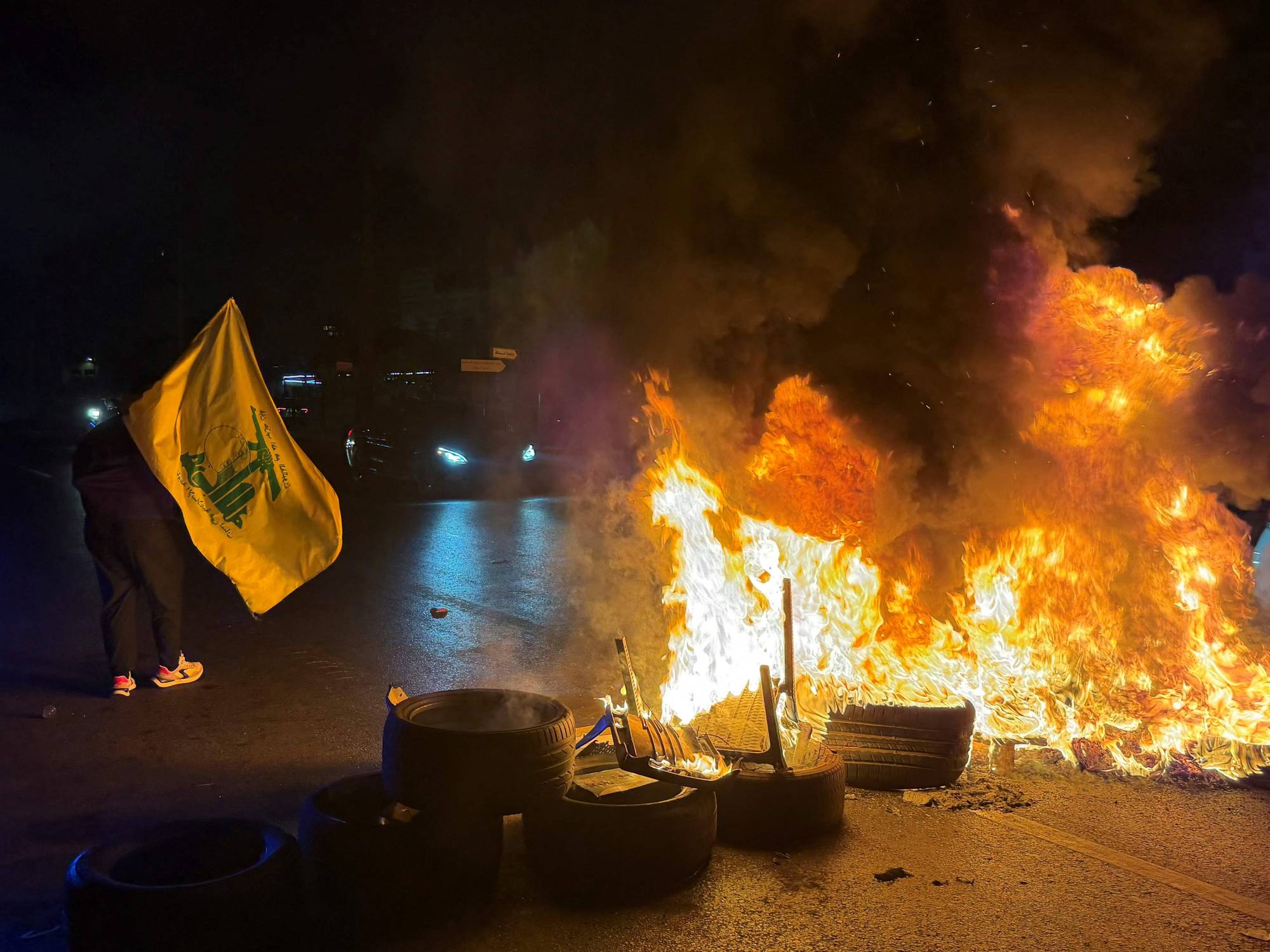
 

Hezbollah supporters block the old airport road in the southern suburbs of Beirut, with burning tires to protest against the trilateral agreement that was signed between the US, Israel and Lebanon on June 27, 2026. (Photo by Ibrahim AMRO / AFP)


Regarding his ties with Hezbollah, Aoun said: "We did not choose to sever ties with anyone. Our offices are open to everyone without exception."

"There is an objection to a choice made by the state to shorten the period of occupation and the suffering of the people. Whoever has another option to achieve this goal should present it, and we will discuss it. The option of continued war is not an option," he told Asharq Al-Awsat.

On the inclusion of a ceasefire in Lebanon in the first clause of the American-Iranian Memorandum of Understanding and its impact on the framework agreement, he said: "We welcome any assistance that aligns with Lebanon's interests. America is the only one capable of exerting pressure on Israel or persuading it. And Iran is the only one capable of influencing Hezbollah and its decisions. Of course, while affirming that Lebanon is the one negotiating on all matters related to it."

Regarding Lebanese Parliament Speaker Nabih Berri's opposition to the framework agreement with Israel, Aoun said: "Speaker Berri is a statesman, and we share what are considered red lines, which are not compromising civil peace, the reputation and role of the army, and not resorting to street protests."

He also noted that his relationship with Prime Minister Nawaf Salam is excellent.

Relationship Between Aoun and the Army Commander

Asked about the army's cohesion given Lebanon's circumstances and about rumors of renewed tensions between him and Army Commander General Rodolphe Haykal, the Lebanese president replied that "the army is cohesive and has not faltered. It is already implementing government decisions, naturally within the available capabilities."

"The army and all security institutions are doing everything they can. My relationship with General Haykal is excellent. There is no truth to the claims circulated by some media outlets."
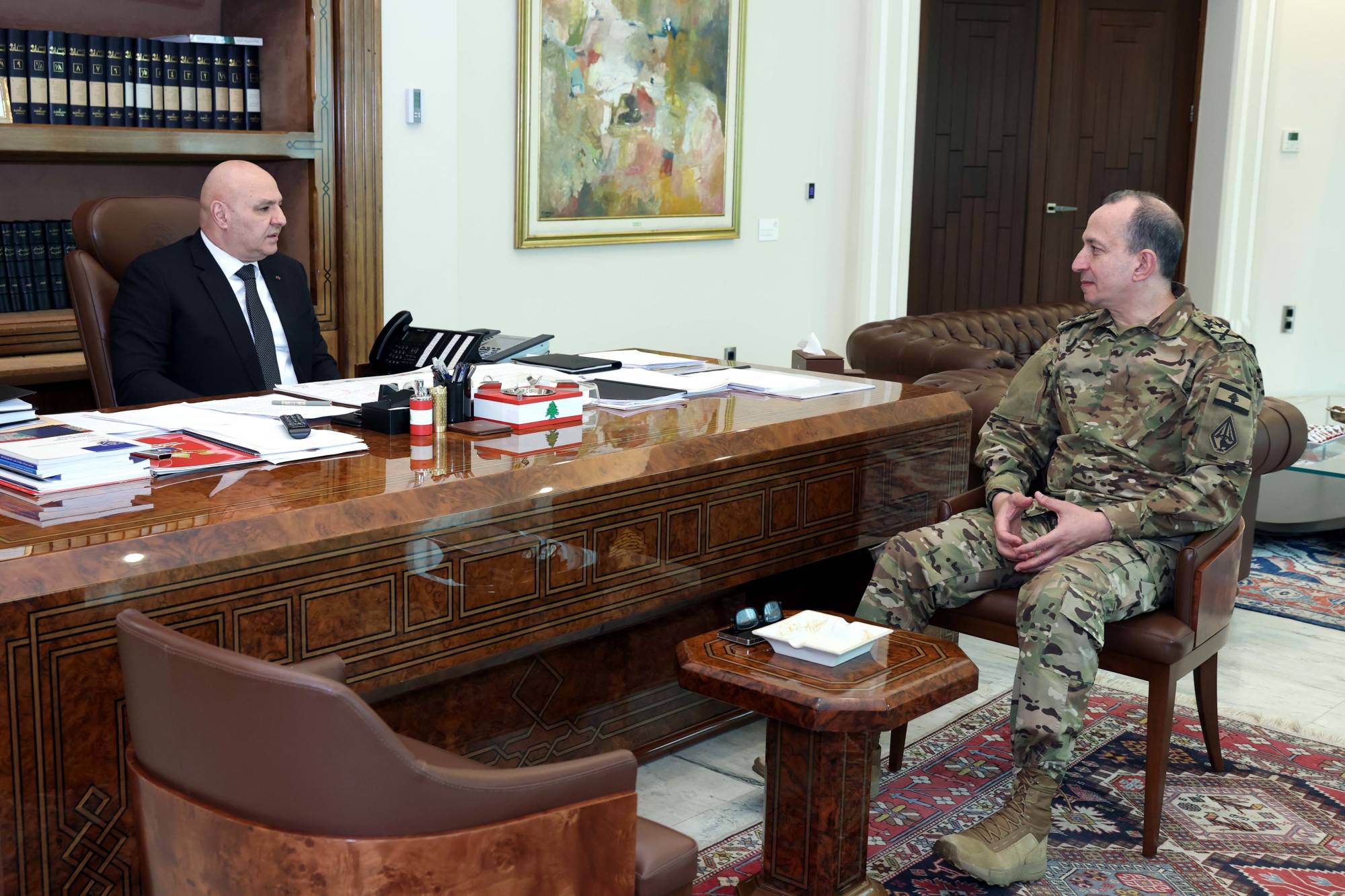
 

President Joseph Aoun meeting with Army Commander General Rodolphe Haykal (Lebanese Presidency)


Aoun also expressed his satisfaction with Arab support for Lebanon. He said: "Saudi Arabia, as always, has not hesitated to provide any assistance we request to support our efforts in restoring our rights and sovereignty."

"I would like to thank the Saudi leadership, especially Crown Prince Mohammed bin Salman, for the decision to resume Lebanese exports. I also want to thank the Qatari government for assisting Lebanon, and the same applies to the United Arab Emirates, which allowed its citizens to visit Lebanon."

When asked if he was concerned about his safety, Aoun replied with a smile: "God is the guardian. No one dies before their time comes."

Gaza Parents Urged to Stop Kids Flying Kites After Israel Warning to Hamas

Palestinians make a kite at a tent camp sheltering displaced people in Gaza City, August 25, 2026. (Reuters)
TT

Gaza Parents Urged to Stop Kids Flying Kites After Israel Warning to Hamas

Palestinians make a kite at a tent camp sheltering displaced people in Gaza City, August 25, 2026. (Reuters)

Gaza parents have been warned to stop their children flying kites in the war-ravaged enclave, after Israel threatened a forceful response if the Hamas group revives a tactic of launching incendiary kites over the border.

The popular committees, comprising representatives of local non-government organizations and charities that run Gaza displacement camps and shelters, issued the warning in a statement late on Monday.

The announcement was coordinated with Hamas authorities, a source in the movement ‌said.

"We are ‌working tirelessly on the ground and doing everything possible ‌to ⁠stop this practice, ⁠not to restrict the childhood of our children, who have already been deprived of the most basic rights to play and live in safety, but to protect their innocent lives," the statement said.

In 2018, Gazans sent incendiary balloons and kites over the border, causing fires across hundreds of acres of open fields and farmlands, in what they said was in protest at the ⁠Israeli blockade of the Hamas-controlled enclave.

KITES SCARE ISRAELI VILLAGERS

In ‌the past month, several kites that ‌were not reported to be carrying incendiary materials were spotted drifting from Gaza into Israel, ‌alarming Israelis who live in the nearby villages which came under ‌attack by Hamas in the October 7, 2023 assault that sparked the Gaza war.

On Sunday, Israeli Prime Minister Benjamin Netanyahu warned Hamas that unless that stopped immediately, "those responsible" for launching kites, balloons or drones toward Israel would be targets of assassination and ‌that areas from which they are sent will be ordered to evacuate.

Umm Mohammed, a mother from Gaza ⁠City who spoke ⁠with Reuters over a chat app, said she was worried her son could be hurt.

"Every summer, my kid, Ahmed, 10, and the kids in the street fly those kites to entertain themselves, but I will not allow him to, not anymore," she said.

A senior Israeli defense official said that Hamas was trying to provoke Israel by encouraging Gazans to fly kites across the border.

A Hamas official told Reuters the group has complained to ceasefire mediators that "Israel was making fake pretexts to continue the war on Gaza."

Israel complained to US President Donald Trump's Board of Peace, which oversees the implementation of the 2025 Gaza ceasefire deal, about the kites, according to a second Israeli official.


Strikes in Gaza Kill 4, Including 2 Children, a Week After US Asked Israel to Curb Attacks

A Palestinian inspects the old Abu Salim mosque a day after it was hit by an Israeli airstrike in Deir al-Balah in the central Gaza Strip on August 25, 2026. (AFP)
TT

Strikes in Gaza Kill 4, Including 2 Children, a Week After US Asked Israel to Curb Attacks

A Palestinian inspects the old Abu Salim mosque a day after it was hit by an Israeli airstrike in Deir al-Balah in the central Gaza Strip on August 25, 2026. (AFP)

Palestinian residents of war-battered Gaza fled homes and businesses as Israeli strikes and tank fire killed at least four people Monday, including two children, hospital officials said, a week after a US delegation asked Israel to draw down attacks.

After evacuation warnings by Israel's military, a strike hit a building in the Bureij refugee camp in central Gaza. One family was unable to flee and a 4-year-old child was killed, according to Awda Hospital, where he was taken. His mother and sister were wounded. There was no Israeli military comment.

Israeli strikes hit three other buildings across the territory after residents said they received evacuation warnings. Some people sprinted away, with mothers carrying children, while others moved amid the rubble in wheelchairs or with canes.

Smoke rose over the already devastated landscape.

Israel's military said it carried out strikes in the Shati refugee camp in Gaza City and in Deir al-Balah after issuing warnings, targeting what it described as two Hamas weapons storage facilities inside mosques. The military did not provide evidence but said the facilities contained dozens of “Kalashnikov rifles, magazines and additional military equipment.”

An earlier Israeli strike on a tent in Deir al-Balah killed a man, according to Al-Aqsa Hospital, where his body was taken. Israel’s military said it killed a militant affiliated with Hamas’ special forces unit.

A man was killed and five others were wounded in an Israeli strike in Khan Younis in southern Gaza, according to Nasser Hospital, which received the casualties.

And Israeli tank fire hit an area east of Khan Younis, killing a 10-year-old girl, according to the hospital, where her body was taken.

Israel's military did not immediately comment on the strike in Khan Younis and said it was not aware of the incident with the child.

Israel has continued to carry out targeted killings in the week since a US delegation met with Prime Minister Benjamin Netanyahu in an effort to push last year's ceasefire deal forward.

US negotiator Jared Kushner asked Netanyahu to draw down Israel’s attacks in Gaza, a person familiar with the meeting said last week, speaking on condition of anonymity because they weren’t authorized to brief journalists.

Israel has announced strikes on six of the seven days since that meeting.

While the heaviest fighting in Gaza has subsided since the ceasefire took hold in October, Israeli airstrikes have killed at least 1,288 Palestinians, according to Gaza's health ministry. The ministry, part of the Hamas-led government, maintains detailed casualty records that are seen as generally reliable by UN agencies and independent experts. It does not give a breakdown of civilians and fighters.

Gunmen have carried out shooting attacks on Israeli troops, and Israel says its strikes are in response to that and other ceasefire violations. Five Israeli soldiers have been killed since the ceasefire.

Palestinian officials have reported strikes on homes and police stations, and Hamas has claimed that attacks are designed to destabilize Gaza and prevent progress on the ceasefire's next steps, which include demilitarizing and reconstructing the territory and the deployment of an international stabilization force.

Israel warns against kites sent from Gaza

In the period before the Hamas-led Oct. 7, 2023, attack on southern Israel that sparked the war, burning kites and balloons were sent from Gaza into Israel, causing fires and other damage.

Now Israeli officials are expressing concern after several kites were found in a kibbutz near Gaza. No weapons or dangerous materials were attached.

Netanyahu and Defense Minister Israel Katz in a statement Sunday threatened to ramp up strikes on Gaza unless Hamas ensures the kites stop flying toward Israel.

Hamas spokesperson Hazem Qassem has called the kites “essentially children’s toys” and accused Israel of using them as “an attempt to justify the continuation of aggression and violations against our people.”

The Oct. 7 attack killed some 1,200 people and saw 251 taken hostage. All hostages or their remains were later released. Israel’s retaliatory offensive in Gaza has killed more than 73,422 Palestinians, according to Gaza’s health ministry.


Al-Zaidi: Iraq Will Not Become a Platform to Harm Others

Iraqi Prime Minister Ali al-Zaidi delivers his speech at the event in Baghdad. (INA)
TT

Al-Zaidi: Iraq Will Not Become a Platform to Harm Others

Iraqi Prime Minister Ali al-Zaidi delivers his speech at the event in Baghdad. (INA)

Iraqi Prime Minister Ali al-Zaidi stressed on Monday that his government is forging ahead in building a “free” and “sovereign” Iraq, adding that international coalition forces will complete their withdrawal on September 30.

“Since assuming responsibility for the government, we have pledged to move toward building a fully sovereign Iraq in which the people enjoy all the foundations of respect, dignity and security, and whose citizens cooperate in protecting the country and safeguarding its wealth and the future of its generations,” he said during a speech at an event in Baghdad marking the Prophet Muhammed’s birthday.

Iraq will declare the completion of its sovereignty over its entire territory on September 30, he announced, reported Iraq’s state news agency INA.

Moreover, he said: “Iraq should not be a platform for harming others.”

“Our region has lived for decades amid ongoing tensions that have led to divisions in the approaches and governing visions of the countries of the Arab and Islamic world,” remarked al-Zaidi.

“Our government program included a clear approach to construction and reform, combating corruption and strengthening a productive working environment, alongside building security institutions operating under the framework of the Constitution.”

Earlier, al-Zaidi received in Baghdad Commander of German Forces Deployed Abroad Gunter Schneider.

The PM highlighted “the importance of transitioning toward multidimensional relations with the coalition countries.”

The meeting reviewed preparations for completing the withdrawal of coalition forces from Iraq.

Al-Zaidi commended Germany’s longstanding role in assisting Iraq in its fight against terrorism, particularly during the war on ISIS.