


France Returns 23 Syrian Treasures After 15 Years as Macron Visits Damascus

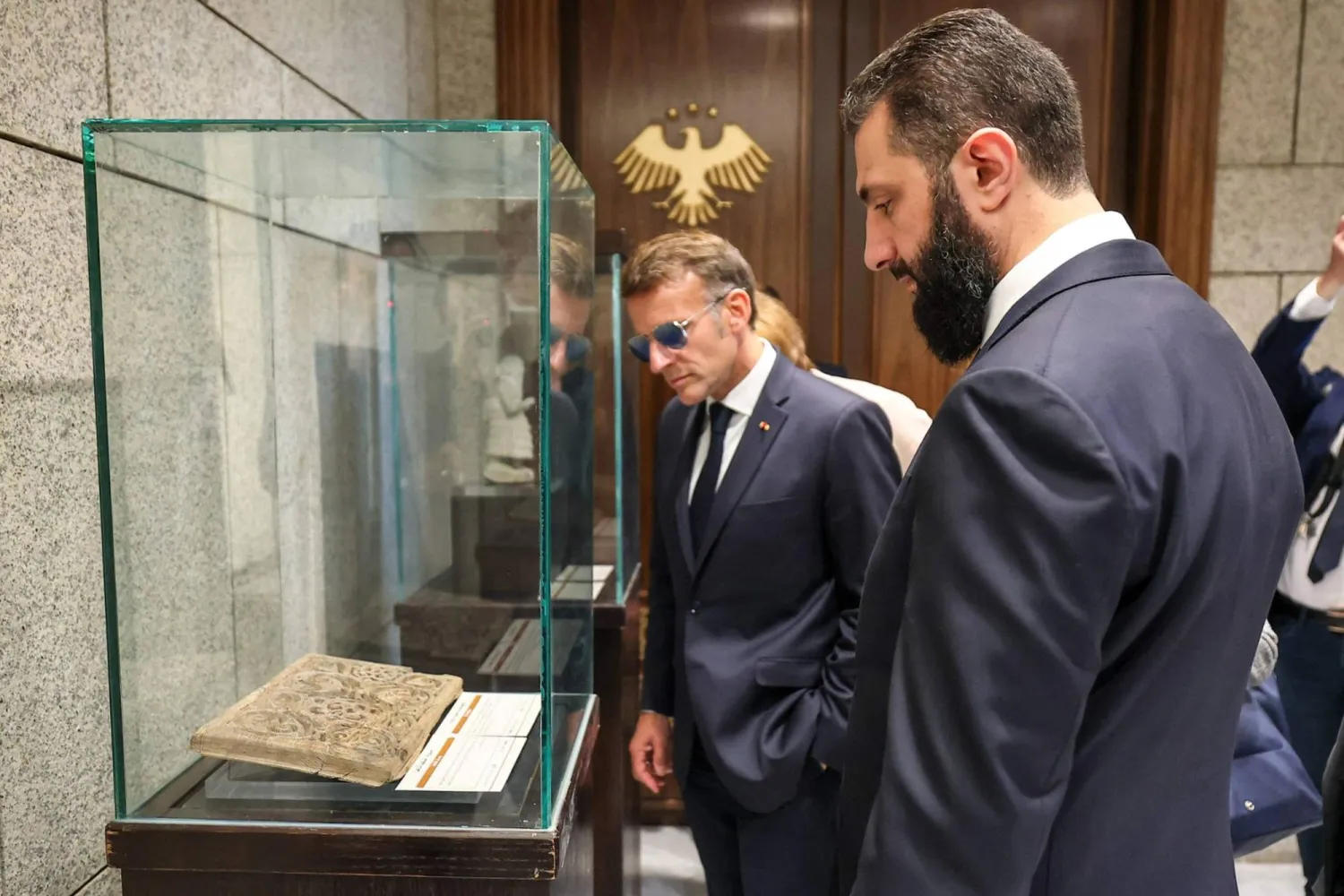
This handout picture released by the official Syrian Arab News Agency (SANA) shows Syria's interim President Ahmed al-Sharaa and France's President Emmanuel Macron inspecting repatriated Syrian artifacts that had been on loan to the Arab World Institute in Paris since 2010, during an official ceremony at the at the People's Palace in Damascus on July 7, 2026. (SANA/AFP)
TT

France Returns 23 Syrian Treasures After 15 Years as Macron Visits Damascus

This handout picture released by the official Syrian Arab News Agency (SANA) shows Syria's interim President Ahmed al-Sharaa and France's President Emmanuel Macron inspecting repatriated Syrian artifacts that had been on loan to the Arab World Institute in Paris since 2010, during an official ceremony at the at the People's Palace in Damascus on July 7, 2026. (SANA/AFP)

France has finally returned 23 Syrian archaeological treasures that remained in the country for about 15 years after being loaned for an exhibition. Their return coincided with French President Emmanuel Macron’s landmark visit to Damascus — the first by a major Western leader since the ouster of Bashar al-Assad in late 2024.

The artifacts, flown aboard Macron’s presidential aircraft on Tuesday and returned to Syria’s National Museum, include Roman bronze objects, Byzantine and Islamic-era pieces and a richly colored mosaic panel that once adorned the Umayyad Mosque. The collection was loaned in 2011 to an exhibition of Syrian antiquities at the Arab World Institute in Paris.

The Syrian Foreign Ministry said that the artifacts belonged to museums in Damascus, Aleppo, Latakia and Palmyra and remained in France after diplomatic ties between the two countries were severed under Assad’s rule. It described France as the first country to cooperate with Syria under a national campaign to recover antiquities held abroad.

“Today we are unveiling a selection of archaeological artifacts that have been returned to Syria,” said Ayman al-Nabo, deputy director-general of Syria’s Directorate-General of Antiquities and Museums, at the opening of an exhibition at the National Museum in Damascus featuring two of the returned pieces.

At the National Museum, curator Nivine Saadeddine said the returned collection spans some of the most significant periods of Syrian civilization.

“They date from the ninth millennium B.C. to the 14th and 15th centuries A.D. Every object represents a distinct chapter in Syria’s history,” she said.

For Maamoun Abdulkarim, Syria’s former director-general of antiquities and museums, the return closes a chapter that stretched across years of war, diplomatic isolation and failed attempts to retrieve the collection.

Abdulkarim, now a professor of archaeology at the University of Sharjah in the United Arab Emirates, said the loan was made as part of normal cultural cooperation before the conflict.

Abdulkarim said he formally requested the return of the artifacts in 2014 but received no response. He said French officials later told Syrian authorities they could not communicate with representatives of Assad’s government, which had become internationally isolated and subject to broad sanctions after the crackdown on anti-government protests and the ensuing civil war.

He said UNESCO’s Beirut office later tried to mediate, but the effort also failed.

The dispute also had personal consequences, Abdulkarim said.

“We were interrogated by Bashar al-Assad’s security forces,” he said. “We were beaten and accused of being too lenient in protecting Syria’s antiquities. Had it not been for the correspondence we had sent to the institute proving we had repeatedly requested the artifacts’ return, we could have been imprisoned.”

Despite the ordeal, Abdulkarim said he welcomed the renewed cultural cooperation.

“I am very happy that, despite everything that happened, the war is over, Syria is reopening to the world and cultural exchange is returning,” he said.

Syria’s Ministry of Foreign Affairs said France is the first country to cooperate with Syria under a national campaign to recover antiquities held abroad since Assad was overthrown by opposition forces, ending more than five decades of Assad family rule.

Despite the war and severed ties, Syrian artifacts have previously been repatriated under formal loan agreements, Abdulkarim said.

Around 2017, Italy returned two pieces that had been damaged by the ISIS group after restoring them for an exhibition in Rome on the destruction of cultural heritage, he added.

Other artifacts remain in Japan under a longstanding archaeological cooperation agreement dating back to excavations conducted there in the 1980s.

Meanwhile, Abdulkarim said, thousands of Syrian artifacts looted from archaeological sites during the war remain scattered around the world.

“Recovering them will require years of diplomatic work,” Abdulkarim said.

He said the return from France sends “a positive message for the future” and could help encourage further international cooperation to recover Syria’s stolen heritage.

Syria’s cultural heritage suffered extensive damage during the country’s nearly 14-year conflict. Ancient cities, including the UNESCO World Heritage site of Palmyra, were heavily damaged, while landmarks such as the medieval Crusader fortress of Crac des Chevaliers bear scars from years of fighting.

ISIS militants also destroyed temples, tombs and monumental sculptures in Palmyra, considering them symbols of idolatry, while trafficked antiquities became a lucrative source of revenue for armed groups.


Saudi Culture Ministry, ALECSO Sign Executive Program for Intangible Cultural Heritage

The agreement focuses on organizing a specialized symposium to exchange expertise on safeguarding policies, methodologies, and practices. SPA
TT

Saudi Culture Ministry, ALECSO Sign Executive Program for Intangible Cultural Heritage

The agreement focuses on organizing a specialized symposium to exchange expertise on safeguarding policies, methodologies, and practices. SPA

The Ministry of Culture has signed an executive program with the Arab League Educational, Cultural and Scientific Organization (ALECSO) to establish a cooperative framework to safeguard intangible cultural heritage and advance shared Arab cultural goals.

Thursday’s agreement focuses on organizing a specialized symposium to exchange expertise on safeguarding policies, methodologies, and practices.

It also includes formulating recommendations for bilateral and multilateral cooperation and showcasing living Arab heritage practices on the international stage to unify regional preservation efforts.

Building upon a 2022 memorandum of understanding between the ministry and ALECSO, the executive program underscores both parties' commitment to broadening institutional partnerships that ensure the long-term protection and sustainability of intangible cultural heritage.


Visual Arts Commission Marks Saudi National Day with Cultural Campaign

Visual Arts Commission logo
TT

Visual Arts Commission Marks Saudi National Day with Cultural Campaign

Visual Arts Commission logo

The Visual Arts Commission has launched a cultural campaign for Saudi National Day, evoking national memory, culture, and shared lived experiences through visual art.

Centered around the question "What is a homeland?", the initiative explores how art intersects with the details of everyday life, inviting community members to contribute their personal stories, reflections, and cherished memories to the national narrative.

By positioning art as a platform for self-expression and cultural reflection, the initiative highlights individual experiences that shape collective Saudi identity.

The campaign aligns with Saudi Vision 2030 objectives to support culture and the arts, expand their footprint in society, and reinforce national heritage within the Kingdom's evolving cultural and artistic landscape.


Two Unseen Monet Paintings to be Sold in Paris

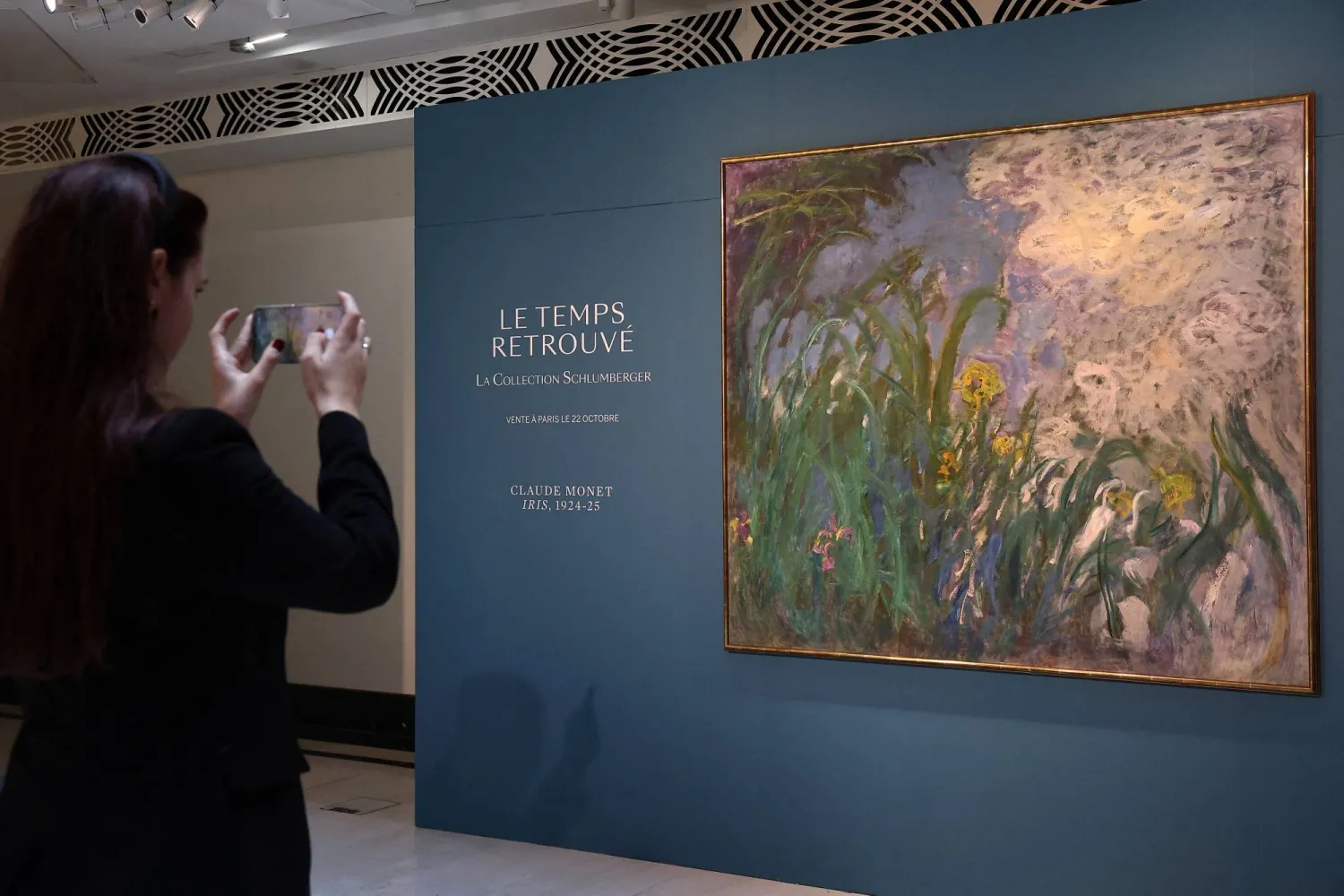
A visitor takes a picture of the painting "Iris, 1924-1925" by French painter Claude Monet (1840-1926) during the presentation of 28 art works from the Schlumberger Collection ahead of the auction at Sotheby's auction house in Paris, France, September 17, 2026. REUTERS/Abdul Saboor
TT

Two Unseen Monet Paintings to be Sold in Paris

A visitor takes a picture of the painting "Iris, 1924-1925" by French painter Claude Monet (1840-1926) during the presentation of 28 art works from the Schlumberger Collection ahead of the auction at Sotheby's auction house in Paris, France, September 17, 2026. REUTERS/Abdul Saboor

Two paintings by the Impressionist master Claude Monet that have never been shown in public are to be sold in Paris next month by the Schlumberger family of France, auction house Sotheby's said Thursday.

"Iris", a large painting Monet completed toward the end of his life, has been valued at 22 million to 30 million euros ($25-34 million), which represents "the highest estimate ever given for a painting offered at auction in France", Sotheby's said as it unveiled the sale at its Paris headquarters.

It has never left the Schlumberger family's home in Paris after being acquired by Jeanne Schlumberger (1889-1983), who was described as "a brilliant art collector" by Sotheby's art department co-head Thomas Bompard, AFP reported.

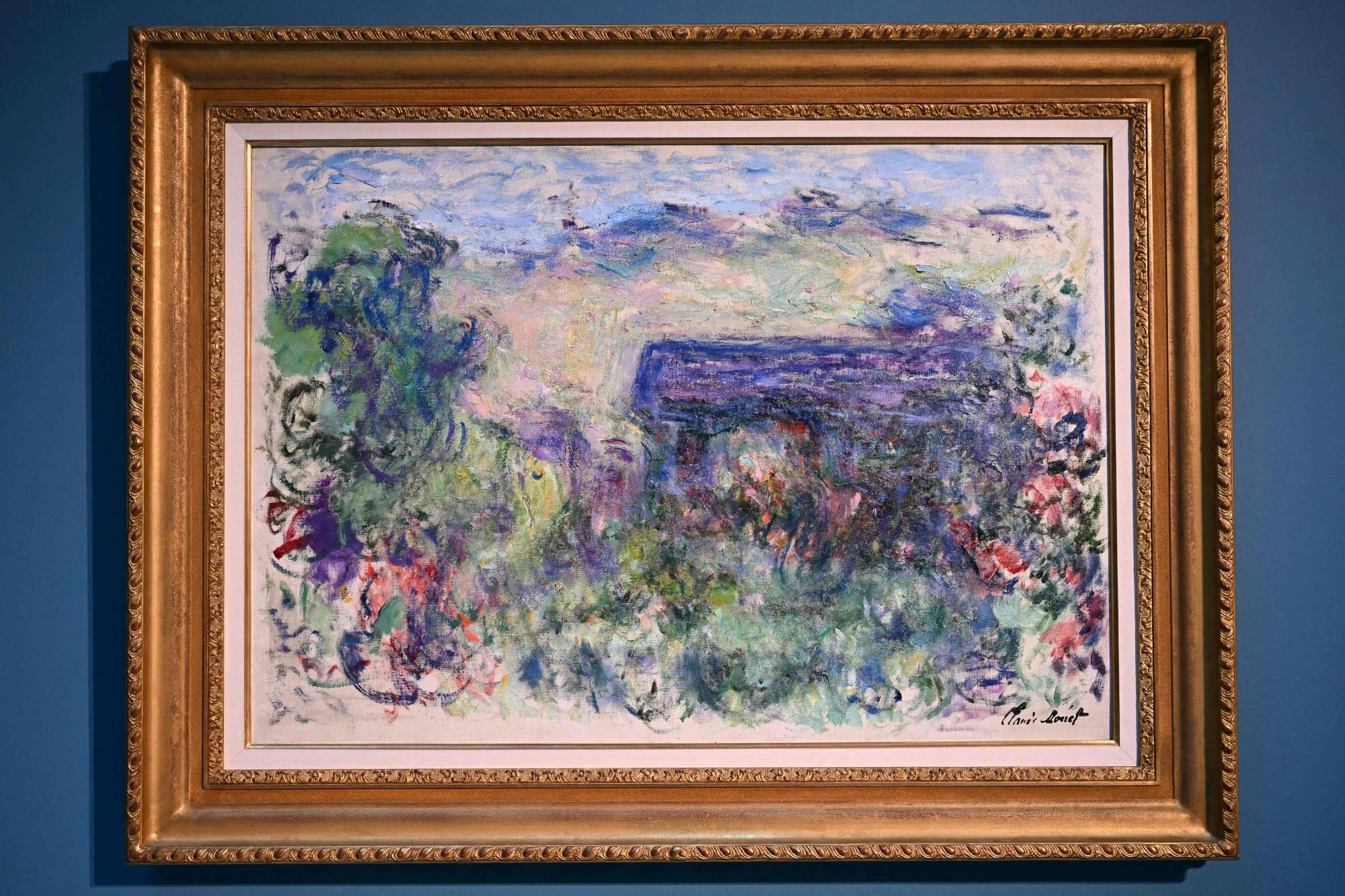
Alongside "Iris", three other canvases by Monet are included in the sale on October 22, among them "Saule Pleureur" (Weeping Willow), valued at 9-12 million euros.

This photograph shows French painter Claude Monet's La maison a travers les roses (The House Seen Through the Roses), during a preview of 28 Impressionist works from the Schlumberger Collection, unveiled ahead of the October 22, 2026, sale at Sotheby's auction house in Paris on September 17, 2026. (Photo by LOU BENOIST / AFP)

The sale comes in the year marking the centenary of Monet's death on December 5, 1926, which is being commemorated by two Paris exhibitions opening in late September: "Monet, Painting Time" and "Stories of Landscapes, from Monet to Hockney."

The Schlumberger collection, which will be shown in Hong Kong and New York before the sale, also includes three works by Paul Cezanne, among them "La Ferme" (The Farm), "the largest work by the artist ever to be offered at auction," estimated at 600,000 to 800,000 euros.
