


Spain Says Trump Softened Rhetoric After Learning of Madrid’s Contributions to NATO

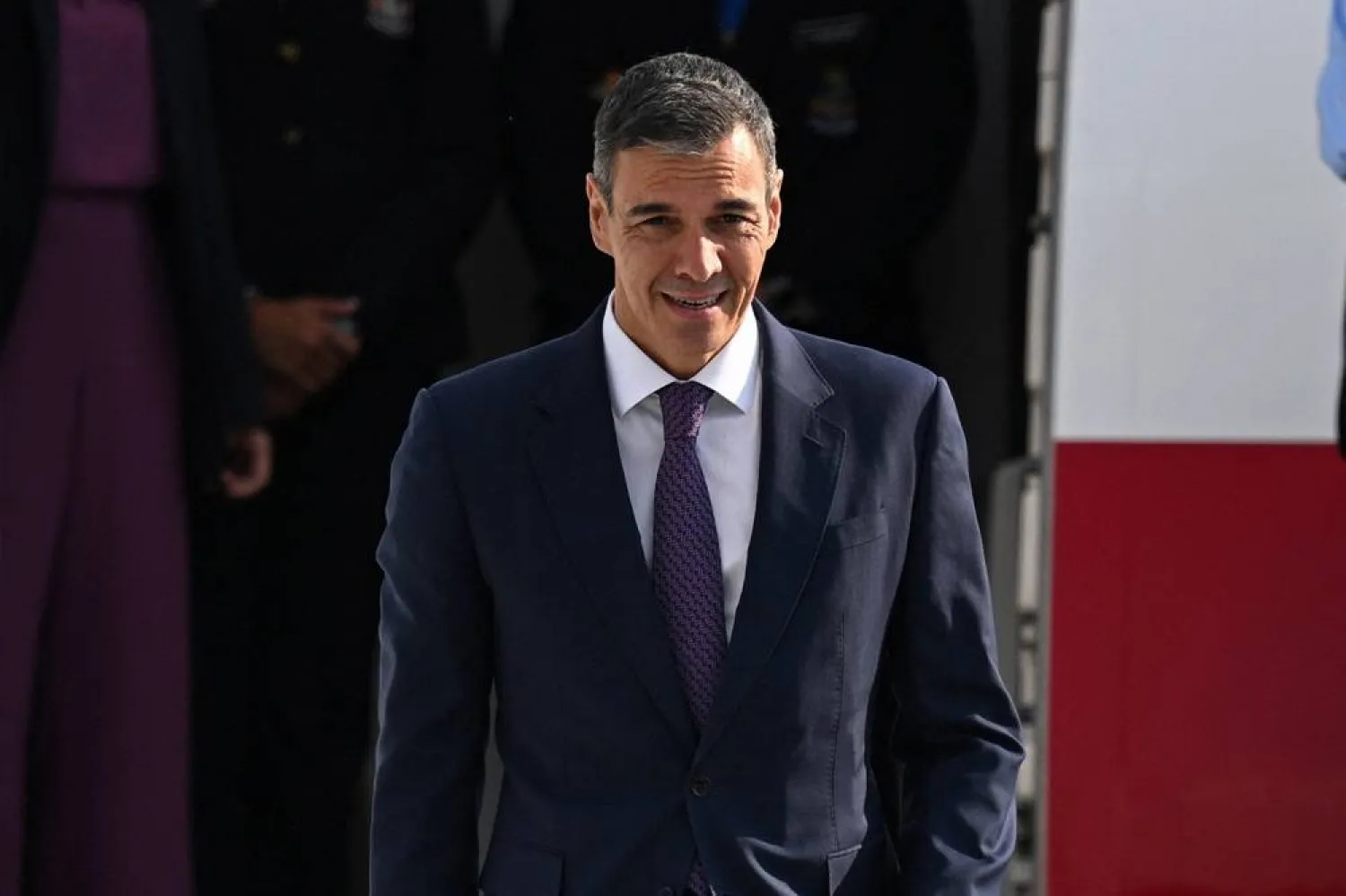
Spanish Prime Minister Pedro Sanchez arrives at Ankara Airport ahead of the 36th NATO Heads of State and Government Summit in Ankara, Türkiye, July 7, 2026. (Reuters)
TT

Spain Says Trump Softened Rhetoric After Learning of Madrid’s Contributions to NATO

Spanish Prime Minister Pedro Sanchez arrives at Ankara Airport ahead of the 36th NATO Heads of State and Government Summit in Ankara, Türkiye, July 7, 2026. (Reuters)

Madrid said on Thursday US President Donald Trump had softened his rhetoric on Spain, hours after threatening to halt trade with the NATO ally, because he had been made aware of a surge in Madrid's contributions to the alliance in recent years.

At a NATO summit in Ankara on Wednesday, Trump called Spain a "terrible partner" and ordered an immediate halt to all trade with the country after disputes over defense spending and the Iran war.

On his way back to the United States after the summit, he told reporters aboard Air Force One: "I did have issues, and I still do. But Spain, they came back all the way today. Spain was very generous today."

Asked what Spain had done, ‌he said: "They honored ‌a request for lots of payments, and if they didn't, we ‌wouldn't ⁠have even talked to ⁠them."

A spokesperson for Spanish Prime Minister Pedro Sanchez said this was understood to be a reference to Madrid complying with NATO's former defense spending target of 2% of GDP.

At the summit, Sanchez highlighted that Spain would reach that goal this year after more than doubling nominal defense spending from 0.98% of GDP in 2017 to nearly €33 billion ($37.7 billion).

He played down the rift and said he had a "very cordial" conversation with Trump during the summit.

But Trump has repeatedly criticized Spain for not agreeing to a new objective ⁠for NATO member states to spend 5% of GDP on defense by ‌2035. Spain's left-wing government says it wants to respond to ‌real threats rather than increasing spending for the sake of it, as that would imply cuts to ‌social benefits.

It was not immediately clear what the softening of Trump's rhetoric might mean for his ‌threat to halt trade.

Asked about the next steps following Trump's directive, a US official in Washington told Reuters the relevant federal agencies would present Trump with a "menu" of Spanish products that may be embargoed.

Trade lawyers say Trump could invoke the International Emergency Economic Powers Act to impose a full or partial embargo on Spanish imports. ‌Trump's first administration imposed a 30% anti-dumping tariff on Spanish black olives in 2018.

OPPOSITION CRITICISM

According to the Spanish government's agenda, Defense Minister Margarita Robles ⁠was set to meet ⁠with US Ambassador Benjamin Leon later on Thursday for a "working meeting", without providing further details.

Sources in the Spanish delegation to Ankara cited by El Mundo said Madrid likened the dispute to a staged fight lacking actual conflict and that Spanish officials had not detected any economic consequences or a decline in investment in Spain in recent years despite Trump's criticisms.

Some figures in the main opposition People's Party (PP) blamed Sanchez for the spat but said they stood with their country.

A senior PP official highlighted the interdependence between Spanish and US firms, which meant "economic reality takes precedence over the grandiloquent statements (Trump) seeks to make in order to attack Spain".

In the PP-run region of Aragon - where big US tech firms including Amazon and Microsoft have invested billions of dollars in data centers - officials said it was business as usual.

Santiago Abascal - a Trump ally who leads far-right party Vox - said the tensions with Washington were "absolutely dramatic" and accused Sanchez of "destroying Spain's credibility on the world stage".



Costa Rica Bars UN Rapporteur on Palestinian Territory, Drawing Concern from Rights Chief

UN Special Rapporteur on the occupied Palestinian territories Francesca Albanese holds a press conference on the human rights situation in Gaza in Geneva on September 15, 2025. (AFP)
TT

Costa Rica Bars UN Rapporteur on Palestinian Territory, Drawing Concern from Rights Chief

UN Special Rapporteur on the occupied Palestinian territories Francesca Albanese holds a press conference on the human rights situation in Gaza in Geneva on September 15, 2025. (AFP)

Costa Rica denied entry to the United Nations special rapporteur on the occupied Palestinian territory, drawing criticism from UN human rights chief Volker Turk on Friday.

Costa Rica's move put the small Central American country's increasingly close alignment with Washington and Israel on security and foreign policy into the spotlight.

Turk said he was "deeply concerned" by Costa Rica's decision to bar Francesca Albanese from entering the country and urged authorities to reconsider after she was stopped at Juan Santamaria airport, which serves the capital San Jose.

Albanese, an Italian national, had ‌traveled to ‌Costa Rica to receive an honorary doctorate from ‌the ⁠state-run University of Costa ⁠Rica. A UN special rapporteur is an independent expert appointed by the UN Human Rights Council to investigate and report on rights abuses in a specific country.

The UN human rights office said on X that Albanese was denied entry on "claimed national security grounds." Costa Rica's migration office said it had acted after receiving ⁠an alert and that the decision was consistent with ‌national security measures.

Albanese, who has been ‌sanctioned by the United States under measures related to the International Criminal ‌Court, said she hoped Costa Rica would reverse the decision ‌and rejected what she described as efforts to link her to terrorism.

In a video call interview with journalist Ahmed Shihab-Eldin recorded from a gate at the airport, Albanese said authorities took her passport and that she ‌was offered a detention room to sleep in that was so smelly she almost got sick.

"I was ⁠almost forced ⁠to board the plane to be shipped back to Paris. I said no, and I opposed it... and they threatened to put me on the plane by force," she added.

Albanese has become one of the most outspoken international critics of Israel's conduct in Gaza, making her a frequent target of pro-Israel officials and governments.

Israel's UN ambassador, Danny Danon, praised Costa Rica's decision in a post on X.

Costa Rica, under President Laura Fernandez, has deepened cooperation with the United States on security and has moved closer to Israel, a notable shift for a country long associated with support for multilateral institutions.


Eisenkot Accuses Netanyahu's Party of Stalling Israeli Coalition Talks

Gadi Eisenkot, who is tasked with forming the next Israeli government, attends a conference at the parliament in Jerusalem on November 25, 2026. (AFP)
TT

Eisenkot Accuses Netanyahu's Party of Stalling Israeli Coalition Talks

Gadi Eisenkot, who is tasked with forming the next Israeli government, attends a conference at the parliament in Jerusalem on November 25, 2026. (AFP)

Gadi Eisenkot, who is trying to form the next Israeli government, on Friday accused the party of caretaker Prime Minister Benjamin Netanyahu of stalling coalition talks in a bid to bring about new elections.

Eisenkot's centrist Yashar party has in recent days agreed coalition deals with two allied parties, but the route to a parliamentary majority is still far from certain.

After the October election failed to deliver a clear majority for either bloc, Yashar has also held talks with Netanyahu's right-wing Likud party over the possibility of forming a national unity government involving both parties.

But no breakthroughs on that front have ostensibly been reached.

"Likud, for its part, was unwilling to compromise and, over two weeks, refused to put a single concrete proposal on the table," Eisenkot said in a statement on Friday.

"Their conduct points to an effort to run down the clock until the mandate expires, split the Change bloc and drag Israel into another election under the outgoing government," he added.

Eisenkot has until December 6 -- a deadline which can be extended by 14 days -- to form a government to replace Netanyahu.

His wide-ranging camp has faced divisions on whether to forge alliances with the ultra-Orthodox parties, or the Arab-majority lists, or whether to form a unity government with Likud.

"We are approaching a moment of decision," Eisenkot said on Friday.

"The question is whether Likud will engage in serious negotiations and commit to a partnership that requires compromise or keep up appearances and continue to stall," he added, but maintained he was still open to talks if Likud was "genuinely prepared to change course".

Likud, in turn, accused Eisenkot of working to form a "dangerous left-wing government" but nonetheless said it would still be open to a unity government.

Eisenkot's Yashar party has so far agreed coalition deals with the left-leaning Democrats party and the right-wing Israel Beiteinu party.

Together, they have a combined total of 36 lawmakers -- far short of the 61 needed for a parliamentary majority.


Iran Says Enemy Should Expect Action in Air and at Sea

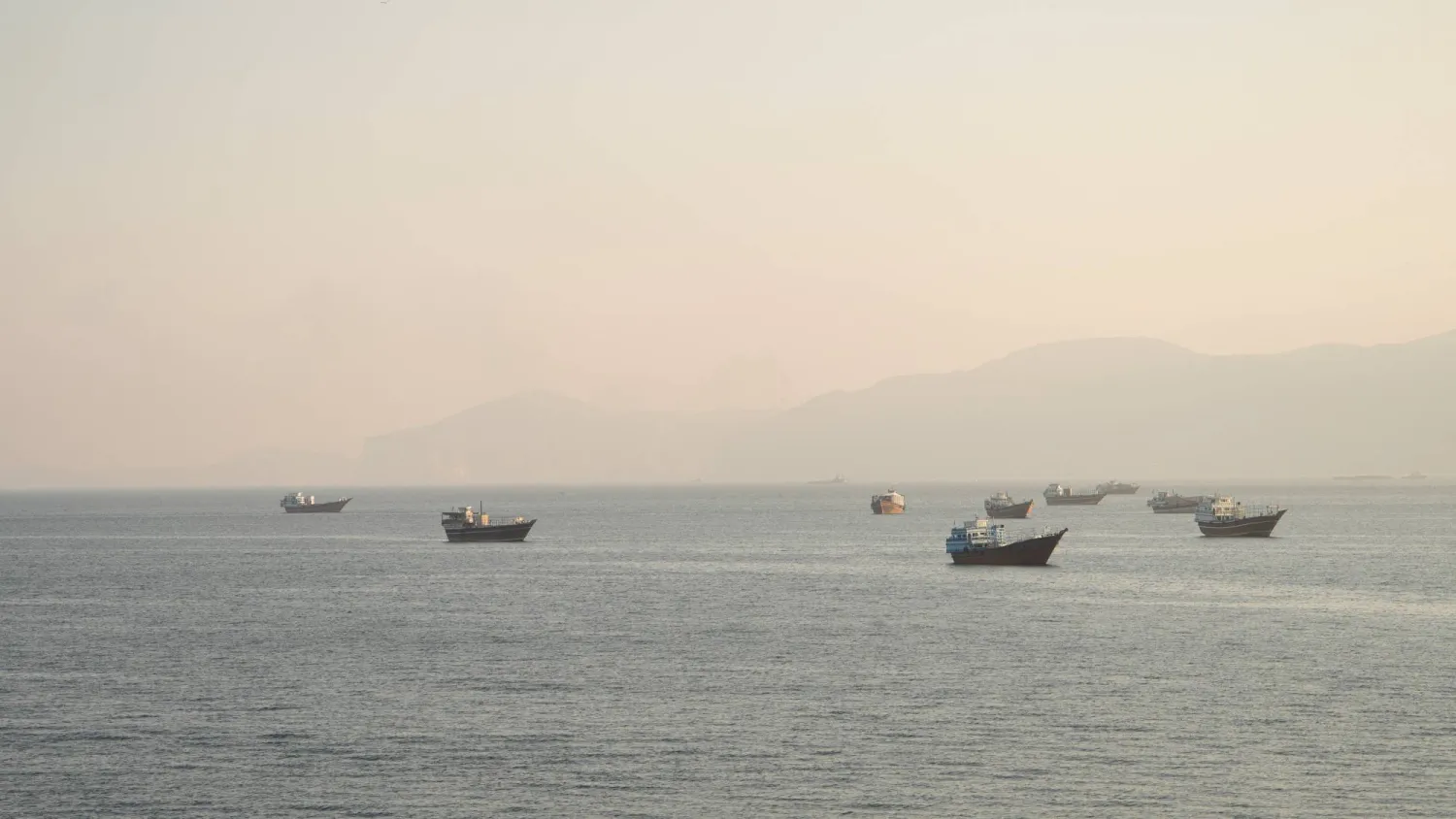
Vessels at the Strait of Hormuz, as seen from Musandam, Oman, November 23, 2026. (Reuters)
TT

Iran Says Enemy Should Expect Action in Air and at Sea

Vessels at the Strait of Hormuz, as seen from Musandam, Oman, November 23, 2026. (Reuters)

Iran's Revolutionary Guards Aerospace Force commander Majid Mousavi said in a post ‌on ‌X on ‌Friday ⁠that Iran's enemies should ⁠expect action in the air and ⁠at sea.

Breaking ‌the ‌blockade of ‌Iran ‌was the country's "firm mission and unwavering determination", ‌he said, a reference ⁠to the blockade ⁠imposed by the United States on Iranian ports.

The US military, meanwhile, said on Friday it disabled a commercial ship in the Gulf of Oman on ‌Thursday after its ‌crew attempted ‌to ⁠run the US ⁠blockade of Iran. 

Military aircraft launched precision munitions that struck the ⁠stern of ‌the ‌Palau-flagged M/V Pacific ‌Archer after ‌it departed from the port city of Bandar Abbas, ‌and the ship’s propulsion was disabled ⁠while ⁠the civilian crew was unharmed, US Central Command said in a statement.