


Iraq Moves to Mend Gulf Ties, Al-Zaidi Proposes New Partnership

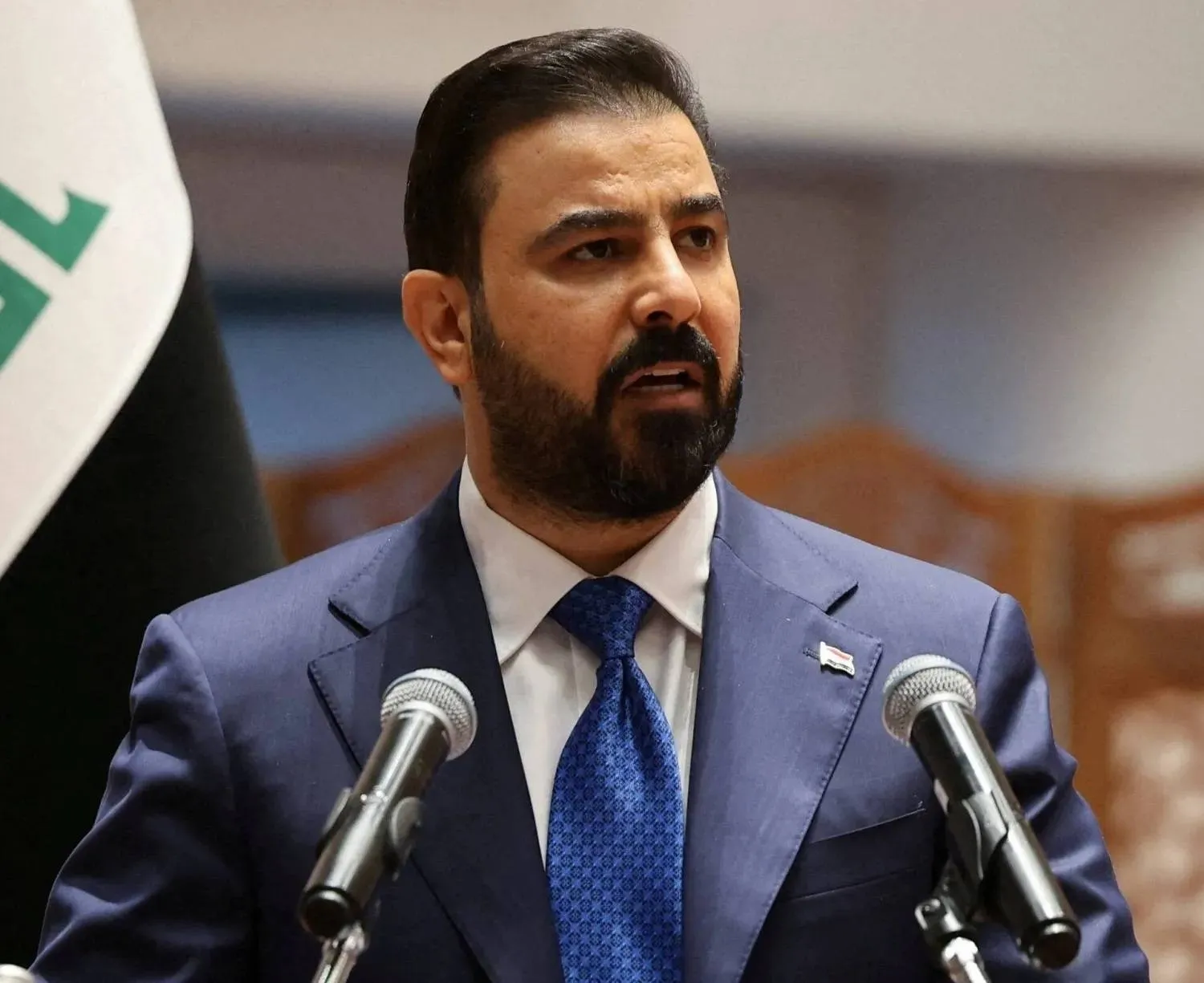
Iraqi Prime Minister Ali al-Zaidi. (Reuters)
TT

Iraq Moves to Mend Gulf Ties, Al-Zaidi Proposes New Partnership

Iraqi Prime Minister Ali al-Zaidi. (Reuters)

The Iraqi government is intensifying diplomatic engagement with its Arab neighbors, especially Gulf Arab states, ahead of an expected visit by Iraqi Prime Minister Ali al-Zaidi to the United States.

It is an effort to strengthen regional and international partnerships, address economic and security issues, and recover funds linked to corruption cases.

As part of that push, Deputy Prime Minister and Foreign Minister Fuad Hussein began a visit to Kuwait at the head of a delegation that included the national security adviser, the governor of Basra and senior Foreign Ministry officials.

Hussein said in a post on X that the visit aimed to “discuss developing relations with Kuwait in a way that serves the interests of the two brotherly peoples.”

Hours after his arrival, Hussein said in a separate statement that Kuwaiti authorities had agreed to release Iraqi fishermen detained by the Kuwaiti coast guard last week. He said they would return to Basra province with the Basra governor after legal procedures were completed.

The Iraqi minister said the decision came in response to a request made by the Iraqi delegation during its meeting with Kuwaiti First Deputy Prime Minister and Interior Minister Sheikh Fahad Yusuf Saud al-Sabah.

A government source said the Iraqi government was “keen to maximize its relations with its Arab surroundings, especially the Gulf, which requires sending positive messages that reinforce this direction,” adding that the foreign minister carried several important files with him during the visit.

The source told Asharq Al-Awsat that the delegation also discussed economic files, including strengthening investment partnerships and the possibility of Kuwait supplying Iraq with gas to operate power plants, as Iraq faces chronic challenges in its energy sector, particularly during the summer months.

‘Iraq will not join any axis’

The diplomatic moves come as al-Zaidi prepares to visit the United States. In press remarks on Thursday, he said Washington’s release of cash dollar shipments to Iraq after a suspension lasting several months represented “a gesture of goodwill” toward Baghdad.

Al-Zaidi said his expected visit would include “an announcement of economic and political partnership with Washington,” adding that the two countries could expand the exchange of security information.

He stressed that Iraq “will not join any axis” amid regional tensions, but said Baghdad continued to seek to bring the United States and Iran closer together to help resolve their disputes and achieve stability in the region.

The prime minister said his foreign tour would not be limited to Washington and would be followed by visits to several Arab countries. He said it was “important for Iraq to be part of the Arab incubator.”

He added that Baghdad sought to establish an economic partnership with Saudi Arabia during an expected visit to Riyadh before heading to Damascus, citing the importance of strengthening economic cooperation with neighboring Syria.

On energy, al-Zaidi denied reports that Iraq intended to withdraw from OPEC, saying his country would remain a member of the organization but was seeking a “fair share” of oil exports.

Impact of Iranian influence

Observers say Iraq’s moves toward Gulf states are part of an effort to rebalance its foreign policy, alongside its opening to the United States, as the regional environment grows more complex.

Issam al-Fayli, a professor of political science at Mustansiriyah University, told Asharq Al-Awsat that the government faced the challenge of balancing Iranian influence inside Iraq with the prospects of relations with the United States.

He said the prime minister was “serious about limiting the influence of Iranian arms in preparation for a new Iraqi project based on economic openness and energy projects in the region.”

Ihsan al-Shammari, head of the Political Thinking Center, said Iraq could repair its relations with Gulf states if it adopted a new vision to redefine those ties, adding that previous governments had not achieved tangible progress on that front.

He said Baghdad needed to restore Gulf Arab trust by reducing the impact of Iranian influence and addressing the issue of armed factions, opening the way for broader economic and trade partnerships.

Ghalib al-Daami, a professor of political science at Mustansiriyah University, said “loose weapons” represented the biggest obstacle to developing relations with Gulf states. He said the current government appeared serious about fighting corruption and addressing the issue of armed factions.

Talib Mohammed Karim, a professor of political science, told Asharq Al-Awsat that Iraq had a real opportunity to strengthen relations with its Arab surroundings, especially Gulf states, amid regional shifts.

But he said the success of that path depended on the state’s ability to entrench stability, strengthen its sovereignty and provide an environment attractive to investment.

Muhannad Salloum, a professor of security studies, said Baghdad’s success in rebuilding trust with Gulf states first required the state to monopolize the use of force and address the issue of militias and armed factions.

Second, he said, Iraq needed to expand economic links with Gulf states through projects such as railway connectivity, the Development Road and security cooperation systems.

Third, it needed to take confidence-building steps, address mutual accusations of attacks that some Gulf states attribute to Iraqi factions, and strengthen mutual understanding between the two sides.


UN Peacekeeping Force Says Shots Fired at Post on Lebanon-Israel Border

UNIFIL currently has 7,500 blue helmets from around 50 countries. (Reuters)
TT

UN Peacekeeping Force Says Shots Fired at Post on Lebanon-Israel Border

UNIFIL currently has 7,500 blue helmets from around 50 countries. (Reuters)

The United Nations Interim Force in Lebanon said one of its posts was targeted on Wednesday near the border with Israel by small-arms fire, but there were no casualties.

"This morning, several rounds of small arms fire impacted a UNIFIL position near Kfar Shouba along the Blue Line in Sector East," the UN force said in a statement, referring to the de facto border between Lebanon and Israel.

The blue helmets described the shooting as "unacceptable".

"Such deliberate attacks gravely endanger the lives of peacekeepers," it said, adding that it was investigating the incident.

Under US pressure, the UN Security Council decided in August to fix December as the end of the mandate for UNIFIL, which has been deployed since 1978.

Last month, Lebanon's Prime Minister Nawaf Salam insisted at the UN on the need to "avert the vacuum" that would be caused by withdrawing the peacekeeping mission deployed in the country's south without a viable replacement.

UNIFIL currently has 7,500 blue helmets from around 50 countries.

Violence has decreased since a ceasefire following a memorandum of understanding in the US-Iran war struck in June, while Lebanon and Israel concluded a US-sponsored framework agreement later that month.

The Lebanon-Israel deal involves the disarmament of Hezbollah, a gradual withdrawal of Israeli forces from Lebanon's south and the deployment of the Lebanese army to the region, starting in test areas known as "pilot zones".


Israelis Mark Three Years Since October 7 as Palestinians Mourn Gaza’s Destruction

A Palestinian man works amid the rubble of a building damaged during the war, overlooking a makeshift tent camp at the Islamic University, in Gaza City, October 3, 2026. (Reuters)
TT

Israelis Mark Three Years Since October 7 as Palestinians Mourn Gaza’s Destruction

A Palestinian man works amid the rubble of a building damaged during the war, overlooking a makeshift tent camp at the Islamic University, in Gaza City, October 3, 2026. (Reuters)

Israelis gathered in silence on Wednesday in a kibbutz near the Gaza border that was overrun by Hamas on October 7 three years ago, mourning victims of attacks that set off Israel's assault in Gaza and plunged the Middle East into war.

In the Gaza Strip, devastated by three years of Israeli bombardment, Palestinians sheltering among the ruins of destroyed cities recalled life before a war that displaced nearly the entire population and tore apart families.

The attacks of October 7, 2023, were the deadliest day in Israel's history. Militants led by Hamas killed 1,200 people and took 251 hostages, a cross-border incursion that traumatized Israelis who have demanded government accountability.

Israel's subsequent bombardment and ground operations in Gaza have killed more than 74,000 people, including at least 1,400 killed in the past year since a US-brokered ceasefire, which halted major fighting but has failed to stop Israeli attacks or secure the disarmament of Hamas.

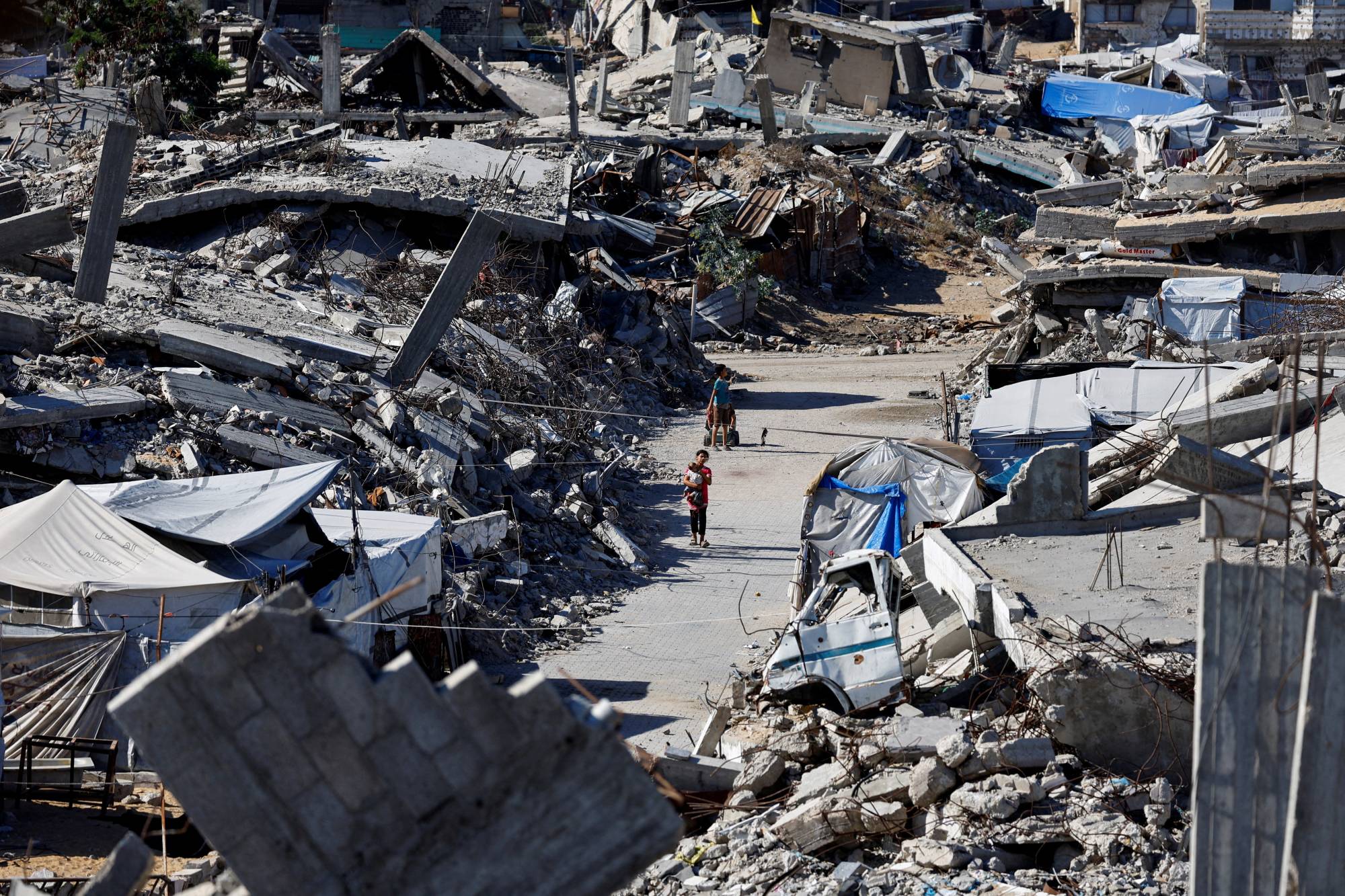
Palestinian children walk amid the rubble of buildings destroyed during the war in Gaza City, October 7, 2026. (Reuters)

'A ‌VERY DIFFICULT DAY'

In ‌Kfar Aza, where Hamas fighters killed dozens of Israelis before taking 19 hostages back into Gaza, ‌residents ⁠held a vigil for ⁠those killed, standing in silence as a trumpet played a solemn bugle call. A resident read out a roll call of the dead.

Zion Regev, a community leader in the kibbutz, said most residents remain displaced and have yet to return, the trauma of October 7 continuing to shape their lives.

"This is the first time we are doing all the things here in the kibbutz," Regev said of the vigil. "It's a very emotional day, it's a very difficult day for our community, three years after October 7th."

Elsewhere in Israel, protesters against what they view as a lack of accountability for the security failure gathered outside parliament in Jerusalem, blaming Prime Minister Benjamin Netanyahu for refusing an independent inquiry into the attack.

Some protesters held ⁠signs reading: "The people will remember October 7 on October 27," a reference to an Israeli general election ‌20 days away that is being viewed as a referendum on Netanyahu's long tenure ‌in power.

"We need the change and we need hope and we need to know that we have a government that cares about the public ‌and doesn't work also only for themselves," said protester Shaked Arrad.

Netanyahu has rejected blame for the security breach and resisted calls for an independent ‌investigation. That has frustrated many in Israel, including families of those killed in the attacks, some of whom have joined the election race.

In a statement released by his office, Netanyahu said: "The nation unites on this day in the longing for our dear ones."

Referring to his country's ongoing attacks in Gaza, he added: "We will complete the mission: we have settled the score and will continue settling the score with all the murderers."

Election polls show neither Netanyahu nor ‌his main competitors would muster enough seats in parliament to form a coalition if a vote were held today.

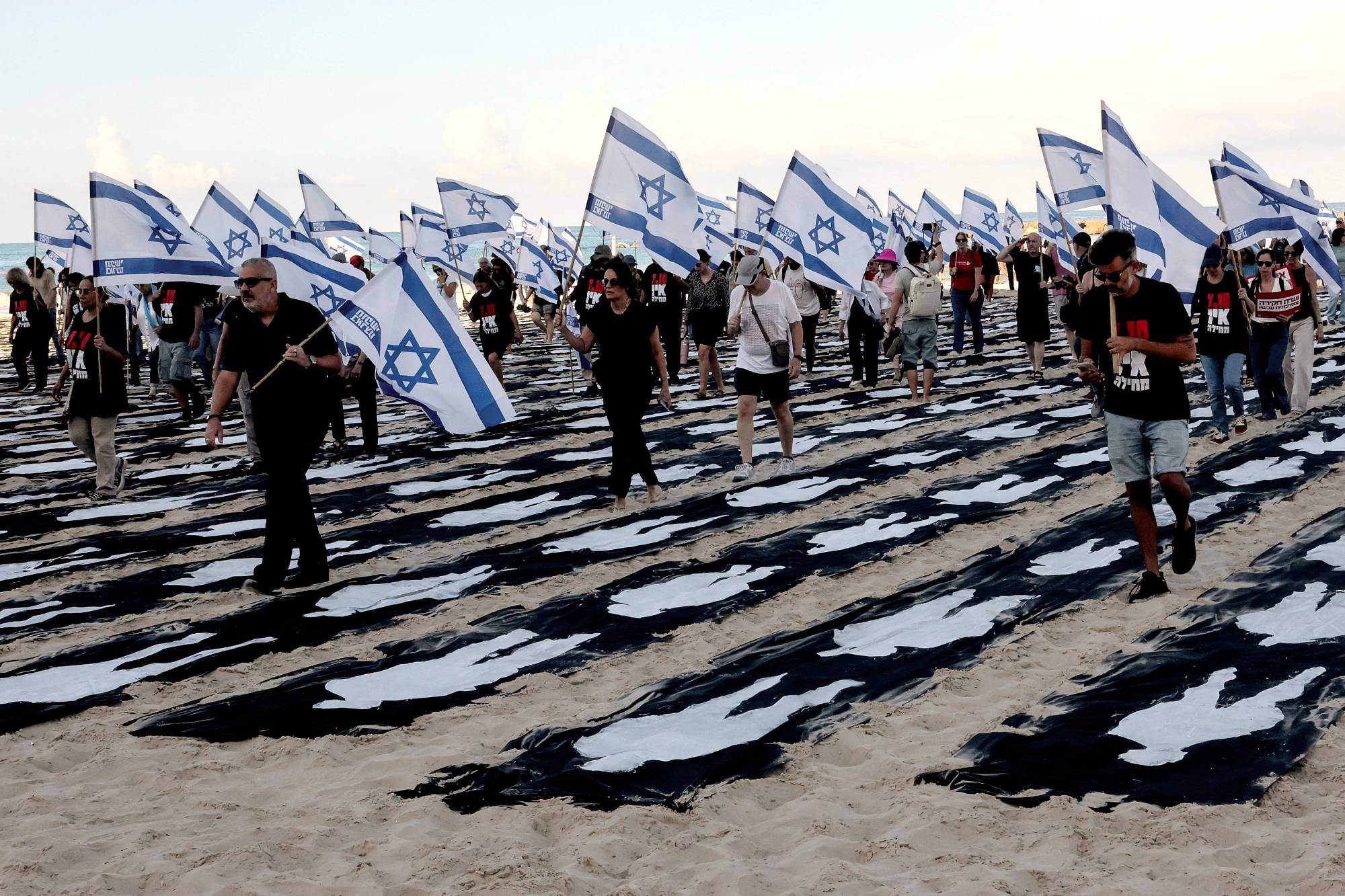
People carrying Israeli flags walk through a commemorative installation set up on the beach in Tel Aviv to mark the third anniversary of Hamas's October 7 attack on Israel, on October 7, 2026. (AFP)

DISPLACED GAZANS RECALL LIFE BEFORE ISRAELI ASSAULT

The anniversary is the first since the ⁠October 10, 2025, ceasefire deal, which has ⁠left Israel in control of around two-thirds of Gaza, where it has demolished remaining buildings and ordered residents out.

Hamas controls the remaining third of the territory, a narrow strip on the coast where the 2 million population mostly live in makeshift tents and bombed-out buildings.

In the latest violence, Gaza medics said on Wednesday Israel's military had carried out air strikes in Beit Lahia in northern Gaza and in Khan Younis in the south, killing at least two Palestinians and wounding others.

The Israeli military said it struck and killed two people it described as militants with Hamas, which did not immediately provide comment. The military did not provide comment on the strike in Khan Younis.

Umm Mohammad, a mother of five displaced from Gaza City and now living with her husband and children in a tent encampment in Deir Al-Balah, said the war had ripped her family apart.

"We were one happy family. The war displaced us. My son left Gaza, the other went to a separate tent, my daughters left with their husbands to other parts of the Strip and we rarely meet," she said.

On this day, she said, "we recall how happy, despite all problems, we were before the war broke out, destroying everything we loved."


Syria Says Northeast Pipeline Damaged in Sabotage Attack

Security forces in Syria. (SANA file)
TT

Syria Says Northeast Pipeline Damaged in Sabotage Attack

Security forces in Syria. (SANA file)

Syria's state petroleum company said on Wednesday that an oil pipeline in the country's northeast was damaged in a "sabotage attack", the third such incident in recent weeks.

Years of civil war before the fall of longtime ruler Bashar al-Assad in late 2024 devastated Syria's oil, gas and electricity sectors, with the country becoming heavily reliant on imports to meet its needs.

In a statement, the Syrian Petroleum Company said the pipeline near "the Tal Hamis area in Al-Hasakeh Governorate was subjected to a sabotage attack at 6:00 am on Wednesday, October 7, resulting in damage to the pipeline".

It added that maintenance crews were working to "isolate the damaged section and begin repair and maintenance work".

The company said authorities arrested the alleged perpetrators and referred them to the judiciary.

On September 29, sabotage targeting a gas pipeline in eastern Syria caused an explosion, according to state news agency SANA.

In early October, an explosion at a gas pipeline near the capital Damascus took three power stations offline.

The incidents come after demonstrations last month over rising fuel prices, which authorities linked to price hikes caused by the Middle East war.
