


Iraqi Judiciary Opens Door to 'Conditional Settlements' to Recover Corruption Funds

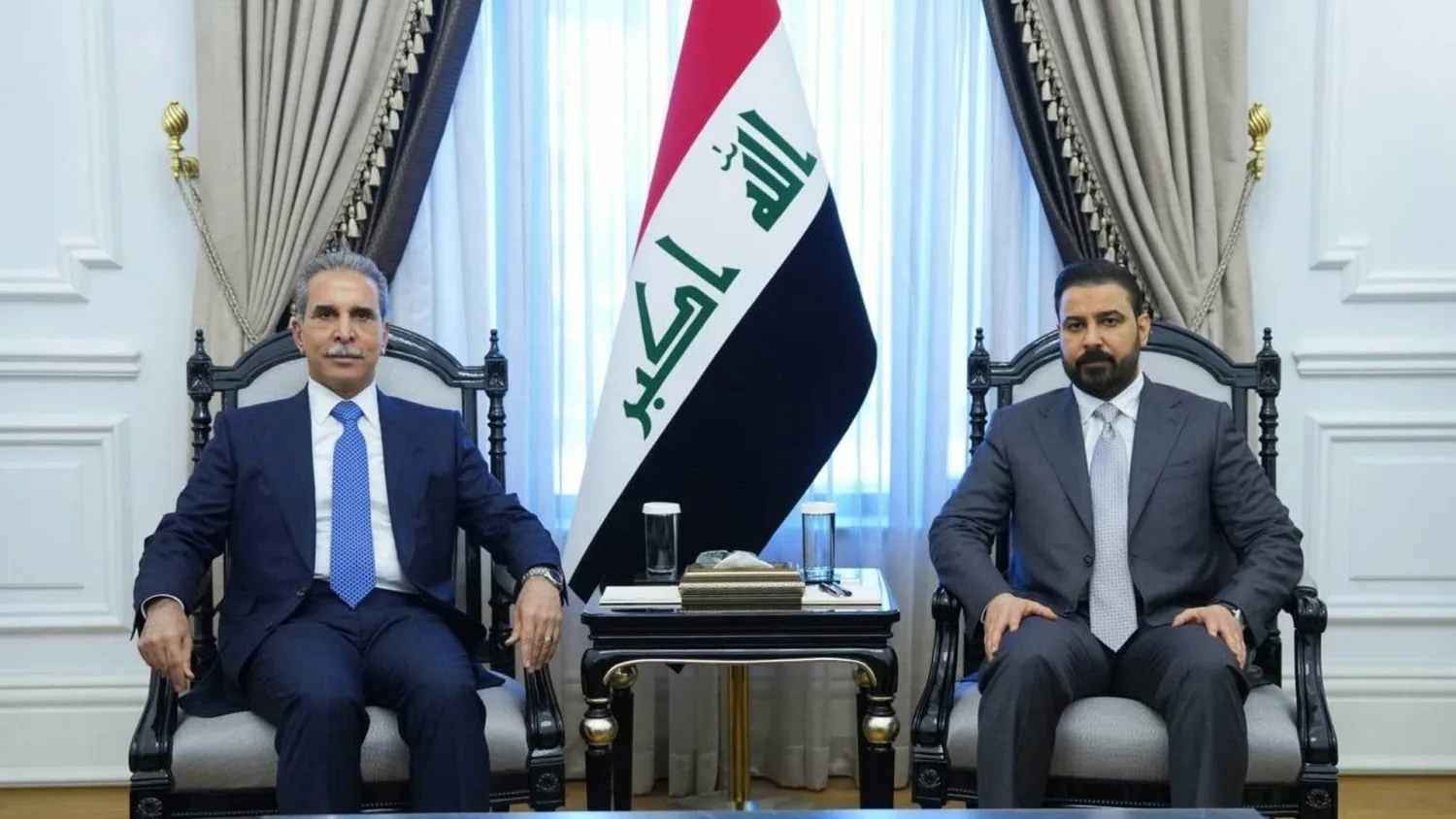
 Iraqi Prime Minister Ali al-Zaidi receives Supreme Judicial Council President Faiq Zaidan in Baghdad. (Government press office)
Iraqi Prime Minister Ali al-Zaidi receives Supreme Judicial Council President Faiq Zaidan in Baghdad. (Government press office)
TT

Iraqi Judiciary Opens Door to 'Conditional Settlements' to Recover Corruption Funds

 Iraqi Prime Minister Ali al-Zaidi receives Supreme Judicial Council President Faiq Zaidan in Baghdad. (Government press office)
Iraqi Prime Minister Ali al-Zaidi receives Supreme Judicial Council President Faiq Zaidan in Baghdad. (Government press office)

Iraq’s Supreme Judicial Council announced Friday that it is coordinating with the government on legal mechanisms aimed at combining accountability for corruption with the recovery of public funds.

The proposal could allow reduced legal measures or lighter sentences for defendants who voluntarily return embezzled money under amendments to the General Amnesty Law.

Meanwhile, the recent security operation, dubbed Dawn Assault, has exposed divisions within the ruling Coordination Framework, according to political sources and public statements.

In a statement, the council said its objective is to both hold perpetrators of financial and administrative corruption accountable and recover state funds, adding that these goals could be achieved by easing legal procedures or reducing sentences “within constitutional and legal limits.”

The council noted that the approach was first adopted in the Tax Deposits case, widely known as the “Heist of the Century.” The case centers on the fraudulent withdrawal of tax deposits lodged by foreign companies with the General Commission for Taxes as guarantees for project implementation.

The funds were allegedly siphoned off through irregular procedures involving brokerage firms, including Al-Qant and Al-Mubdeoon Oil Services Company, owned by businessman Noor Zuhair, with the help of government employees.

According to the council, the head of the Supreme Judicial Council and then-Prime Minister Mohammed Shia al-Sudani agreed, with the approval of the investigating judge, to release Zuhair on bail in exchange for repaying the money in installments and receiving a reduced sentence.

The arrangement led to the recovery of 365 billion Iraqi dinars (about $252 million) out of 1.618 trillion dinars (about $1.12 billion) owed by the two companies. Overall, about 3.831 trillion dinars (roughly $2.64 billion) were withdrawn from Rafidain Bank through multiple companies.

According to the council, Zuhair later left Iraq, bringing repayments to a halt. He was subsequently tried in absentia, sentenced to 10 years in prison, and became the subject of extradition proceedings through Arab and international police channels.

Following amendments to the General Amnesty Law, Zuhair’s lawyer requested that his client be covered by the legislation in exchange for repaying the remaining funds. The court sought the Finance Ministry’s opinion, as the injured party, on the proposed repayment mechanism but has yet to receive a response, leaving the request pending.

The council added that 12 employees of the General Commission for Taxes have been sentenced to prison for facilitating the withdrawals and may qualify under the amended amnesty law after paying compensation determined by the Finance Ministry.
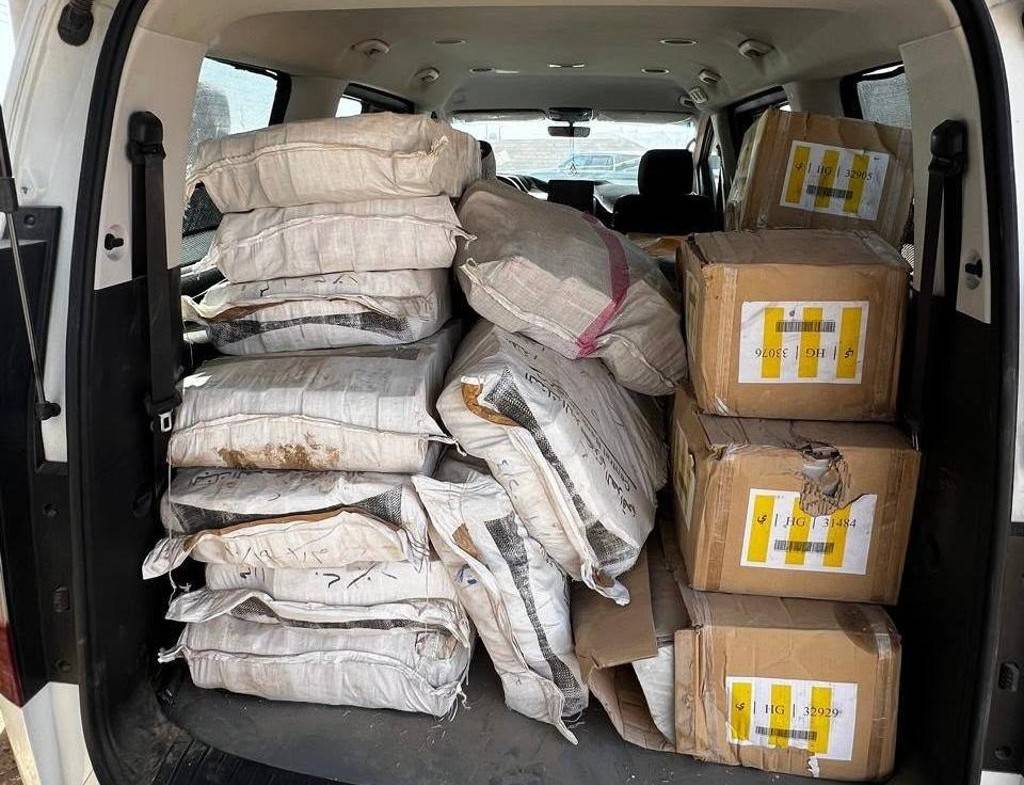
An photo released by the Iraqi judiciary shows cash seized inside boxes and bags marked with the Iraqi Central Bank's seal.

It also noted that an investigation into former Prime Minister Mustafa al-Kadhimi, whose government was in office when the crime occurred, was closed for lack of evidence.

The same approach could also be applied in the North Refineries Company case involving detained suspect Adnan al-Jumaili and several current and former lawmakers, provided the alleged offenses predated the amended amnesty law and the outstanding funds are repaid.

Crimes committed after the law took effect are not eligible for amnesty.

The judiciary is now coordinating with Prime Minister Ali al-Zaidi on a constitutional and legal “roadmap” aimed at recovering public funds while easing legal measures against those who voluntarily return them.

Separately, the June 28 Dawn Assault operation inside Baghdad’s Green Zone, which resulted in the arrest of dozens of corruption suspects, triggered criticism within the Coordination Framework.

An informed source told Asharq Al-Awsat that several alliance leaders were caught off guard by the operation and the deployment of tanks and armored vehicles, raising concerns that military force could be used more broadly in the future.

The source added that al-Zaidi defended the measures during his first meeting with Coordination Framework leaders after the operation, arguing that the armored deployment was necessary to seal off the Green Zone while the arrests were carried out.

The source also said several lawmakers managed to leave the Green Zone minutes before the operation began, some of them affiliated with armed factions.

The absence of any response from those groups during the operation further heightened concerns among some Coordination Framework leaders.

Legal expert Jamal al-Asadi told Asharq Al-Awsat that Iraqi law has no provision allowing financial settlements in corruption cases or other criminal offenses.

He noted, however, that the amended General Amnesty Law includes specific provisions covering those convicted of embezzlement or squandering public funds, subject to prescribed legal conditions.

In televised remarks, leading member of the Coordination Framework Amer al-Fayez said all alliance leaders except former PM al-Sudani criticized the government for failing to notify them in advance of the operation.

While backing efforts to pursue corruption suspects, he objected to the use of tanks during the arrests, arguing that although the prime minister was under no obligation to disclose operational details, the Coordination Framework, as “the state’s highest governing authority,” should have been informed.



Egyptian Source to Asharq Al-Awsat: Cairo Hosts Egyptian-Israeli Talks to Avert Renewed Gaza War

Palestinians inspect the site of an Israeli strike on a vehicle in Gaza City, July 9, 2026. (Reuters)
TT

Egyptian Source to Asharq Al-Awsat: Cairo Hosts Egyptian-Israeli Talks to Avert Renewed Gaza War

Palestinians inspect the site of an Israeli strike on a vehicle in Gaza City, July 9, 2026. (Reuters)

An Egyptian source familiar with the Gaza ceasefire negotiations told Asharq Al-Awsat that Egyptian and Israeli delegations met in Cairo in recent hours as part of intensive efforts to prevent complications that could jeopardize the ceasefire in the Gaza Strip.

On Thursday evening, Israel’s public broadcaster reported that a delegation of senior Israeli military officers had arrived in Cairo and held talks over the previous two days with senior Egyptian military officials on advancing to the second phase of the Gaza ceasefire agreement.

The meeting coincided with the presence in Cairo of a Hamas delegation led by Khalil al-Hayya, which is holding talks with mediators on preserving the Gaza agreement signed in October.

The Egyptian source said a US delegation is expected to arrive in Cairo for consultations on Gaza and continued talks with Hamas in an effort to salvage mediation. The source added that there are growing indications Israeli Prime Minister Benjamin Netanyahu may resume the war for electoral gain.

According to the source, the Cairo talks focused on proposals presented last week that Hamas had rejected. The Israeli delegation conveyed a message it had delivered to Nickolay Mladenov, the High Representative for the Board of Peace, warning that if current efforts based on revised draft proposals fail, Israel will move ahead with military operations inside Gaza.

Over the past three months, Mladenov has put forward proposals centered on disarming Gaza as a prerequisite for reconstruction. Hamas has objected, insisting that the remaining commitments of the agreement’s first phase, particularly an Israeli withdrawal, be implemented first.

Displaced Palestinian children refill water containers in Deir al-Balah, central Gaza Strip, Saturday July 4, 2026. (AP)

The source said the Israeli delegation reiterated that Hamas must comply with the agreement, foremost by accepting the proposed disarmament formula.

Mediators are consulting Hamas on accepting a clear and direct text to be conveyed to Mladenov to move the process forward and avert renewed Israeli military action.

The source also warned of mounting indications that Netanyahu could opt for military escalation ahead of elections expected in the coming months, citing opinion polls showing stronger support for rivals including Gadi Eisenkot and Naftali Bennett.

The source added that Mladenov has refused to amend the current proposals and continues to insist that Hamas engage with them seriously.

According to the source, the Israeli delegation expressed its willingness to cooperate with Egypt’s “responsible efforts,” while warning that Hamas’s intransigence would inevitably lead to renewed confrontation.

The source said Egypt’s decision to host the Israeli delegation despite regional tensions reflects Cairo’s openness to all parties and its determination to bridge differences.

Egypt is engaging all sides, the source added, because of the worsening humanitarian situation and fears that renewed fighting would lead to further targeted killings of field commanders and a broader deterioration on the ground.

A US delegation may soon arrive in Cairo for further consultations.

Egypt is coordinating closely with Türkiye and Qatar to maximize pressure on the Israeli government, according to the source. Cairo also plans contacts with Washington aimed at ensuring US adherence to the existing peace framework and preventing alternative tracks or new proposals from Mladenov that could further complicate negotiations.

The source did not rule out Hamas continuing to play for time while monitoring US-Iran developments and awaiting the outcome of its internal elections, potentially delaying major decisions and leaving negotiations in limbo.

Even so, the source said Egypt is racing against time to prevent renewed Israeli military action as Israeli elections and the US midterm elections approach, warning that both could derail diplomatic efforts.


Renewed US-Iran Conflict Narrows Egypt’s Economic Growth Prospects

 A traditional market in Egypt’s Giza Governorate. (Asharq Al-Awsat) 
 A traditional market in Egypt’s Giza Governorate. (Asharq Al-Awsat) 
TT

Renewed US-Iran Conflict Narrows Egypt’s Economic Growth Prospects

 A traditional market in Egypt’s Giza Governorate. (Asharq Al-Awsat) 
 A traditional market in Egypt’s Giza Governorate. (Asharq Al-Awsat) 

The renewed US-Iran conflict in the Middle East is expected to further curb Egypt’s economic growth prospects as global oil prices are forecast to rise again, while several sectors of the economy continue to grapple with the effects of months of conflict, analysts say.

In its latest World Economic Outlook report released days ago, the International Monetary Fund (IMF) lowered its forecast for Egypt’s economic growth in fiscal year 2026-27 to 4.4 percent, down from the 4.8 percent projected in April. The IMF cited “the continuing impact of the Iran conflict — particularly the closure of the Strait of Hormuz — on the Middle East, weaker investment, higher financing costs, and persistent uncertainty.”

Economist Wael El-Nahas said the downgrade is “not limited to Egypt but reflects the global economy as a whole in light of the conflict’s repercussions,” describing the revision as both natural and expected.

Speaking to Asharq Al-Awsat, El-Nahas noted that the current period of skirmishes between the two sides could be viewed as a period of tacit understandings, allowing oil supplies to keep flowing while limiting sharp increases in food prices and other commodities. However, he warned that a renewed conflict would bring “a much worse period.”

Financial markets researcher Mohamed Mahdy Abdulnabi told Asharq Al-Awsat that geopolitical tensions are the main driver behind the weaker growth outlook.

He said Egypt faces several challenges under the current circumstances, including higher borrowing costs, greater reluctance among lenders to extend new financing, declining foreign investment, stagnation in the private sector, and continued losses at the Suez Canal.

President Abdel Fattah al-Sisi has previously estimated the canal’s losses at $10 billion, citing regional tensions and their impact on Red Sea shipping.

Abdulnabi warned that if the conflict persists, pressure on Egypt’s economy will intensify. “When global oil prices fell below $70 a barrel, the Egyptian government did not cut domestic fuel prices. But as soon as prices began rising again, discussion resumed over the automatic fuel pricing mechanism and the need to increase fuel prices,” he remarked.

The government raised fuel prices by between 14 and 30 percent last March, just 10 days after the US-Iran conflict erupted, amid rising energy import costs.

El-Nahas warned that global oil prices could climb above $100 a barrel, noting that Egypt’s current state budget is based on an assumed oil price of about $75 a barrel. Any increase, he said, would raise the country’s energy import bill and widen the budget deficit. He also cautioned that it could trigger another round of fuel price hikes, further worsening the cost-of-living crisis.

Egypt’s annual inflation rate stood at 14.3 percent in June, down slightly from 14.6 percent in May.

Despite the risks, El-Nahas stressed that some sectors, particularly tourism, still have strong growth prospects despite the renewed US-Iran conflict.


Aoun Rejects Linking Lebanon to Iran Talks, Says Hezbollah Must Prove it Prioritizes Lebanon

Lebanese President Joseph Aoun meets with Army Commander Gen. Rodolphe Haykal to discuss ongoing preparations for implementing the provisions of the framework agreement in the pilot areas. (Lebanese Presidency)
TT

Aoun Rejects Linking Lebanon to Iran Talks, Says Hezbollah Must Prove it Prioritizes Lebanon

Lebanese President Joseph Aoun meets with Army Commander Gen. Rodolphe Haykal to discuss ongoing preparations for implementing the provisions of the framework agreement in the pilot areas. (Lebanese Presidency)

Lebanese President Joseph Aoun rejected attempts to tie Lebanon’s future to the Iranian negotiations, declaring that “we are now separate from the Iranian situation and the Islamabad agreement.”

He also urged all parties to give the US-sponsored framework agreement between Lebanon and Israel a chance, accusing both Tehran and Tel Aviv of trying to undermine it. Hezbollah has also rejected it.

Aoun warned that if Hezbollah refuses to cooperate with efforts to end the war in South Lebanon, “it will bear responsibility for its decision” and prove that it places Iran’s interests above Lebanon’s.

The Lebanese state is pressing ahead with US-mediated negotiations with Israel despite Hezbollah’s continued rejection and insistence on retaining its weapons.

The diplomatic track has won broad international backing and growing support among Lebanon’s Christian parties. On Friday, the Lebanese Forces reiterated that “there is currently no alternative to negotiations.”

Speaking to journalists on Friday, Aoun said war had proved futile and that negotiations, backed by US guarantees, offered the best path forward.

He noted that Hezbollah’s stated objectives — an Israeli withdrawal from southern Lebanon, the return of bodies, and reconstruction — are the same goals Lebanon has pursued in talks with Israel under US mediation.

“The difference is the means,” Aoun said, reiterating that war “is not a good option.”

He urged all parties to give the agreement a chance while warning that Israeli Prime Minister Benjamin Netanyahu “always wants to complicate matters,” adding that Iran is doing the same.

Turning to Hezbollah’s weapons, Aoun said: “As long as the party’s choice is Iranian, there will be no point. Matters will be resolved only when its choice becomes Lebanese rather than Iranian.”

He stressed that Hezbollah cannot be dealt with by force because it is not just an armed groups “but also a social constituency.”

Trump meeting

Ahead of his July 21 meeting with US President Donald Trump in Washington, Aoun said he would present “the true reality in Lebanon today,” seek continued US support for the Lebanese Armed Forces, and call for an international conference to support Lebanon.

He described Trump’s invitation to the White House as a “golden opportunity” to tell the US administration that “America’s credibility is at stake” in implementing the framework agreement.

He added that resolving Hezbollah’s weapons issue requires cooperation with the group rather than simply talking about “disarmament,” noting that the weapons are concealed in numerous locations rather than stored in identifiable military barracks.

Aoun also revealed that Lebanon has yet to appoint its representative to the committee established under the Washington-Tehran memorandum of understanding following the Islamabad negotiations, pending a formal US request, particularly since Iran has not yet named its own representative.

He stressed that he, Prime Minister Nawaf Salam, and Parliament Speaker Nabih Berri “do not want sedition or internal fighting,” adding: “We are now separate from the Iranian situation and the Islamabad agreement.”

At the same time, he cautioned that any broader regional conflict would inevitably spill over into Lebanon.

On the border issue, Aoun said talks with Israel would be confined to the 13 disputed border points. He also disclosed that Lebanon had sent Syria a border file and was still awaiting a response.

Geagea

Meeting a delegation from the Lebanese Forces led by party chief Samir Geagea, Aoun pledged not to retreat from negotiations, saying the framework agreement could restore Lebanon’s rights through diplomacy, provided Israel respects it.

He argued that criticism of the process stems from attempts to place the Lebanese file back in Iran’s hands.

Geagea endorsed the negotiating track, saying Lebanon cannot function without “one army and one set of arms.”

Decisions on national issues and the Israeli presence must be made by the Lebanese state, not by any political party, he urged.

“None of us is enamored with the agreement, but at present we have no alternative but negotiations,” he remarked.

In contrast, Hezbollah MP Hussein Hajj Hassan dismissed the agreement as one imposed by the United States on both Israel and Lebanon’s authorities, which he said lack negotiating experience and represent only part of the Lebanese people.

Rejecting what he described as threats to bring in foreign forces to disarm Hezbollah, he said neither foreign troops nor the Lebanese authorities would succeed in stripping the “resistance” of its weapons.