Qatar's Former Ruler Sheikh Hamad bin Khalifa Al Thani Dies

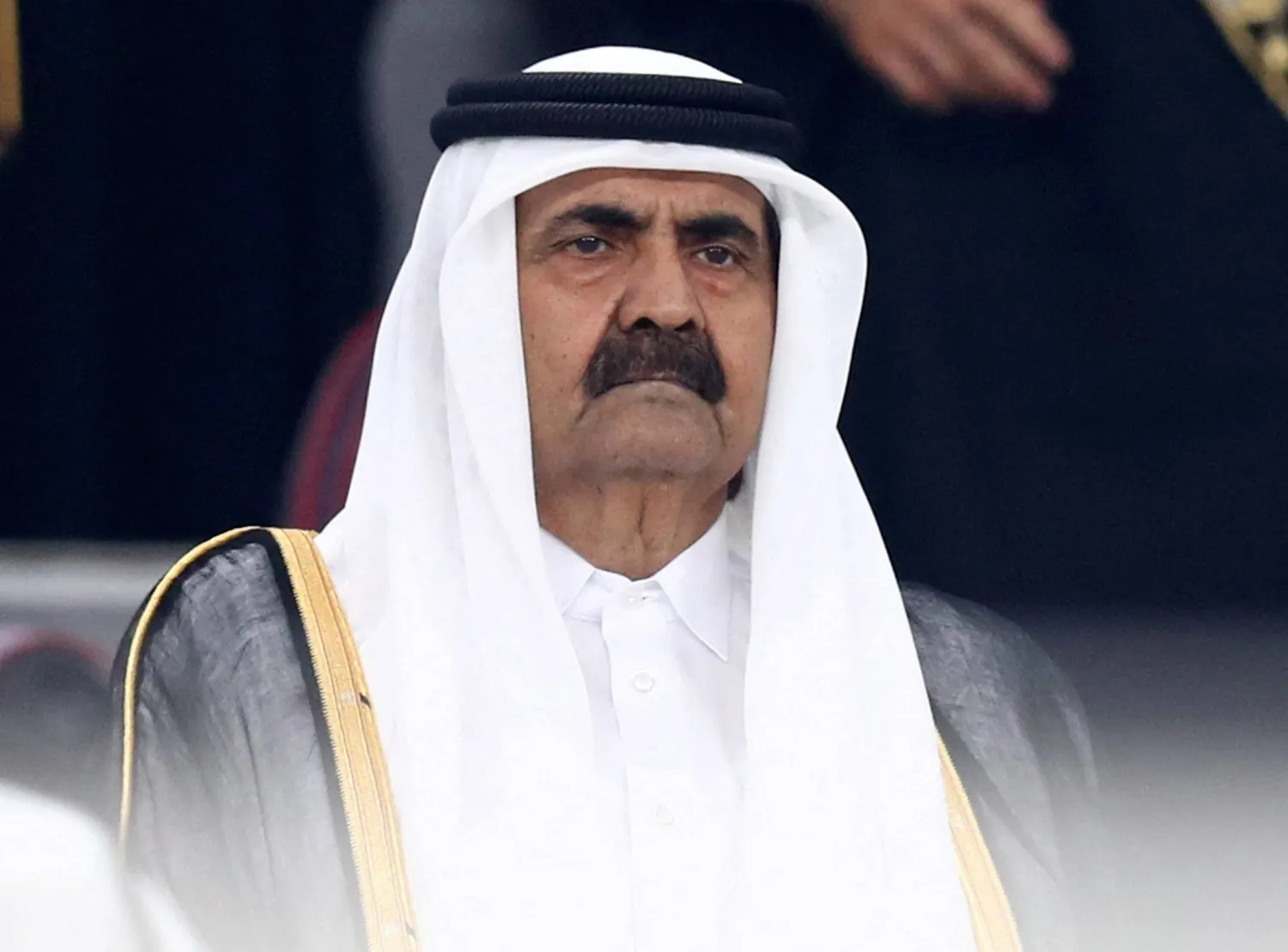
Sheikh Hamad bin Khalifa al-Thani. REUTERS/Ibraheem Al Omari/File Photo
TT

Qatar's Former Ruler Sheikh Hamad bin Khalifa Al Thani Dies

Sheikh Hamad bin Khalifa al-Thani. REUTERS/Ibraheem Al Omari/File Photo

Qatari former Emir Sheikh Hamad bin Khalifa Al Thani ⁠has died ⁠at the ⁠age of 74, the nation's Emiri Diwan said ⁠on ⁠Sunday.

"With hearts steadfast in faith in God's decree and destiny, the Bureau of the Emir mourns the great loss to the nation of the late -- may God have mercy on him -- His Highness the Father Emir Sheikh Hamad bin Khalifa Al Thani," read a statement published by the Emir's Diwan on social media.

Sheikh Hamad, who stepped down in June 2013 after 18 years as emir, was the architect of Qatar’s ambitions.

“The future lies ahead of you, the children of this homeland, as you usher into a new era where young leadership hoists the banner,” Sheikh Hamad said as he announced his abdication and the transition to his son, Prince Sheikh Tamim bin Hamad Al Thani.


Saudi Foreign Minister Participates in GCC Coordination Meeting in New York

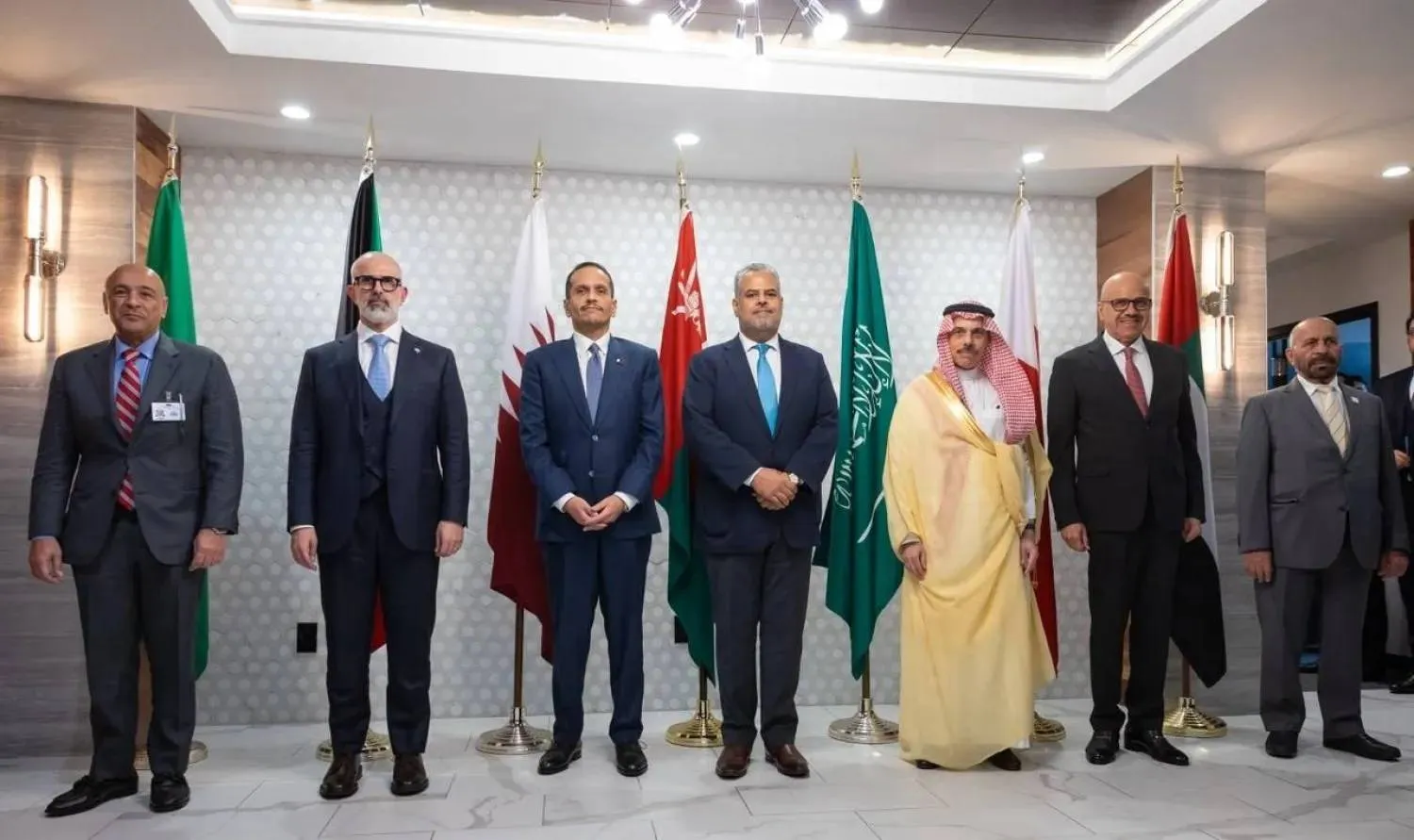
Saudi Foreign Minister Prince Faisal bin Farhan bin Abdullah took part in a coordination meeting of the ministerial council of the Gulf Cooperation Council (GCC) in New York. (SPA)
TT

Saudi Foreign Minister Participates in GCC Coordination Meeting in New York

Saudi Foreign Minister Prince Faisal bin Farhan bin Abdullah took part in a coordination meeting of the ministerial council of the Gulf Cooperation Council (GCC) in New York. (SPA)

Saudi Foreign Minister Prince Faisal bin Farhan bin Abdullah took part in a coordination meeting of the ministerial council of the Gulf Cooperation Council (GCC) in New York.

The meeting was held at the headquarters of Bahrain’s permanent mission to the United Nations ahead of the start of the high-level week of the 81st session of the UN General Assembly.

The interlocutors reviewed the key topics and issues scheduled for discussion during the General Assembly, as well as the Gulf Cooperation Council states’ joint efforts and shared positions on those matters.

The foreign ministers also discussed current regional developments, their implications for the security and stability of the region, as well as ways to promote joint cooperation and coordination in addressing current challenges.

Saudi Deputy Foreign Minister for Multilateral International Affairs and Supervisor General of the Ministry’s Agency for Economic and Development Affairs, Abdulrahman bin Ibrahim Al-Rassi, attended the meeting.


Saudi Arabia Condemns Israeli Official, Settlers’ Storming of Al-Aqsa Courtyards

Logo of the Saudi Ministry of Foreign Affairs
TT

Saudi Arabia Condemns Israeli Official, Settlers’ Storming of Al-Aqsa Courtyards

Logo of the Saudi Ministry of Foreign Affairs

The Saudi Ministry of Foreign Affairs strongly condemned the storming of Al-Aqsa Mosque’s courtyards by an Israeli occupation official and a group of extremist settlers, under the protection of occupation forces, describing the incursion as a flagrant violation and a provocation to Muslims worldwide, the Saudi Press Agency said Monday.

In a statement, the ministry said: "Saudi Arabia reiterates its categorical rejection of the provocative practices and illegal and extremist acts of incitement and violence committed by Israeli occupation officials against Palestinians and the holy lands in occupied Palestine."

The ministry further stressed the urgent need for the international community to fulfill its responsibility to stop all such attacks, which violate international law and international humanitarian law.


Türkiye: The Makkah Agreement Will Be a Pivotal Platform That Changes the Rules of the Game in the Region

Saudi Crown Prince Mohammed bin Salman, Turkish President Recep Tayyip Erdogan and Pakistani Prime Minister Shehbaz Sharif signed the Makkah Joint Defense Agreement on August 7 (Turkish Presidency).
TT

Türkiye: The Makkah Agreement Will Be a Pivotal Platform That Changes the Rules of the Game in the Region

Saudi Crown Prince Mohammed bin Salman, Turkish President Recep Tayyip Erdogan and Pakistani Prime Minister Shehbaz Sharif signed the Makkah Joint Defense Agreement on August 7 (Turkish Presidency).

Türkiye said the Makkah Agreement on mutual defense will become a pivotal platform that will change the rules of the game in the region.

Turkish Foreign Minister Hakan Fidan said the Makkah Agreement is progressing well and represents a very strong expression of political will, with intensive efforts under way to translate that will into practical steps.

He added that steps are currently being taken to institutionalize the agreement, and that work to establish the secretariat and associated military command stipulated in the agreement is nearing completion. An understanding has been reached, he said, leaving the deployment of personnel and activation of the command as the remaining steps, adding that Türkiye is satisfied with the progress being made in this regard.

In a televised interview late Saturday, Fidan said the Makkah Agreement is open to the countries of the region and that, once the steps of the foundational phase are completed, the necessary consultations can be held with Saudi Arabia and Pakistan regarding the admission of new allies.

He explained that there is an initial decision to that effect, noting that President Recep Tayyip Erdogan had said from the outset that if the framework did not expand, it would not constitute an alliance but rather a bloc. He added that Türkiye's regional vision is based on bringing together the largest possible group of countries in the region to establish a common defense framework.

Fidan stressed that this defense framework is not directed against outside parties. Rather, its aim is to enable the region to address its internal problems more effectively through the concept of regional ownership, and to prevent new crises from emerging by creating an environment of trust that did not previously exist. He said the fundamental starting point for all of this is the pursuit of regional solutions to regional problems.

Regarding the concerns expressed by some countries, and comments from Israel, Iran, India and Greece describing the Makkah Agreement as merely a piece of paper, Fidan said that the fact that these countries are concerned demonstrates the agreement's impact and importance.

He added that attempts to discredit the agreement and such forms of misinformation through the media are in fact a reflection of that impact and the concerns it has generated. He said Türkiye simply smiles and moves on because such claims have no basis.

Fidan pointed out that Türkiye has been a member of NATO since 1952 and that NATO has activated Article 5 only twice in its history, yet no one described the alliance as merely a piece of paper. He said that describing an agreement signed only three months ago in such terms, despite the rapid progress it is making, amounts to an attempt to end something before it has even begun. He added that, in reality, such an approach indirectly reflects the perception of the threat held by those making these comments, and said the Makkah Agreement will become a pivotal platform that changes the rules of the game.

Asked about the Houthis' recent attacks targeting Saudi Arabia and whether the principle of mutual defense under the Makkah Agreement would be activated, Fidan said Saudi Arabia had come under serious attacks targeting its territorial integrity, sovereignty and infrastructure. He said Türkiye stands in solidarity with Saudi Arabia on this matter, is assessing and analyzing the situation, and is conducting consultations that cannot be made public. These discussions, he added, could identify specific military needs in certain technical areas, and Türkiye would have no difficulty meeting them.

He noted that the Turkish Foreign Ministry had condemned the attacks against Saudi Arabia, particularly those targeting Makkah and oil infrastructure. He stressed that it is unacceptable to turn this matter into part of the ongoing conflict between Iran and the United States, and that Saudi Arabia must be kept outside this equation because it is also not seeking to join it.