


UK Unveils Plan to Ban Iran Revolutionary Guards

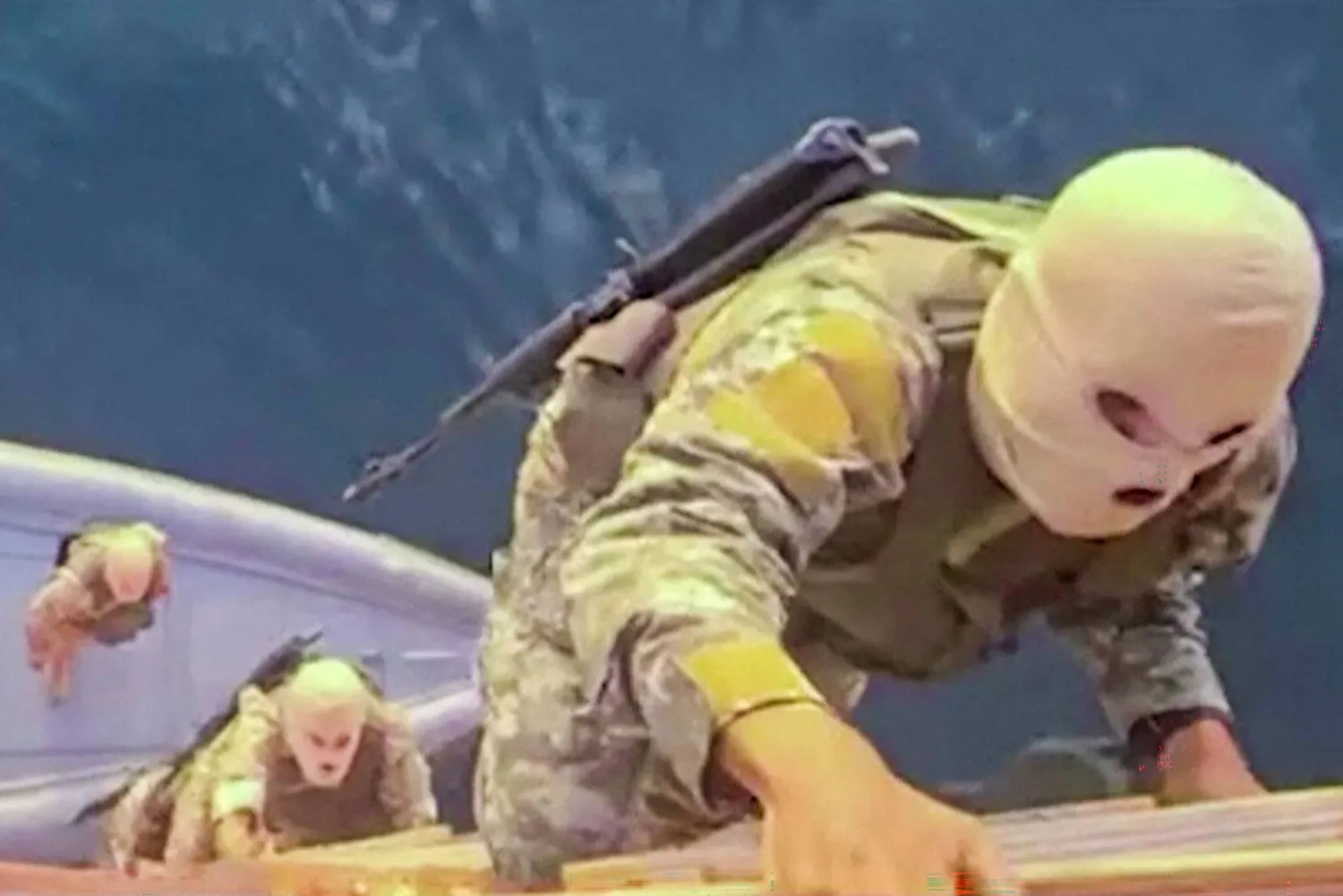
This screen grab taken from undated video footage released by Iran's Revolutionary Guards (IRGC) and made available via Iran's state broadcaster (IRIB) on April 23, 2026, shows IRGC naval forces allegedly boarding a ship attempting to cross the Strait of Hormuz. (Photo by IRIB TV / AFP) /
TT

UK Unveils Plan to Ban Iran Revolutionary Guards

This screen grab taken from undated video footage released by Iran's Revolutionary Guards (IRGC) and made available via Iran's state broadcaster (IRIB) on April 23, 2026, shows IRGC naval forces allegedly boarding a ship attempting to cross the Strait of Hormuz. (Photo by IRIB TV / AFP) /

The UK government announced plans on Monday to ban Iran's Revolutionary Guard Corps (IRGC) as a threat to national security, alongside an Iran-linked group accused of a series of attacks against the Jewish community.

"Anyone found supporting or assisting these groups will now face up to 14 years in prison," Prime Minister Keir Starmer said of a proposed law to be presented to parliament this week, AFP reported.

The banned groups would also include proxies and volunteers of Russia's GRU military intelligence agency, and the Islamic Movement of Companions of the Right (IMCR), an Iran-linked group which has claimed attacks on Jewish properties in London.

The new legislation gives the British government "proscription-like" powers to designate foreign state proxies deemed a threat to Britain's national security.

"The move will step up the government's ability to counter state threats linked to foreign powers including espionage, foreign interference in our democracy, sabotage and physical attacks," the Home Office said in a statement.

The new legislation will mean that prosecutors do not need to establish a foreign power connection in cases involving designated groups.

"The United Kingdom has identified activity linked to the IRGC involving threats to life and intimidation on UK soil," Home Office minister Angela Eagle said in a written statement.

The announcement comes after several antisemitic attacks struck the British capital earlier this year, including a spate of arson attacks on synagogues, community ambulances and other Jewish sites.

"The government fast-tracked legislation to bring in new powers after the abhorrent antisemitic attacks in north London," the Home Office said in a statement.

Last month, 22 countries including the UK, US and European nations blamed the IRGC and its foreign operations branch, the Quds Force, for plotting against Iranian dissidents, journalist and Jewish communities.

The IMCR, also known as Harakat Ashab al-Yamin al-Islamiyah (HAYI), have claimed multiple attacks, including an arson attack against four ambulances of the Hatzola Jewish charity.

"Iran and Russia are using proxies and thugs to do their dirty work on our shores. I have rapidly designated three groups so those working for them will be tracked down and put behind bars," Home Secretary Shabana Mahmood said.



Iran and Oman Agree on Temporary Route in Hormuz Strait

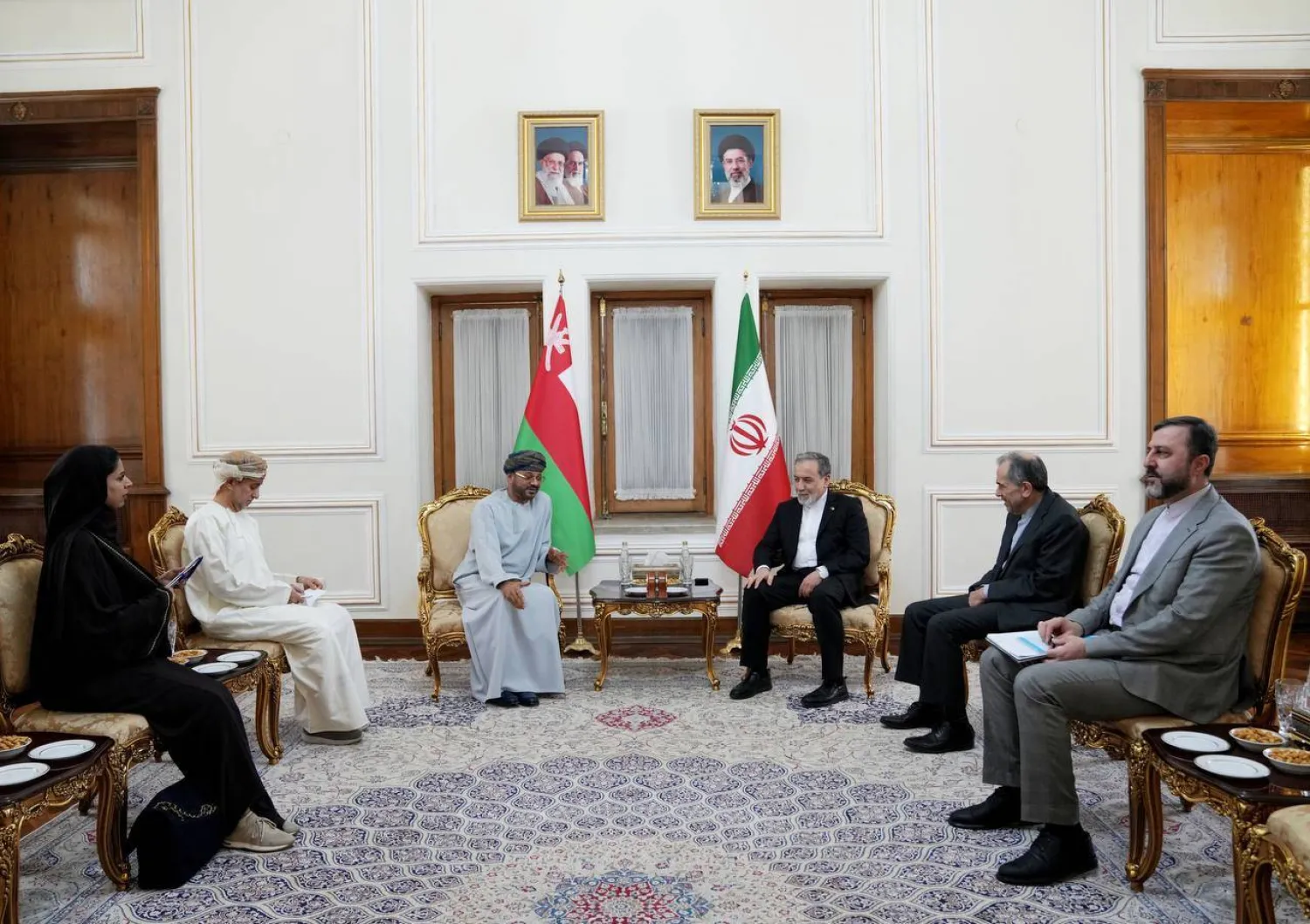
A handout picture provided by the Iranian Foreign Ministry Office, shows Iranian Foreign Minister Abbas Araghchi (top-R) and Omans' Foreign Minister Badr al-Busaidi (Top-L) meeting in Tehran on August 25, 2026. (Iranian Foreign Ministry Office / AFP)
TT

Iran and Oman Agree on Temporary Route in Hormuz Strait

A handout picture provided by the Iranian Foreign Ministry Office, shows Iranian Foreign Minister Abbas Araghchi (top-R) and Omans' Foreign Minister Badr al-Busaidi (Top-L) meeting in Tehran on August 25, 2026. (Iranian Foreign Ministry Office / AFP)

Omani Foreign Minister Badr al-Busaidi met with his Iranian counterpart, Abbas Araghchi, in Tehran, Iran's capital, on Tuesday to discuss a framework for managing ship traffic in the Strait of Hormuz.

A joint statement by the two countries, located on opposite sides of the narrow strait, said the proposed framework includes a “joint temporary navigational corridor” and both countries working to clear mines from the waterway.

The statement said Iran and Oman will continue technical negotiations toward establishing a permanent shipping corridor and an agreement on the future administration of the strait.

Iranian Deputy Foreign Minister Kazem Gharibabadi told state TV that the two countries had reached an understanding on a temporary route.

Traffic into the Gulf from the Gulf of Oman would pass entirely through Iranian waters, while the outbound route would pass partly through Iranian waters and partly through Oman’s territorial waters.

Iran and Oman would then hold negotiations over 30 to 60 days to “reach an understanding on a new permanent and sustainable route,” he said.

About a fifth of the world’s traded oil passed through the strait before the United States and Israel attacked Iran on Feb. 28.

It’s unknown whether the US will accept the emerging deal.

Iran’s president and other senior officials also discussed the strait with a delegation from Pakistan that left Tehran on Tuesday following talks on reviving negotiations to end the Iran-US conflict, the Pakistani military said.


Trump Says Strait of Hormuz Has Been Demined, Warns Iran Not to Plant More

Vessels in the Strait of Hormuz are visible near the beach of Bandar Abbas, Iran, August 25, 2026. Majid Asgaripour/WANA (West Asia News Agency) via REUTERS
TT

Trump Says Strait of Hormuz Has Been Demined, Warns Iran Not to Plant More

Vessels in the Strait of Hormuz are visible near the beach of Bandar Abbas, Iran, August 25, 2026. Majid Asgaripour/WANA (West Asia News Agency) via REUTERS

US President Donald Trump said on Tuesday that all mines had been detonated or removed from international waters of the Strait of Hormuz and that Iran has been told that any ship or boat placing new mines will be destroyed.

In a post ⁠on Truth Social, ⁠Trump said the United States, through its Space Force, was watching "every square inch" of the Strait, a key waterway in the global energy supply chain.

"There is ⁠a Zero Tolerance policy on mine placement in full force and effect," Trump said.

The US and Iran have not conducted air strikes on each other's militaries for weeks, but attacks on vessels in the Strait of Hormuz have continued as the two sides vie for ⁠control of ⁠the narrow maritime passage.

Oil transits through the strait were at 5 million barrels per day on Monday, provisional data from shiptracker Vortexa showed, down from more than 20 million per day before the war or about one of every five barrels consumed worldwide.


Ukraine’s Zelenskiy Sees Window for US Mediation Until Summer 2027

 Ukraine's President Volodymyr Zelenskiy attends a press conference following a meeting of the so-called Coalition of the Willing group, amid Russia's attack on Ukraine, in Kyiv, Ukraine August 24, 2026. (Reuters)
Ukraine's President Volodymyr Zelenskiy attends a press conference following a meeting of the so-called Coalition of the Willing group, amid Russia's attack on Ukraine, in Kyiv, Ukraine August 24, 2026. (Reuters)
TT

Ukraine’s Zelenskiy Sees Window for US Mediation Until Summer 2027

 Ukraine's President Volodymyr Zelenskiy attends a press conference following a meeting of the so-called Coalition of the Willing group, amid Russia's attack on Ukraine, in Kyiv, Ukraine August 24, 2026. (Reuters)
Ukraine's President Volodymyr Zelenskiy attends a press conference following a meeting of the so-called Coalition of the Willing group, amid Russia's attack on Ukraine, in Kyiv, Ukraine August 24, 2026. (Reuters)

Ukraine sees a window of opportunity for US mediation to end Russia's war in Ukraine until the end of next summer and has drafted one page of ideas with US and European officials to be presented to Moscow, President Volodymyr Zelenskiy said.

Zelenskiy said that a ceasefire and a previously discussed US proposal for a free economic zone in Ukraine's eastern Donbas area — to be administered by a third party — were among the ideas in the ‌document.

"It contains ‌one of the ideas for a ceasefire — that ‌is ⁠the main point. The ⁠second part concerns what the Americans proposed regarding a free economic zone," Zelenskiy told reporters in a weekend briefing.

Zelenskiy said that he saw a window to end the nearly four-and-a-half years of fighting that stretched from the G20 summit in the US in December this year until the end of summer 2027, given the looming campaign for the ⁠2028 presidential election in the US.

Zelenskiy said earlier this ‌month that Ukraine had handed proposals to ‌US negotiators for a plan to end the war, without providing more detail.

US-led ‌peace talks fell apart earlier this year as Ukraine refused Russian ‌demands to cede more territory and as Washington became increasingly preoccupied with the conflict with Iran.

US negotiators Steve Witkoff and Jared Kushner were last in Moscow in January and have not yet visited Kyiv.

Zelenskiy said the third ‌element in the draft proposal was the role that the European Union and NATO would play and ⁠what "Ukraine is ⁠prepared to do to achieve this". He did not elaborate further.

"These three ideas I've mentioned are not exclusively Ukrainian ideas," Zelenskiy said, adding they were developed jointly with the Americans and the Europeans, with some stemming from previous talks US negotiators had with Ukraine and Russia.

Russia was open to listening to new proposals on how to reach a settlement on the Ukraine conflict, but they should reflect the "realities on the ground", a senior Russian diplomat said in an interview published last week.

Moscow's key objective is capturing the remainder of Donbas, where it has been making a push to advance into Ukraine's so-called fortress belt of eastern cities.