Oil Extends Gains after Latest US Strikes, Tech Suffers More Losses

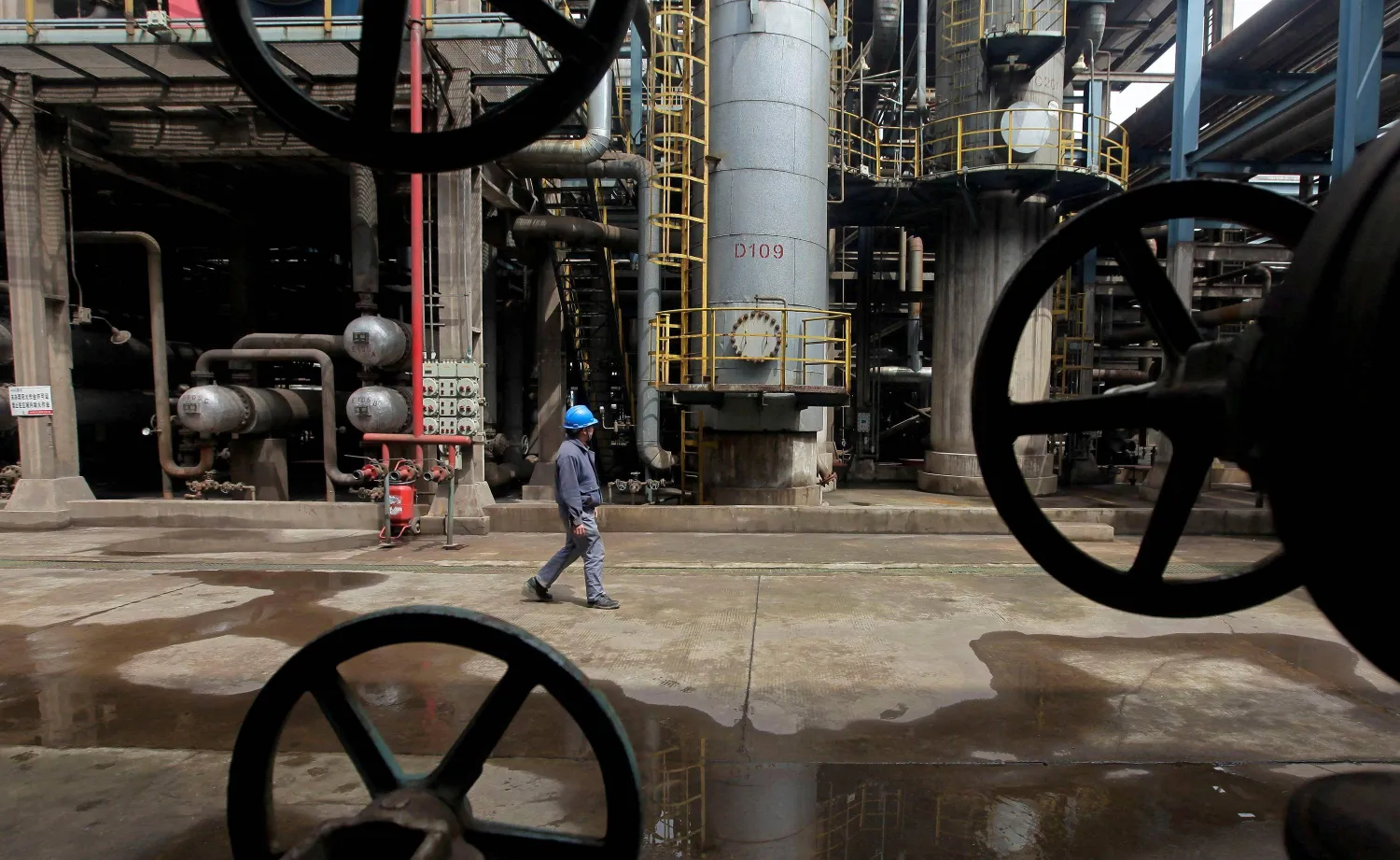
FILE PHOTO: A worker walks past oil pipes at a refinery in Wuhan, Hubei province March 23, 2012.   REUTERS/Stringer/File Photo/File Photo
FILE PHOTO: A worker walks past oil pipes at a refinery in Wuhan, Hubei province March 23, 2012. REUTERS/Stringer/File Photo/File Photo
TT

Oil Extends Gains after Latest US Strikes, Tech Suffers More Losses

FILE PHOTO: A worker walks past oil pipes at a refinery in Wuhan, Hubei province March 23, 2012.   REUTERS/Stringer/File Photo/File Photo
FILE PHOTO: A worker walks past oil pipes at a refinery in Wuhan, Hubei province March 23, 2012. REUTERS/Stringer/File Photo/File Photo

Oil prices jumped and stocks fell again Tuesday after fresh US strikes against Iran that marked a new escalation in hostilities that has fueled fears over their already fragile truce and the chances of another spike in inflation.

Tech firms were once again in the crosshairs, with South Korea's Kospi extending a painful selloff as chip titan SK hynix continued to be routed amid growing fears about the AI boom.

The latest attacks came after Iranian forces struck a commercial ship in the Strait of Hormuz -- through which a fifth of global oil passes -- early Sunday, before announcing the closure of the waterway.

That led to a series of US strikes on sites in the Iranian republic, which replied by hitting targets in Bahrain, Jordan, Kuwait and Oman.

Before the latest US attacks, President Donald Trump told conservative radio host Hugh Hewitt on Monday that "we're going to hit them very hard tonight, and we're going to hit them hard tomorrow".

He later declared on Truth Social that the United States would be "known as 'THE GUARDIAN OF THE HORMUZ STRAIT'" and levy a 20 percent fee on all cargo shipped through the waterway.

While Iran's ports would again be blockaded, Trump said "all other countries will have fair and open use of the strait".

However, he also said a deal with Tehran to end the crisis was still possible.

"Yeah, I think a deal is possible. Sure, I do," he told reporters in the Oval Office. "We had a deal with them two days ago and then they said 'Oh we can't make that deal. We have to negotiate it further.'"

Oil prices shot up more than nine percent Monday over fears of renewed conflict and the possibility that a fresh surge in inflation could force the Federal Reserve and other central banks to hike interest rates soon.

And they continued to rise Tuesday, piling on more than one percent.

"With Trump, one never quite knows how seriously to take such pronouncements, but Gulf allies would not be pleased with this plan, and it almost certainly violates international law," said BNZ's Jason Wong.

"The 20 percent levy would add about $16 to the cost of every barrel of oil passing through the strait on a typical supertanker.

"It remains to be seen whether the plan will stick -- probably not -- and whether it is merely a negotiating tactic aimed at getting Iran to pause its military strikes on shipping in the area."

The renewed hostilities once again dragged on equities, compounding the flight from tech firms that has characterized markets in recent weeks as traders worry that the sector's AI-led rally has gone too far.

Seoul again suffered heavy selling, with SK hynix shedding more than three percent, the day after a 15 percent collapse. Its New York-listed shares -- which soared more than 13 percent on their debut Friday -- plunged more than nine percent Monday.

Tokyo, Hong Kong, Sydney, Singapore, Taipei, Wellington, Manila and Jakarta were also sharply down.

The losses came at the start of a big week for traders, with earnings season about to kick off, Fed boss Kevin Warsh due to testify in Congress and US inflation data set to be released.

Meanwhile, Fed governor Christopher Waller stoked concerns over an early interest rate hike as inflation continues to remain elevated.

"If we get another hot reading on core inflation this week, then the (rate-setting committee) will need to consider tightening monetary policy in the near term," he said Monday.


Hapag-Lloyd Raises Outlook for Third Time on Strong Freight Rates

Hapag-Lloyd containers at a loading terminal at the harbor in Hamburg, Germany, July 13, 2025. (Reuters)
TT

Hapag-Lloyd Raises Outlook for Third Time on Strong Freight Rates

Hapag-Lloyd containers at a loading terminal at the harbor in Hamburg, Germany, July 13, 2025. (Reuters)

German container shipping company Hapag-Lloyd on Wednesday raised its full-year earnings outlook for the third time this year, citing strength in freight rates and a stronger-than-expected performance ‌in the ‌fourth quarter.

The stock was ‌up ⁠2.4% at 0925 ⁠GMT.

The upgrade adds to a series of positive outlook revisions across the European logistics sector, where resilient global trade, elevated shipping ⁠rates and persistent ‌supply-chain disruptions have ‌supported earnings and boosted profitability.

Hapag-Lloyd ‌now expects full-year earnings ‌before interest and tax of $2.0 billion to $2.4 billion, up from previous expectations of $1.25 billion to $1.75 ‌billion.

The company also lifted its 2026 earnings before ⁠interest, tax, ⁠depreciation and amortization guidance to $4.6 billion to $5.0 billion, from $3.9 billion to $4.4 billion previously.

The latest increase follows earlier upgrades in July and September, reflecting sustained strength in container shipping markets and management's improved expectations for year-end trading.


Gold Gains After Steep Drop, but Hawkish Central Bank Signals Weigh

People buy gold jewellery on the occasion of 'Dhanteras' as part of Diwali celebrations, the Hindu festival of lights, in Kolkata on November 6, 2026. (AFP)
TT

Gold Gains After Steep Drop, but Hawkish Central Bank Signals Weigh

People buy gold jewellery on the occasion of 'Dhanteras' as part of Diwali celebrations, the Hindu festival of lights, in Kolkata on November 6, 2026. (AFP)

Gold prices climbed on Wednesday, but remained anchored near the $4,000 level after a sharp selloff in the previous session following a hot US inflation print and hawkish policymakers' comments that tilted market expectations towards further and larger ‌rate hikes.

Spot ‌gold rose 0.5% to $4,051.31 per ounce ‌by ⁠0916 GMT after dropping ⁠as much as 3% to $4,013.29 on Tuesday. US gold futures for December delivery gained 0.7% to $4,059 per ounce.

"Gold is seeing some slight relief after its post-CPI declines," said Han Tan, chief market analyst at Bybit.

"However, it's a tough ask for gold bulls to keep pushing prices higher, given ⁠the prospects of more Fed rate ‌hikes in the pipeline."

Data released on ‌Tuesday showed US consumer prices rose more than expected in ‌October, with the CPI increasing 0.4%. Economists polled by Reuters ‌had forecast a 0.3% rise.

Traders raised the odds of a December Federal Reserve rate hike to 100% from 84% before the data, as per CME's FedWatch tool. Expectations of a ‌larger, half-percentage-point hike also increased.

Ahead of the data, Fed Governor Christopher Waller said a core inflation ⁠reading ⁠of 0.3% in October would prompt him to consider a half-point hike at the December meeting.

Other policymakers also maintained a hawkish tone, with Fed Bank of Philadelphia President Anna Paulson signaling further US rate hikes and Fed Vice Chair for Supervision Michelle Bowman reaffirming the central bank's focus on curbing price pressures.

Although gold is typically seen as an inflation hedge, higher interest rates diminish its appeal, as gold bullion pays no interest.

Among other metals, spot silver climbed 2.7% to $52.87 per ounce, and palladium gained 4.1% to $1,066.66 per ounce.


Oman Posts Third-Quarter Budget Surplus as Revenue Rises 16%

Visitors and locals gather at the Mutrah Corniche in Muscat, Oman, April 11, 2025. (AP)
TT

Oman Posts Third-Quarter Budget Surplus as Revenue Rises 16%

Visitors and locals gather at the Mutrah Corniche in Muscat, Oman, April 11, 2025. (AP)

Oman's ‌public revenue rose 16% by the end of the third quarter to 9.828 billion Omani rials ($25.53 billion), the Oman News Agency said in a post ‌on X on ‌Wednesday.

Public spending ‌rose ⁠9% to about ⁠9.74 billion rials, and the state budget recorded a surplus of about 90 million rials ⁠at the end of ‌the ‌third quarter.

Public debt ‌fell by more ‌than 600 million rials from a year earlier, to about 14.1 ‌billion rials from 14.7 billion.

Dues paid ⁠to ⁠the private sector and received through the financial system totaled more than 1.43 billion rials by the end of the third quarter.