


Lebanon Parliament to Discuss Sweeping Amnesty Bill

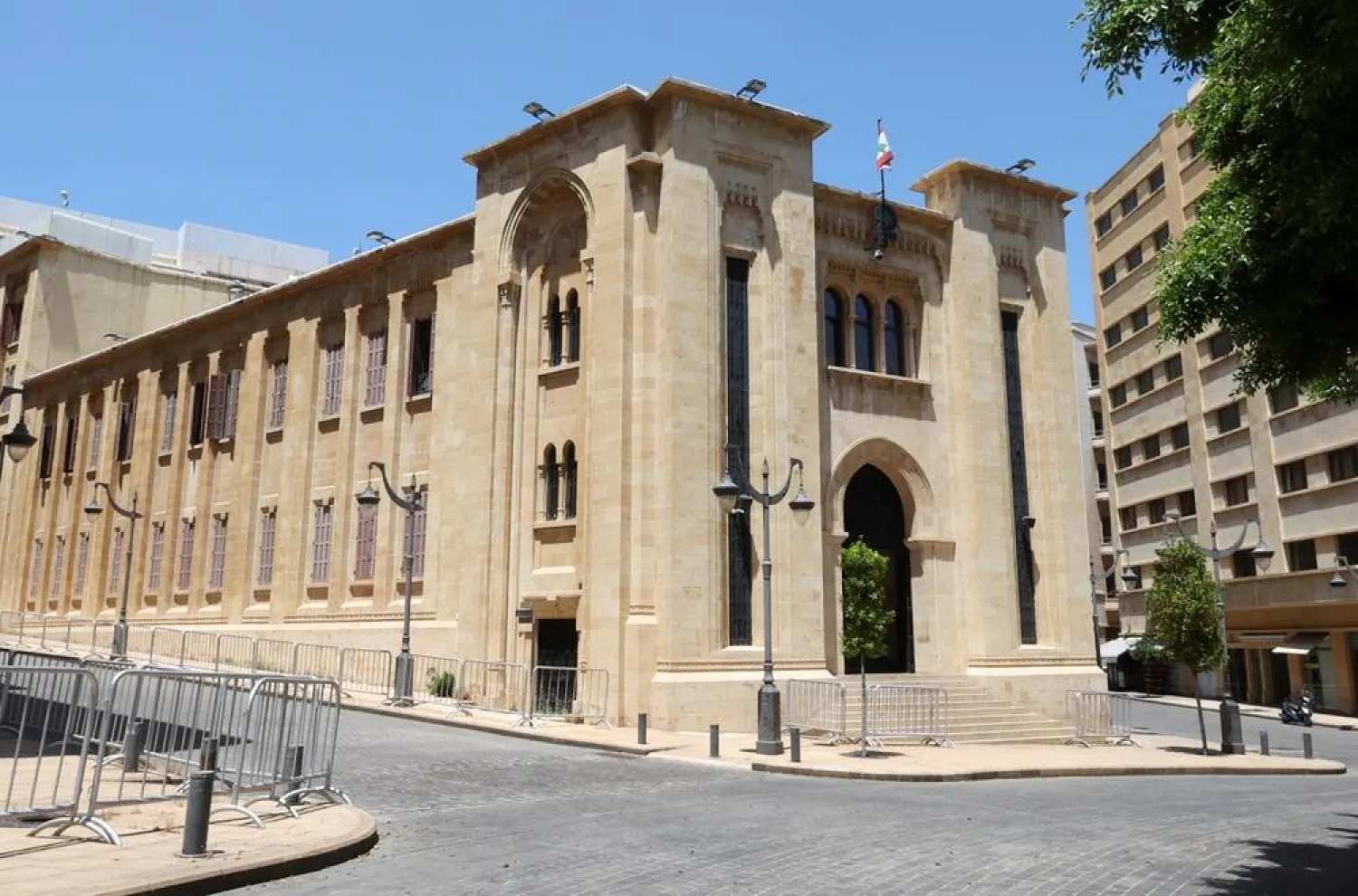
A general view shows the parliament building, ahead of the parliamentary election, in downtown Beirut, Lebanon May 12, 2022. (Reuters)
TT

Lebanon Parliament to Discuss Sweeping Amnesty Bill

A general view shows the parliament building, ahead of the parliamentary election, in downtown Beirut, Lebanon May 12, 2022. (Reuters)

Lebanon's parliament commenced a legislative session on Wednesday to discuss and vote on several bills, including an amnesty law that could cover swathes of prisoners.

More than 40 draft laws will be discussed and voted on in the two-day session, the most prominent being the abolition of the death penalty, which has not been carried out in years, and the amnesty.

For years, parliament has been trying to pass a general amnesty bill, whose primary goal is to reduce overcrowding in Lebanon's prisons, without gaining consensus due to sectarian and political divisions regarding who would benefit from it.

Amnesty has been a demand for families of Islamist prisoners, some of them accused of attacking the Lebanese army, participating in clashes in the northern city of Tripoli and planning bombings.

Thousands of families from the eastern Baalbek and Hermel regions, bastions of Hezbollah and its ally Amal where illicit cannabis cultivation is widespread, have also been demanding amnesty for drug-related offences and theft.

Relatives of those who fled to Israel after its withdrawal from southern Lebanon in 2000, fearing reprisals, particularly from Hezbollah and its supporters, also want their family members covered.

Lebanon previously passed a general amnesty law in the wake of its 1975-90 civil war, allowing former warlords to transition into politics without facing trial for crimes committed during the conflict.

Parliament will also vote on the abolition of the death penalty, last carried out in Lebanon in 2004.

Capital punishment prevents Lebanon from extraditing criminals who have fled to countries that have abolished the penalty.

Wednesday's legislative session is the first held by parliament since it postponed elections by two years in March due to the Israel-Hezbollah war.



Morocco Signs Agreement to Join Gaza International Force

 Palestinians gather around a blacksmith shop in Gaza City's Sabra neighborhood after it was hit by an Israeli military strike on Sunday, July 12, 2026. (AP)
Palestinians gather around a blacksmith shop in Gaza City's Sabra neighborhood after it was hit by an Israeli military strike on Sunday, July 12, 2026. (AP)
TT

Morocco Signs Agreement to Join Gaza International Force

 Palestinians gather around a blacksmith shop in Gaza City's Sabra neighborhood after it was hit by an Israeli military strike on Sunday, July 12, 2026. (AP)
Palestinians gather around a blacksmith shop in Gaza City's Sabra neighborhood after it was hit by an Israeli military strike on Sunday, July 12, 2026. (AP)

Morocco signed an agreement on Wednesday to participate in the International Stabilization Force (ISF) for Gaza, state media reported.

The agreement was signed in Rabat at a meeting attended by Moroccan Foreign Minister Nasser Bourita, senior defense officials ‌and Nickolay ‌Mladenov, the Board ‌of Peace ⁠envoy for Gaza, along ⁠with a delegation including the commander of the ISF, the state news agency MAP said.

The agreement "reflects the shared determination to contribute, through ⁠concrete humanitarian and security ‌actions, to the ‌establishment of a climate of ‌peace and security in the region," ‌MAP quoted a statement from the Moroccan defense administration as saying.

The Gaza Peace Council and ISF ‌leadership welcomed Morocco's decision to join the initiative, citing ⁠its ⁠planned deployment of senior military officers, gendarmerie and police personnel, as well as the creation of a military field hospital, MAP said.


Could Hezbollah Launch a New War in Support of Iran?

Supporters of Hezbollah carry Iranian and Hezbollah flags during a memorial ceremony for slain Supreme Leader Ali Khamenei in the southern suburbs of Beirut, Lebanon, 08 July 2026. (EPA)
TT

Could Hezbollah Launch a New War in Support of Iran?

Supporters of Hezbollah carry Iranian and Hezbollah flags during a memorial ceremony for slain Supreme Leader Ali Khamenei in the southern suburbs of Beirut, Lebanon, 08 July 2026. (EPA)

Amid deteriorating regional conditions and faltering US-Iranian understandings, Lebanese people fear that Hezbollah may once again launch a new round of war in support of Iran. This follows the party’s previous interventions, including its 2023 campaign backing Gaza and its retaliation for the late Iranian Supreme Leader Ali Khamenei in March this year.

Lebanon has witnessed a drop in Israeli military operations, which have reached their lowest levels in weeks, despite Israel's continued occupation of a security zone extending up to ten kilometers deep inside Lebanese territory. Hezbollah has also halted all military operations since the ceasefire was announced in mid-June.

However, the resumption of attacks between the US and Iran leads observers to believe that Tehran could once again request its regional proxies, including Hezbollah, to reignite all fronts in its support, should it perceive that the situation is heading toward a major escalation against it.

These fears are compounded by past statements by Hezbollah lawmakers and leaders. Most recently, MP Ali Ammar pledged to stand behind Iran in the event of a new war.

Conversely, during his latest appearance, Hezbollah Secretary-General Naim Qassem insisted on maintaining the diplomatic track between the US and Iran, while fiercely attacking the path of direct negotiations between Lebanon and Israel.

Political analyst Qassem Qassir, who is close to Hezbollah's positioning, noted that “no one can definitively determine the red lines drawn by Hezbollah, which, if crossed, would prompt a return to resistance in its broadest sense.”

“However, it is expected that a broad Israeli assault on the Ali al-Taher hill would naturally compel the group to defend it,” he told Asharq Al-Awsat.

“The same applies if attacks target other Lebanese areas still outside direct Israeli control, or if the enemy resumes wide-scale offensives and attacks against Nabatieh, Tyre, the southern suburbs of Beirut or other regions,” he added.

“Ultimately, the decision rests with Hezbollah's leadership, which has confirmed through its Secretary-General that it will not accept a return to the status quo prior to March 2” when the war with Israel erupted, he said.

“Consequently, matters remain contingent upon favorable conditions on the ground as well as the political climate. For instance, should direct Lebanese-Israeli negotiations hit a dead end, it could prompt the resistance [Hezbollah] to resume direct military operations,” he remarked.

Security and defense analyst Dr. Riad Kahwaji said: “The red lines that could prompt Hezbollah to resume fighting are determined by Iran, not the party's own leadership.”

Speaking to Asharq Al-Awsat, he added: “Tehran alone decides when the party will reopen the support front.”


Israeli NGO Slams Investment Plan for West Bank Settlements

Construction cranes tower above a construction site in Givat HaMatos, an Israeli settlement suburb of Israeli-annexed east Jerusalem on January 2, 2026. (AFP)
TT

Israeli NGO Slams Investment Plan for West Bank Settlements

Construction cranes tower above a construction site in Givat HaMatos, an Israeli settlement suburb of Israeli-annexed east Jerusalem on January 2, 2026. (AFP)

An Israeli NGO on Wednesday condemned a government plan to invest around $2.7 billion in infrastructure and thousands of new residential units across several settlements in the occupied West Bank.

Since Prime Minister Benjamin Netanyahu took office in 2022, his government has rapidly expanded settlements in the West Bank, drawing criticism from rights groups and the UN.

Earlier this week, Netanyahu and far-right Finance Minister Bezalel Smotrich signed an umbrella agreement to invest in settlements in the north of the Palestinian territory.

"This is another significant step in the settlement revolution we are leading in Judea and Samaria," Smotrich said on X, using the biblical name for the West Bank.

"As part of the agreement, approximately 12,000 new housing units will be established, alongside an investment of more than eight billion ILS (approximately $ 2.7 billion) in infrastructure, public institutions and settlement development."

Netanyahu hailed the agreement.

"Not only do we defend this place, we elevate it," he said.

Israeli anti-settlement watchdog Peace Now slammed the decision, accusing the government of squandering public funds and entrenching the occupation of the West Bank.

The group said the move would complicate any future withdrawal from the West Bank and the creation of a Palestinian state.

"Umbrella agreements are used for the rapid development of large-scale projects," Hagit Ofran, a spokeswoman for Peace Now, told AFP.

"From the government's perspective, it is a double win: unbridled construction in the settlements, along with shackling the next government to commitments that will make it difficult to roll back this terrible government's reckless policy."

Since taking office, Netanyahu's government, widely seen as one of the most right-wing in the country's history, has approved the establishment of 102 settlements in the West Bank, according to Peace Now.

All Israeli settlements are illegal under international law.

Excluding east Jerusalem, more than 500,000 Israelis live in settlements in the West Bank, which Israel has occupied since 1967, among some three million Palestinians.