


Why Greater Tunb Matters Near the Strait of Hormuz

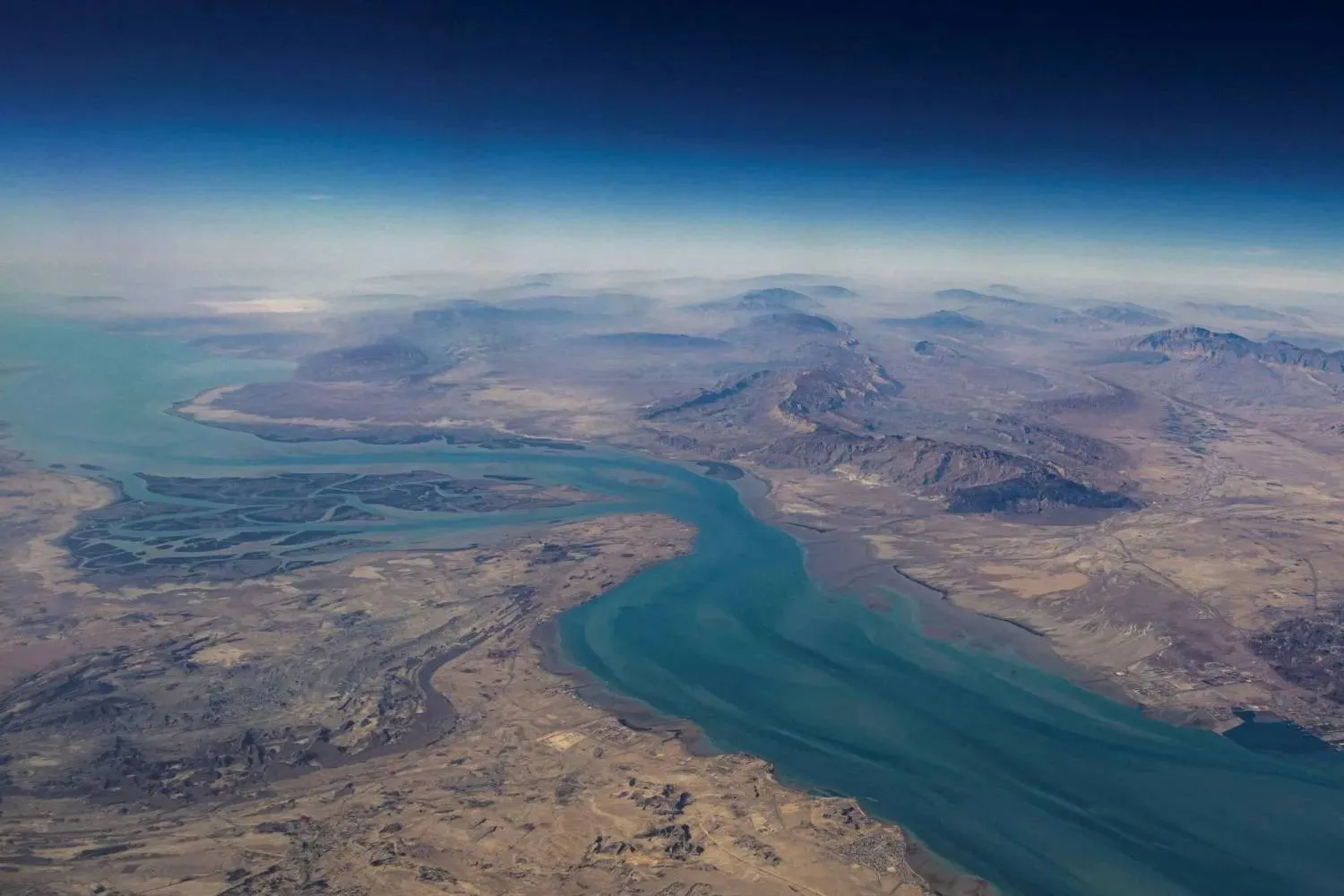
An aerial view of Iran’s Qeshm Island near the Strait of Hormuz (Reuters)
TT

Why Greater Tunb Matters Near the Strait of Hormuz

An aerial view of Iran’s Qeshm Island near the Strait of Hormuz (Reuters)

US strikes on Greater Tunb on Wednesday thrust one of the most sensitive points at the entrance to the Strait of Hormuz back into the center of the confrontation, after US Central Command said it hit coastal defense systems, storage sites and cruise missile launchers in a 90-minute assault.

CENTCOM said the strikes were aimed at reducing Iran’s ability to attack commercial vessels in the strait.

Greater Tunb, one of three Emirati islands occupied by Iran since 1971, hosts a military airfield, Iranian Revolutionary Guard Corps Navy bases, garrisons and missile assets used to monitor nearby shipping lanes.

Former IRGC Navy commander Alireza Tangsiri had called the island vital to Iran’s control of the strait because it sits between the main inbound and outbound shipping routes.

Tangsiri, who was killed in an airstrike in Bandar Abbas on March 26, said in an earlier state television interview that losing Greater Tunb would mean losing control of transit routes through the Strait of Hormuz.

Its location, he said, gave Iranian forces the ability to monitor maritime traffic and shape its movement.

Tangsiri also tied Abu Musa and Sirri islands to Iran’s gas fields and Gulf trade, warning that the loss of Abu Musa could lead to the loss of Sirri and its military positions, gas fields and trade routes.

He had overseen the expansion of IRGC bases across the islands, including the military airfield on Greater Tunb and facilities on Sirri.

Islands and shipping lanes

Greater Tunb is part of a chain that includes Abu Musa, Lesser Tunb, Qeshm, Larak, Hormuz and Sirri. Studies have described the islands as forming Iran’s “defensive arc” around the strait.

Iranian officials have likened them to “unsinkable aircraft carriers” because they host anti-ship missiles, surveillance posts and naval bases.

Greater Tunb’s importance also lies in its proximity to the two main shipping lanes.

Tehran says vessels must follow routes and schedules set by Iranian authorities and secure prior approval. Washington is pressing for a southern route along the Omani coast that would fall outside Iranian control.

The routes have become a central point of dispute since the Islamabad memorandum of understanding on June 17.

Iran interprets its fifth provision as granting Tehran a role in regulating passage. The United States says the Strait of Hormuz is an international waterway that cannot be subjected to unilateral permits or fees.

Greater Tunb is a forward military outpost in Iran’s network of control over the strait.

The strikes were aimed at disabling coastal defense and missile sites that could be used against vessels and weakening Iran’s ability to impose its rules on shipping.



Heavy Rain Shuts Down Istanbul, Causing Flooding and 3 Deaths

Car owners search for their vehicles swept away by the flood after a heavy rain at Ayazaga district in Istanbul, on October 15,2026. (AFP)
TT

Heavy Rain Shuts Down Istanbul, Causing Flooding and 3 Deaths

Car owners search for their vehicles swept away by the flood after a heavy rain at Ayazaga district in Istanbul, on October 15,2026. (AFP)

A heavy downpour has shut down Istanbul, flooded homes and roads and killed at least three people, officials said Thursday, as rescuers evacuated hundreds of stranded people.

The downpour Wednesday night flooded homes and businesses and inundated roads and underpasses, stranding vehicles and causing traffic chaos in Türkiye's largest city. In some neighborhoods, the floods swept away cars, sending them crashing into one another.

It was the heaviest rainfall in the city in 83 years, said Murat Kurum, the minister for the environment, urbanization and climate change.

The Istanbul governor's office on Thursday reported three deaths in the city and said five other people were reported missing. A 14-year-old was electrocuted after stepping in a puddle at a park in the Fatih district, and a 34-year-old slipped on a sidewalk in the Sariyer district and hit their head, local media reports said. The governor's office said the body of a third victim was discovered near another park in the Kagithane district.

More than 3,000 people who were stranded by the floods were safely evacuated throughout the city, Kurum said.

The minister, who will chair the UN climate change conference, COP31, in the Mediterranean coastal city of Antalya next month, linked the floods to the climate crisis.

“Climate change is no longer an issue of the future; it is the most important issue of today,” he told reporters. "Unfortunately, climate change is affecting rainfall patterns. We are now facing more intense rainfall events.”

In Sakarya province, around 150 kilometers (93 miles) east of Istanbul, a two-story house that was built on a riverbed collapsed in the floods, HaberTurk television reported. One person was reported missing in neighboring Kocaeli province.

The country’s weather agency has predicted more showers for Istanbul and the surrounding area in the coming days.

The Istanbul governor’s office extended a school closure order to include Friday, and some state employees were placed on leave Thursday.

Kurum asked residents not to leave their homes. Motorcycles were barred from traffic until further notice.


US Extends Sanctions Waiver for Russia’s Lukoil

 Prices of gasoline and diesel fuel are displayed in downtown Los Angeles, California, US, October 15, 2026. (Reuters)
Prices of gasoline and diesel fuel are displayed in downtown Los Angeles, California, US, October 15, 2026. (Reuters)
TT

US Extends Sanctions Waiver for Russia’s Lukoil

 Prices of gasoline and diesel fuel are displayed in downtown Los Angeles, California, US, October 15, 2026. (Reuters)
Prices of gasoline and diesel fuel are displayed in downtown Los Angeles, California, US, October 15, 2026. (Reuters)

The US Treasury Department on Thursday extended a sanctions waiver on Russian oil giant Lukoil for service stations outside Russia through April 2027.

The move allows Lukoil-branded stations in countries like the United States to continue serving customers until April 24 next year.

An earlier license enabling such transactions would have expired towards the end of this month.

The extension comes a week after US President Donald Trump said he had secured an agreement with Russia to supply diesel to American and global markets, with the US Treasury issuing a temporary license to enable flows.

Oil prices remain high with war in the Middle East now in its eighth month.

Energy prices have surged since the United States and Israel launched attacks on Iran in late February. Tehran's retaliation included the blockade of the Strait of Hormuz, a key passage for global oil transit, sending costs up.

The latest license, like an earlier one, does not allow the "transfer of funds to any person or account located in the Russian Federation."

A separate Treasury license on Thursday also authorized certain transactions involving Lukoil's Bulgaria entities through April 24, 2027.


Trump Scraps Plan to Livestream Execution After Fierce Backlash

 US Defense Secretary Pete Hegseth shakes hands with US President Donald Trump onstage during an event at Sparrows Point Shipyard, in Baltimore County, Maryland, US, October 6, 2026. (Reuters)
US Defense Secretary Pete Hegseth shakes hands with US President Donald Trump onstage during an event at Sparrows Point Shipyard, in Baltimore County, Maryland, US, October 6, 2026. (Reuters)
TT

Trump Scraps Plan to Livestream Execution After Fierce Backlash

 US Defense Secretary Pete Hegseth shakes hands with US President Donald Trump onstage during an event at Sparrows Point Shipyard, in Baltimore County, Maryland, US, October 6, 2026. (Reuters)
US Defense Secretary Pete Hegseth shakes hands with US President Donald Trump onstage during an event at Sparrows Point Shipyard, in Baltimore County, Maryland, US, October 6, 2026. (Reuters)

US President Donald Trump on Thursday canceled plans to livestream the firing squad execution of a convicted military base mass shooter, reversing a widely condemned move by Defense Secretary Pete Hegseth.

The plan to make Nidal Hasan's execution public was opposed at home and abroad, with US Democratic and Republican politicians, the Catholic Church and the United Nations all expressing outrage.

The cancellation is a blow to Hegseth, who is already under fire over the stalemated Iran war and its fallout, which are weighing on Trump's Republican Party ahead of November midterm elections.

Hasan "will die, as scheduled, by firing squad, but this event will not be streamed," Trump said in a post on his Truth Social platform.

The US president indicated he did not personally oppose the streaming plan, saying it "might have been a strong deterrent for the World to witness how America deals with Terrorists and SCUM like Hasan."

But "many very good and well-meaning people would rather not watch him die," Trump said, adding that the execution could still be viewed in person by immediate family of the victims if they wanted to do so.

Pentagon spokesman Sean Parnell said Hegseth and Trump had spoken before the announcement.

"The secretary supports the president's decision, and they are completely aligned," Parnell said in a statement.

Hasan's execution -- scheduled for December 3 at Fort Hood, Texas, where he gunned down 13 people in 2009 -- is set to be the first by a US military firing squad since 1945.

Last week, Hegseth said that "we'll make sure that people are able to watch it, that it's public," later confirming that the plan was to livestream the execution.

"People need to understand that...there's serious consequences for these types of things," he said.

Backlash to the plan quickly grew following Hegseth's announcement.

- Most Americans opposed -

The United Nations said streaming the execution would amount to "torture," while the president of the US Conference of Catholic Bishops said it was a "barbaric promotion of a culture of death," and both Australia and Britain's prime ministers described it as "abhorrent."

A Washington Post-ABC News-Ipsos poll released Thursday found that eight in 10 Americans opposed livestreaming the execution.

Lawmakers from both main US parties have said they were against it, and dozens of retired US military officers expressed opposition to the planned broadcast in an open letter.

It "will taint the honor of the military that employs it, and a nation that allows it," and "will ensure that Hasan becomes a martyr," said the officers, including more than 40 generals and admirals.

Some US Democratic lawmakers on Thursday hailed the decision to cancel the livestream while slamming Hegseth.

Representative Chrissy Houlahan said it was "as clear an illustration as any that Hegseth is dangerously unqualified," while Senator Jack Reed said Trump was "right to backtrack" but that Hegseth "deserves to be admonished for his lack of judgment."

Republican Senator John Curtis also weighed in, saying the cancelation "is the right move, both for the loved ones of the victims and for the country."

The last US military execution was carried out in 1961, when John Bennett was hanged for rape and attempted murder.

The Death Penalty Information Center says 135 troops have been executed by the US military since 1916.

Twelve of the 13 people Hasan killed and 30 of those he wounded were soldiers. He was shot by a civilian police officer who responded to the attack and is paralyzed from the waist down.

Hasan chose to conduct his own defense during the trial but called no witnesses and gave no testimony, and made no attempt to deny the charges.

He was sentenced to death by a military jury in 2013.

The court that convicted Hasan was told he was opposed to the US military's occupations of Iraq and Afghanistan, and that he had spoken online with an alleged Al-Qaeda figure, radical cleric Anwar al-Awlaki, an American citizen subsequently killed in a US drone strike in Yemen.