
Komala: A Frequent Target of Iranian Attacks in Iraqi Kurdistan

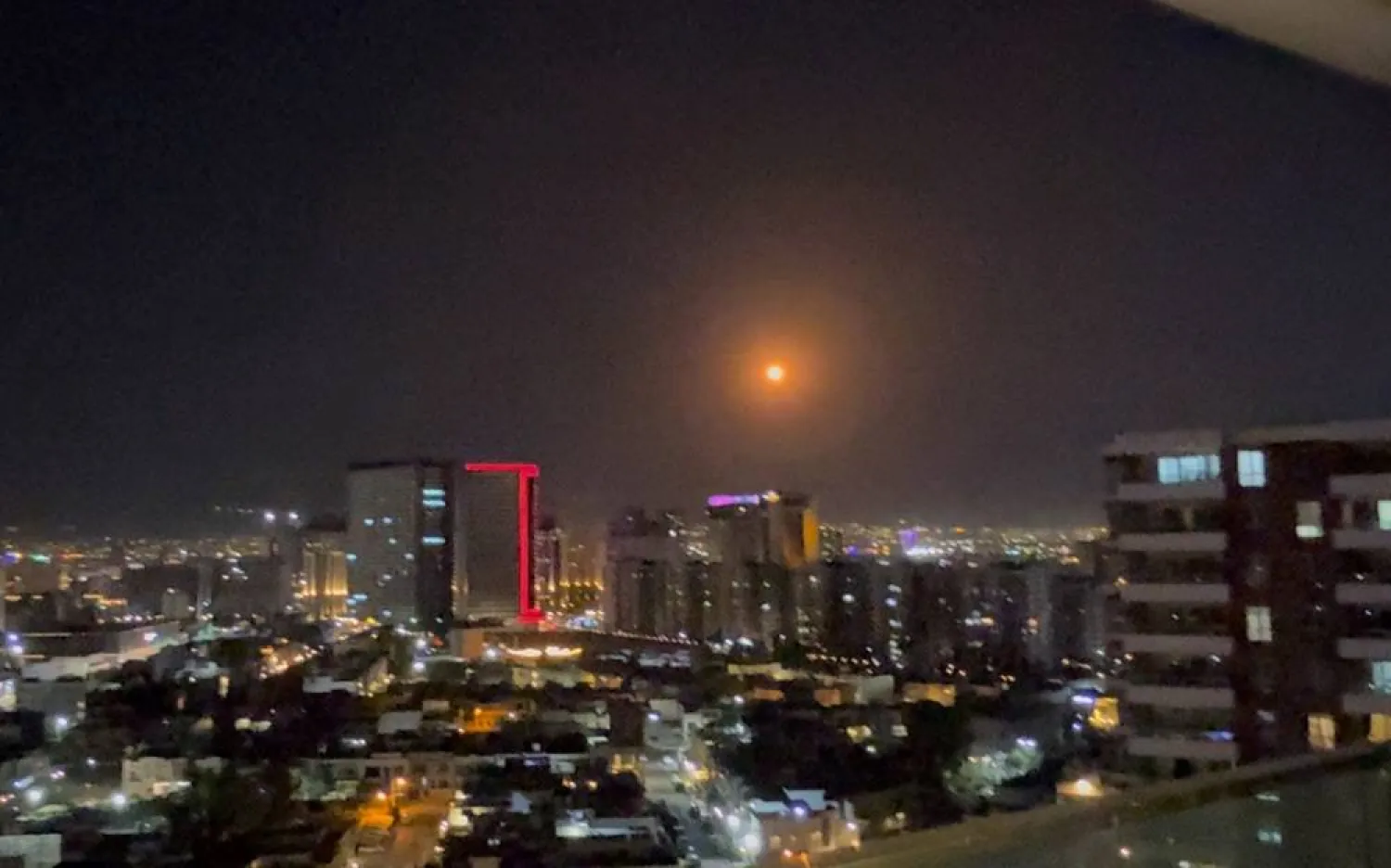
A drone is intercepted in the sky over Erbil, Iraq, July 15, 2026, in this screengrab obtained from a social media video. (Dlawer/X/via Reuters)
TT

Komala: A Frequent Target of Iranian Attacks in Iraqi Kurdistan

A drone is intercepted in the sky over Erbil, Iraq, July 15, 2026, in this screengrab obtained from a social media video. (Dlawer/X/via Reuters)

At least nine people were killed and others wounded on Friday in a missile and drone attack suspected of having been carried out by Iran against an Iranian Kurdish opposition group in the Iraqi Kurdistan Region, a group official said.

The attack targeted positions belonging to the Komala Party of Iranian Kurdistan in the Zargwezela area near Sulaymaniyah, the official said, requesting anonymity for security reasons.

The group said Iran was behind the strike, the official added. Tehran did not immediately claim responsibility.

Iran has previously attacked Iranian Kurdish opposition groups based in the Kurdistan Region.

Abdullah Azarbar, a member of the Politburo of the Komala Party, said the attack began at around 6 a.m. and involved eight large bunker-busting missiles.

Nine members of the group’s Peshmerga forces were killed and three others seriously wounded, he added. Three missiles struck the headquarters where the casualties occurred.

A security source had earlier said a party headquarters in the Surdas subdistrict of Sulaymaniyah province had been hit by missiles. Authorities opened an investigation to determine the circumstances of the attack and identify those responsible, the source said.

The Kurdistan Region Security Agency said seven missiles struck three areas in Sulaymaniyah province early on Friday.

Four landed in Zargwezela, one in Qasardi village and two near Tal Kobani in the Qaradagh area, the agency said. Its teams were still assessing casualties and material damage.

The Kurdistan Region Counter-Terrorism Service had earlier said coalition forces intercepted and destroyed eight explosive-laden drones over Erbil early on Friday. No casualties were reported.

Residents of Sulaymaniyah and Halabja provinces said they heard loud explosions in the early hours of the morning.

The Kurdistan Region Presidency condemned the missile and drone attacks on Sulaymaniyah and Erbil provinces, calling them a “dangerous development and a flagrant violation” of Iraqi sovereignty.

It warned that continued attacks could threaten Iraq’s stability and undermine efforts to strengthen security and peace in the region.

Komala repeatedly targeted

The Komala Party of Iranian Kurdistan is one of Iran’s oldest opposition groups. Founded in the late 1960s as a leftist Kurdish movement, it rose to prominence during the unrest that followed Iran’s 1979 revolution.

The group later entered into armed conflict with the new authorities over Kurdish autonomy and political freedoms.

After years of fighting inside Iran, Komala moved much of its operations and many of its bases to Iraq’s Kurdistan Region, where it established political and military headquarters and camps.

It has since faced repeated Iranian attacks, particularly by Iran’s Revolutionary Guards, which accuses Iranian Kurdish opposition parties of seeking to destabilize the country.

Komala combines political opposition to Tehran with advocacy for Kurdish rights in Iran. Tehran says such groups pose a security threat.

The 2022 “Woman, Life, Freedom” protests renewed attention on Iranian Kurdish opposition parties, although most remained based outside Iran.

Since the war between Iran and the United States began in February, no independent tally has established a final figure for the number of attacks on Komala bases.

Available reports, however, indicate that Iranian Kurdish opposition headquarters in Iraq’s Kurdistan Region were hit by a wave of missile and drone strikes during the conflict.

According to statements by the party and its allies, sites belonging to Iranian Kurdish opposition groups were repeatedly attacked, including bases linked to Komala and other parties in Erbil and Sulaymaniyah provinces.

The Coalition of Political Forces of Iranian Kurdistan also said missile strikes had targeted Peshmerga positions.

Human rights reports and Kurdish sources said bases belonging to Iranian Kurdish opposition parties, including Komala, were among the targets of dozens of missile and drone attacks during the war.

Baghdad Says Committed to Completing US Troop Withdrawal by End of Sept.

A soldier from the US-led anti-ISIS coalition. (AFP file)
TT

Baghdad Says Committed to Completing US Troop Withdrawal by End of Sept.

A soldier from the US-led anti-ISIS coalition. (AFP file)

Baghdad remains committed to the upcoming September 30 deadline to end the military presence of international coalition forces in Iraq, sources said.

Media reports, meanwhile, said that the United States and its partners intend to scale down their military mission and transition to a bilateral security framework with the Iraqi government instead of a complete withdrawal.

An official Iraqi source told Asharq Al-Awsat that reports about the continued presence of US and foreign forces in Iraq after September "contradict what was agreed upon between the previous Iraqi government and the US administration." However, the source added that "it is premature to comment on press reports that are not based on an official US source."

Reports on Saturday cited an unnamed US official, whose identity or position was not disclosed, stating that the US and its coalition partners will scale down their military missions in Iraq by the upcoming September 30 deadline.

The source said that the move is in execution of directives from President Donald Trump.

According to statements attributed to the official, the reduction of the mission reflects what they described as a shared success in fighting ISIS. The official noted that it represents a transition toward a permanent bilateral security partnership between Baghdad and Washington, in accordance with US interests, the Iraqi constitution, and the Strategic Framework Agreement between the two countries.

The official explained that the move does not mean the end of the international coalition against ISIS, but rather the transition of its military mission into a more traditional format within a bilateral framework.

Coordination between the Iraqi government and coalition member states will continue to ensure a "responsible and smooth" transition, he added.

In September 2024, Iraq and the US announced a plan to end the military mission of the Washington-led international coalition against ISIS in Iraq and to gradually transition to a bilateral security relationship.

Under the plan, the first phase of the mission concluded in September 2025, while forces remained in the Kurdistan region to support counter-ISIS operations in Syria, with the final phase scheduled to end in September 2026.

Sabah al-Numan, the military spokesperson for the Commander-in-Chief of the Armed Forces, said that the upcoming September 30 will be like an "Iraqi celebration," confirming Baghdad's commitment to completing the withdrawal of coalition forces on schedule.

Al-Numan added that the government is also proceeding with regulating weapons, restricting them to the control of the state, and integrating armed factions into legitimate state institutions.

The official Iraqi source told Asharq Al-Awsat that the government "is committed to what was agreed upon between Baghdad and Washington," and that Iraq no longer needs foreign forces on its territory for any purpose.

Baghdad is keen to ensure that a continued US presence, should it occur, does not provide a justification for armed factions to back track on the initiative to restrict weapons to the custody of the state, he stressed.


Dozens of Israeli Settlers Attack Flashpoint West Bank Village

Israeli settlers jump over the garden wall as they make their way towards a Palestinian home under construction in the village of Qusra, south of the city of Nablus in the Israeli-occupied West Bank, which has faced escalating settler violence over the past month, on August 29, 2026. (AFP)
TT

Dozens of Israeli Settlers Attack Flashpoint West Bank Village

Israeli settlers jump over the garden wall as they make their way towards a Palestinian home under construction in the village of Qusra, south of the city of Nablus in the Israeli-occupied West Bank, which has faced escalating settler violence over the past month, on August 29, 2026. (AFP)

Dozens of Israeli settlers attacked the Palestinian village of Qusra in the northern occupied West Bank on Saturday, residents and the military said, after nearly three weeks of tension in the area.

Earlier in August a group of rogue settlers began blocking supplies from entering Palestinian houses on the outskirts of the village near Nablus, trapping residents inside and drawing domestic and international condemnation.

Weeks later, Israeli forces continue to operate in the area while settlers still roam the surrounding hills.

On Saturday, Qusra resident Yussef Abdul Kareem Hassan told AFP that a handful of villagers were doing work on a house when they were approached by a small group of settlers.

The settlers then called for backup and returned with dozens more, Hassan said, adding that they had surrounded the Palestinians inside the house and began throwing stones.

AFP footage of Qusra on Saturday showed dozens of Israeli forces deployed to the site.

The Israeli military said soldiers and border police forces were dispatched "following reports that Israeli rioters had arrived in the area and that violent clashes had occurred, including stone-hurling toward Palestinians and additional civilians."

"Upon their arrival, the security forces identified dozens of rioters who had barricaded themselves inside a Palestinian home while Palestinian residents were inside," a military statement said, adding that it was "aware of reports of Palestinian injuries".

It said forces had worked to remove the settlers from the house, separate the groups, and confiscate vehicles "that were suspected of having been used to reach the area."

The vehicles would be used as evidence in a police investigation that has been opened, it said, adding that forces continued to operate in the area "to prevent further disturbances and restore order".

"The security forces strongly condemn all forms of violence," it said.

Violence by Israeli settlers towards Palestinians in the West Bank has persisted for years, often with little or no legal consequence, but recent months have seen a surge in attacks.

More than 500,000 Israelis live in settlements in the Palestinian territory, which are illegal under international law, among some three million Palestinians.

Israel has occupied the West Bank since 1967.

According to an AFP tally based on data from the Palestinian health ministry, Israeli forces or settlers have killed at least 1,103 Palestinians in the West Bank, including both fighters and civilians, since the start of the Gaza war in October 2023.

Israeli figures show at least 48 Israelis, including civilians and security personnel, have been killed in Palestinian attacks or during Israeli military operations during the same period.


Syria: Local Factions Clash Overnight in Sweida

Syrian army soldiers stand on the chassis of a mine-clearing tank of the Syrian Ministry of Defense's military engineering department during a demining operation in Qarah in the Damascus countryside on August 23, 2026. (Photo by Bakr ALkasem / AFP)
TT

Syria: Local Factions Clash Overnight in Sweida

Syrian army soldiers stand on the chassis of a mine-clearing tank of the Syrian Ministry of Defense's military engineering department during a demining operation in Qarah in the Damascus countryside on August 23, 2026. (Photo by Bakr ALkasem / AFP)

Armed clashes broke out in the Syrian city of Sweida late on Friday following a dispute between a group of factions that escalated into gunfire and the use of various weapons and projectiles, according to local sources and media reports cited by the German news agency dpa.

Syria TV quoted local sources as saying the clashes took place between a faction known as the “Security Office” of the National Guard, affiliated with Salman al-Hijri, the son of Hikmat al-Hijri, and local factions from the western countryside of Sweida.

A loud explosion was heard over the city. It was caused by a rocket-propelled projectile exploding in the air.

According to the sources, gunfire continued accompanied by explosions caused by RPG rounds and grenades near the provincial government building.

The Sweida 24 network reported that Ghaith Qantar, a commander in the security office, was wounded by gunfire during the clashes. It said the fighting also damaged several homes and sparked panic among civilians.

Sweida province continues to see intermittent clashes between Syrian government security forces and forces aligned with cleric Hikmat al-Hijri, despite a ceasefire that took effect on July 20, 2025.

Government security forces and al-Hijri’s forces share control of the province following the deadly violence that erupted on July 13 last year and killed more than 2,000 people, according to local estimates. The city of Sweida remains under the control of forces loyal to al-Hijri.