


UN to List West Bank, Lebanon Sites as 'in Danger'

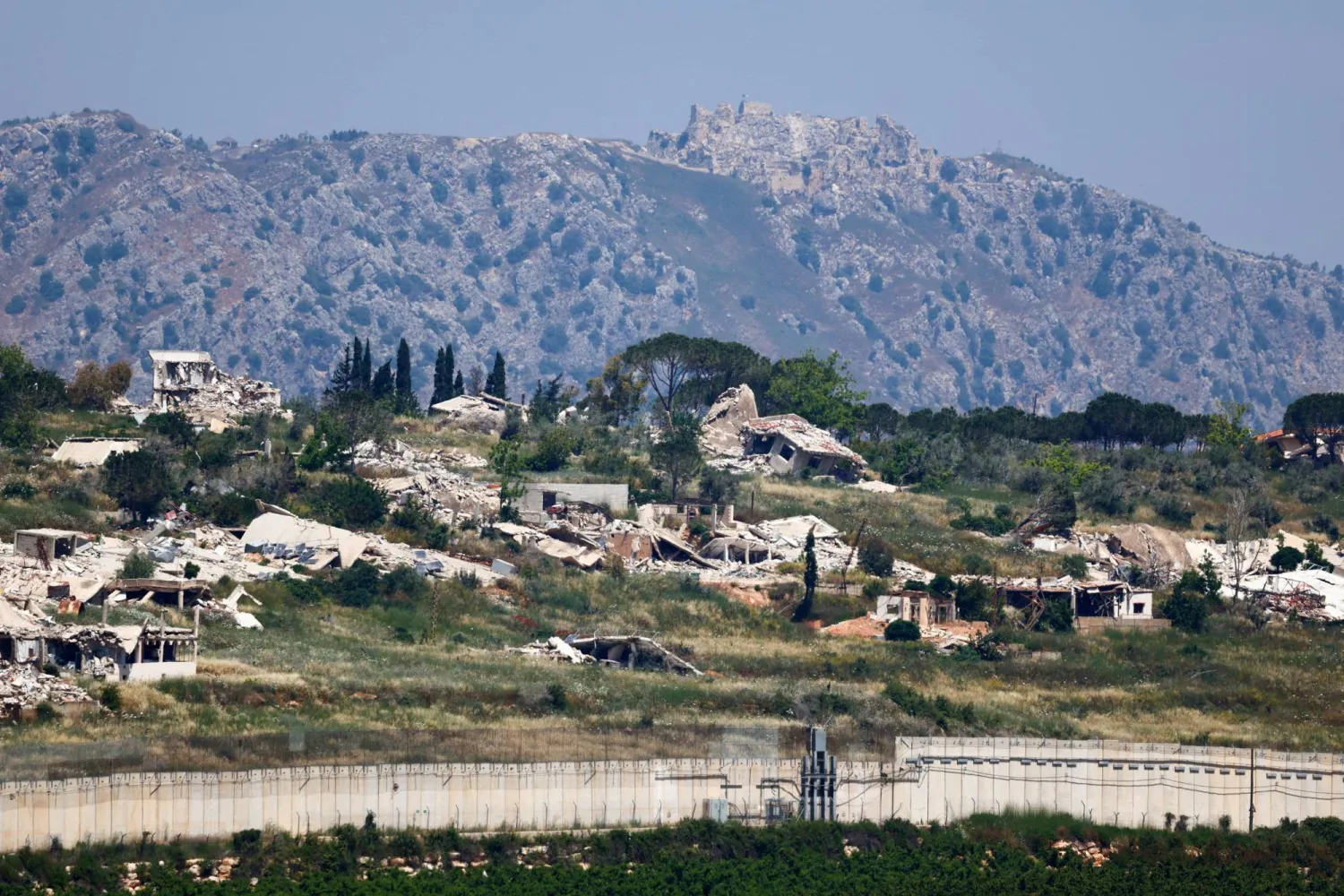
FILE PHOTO: Beaufort Castle in southern Lebanon, as seen from Metula in northern Israel, June 1, 2026. REUTERS/Amir Cohen/File Photo
TT

UN to List West Bank, Lebanon Sites as 'in Danger'

FILE PHOTO: Beaufort Castle in southern Lebanon, as seen from Metula in northern Israel, June 1, 2026. REUTERS/Amir Cohen/File Photo

The United Nations looks set to list a Biblical site, Lebanese castles, an antelope migration path and the world's deepest lake as world treasures under threat, including from war or climate change.

The 196 members states of the United Nations Educational, Scientific and Cultural Organization (UNESCO) are to cast votes from Friday next week on new additions to its World Heritage and World Heritage in Danger lists when they meet in Busan, South Korea.

"We may not have the means to deploy peacekeepers... but we can send a message to the entire world," the director of UNESCO's World Heritage Centre, Lazare Eloundou Assomo told AFP.

"These sites are important, and everything must be done to prevent their destruction."

Safeguarding "heritage allows communities that have been traumatized, victims of conflicts, to begin to come back and rebuild," he added.

Some 1,200 sites around the globe are listed as part of UNESCO World Heritage.

Making the heritage list often sparks a lucrative tourism drive, and can unlock funding for the preservation of sites that can face threats including pollution, war and negligence.

A site being qualified as heritage in danger, Assomo said, was not a reprimand but a measure meant to help states "find funding, partners and attention" to better preserve it.

Three sites, so far unlisted, are expected to be fast-tracked and voted straight onto the list of endangered places.

These could include the archaeological site of Sebastia, identified as being Biblical Samaria, in the Israeli-occupied Palestinian territory of the West Bank.

The site itself is in an area of the West Bank under Israeli control.

But Palestinians in the adjacent village, which is under dual Israeli-Palestinian control, have long depended on tourist visits to the ruins for their income and fear Israel could completely cut off access.

Israel left UNESCO in 2017, but remains a member of the World Heritage Committee, which has the final say on which sites are inscribed on each list.

Also to be given priority are five castles in south Lebanon, an area under fire from Israel, one of which -- the Crusader fortress of Qalaat al-Chakif or Beaufort Castle -- Israeli troops captured in May.

UNESCO members are also to vote on directly listing the Boma-Badingilo grassland and woodland savannahs in South Sudan the as under threat from both war and climate change.

One million animals -- including antelopes and gazelles -- migrate through the vast wilderness located between the White Nile and the Ethiopian border every year, leaving scars on the grasslands that are visible from the sky.

Beyond these priority cases, some sites already listed as heritage spots could now further be labelled as endangered.

These include the remains of Roman baths and a second-century triumphal arch and hippodrome in the southern Lebanese city of Tyre, which has come under heavy Israeli bombardment in recent months.

Also a potential candidate is the ancient Greek settlement of Tauric Chersonese in the Crimea peninsula that Russia unilaterally annexed from Ukraine in 2014.

Ukraine argues it is under threat from unauthorized excavations, large-scale construction projects, and the relocation of artifacts after Russia's invasion of Crimea.

In Russia, the world's deepest lake -- Lake Baikal -- could also be labelled in danger as authorities struggle to contain damage from pollution, mass tourism, large-scale logging and lower water levels due to a dam upstream in Mongolia.

The vast Siberian lake contains 20 percent of the world's total unfrozen freshwater reserve, according to Russia. Known as the "Galapagos of Russia", it is home to a huge variety of flora and fauna.

But in a 2023 report, the UN agency warned that if the "unfolding ecological degradation of Lake Baikal" was not urgently stopped and reversed, it would be classified as in danger.

"Some actions are being implemented to address this," it added, but "the mission considers that they are not sufficient".

Other sites are also vying for a simple listing.

In France, the Normandy beaches on which the Allies landed on June 6, 1944 during World War II could finally receive UNESCO recognition.

Two theatres built in the Amazon forest in Brazil and the Tunisian village of Sidi Bou Said might also be listed.



Hegra Highlights Status as Saudi Arabia’s First UNESCO World Heritage Site

Hegra Highlights Status as Saudi Arabia’s First UNESCO World Heritage Site
TT

Hegra Highlights Status as Saudi Arabia’s First UNESCO World Heritage Site

Hegra Highlights Status as Saudi Arabia’s First UNESCO World Heritage Site

The Kingdom of Saudi Arabia, a land that has witnessed successive civilizations whose traces remain across its regions, is home to AlUla Governorate, where the Hegra Archaeological Site stands as part of this rich human heritage.

It was the first Saudi site inscribed on the UNESCO World Heritage List, a testament to Saudi Arabia’s deep civilizational heritage and its commitment to preserving and safeguarding it for future generations.

As Saudi Arabia celebrates Saudi National Day, Hegra evokes part of the history of the Arabian Peninsula and the civilizational and cultural exchanges that took place across the region through the ages, according to SPA.

The Hegra Archaeological Site was inscribed on the UNESCO World Heritage List in 2008, becoming the first Saudi site to be added to the list, in an achievement that reflects its exceptional historical and civilizational significance. The site contains archaeological remains and carved rock facades that showcase the Nabataeans’ engineering and sculptural expertise.

Saudi Arabia, represented by the Royal Commission for AlUla (RCU), pays particular attention to the Hegra Archaeological Site through comprehensive efforts to preserve the site and safeguard its archaeological and historical components.

These conservation efforts are complemented by archaeological studies, surveys, and research conducted by the RCU in cooperation with experts and academic institutions.

Hegra remains one of the Kingdom’s most prominent heritage sites and a destination for visitors and researchers from around the world.


Tyre’s Ruins Survived the Strikes. Now Divers are Finding their Way Back Underwater

A diver passes above Roman-era columns at an archaeological site near the coast in the southern port city of Tyre, Lebanon, Thursday, Sept. 17, 2026. (AP Photo/Bilal Hussein)
TT

Tyre’s Ruins Survived the Strikes. Now Divers are Finding their Way Back Underwater

A diver passes above Roman-era columns at an archaeological site near the coast in the southern port city of Tyre, Lebanon, Thursday, Sept. 17, 2026. (AP Photo/Bilal Hussein)

Beneath the Mediterranean waters off the southern Lebanese city of Tyre, divers swim past stone walls, ancient structures and a submerged road — remnants of parts of a city that once stood above the water.

With a shaky ceasefire in place after the latest Israel-Hezbollah war, visitors are returning to Tyre, a city known for its Roman ruins and its much older Phoenician history. Diving operators say interest in the underwater archaeological sites is increasing, though the number of visitors remains below prewar levels, The Associated Press said.

“The diving season is not like it used to be before, but the number of people coming to dive to see the ruins is increasing day by day,” said Yousef al-Jundi, manager of the Lebanon Diving Center.

The remains underwater are part of Tyre’s wider archaeological landscape. UNESCO says substantial archaeological remains of the ancient city are submerged, while underwater archaeological research has documented walls, harbor structures and other remains along the former island and coastline.

“This is the identity of this city, which tells us how old this city is and what its history is,” al-Jundi said. He said the underwater sites attract divers from around the world who want to see what is commonly described as Tyre’s “sunken city.”

Tyre was one of the major Phoenician maritime cities of antiquity, with trading networks that extended across the Mediterranean. The city was also famous for its purple dye and later became an important Greek and Roman center. Its archaeological remains were added to UNESCO’s World Heritage List in 1984.

The war raised concerns over the preservation of those remains, both on land and underwater.

“We were worried about the archaeological sites on land, which were affected by the war and the strikes, but at the same time we were also worried about the archaeological sites underwater, but thank God they were not affected,” al-Jundi said.

Before the ceasefire in late June, Tyre came under intense Israeli airstrikes, with neighborhoods in the coastal city heavily damaged during the fighting. UNESCO’s World Heritage Committee placed Tyre on its List of World Heritage in Danger in July 2026, citing the threat and damage caused by the ongoing hostilities.

Ali Badawi of Lebanon’s Directorate General of Antiquities said protecting the underwater sites remains a challenge.

“They’re not very well protected," Badawi said, adding that “encroachments” sometimes happen. “But we are trying very hard through surveys and research that we’re conducting, and we’re trying to develop laws to ensure their safety in the future.”

Badawi said the authorities also want to expand research and investment in underwater tourism, including the creation of underwater archaeological parks that would allow more visitors to see the sites.

The effort comes as Tyre seeks to rebuild its tourism sector after the war, while preserving archaeological remains that reflect thousands of years of the city’s history.


Historic Linah Marks Saudi National Day with Heritage Events, International Performances

Linah is one of the most prominent historical sites in northern Saudi Arabia - SPA
TT

Historic Linah Marks Saudi National Day with Heritage Events, International Performances

Linah is one of the most prominent historical sites in northern Saudi Arabia - SPA

Historic Linah, located south of Rafha in Northern Borders Region, will celebrate Saudi National Day with a series of national and heritage events at the Historic Linah Market.

The program features performances by local and international artistic groups, along with a variety of artistic segments, solo musical performances, and equestrian and camel-riding displays, SPA reported.

The festivities will also include puppet shows, children’s competitions, and a musical evening showcasing traditional songs.

The Historic Linah Municipality has completed preparations across sites, parks, and roads, decorating streets with national flags and festive lighting to welcome visitors and create a celebratory atmosphere that reflects national pride.

Linah is one of the most prominent historical sites in northern Saudi Arabia.

Once a key stop along ancient caravan routes, the town’s historic palaces and market continue to stand as enduring witnesses to the region’s collective memory.