
The Biggest Takeaways from the 2026 World Cup

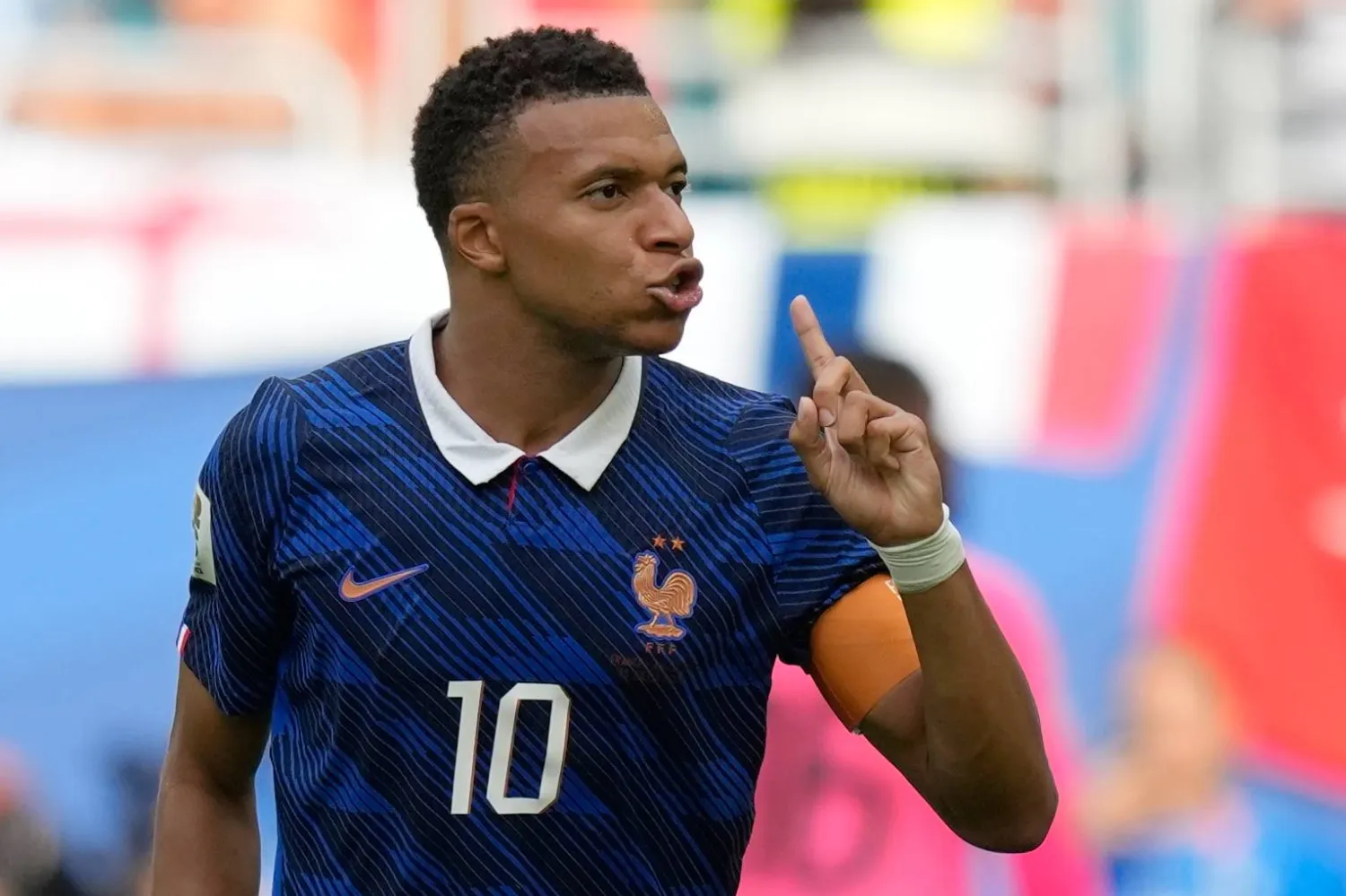
France's Kylian Mbappé (10) reacts after scoring his side's third goal during the World Cup third-place playoff match between France and England in Miami Gardens, Fla., Saturday, July 18, 2026. (AP)
TT

The Biggest Takeaways from the 2026 World Cup

France's Kylian Mbappé (10) reacts after scoring his side's third goal during the World Cup third-place playoff match between France and England in Miami Gardens, Fla., Saturday, July 18, 2026. (AP)

The World Cup final between Spain and defending champion Argentina marks the end of the biggest tournament in the competition’s history. At the final whistle in New Jersey on Sunday, a record 104 games will have been played across almost six weeks and three countries.

The supersized tournament delivered thrilling action on the field, with upsets, dramatic comebacks, spectacular goals and standout performances by the biggest stars of the game.

It also generated controversy, from political tensions surrounding Iran’s participation to criticism against innovations such as hydration breaks, which were unpopular among many fans.

Here are some key takeaways from the 2026 World Cup in the United States, Mexico and Canada.

More teams, more drama

A newly expanded 48-team format raised concerns about lopsided matches and a lack of jeopardy in the group stage.

Tell that to Cape Verde, Congo and even Curaçao, which all made history and won new fans.

Cape Verde held Spain to a draw in its opening game, advanced to the round of 32 and gave Argentina a scare before eventually losing 3-2 in extra time in a World Cup classic. Cape Verde's goalkeeper Vozinha became a breakout star at the age of 40, gaining millions of followers on social media.

Congo also advanced beyond the group stage and pushed England before eventually losing, while Curaçao was still in with a chance of making the knockouts going into its final group match.

FIFA opened its door to more teams and they proved they could compete on football's biggest stage. Nonetheless, it was top-ranked nations Argentina, Spain, France and England — all former champions — that made it to the final four.
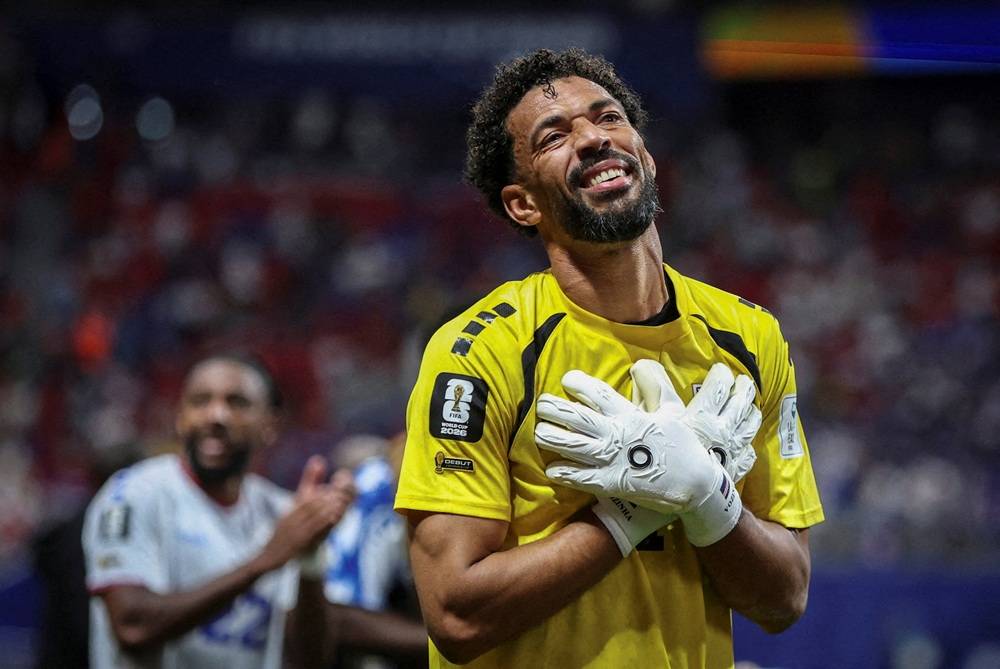
Cape Verde's Vozinha celebrates after the match in Atlanta Stadium, Atlanta, Georgia, US, June 15, 2026. (Reuters)

The big stars delivered

The race for the golden boot became a who's who of the world's top players with Lionel Messi, Kylian Mbappé, Erling Haaland, Harry Kane and Jude Bellingham firing on all cylinders.

Mbappé led the way ahead of Sunday's final with 10 goals in the tournament and a record 22 career World Cup goals. Messi had eight at this World Cup and 21 in total with one game to go.

Cristiano Ronaldo couldn't lead Portugal to success in what he said was his last World Cup, while Spain's teenage sensation Lamine Yamal — the star of the Euros two years ago — had to work his way into the tournament after overcoming injury.

Big tech, big complaints

Video reviews known as VAR were at the center of a number of contentious decisions, ruling out huge goals for Germany, Croatia and Egypt.

Egypt coach Hossam Hassan launched a furious tirade after Argentina staged a spectacular comeback from 2-0 down to win 3-2 in the round of 16.

“We have suffered injustice,” he said after Egypt had a goal overturned when the score was still 1-0.

Fitted with sensors, the high-tech ball in use at the tournament cost Croatia a dramatic late equalizer against Portugal in the round of 32 when it detected the slightest of touches from Igor Mantanovic and ruled Josko Gvardiol's goal offside.

“All these decisions take the joy out of football,” said Croatia coach Zlatko Dalić, who has since stepped down.
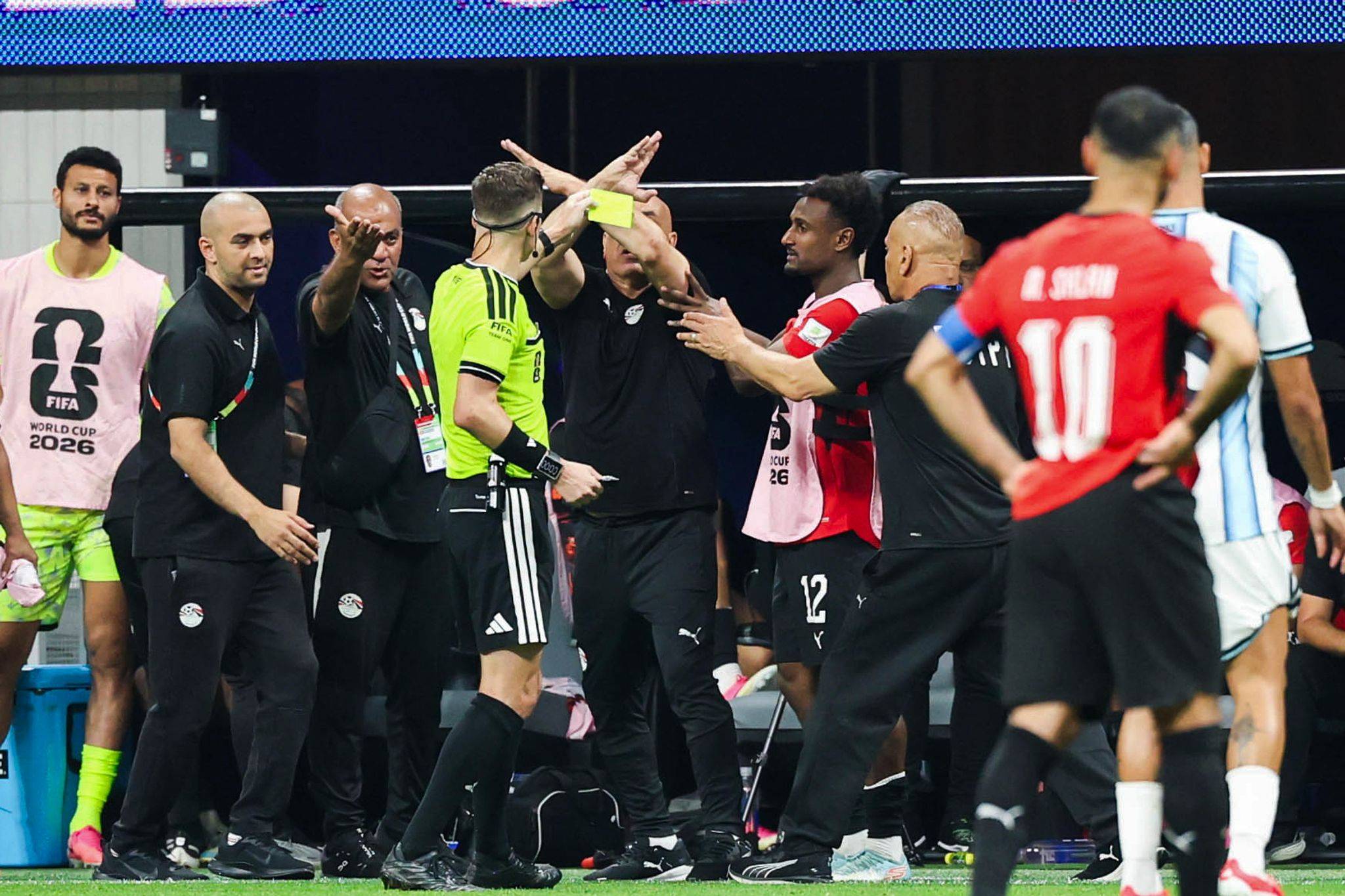
07 July 2026, US, Atlanta: Egypt coach Hossam Hassan gestures as he receives a yellow card during the 2026 FIFA World Cup Round of 16 match between Argentina and Egypt at Atlanta Stadium. (dpa)

Exorbitant ticket prices, but fans still turned up

There were concerns going into the tournament that FIFA's introduction of dynamic pricing would make game tickets unaffordable for average fans. Some critics accused FIFA of a “monumental betrayal."

Official ticket prices on general sale ranged from $140 to $2,735 for group stage matches and up to $8,680 for the final, far beyond the prices at the previous World Cup in Qatar in 2022.

After criticism FIFA said it would offer a selection of $60 tickets for every game to the 48 national federations participating.

FIFA's resale market place allowed sellers to list tickets for massively more than face value, including ones for the final for just under $2.3 million. FIFA didn't control resale pricing, but took a cut from sales.

For all the criticism, fans still turned up in big numbers, even for games that didn’t feature marquee teams or players.

After a shaky start when there were empty seats for the game between South Korea and the Czech Republic in Guadalajara, stadium after stadium reported full houses.

Many foreign visitors were impressed by the hospitality they experienced in the US.

Hydration breaks a turnoff

FIFA’s new hydration breaks midway through each half — a novelty for this World Cup — prompted loud jeers from fans inside the stadium, while former players were also critical.

"We’re in America, right? So, it’s like it is a timeout,” former Ireland international Roy Keane said on The Overlap podcast.

The breaks were introduced to help players deal with the summer heat, but FIFA stipulated they would occur regardless of the weather, venue or location.

Coaches used them like timeouts to pass on in-game tactical instructions. Broadcasters, meanwhile, used them as an opportunity to take commercial breaks.

It is unclear whether FIFA will implement hydration breaks at future World Cups, but the English Football Association said they were unlikely to be in place for the 2028 European Championship, co-hosted by England, Scotland, Wales and Ireland.
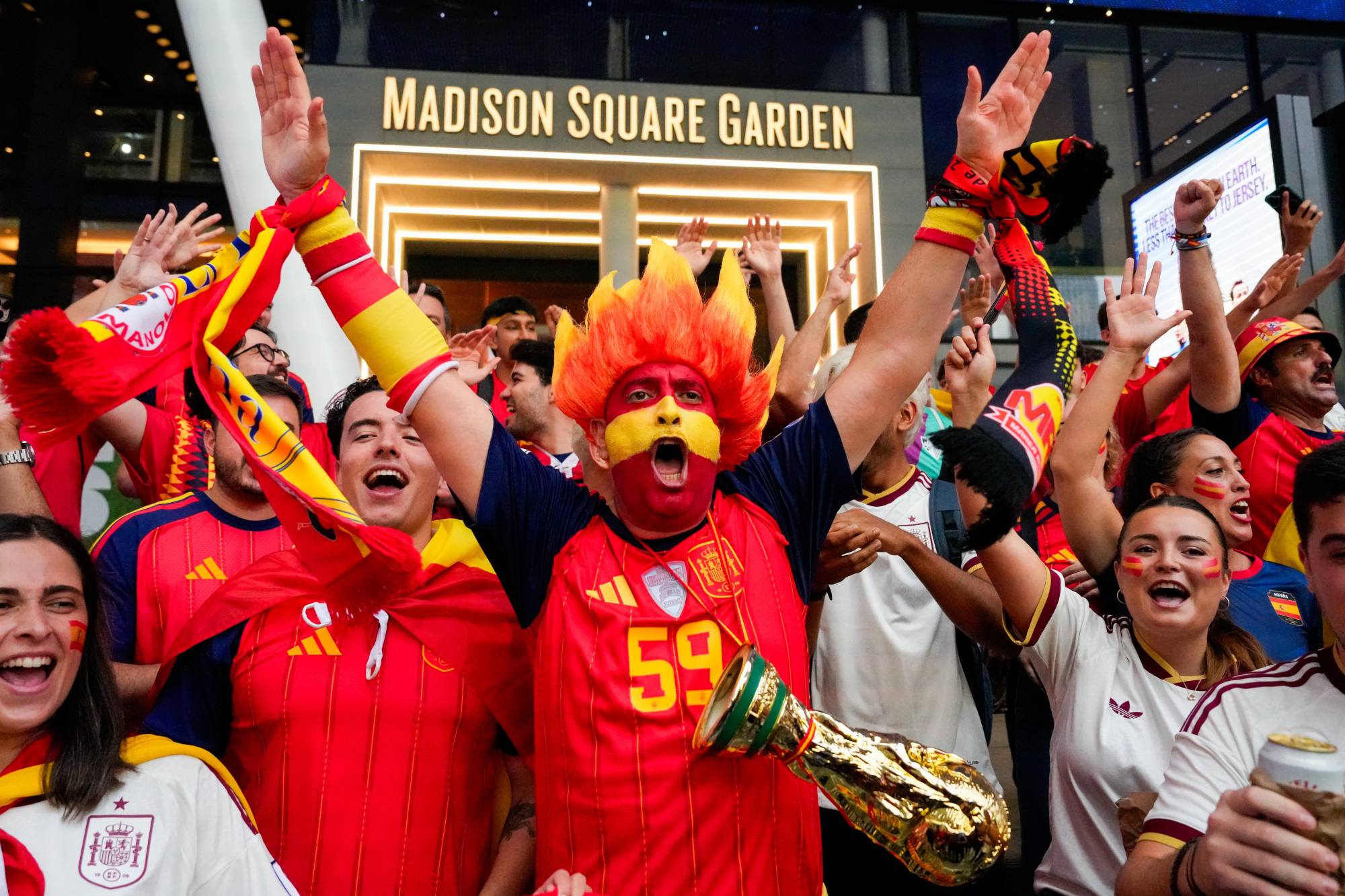
Spain fans gather for a rally on the eve of the World Cup final match in New York's Times Square, Saturday, July 18, 2026 (AP)

Iran participated despite the war

It’s not unusual for politics and sport to intertwine at the World Cup. This time the biggest political tensions surrounded the national team of Iran.

The war in the Middle East raised doubts about whether the Iranian team would show up at all. It did, but only after moving its base camp from Arizona to Mexico.

Its participation was overshadowed by visa issues, with the US refusing visas to several members of Iran's delegation. The Iranians also complained about travel restrictions, including having to leave the US immediately after each match.

When Iran was eliminated at the group stage, Homeland Security Secretary Markwayne Mullin made his feelings clear. “I’m just glad they’re done and they’re not coming back,” he said.

Trump's role in focus

While the Trump administration’s travel restrictions on a series of countries prevented some fans from traveling to the US, there were no reports of the aggressive immigration enforcement that some human rights groups had feared could take place around World Cup stadiums.

Besides the final, Trump didn't attend any World Cup games. However, his relationship with FIFA president Gianni Infantino came into sharp focus when US striker Folarin Balogun's one game ban for a red card was suspended ahead of the team's round of 16 game against Belgium.

Trump said he had called Infantino to ask for the decision to be reviewed before FIFA made Balogun eligible to play. FIFA insisted its disciplinary bodies acted independently, but the incident raised question about political interference.

Ultimately, the decision didn't help the US as it lost 4-1 to Belgium.


Zidane Leads First France Training Session

France's head coach Zinedine Zidane takes part in a training session four days ahead of France's UEFA Nations League football match against Türkiye in Clairefontaine-en-Yvelines outside Paris, on September 21, 2026. (AFP)
TT

Zidane Leads First France Training Session

France's head coach Zinedine Zidane takes part in a training session four days ahead of France's UEFA Nations League football match against Türkiye in Clairefontaine-en-Yvelines outside Paris, on September 21, 2026. (AFP)

Zinedine Zidane oversaw his first training session with the France national team on Monday as Les Bleus prepared for the start of the new Nations League campaign.

Under the gaze of some 50 journalists, the 1998 World Cup winner led a dozen of his players through a light training session at the country's national football center, Clairefontaine.

With many of France's stars in action with their clubs across Europe last weekend, not all of Zidane's 23-man squad were present.

Michael Olise, Eduardo Camavinga, Jules Kounde and Dayot Upamecano featured in the 12-strong group but captain Kylian Mbappe, who played in Real Madrid's derby loss to Atletico Madrid on Sunday, was a notable absentee.

Zidane was joined for the session by his assistant David Bettoni, who worked alongside him at Real Madrid, and former team-mate from the 1998 World Cup and Euro 2000-winning sides, Fabien Barthez, who is France's goalkeeping coach.

The session concluded with a short practice match, followed by shots on goal from crosses delivered by Zidane himself.

France face four Nations League fixtures following this first training camp of the Zidane era: away matches in Türkiye and Belgium on September 25 and 28, followed by home matches against Italy and Belgium at the Stade de France in early October.


Infantino Proposes Consulting Federations to Reform FIFA

13 July 2025, US, East Rutherford: FIFA President Gianni Infantino speaks during the DAZN pre-match interview ahead of the Club World Cup final match between Chelsea FC and Paris Saint-Germain at Metlife Stadium. (dpa)
TT

Infantino Proposes Consulting Federations to Reform FIFA

13 July 2025, US, East Rutherford: FIFA President Gianni Infantino speaks during the DAZN pre-match interview ahead of the Club World Cup final match between Chelsea FC and Paris Saint-Germain at Metlife Stadium. (dpa)

FIFA President Gianni Infantino on Monday suggested a "consultation" with the member federations to reform the world football governing body's decision-making processes, in a letter addressed to the 211 member associations, and seen by AFP.

"I will propose that the Council establish a direct, structured and time-limited consultation with confederations, Member Associations and relevant stakeholders on how FIFA's decision-making can be further strengthened," Infantino wrote.

The 56-year-old Swiss has come under fire since his now-abandoned plan to bring private investment into the men's and women's World Cups.

"The consultation would invite specific proposals on earlier institutional involvement, the respective roles of the President, the Bureau, the Council and the Congress, and practical ways to strengthen transparency, participation and accountability in major strategic initiatives," the letter continued.

Infantino asked for the initial proposals to be considered at the council meeting scheduled for October 15.

Infantino replaced Sepp Blatter as president of FIFA in 2016. He has come under severe pressure since the announcement in late July of proposals to create a commercial subsidiary to run its biggest events, such as the World Cup and Club World Cup.

The plan would have allowed private investors to acquire stakes in a company created under the FIFA Forward Enterprise (FFE) initiative. The backlash that followed led to the proposals being quickly shelved.

European football's governing body UEFA threatened to boycott FIFA competitions. It later suspended that threat, but has urged Infantino to resign and has been preparing possible legal action against him for alleged "criminal mismanagement".

Infantino addressed FFE in his letter on Monday and wrote that "FIFA's democratic processes, independence and sporting authority were never for sale".

The plan also "did not involve relinquishing FIFA's control or authority over sporting decisions", he insisted.

- 'Clear and trusted' -

He further lamented the fact that the scheme "entered the public domain before FIFA's planned institutional process had been completed and before it could be presented in full to the Council and the Member Associations".

"I recognize that, without the full context, this caused concern and created the impression that decisions had already been taken. They had not," Infantino added.

"Major ideas must be developed, tested and communicated through clear and trusted institutions. That is a responsibility I take seriously."

UEFA, alongside North American body CONCACAF and the Asian Football Confederation (AFC), issued a no-holds-barred joint letter against Infantino in August.

"Leadership in football is not a possession. It is not about holding -- or demanding -- power to be held," they wrote.

FIFA confirmed earlier in September that Infantino will stand for re-election as president next March.

At this stage, he is the only candidate. However, CONCACAF President Victor Montagliani is widely seen as a likely challenger.

Candidate nominations for next year's election must be submitted by November 18.


F1 Commission Agrees Shorter Races from 2027

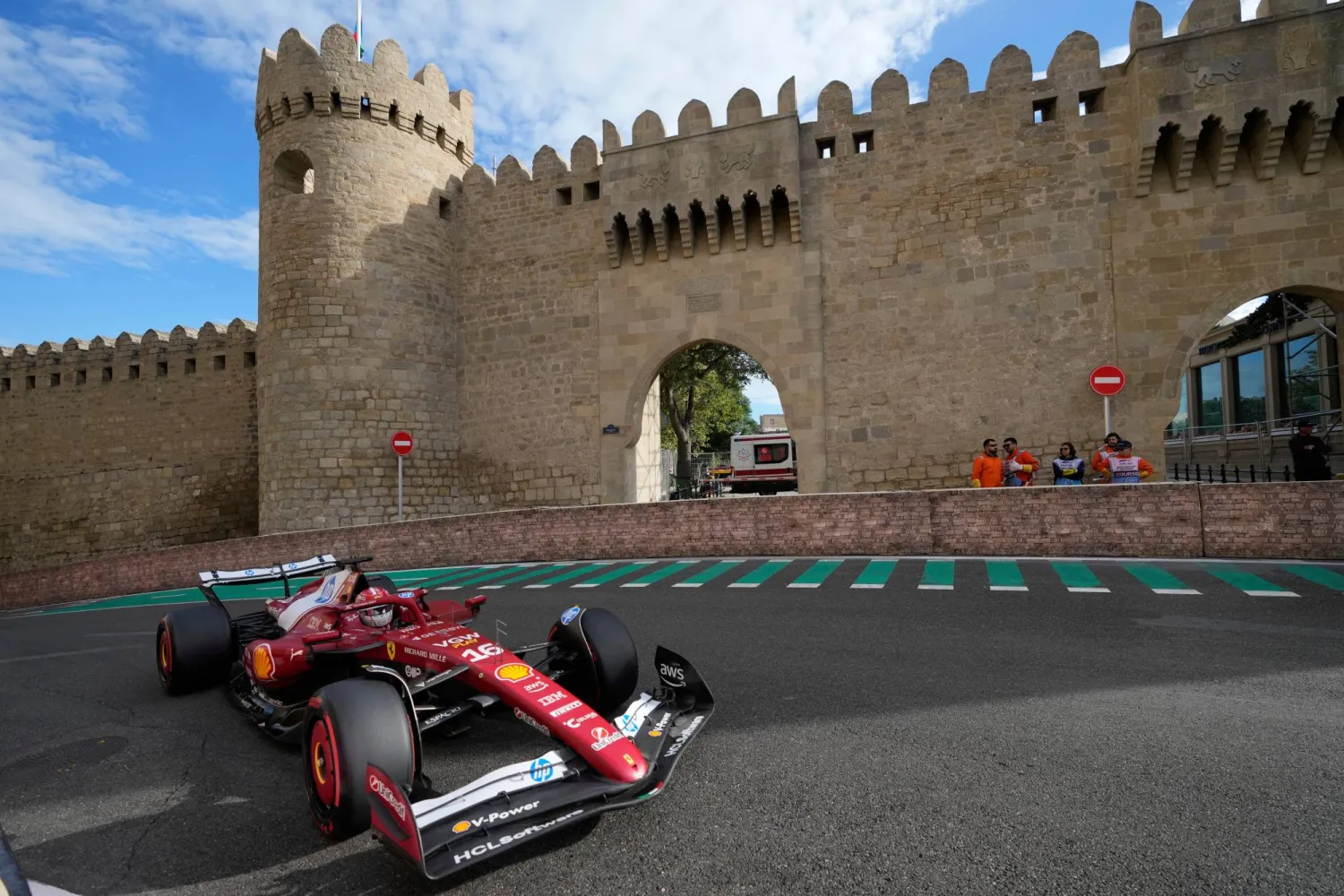
Ferrari driver Charles Leclerc, of Monaco, steers through a turn during qualifying for the Azerbaijan Formula One Grand Prix auto race in Baku, Azerbaijan, Sept. 20, 2025. (AP)
TT

F1 Commission Agrees Shorter Races from 2027

Ferrari driver Charles Leclerc, of Monaco, steers through a turn during qualifying for the Azerbaijan Formula One Grand Prix auto race in Baku, Azerbaijan, Sept. 20, 2025. (AP)

The governing ‌FIA's Formula One commission agreed on Monday to reduce the standard Grand Prix distance from 305km to 290km from 2027, cutting races by two or three laps.

The commission approved the change in line with planned refinements to 2027 power unit regulations concerning fuel flow, ‌they said ‌in a statement after ‌a ⁠meeting in London at ⁠the International Automobile Federation offices.

They also agreed to remove the current three-hour maximum time limit from the start to finish of a race, including any interruptions ⁠caused by rain or other ‌factors.

A two-hour ‌limit on actual racing will remain, while ‌a hard stop time for ‌the end of racing activity will be introduced for disrupted events.

The objective is to give spectators the best possible ‌chance to enjoy a full race when disruptions occur, ⁠the ⁠FIA said.

The commission agreed that organizers should also have greater flexibility to extend free practice sessions if they are interrupted.

Gearbox homologation will be removed for 2027 following consultation with manufacturers and a recommendation from the Sporting Advisory Committee, a move the FIA said would preserve development freedom for suppliers.