
Trump Warns Iran Will Pay ‘Many Times Over’ for US Troop Deaths

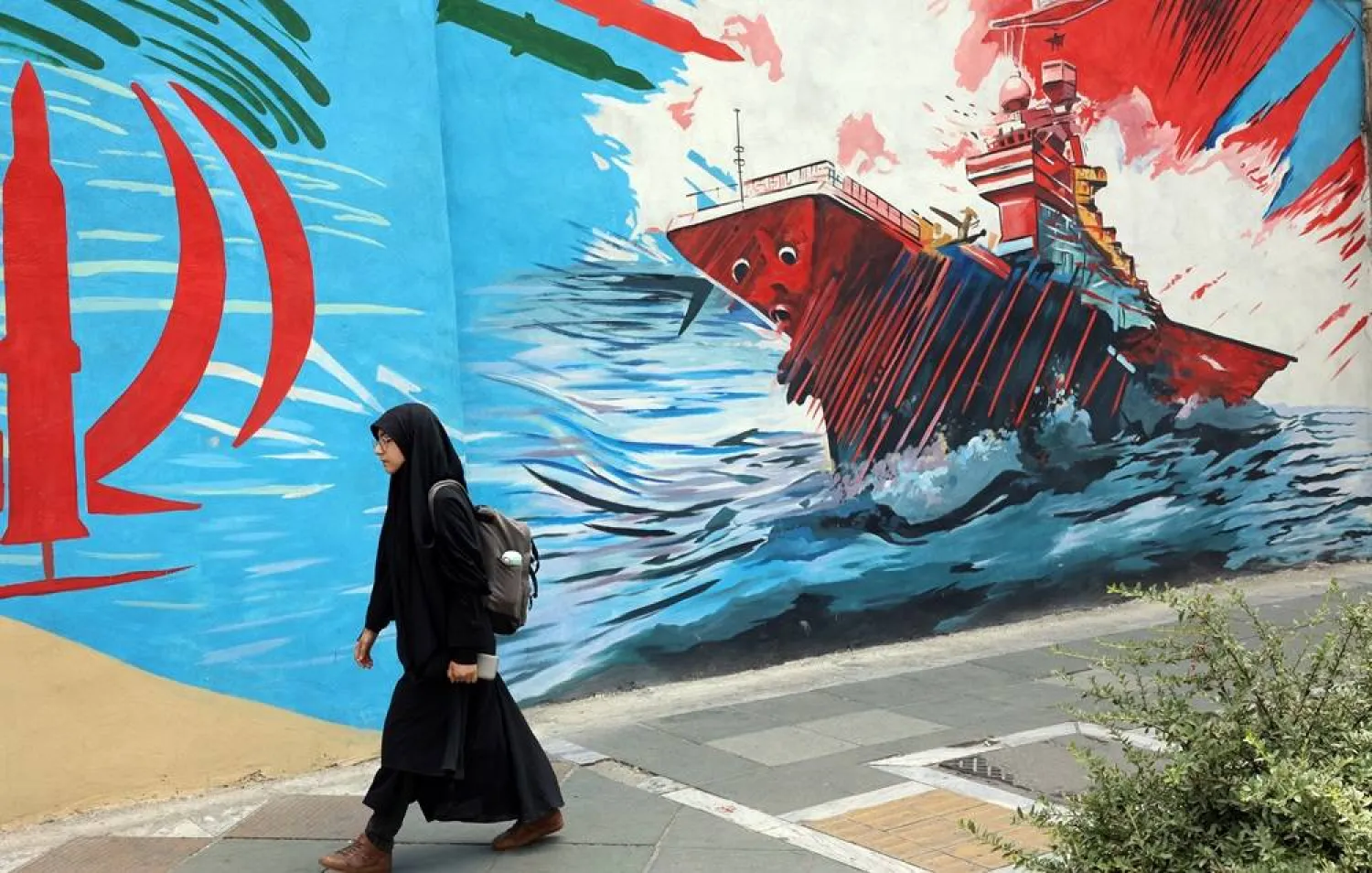
A woman walks next to anti-US graffiti on a street in Tehran, Iran, 20 July 2026. (EPA)
TT

Trump Warns Iran Will Pay ‘Many Times Over’ for US Troop Deaths

A woman walks next to anti-US graffiti on a street in Tehran, Iran, 20 July 2026. (EPA)

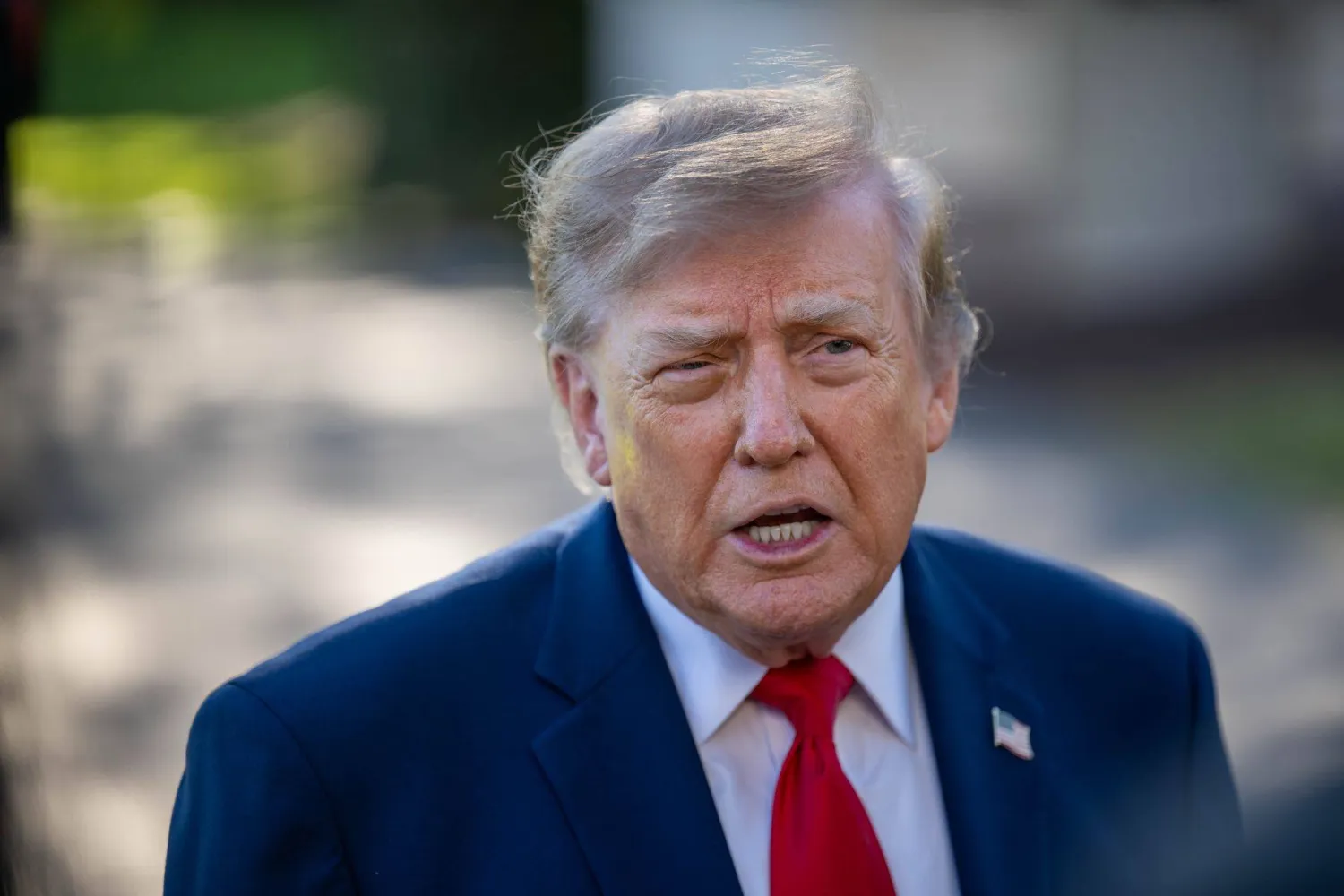
President Donald Trump warned Iran on Monday that it would pay "many times over" for every US soldier it killed after Washington announced over the weekend three new military fatalities and one service member missing in action. 

"Every time Iran kills an American Soldier they will pay for that killing many times over!" Trump posted on his platform, Truth Social.  

"This directive has been passed on to Secretary of War, Pete Hegseth, Chairman of the Joint Chiefs of Staff, Daniel Caine, and every Leader in the Military." 

Iran is fighting a "full-scale war" with the United States, its president said Monday, as Washington expanded its strikes across the country.

"The reality is that today Iran is engaged in a full-scale war," President Masoud Pezeshkian said, according to a presidency statement.

His comments came after state media and local authorities reported US strikes on Monday in the north and center of the country.

The Middle East war resumed after a weeks-long lull prompted by an agreement signed in June, and oil prices surged to a one-month high as the foes battled to control the vital Strait of Hormuz, through which a fifth of world oil travelled in peacetime.

As its truce with the US collapsed, Tehran reimposed its blockade of the waterway, while Washington hit back by again counter-blockading Iran's ports.

On Sunday, US Secretary of State Marco Rubio called on countries around the world to share the burden of protecting global shipping.

US Central Command (CENTCOM) said on Sunday that it successfully completed the ninth consecutive night of strikes against Iran, while Rubio said he would "continue to try" to reach a diplomatic solution.

- Diplomatic exchanges -

The fresh fighting came after a weekend in which the US announced three new US military fatalities and one service member missing in action.

Two were killed during Iranian missile and drone attacks on Jordan on Friday, while another service member was killed in northern Iraq during the controlled detonation of unexploded ordnance from a downed Iranian drone, CENTCOM said.

President Donald Trump said US strikes on Iran "hit them very hard" in honor of the American fatalities.

The deaths brought to 17 the confirmed number of US military fatalities since the conflict began.

On Friday, Iran's health ministry reported that 50 people had been killed in recent fighting and more than 500 wounded.

Despite the latest attacks, Iranian foreign ministry spokesman Esmaeil Baqaei said diplomatic exchanges with the US via mediators were ongoing.

"Ideas have been conveyed to us by certain mediators," he told a news conference in Tehran attended by AFP.

Iran's Interior Minister Eskandar Momeni was set to travel to mediator Pakistan's capital on Monday, a Pakistani interior ministry source told AFP, without confirming the reason.

Meanwhile Iran's Revolutionary Guards announced on Monday that they had hit targets in Syria, Jordan and Kuwait overnight.

Kuwait's military said on Monday afternoon it was responding to fresh missile and drone attacks.

Bahrain's interior ministry also said its air raid sirens had sounded and urged citizens and residents to head to "the nearest safe place".

Manama's civil aviation body said Iran had targeted its air navigation systems.


Trump Sidesteps Questions on Endorsing Netanyahu Before Oct. 27 Israeli Elections

President Donald Trump, right, listens during a news conference with Israeli Prime Minister Benjamin Netanyahu in the State Dining Room of the White House, Sept. 29, 2025, in Washington. (AP)
TT

Trump Sidesteps Questions on Endorsing Netanyahu Before Oct. 27 Israeli Elections

President Donald Trump, right, listens during a news conference with Israeli Prime Minister Benjamin Netanyahu in the State Dining Room of the White House, Sept. 29, 2025, in Washington. (AP)

US President Donald Trump won't say whether he thinks Israeli Prime Minister Benjamin Netanyahu should be reelected when voters head to the polls later this month.

The president, who sat down with Time magazine for a 75-minute interview published Thursday, sidestepped multiple questions about Netanyahu's reelection bid. Israelis are set to vote Oct. 27, in the first national elections since the 2023 Hamas attack on Israel.

The absence of an endorsement is a setback for the Likud party politician, who has billed his tight ties to Trump as a selling point for keeping him in power.

“I can only say that I’m not involved in politics anymore,” responded Trump, when asked if Israelis should give Netanyahu another term.

The US president is in fact ramping up his campaigning for Republicans in the November midterms, and has made a public flex of his political influence abroad on a scale that few if any US presidents have exerted.

He has endorsed candidates like Hungarian Prime Minister Viktor Orbán in his unsuccessful bid for a fifth term, Japanese Prime Minister Sanae Takaichi and Polish President Karol Nawrocki, as well as several Latin American leaders.

Trump's tepid comments sharply contrast with his more fulsome displays of support for Netanyahu in the past. In a 2019 campaign, Netanyahu purchased massive billboards picturing him with Trump and the message “Netanyahu. In Another League." Trump, in turn, highlighted the campaign ad in his own social media feeds.

In the Time interview, Trump, however, didn't miss an opportunity to highlight his own record on Israel as the reporters made several attempts to get him to talk about Netanyahu, Israel's longest-serving prime minister, and his reelection battle.

Trump did note that Netanyahu has shown resilience over the course of his political career.

The Israeli leader is in the midst of a yearslong corruption trial, faced massive protests in 2023 after introducing a plan to restructure Israel’s judiciary and his image has been tarnished by his government's intelligence and security lapses ahead of the Oct. 7, 2023, attack by Hamas on Israel.

Last November, Trump sent a letter to Israeli President Isaac Herzog asking him to pardon Netanyahu on the corruption charges and praised the prime minister as “a formidable and decisive War Time Prime Minister.”

“Well, people have written off Bibi many, many times, just like they’ve written off me many, many times," Trump said. "I wouldn’t underestimate Bibi.”

On Netanyahu’s most serious opponent, centrist Gadi Eisenkot, Trump said, “I don’t hear bad things about him.”

In June, before Eisenkot announced he was running, Trump said he would “most likely” endorse Netanyahu but that he would have to see who he was running against him first.

The US-Israeli relationship has become strained Trump remains a popular figure in Israel.

During his first term, he lent unprecedented support to Israel’s claims to territory seized in war, including by moving the US Embassy to Jerusalem.

The robust support continued in his second term, as he backed Israel’s actions in Gaza and joined it in bombing Iran. Netanyahu has been a frequent guest at the White House and frequently speaks to Trump on the phone.

The alliance has been particularly beneficial to Netanyahu, who has sought to tie himself to Trump to improve his image at home.

But there has been strain between the two leaders over the course of the seven-month Iran war.

Trump was critical of Israel’s decision to attack a critical Iranian gas field in the first weeks of the conflict. Trump in June called Netanyahu “crazy” and said that he was “a little bit perturbed” as Israel’s fighting with Hezbollah in Lebanon was holding back peace talks with Iran.

In August, Netanyahu rejected Trump’s latest plan to advance the stalled ceasefire in Gaza, pushing back on the US administration's call for Israel to withdraw from territory it controls in Gaza until Hamas has been disarmed.

With the move, Netanyahu rolled the dice on potentially angering Trump, who he has repeatedly said is the greatest friend Israel has ever had in the White House.

Going along with Trump's plan could arguably be more perilous for Netanyahu’s reelection chances as the country remains deeply traumatized by the Oct. 7, 2023, attack that happened on his watch. Netanyahu's nationalistic base opposes concessions to the Palestinians.


Trump Says Iran Will Be Hit ‘Very Hard’ if It Is Behind Co-Pilot Who Tried to Crash Flight to Israel

30 September 2026, Israel, Tel Aviv: A replacement Flydubai plane lands at Ben Gurion Airport. (dpa)
TT

Trump Says Iran Will Be Hit ‘Very Hard’ if It Is Behind Co-Pilot Who Tried to Crash Flight to Israel

30 September 2026, Israel, Tel Aviv: A replacement Flydubai plane lands at Ben Gurion Airport. (dpa)

US President Donald Trump said Thursday that if Tehran is linked to the co-pilot who tried to crash an Israel-bound flight, Iran would be struck “very hard” for the attempt on the lives of more than 180 people aboard the jet.

Trump issued the warning as investigators worked to determine why the co-pilot stabbed the flight's captain, causing the Flydubai plane to plummet before others on board stopped the attack and landed the airliner in Saudi Arabia.

The president was asked by reporters at the White House whether he had been briefed about any links between the pilot behind the attack and Tehran. He said, “We’re working on it right now.”

“I would say the answer, based on what I’m hearing, is yes, but we’re working on it right now,” Trump said. He did not elaborate about why he suspects Iran might be involved.

Asked if the US would retaliate against Tehran if it was behind the attack, Trump said, “Oh they’ll be hit, very hard, don’t worry.”

“You just ask them,” he added. “They know what happened. They’ll be hit very hard.”

His remarks came as diplomatic efforts to end the war appear to have stalled.

Iranian officials indicated Wednesday that they received an official US response to Tehran’s latest proposal to end the seven-month war, which Trump had publicly rejected just days earlier. The officials did not say what the response contained and whether it was a rejection.

Trump said in a Time magazine interview published Thursday that he will not accept proposals from Iran that “he wouldn’t have approved a year ago,” and left open the possibility of resuming bombing after the Nov. 3 election in the US.

Meanwhile, the American military has dispatched roughly 9,000 troops aboard a group of ships to the Middle East, a US official said Thursday. That could mean three carriers will be in the region as soon as late October, according to the official, who spoke to The Associated Press on condition of anonymity to discuss sensitive military operations.

Despite Trump’s public rebuff, mediators have continued working with Iran and the US to try to broker a deal to end the fighting and open the Strait of Hormuz, according to officials who were not authorized to comment publicly and spoke on condition of anonymity.

Passengers got into cockpit to take control of jet

Passengers on the plane, which was carrying 182 people, mostly Israelis, from the United Arab Emirates to Tel Aviv, have described how the bloodied Indian captain managed to open the cockpit door to let them in before they grappled with the co-pilot and stabilized a descent so sharp that the plane’s rudder was torn away.

“We felt helpless, suspended in midair, and I didn’t know who to turn to. But it was all instinct to survive,” Asaf Rajuan, who was among those who intervened, said in a statement shared by Israel’s presidency.

A regional official briefed on the investigation said the suspect was under arrest and confirmed that Saudi authorities were working with countries to try to determine a motive. He said the UAE, the United States and Oman also were involved. Saudi Arabia said the co-pilot had been handed over to the UAE.

“All possible scenarios, from terrorism to mental disorders, are being looked into. Nothing is ruled out for now,” said the official, speaking on condition of anonymity because they were not authorized to discuss an ongoing probe.

Israeli Prime Minister Benjamin Netanyahu, without giving details, claimed the attacker underwent extremist indoctrination. Asked who helped radicalize him, the prime minister told Fox News channel’s “Fox and Friends" he did not know.

When asked by AP how the prime minister knew the co-pilot underwent indoctrination, Netanyahu’s office said it would not comment.

Netanyahu told Fox that the suspect apparently got through a loophole in Israeli aviation rules that normally bar pilots from flying to Israel if they are from countries that do not have diplomatic relations with Israel.

The co-pilot has not been publicly identified.

Capt. Smit Machchhar, widely praised as one of the heroes of the flight, was recovering in the Emirati capital of Abu Dhabi, the Indian government said Thursday.

It was not clear what the co-pilot used as a weapon.

The UAE government said its own investigation team had begun looking into the attack and “whether it was linked to any terrorist purpose,” noting that Emirati authorities have jurisdiction because the plane is registered there and UAE law applies to crimes committed on board.

Asked if there is any indication of Iranian involvement, Netanyahu told Fox News it was “too early to say.”

Netanyahu earlier said he also spoke with the UAE’s president, Sheikh Mohamed bin Zayed Al Nahyan, who agreed that Israel would join the interrogation of the suspect.

On Wednesday, Trump told reporters at the White House that he and Netanyahu discussed the incident “at length” by phone. He said it seemed as though the co-pilot “was perhaps a terrorist or perhaps a whack job.”

Netanyahu had warned in recent days of heightened security threats, though he told CNN that Israel had received no specific warning. The country is a week away from the anniversary of the Hamas-led Oct. 7, 2023, attack on Israel, which has triggered the war in Gaza, and weeks away from an election.

The Israeli Foreign Ministry said most of the people aboard the flight were from Israel, along with others from India and the UAE. The US State Department said four passengers had American citizenship.


US Sanctions Target Iran’s Auto, Rail Sectors as Blockade Chokes Ship Lanes

A general view of the entrance to the US Department of the Treasury on day two of a partial government shutdown in Washington, DC, US, February 1, 2026. (Reuters)
TT

US Sanctions Target Iran’s Auto, Rail Sectors as Blockade Chokes Ship Lanes

A general view of the entrance to the US Department of the Treasury on day two of a partial government shutdown in Washington, DC, US, February 1, 2026. (Reuters)

The Trump administration imposed sanctions on Iran's rail and auto sectors and their foreign suppliers, the Treasury Department said on Thursday, widening its wartime economic campaign to isolate Tehran.

The sanctions are part of the department's "Operation Economic Outcast," announced August 24, which aims to ‌cut Tehran's funding for ‌the war, missile construction, cyberattacks and the ‌⁠Revolutionary Guard Corps ⁠or IRGC.

The move extends US economic pressure on Iran from sea to land, targeting sectors Tehran has leaned on since a naval blockade cut off its oil shipments through the Strait of Hormuz. But the expanding sanctions risk inflicting severe costs on ordinary Iranians, one analyst said.

The US blockade of Iranian ports has forced ⁠Tehran to rely more on autos and rail for ‌transporting petroleum, fertilizer, chemicals and other ‌goods. Thursday's sanctions target those alternatives, according to the Treasury Department.

The sanctions ‌designate Iran Khodro Company, or IKCO, and SAIPA Iranian Automobile ‌Manufacturing Company, or SAIPA. Treasury said the two companies represent more than 90% of Iran's domestic auto market.

Treasury also designated the state-owned Islamic Republic of Iran Railway Company, which provides passenger and freight services, the Raja Passenger ‌Trains Company and Sherkat-E Rah Ahan-E Khamle-O-Naghle, also known as the Railway Transportation Company, which it said ⁠is a ⁠top private freight line.

Treasury Secretary Scott Bessent said the action "directly targets Iran’s enablers and lays the groundwork for the United States and our partners to drain the regime’s revenue once and for all."

Thursday's sanctions also target foreign companies in Indonesia, the UAE and Türkiye that supply Iran's auto industry.

"The blockade squeezed Iran at sea, sanctions increasingly isolate it by air, and now Washington is constricting its economic arteries on land," said Brett Erickson, a sanctions expert and managing principal at Obsidian Risk Advisors.

"You cannot choke an economy like this without choking the livelihoods of the people who depend on it," he added.