

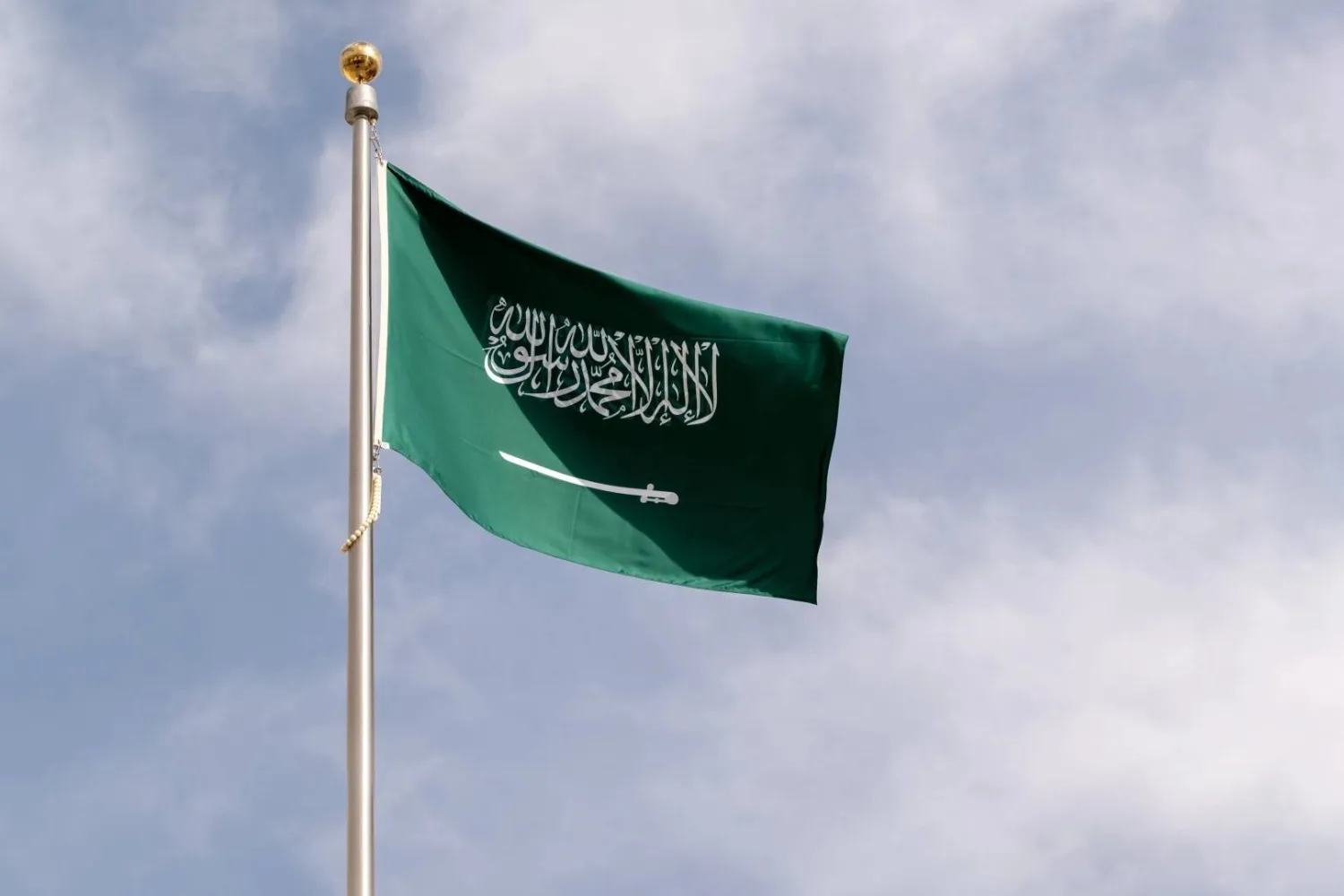

Saudi Arabia Strongly Condemns Houthi Claims Accusing the Kingdom of Besieging the Yemeni People

The Kingdom affirmed that it will take all necessary measures to protect its ships in accordance with international law (Saudi Flag website)
TT

Saudi Arabia Strongly Condemns Houthi Claims Accusing the Kingdom of Besieging the Yemeni People

The Kingdom affirmed that it will take all necessary measures to protect its ships in accordance with international law (Saudi Flag website)

The Saudi Ministry of Foreign Affairs has expressed the Kingdom's strongest condemnation of the allegations made by the so-called military spokesperson of the Houthi terrorist militia, who accused the Kingdom of besieging the Yemeni people and claimed imposing a maritime blockade on the Kingdom.

In a statement issued Monday, the ministry affirmed that the Kingdom has worked over the past years with the legitimate government of Yemen to alleviate the suffering of the Yemeni people through development projects, support for the Yemeni government’s budget, and the provision of petroleum derivatives to operate power plants.

The ports in northern Yemen (Hodeidah, Salif, and Ras Isa) received more than 300 ships carrying various food items goods, fuel, and construction materials during the first half of 2026, while maintaining the implementation of the United Nations Security Council Resolution 2216, including the prohibition on the entry of weapons and ammunition that the militia seeks to smuggle into Yemen by all available means in order to prolong its control over the resources of the Yemeni people.

The Ministry of Foreign Affairs recalled the Houthi’s previous widespread attacks targeting the Yemeni people and infrastructure, including the attack on Aden Airport on December 30, 2020, which resulted in the deaths and injuries of dozens of people.

During the truce, the militia also targeted oil export ports in southern Yemen on October 21, 2022, and subsequently carried out attacks that aimed to cripple the government’s ability to sell oil, which represents approximately 60% of the government’s revenues, and directly impacting the payment of salaries to government employees, the ministry said in a statement.

The militia also seized four aircrafts belonging to Yemenia Airways and detained them at Sanaa Airport after they had transported Yemeni pilgrims from Jeddah.

Furthermore, the militia dragged Yemen into the regional conflict and targeted commercial ships in the Red Sea, exacerbating the suffering of the Yemeni people, preventing them from traveling, and worsening the economic situation, particularly in areas under the control of the Houthi militia.

The Houthi militia rejected all initiatives to resume flights from Sanaa Airport, most recently the Jordanian initiative, and has continued to commit humanitarian violations against Yemeni citizens. The militia is now attempting to deflect responsibility for the economic challenges and growing public discontent it faces by fabricating false accusations against the Kingdom.

The statement said that the Kingdom aims to achieve peace in Yemen and end the suffering of the Yemeni people. Saudi Arabia has supported UN efforts to achieve peace in Yemen over the past years, including the roadmap accepted by the Yemeni government, while the Houthi militia refrained from announcing its acceptance and instead engaged in the regional conflict in support of its sinister agenda and objectives, exacerbating the suffering of Yemeni citizens in the areas under its control.

The Kingdom also called upon the international community to fulfill its responsibilities regarding the implementation of the relevant Security Council resolutions, foremost among them Resolution 2216 on Yemen and Resolution 2722 on the rights and freedom of navigation in the Red Sea.

At the same time, the Kingdom affirmed that it will take all necessary measures to protect its ships in accordance with international law and the 1982 United Nations Convention on the Law of the Sea.




GCC Stresses Importance of Elevating Ties with France

Gulf and French officials are seen at the meeting in New York. (GCC)
TT

GCC Stresses Importance of Elevating Ties with France

Gulf and French officials are seen at the meeting in New York. (GCC)

Secretary-General of the Gulf Cooperation Council (GCC) Jasem Mohamed Albudaiwi stressed on Monday that relations between the Gulf states and France are built on a solid strategic partnership, as well as shared interests and visions.

He highlighted the importance of continued efforts to elevate these relations and expand their scope to serve mutual interests, contributing to the support of security, stability, and peace both regionally and globally.

This came during a joint ministerial meeting between the GCC and France, co-chaired by Dr. Abdullatif Al-Zayani, Bahraini Minister of Foreign Affairs, and Jean-Noel Barrot, French Minister for Europe and Foreign Affairs, with the attendance and participation of the GCC foreign ministers, on the sidelines of the UN General Assembly in New York.

Albudaiwi noted that the meeting comes amid highly sensitive circumstances in the region, pointing to the Iranian attacks targeting vital installations and diplomatic premises that Gulf states have faced since February 28, despite these countries not being a party to the war and having exerted tireless efforts to mediate and contain the escalation.

He stressed the position of the Gulf states calling for ensuring the security and safety of waterways and freedom of international navigation, stressing the need to commit to Security Council Resolution 2817, the return of navigation in the Straits of Hormuz and Bab al-Mandeb to its status prior to February 28, and the rejection of imposing any unilateral fees or conditions on the right of passage.

Albudaiwi commended France's position rejecting the attacks on Gulf countries, as well as its participation in international efforts aimed at reopening the Strait of Hormuz.

On the Palestinian cause, he reaffirmed its centrality, as well as the need to end the Israeli occupation and establishing an independent Palestinian state based on the 1967 borders with East Jerusalem as its capital, according to the Arab Peace Initiative and international resolutions.

Albudaiwi said the partnership between the GCC and France extends beyond addressing current challenges to building a shared vision for a more secure, stable, and prosperous future.

The mutual interests, visions, and political will binding the two sides form a solid foundation for expanding cooperation in political, security, economic, investment, and technological fields, as well as energy, defense, and education, he remarked.

The GCC views France as an important strategic partner, both at the level of Gulf-French and Gulf-European relations, praising Paris' role in supporting and strengthening that partnership, he went on to say.

He said Gulf countries were looking forward to the second Gulf-European Summit, scheduled to be held in Saudi Arabia on October 24. It will mark an important milestone to elevate this partnership and achieve tangible results in priority areas for both sides.

Albudaiwi underscored the strength of economic relations between the two sides, noting that the volume of trade exchange between the GCC and France has exceeded 60 billion euros, reflecting the promising opportunities and potential these relations possess to boost trade, investment, and cooperation in priority sectors.


Saudi Leadership Offers Condolences to UAE Vice President on Death of Sheikh Ahmed bin Rashid Al Maktoum

Custodian of the Two Holy Mosques King Salman bin Abdulaziz Al Saud and Prince Mohammed bin Salman bin Abdulaziz Al Saud, Crown Prince and Prime Minister. (SPA)
TT

Saudi Leadership Offers Condolences to UAE Vice President on Death of Sheikh Ahmed bin Rashid Al Maktoum

Custodian of the Two Holy Mosques King Salman bin Abdulaziz Al Saud and Prince Mohammed bin Salman bin Abdulaziz Al Saud, Crown Prince and Prime Minister. (SPA)

Custodian of the Two Holy Mosques King Salman bin Abdulaziz Al Saud sent on Monday a cable of condolences to Sheikh Mohammed bin Rashid Al Maktoum, Vice President and Prime Minister of the United Arab Emirates and Ruler of Dubai, on the death of his brother, Sheikh Ahmed bin Rashid Al Maktoum.

King Salman expressed his deepest condolences and sincere sympathies to the UAE vice president and the family of the deceased.

Prince Mohammed bin Salman bin Abdulaziz Al Saud, Crown Prince and Prime Minister, sent Sheikh Mohammed a similar cable of condolences.


GCC Secretary-General Highlights Growing Gulf Role on Global Stage

GCC Secretary-General Jasem Albudaiwi. SPA
TT

GCC Secretary-General Highlights Growing Gulf Role on Global Stage

GCC Secretary-General Jasem Albudaiwi. SPA

Secretary-General of the Gulf Cooperation Council (GCC) Jasem Mohamed Albudaiwi underscored that the proactive Gulf engagement across international forums, alongside the council’s continually expanding relations with sovereign nations, regional blocs, and global organizations, mirrors the prominent stature achieved by member states on the world stage, SPA reported.

His statement came during the GCC Ministerial Coordination Meeting, chaired by Minister of Foreign Affairs of the Kingdom of Bahrain Dr. Abdullatif bin Rashid Al Zayani and attended by the foreign ministers of the GCC member states, held on the sidelines of the 81st session of the United Nations General Assembly (UNGA) in New York, United States of America.

He pointed out that the gathering forms part of ongoing consultative mechanisms among member states regarding diverse matters of mutual concern, thereby solidifying a unified Gulf posture and reinforcing collective action across regional and global bodies.

He explained that the session examined upcoming joint ministerial dialogues scheduled with several countries, regional groupings, and international entities during UNGA 81, aligning agenda priorities to advance shared objectives and steer cooperative frameworks toward broader horizons.

"These joint meetings reflect reciprocal dedication between the council and its counterparts to cultivate closer ties, anchored in the pivotal role and rising weight of Gulf nations in underwriting security, stability, and sustainable progress, while opening fresh pathways for constructive engagement regionally and internationally," he stated.

Concluding his remarks, the GCC secretary-general emphasized that GCC countries remain resolute in developing impactful, long-term partnerships founded on mutual respect and shared interests, endeavors that foster peace, tranquility, and comprehensive development worldwide, while reflecting the council's cohesive consensus on pressing regional and international issues.