Louvre Reopens Apollo Gallery After a Brazen Heist, but No Jewels on Displayhttps://english.aawsat.com/culture/5298863-louvre-reopens-apollo-gallery-after-brazen-heist-no-jewels-display
Louvre Reopens Apollo Gallery After a Brazen Heist, but No Jewels on Display
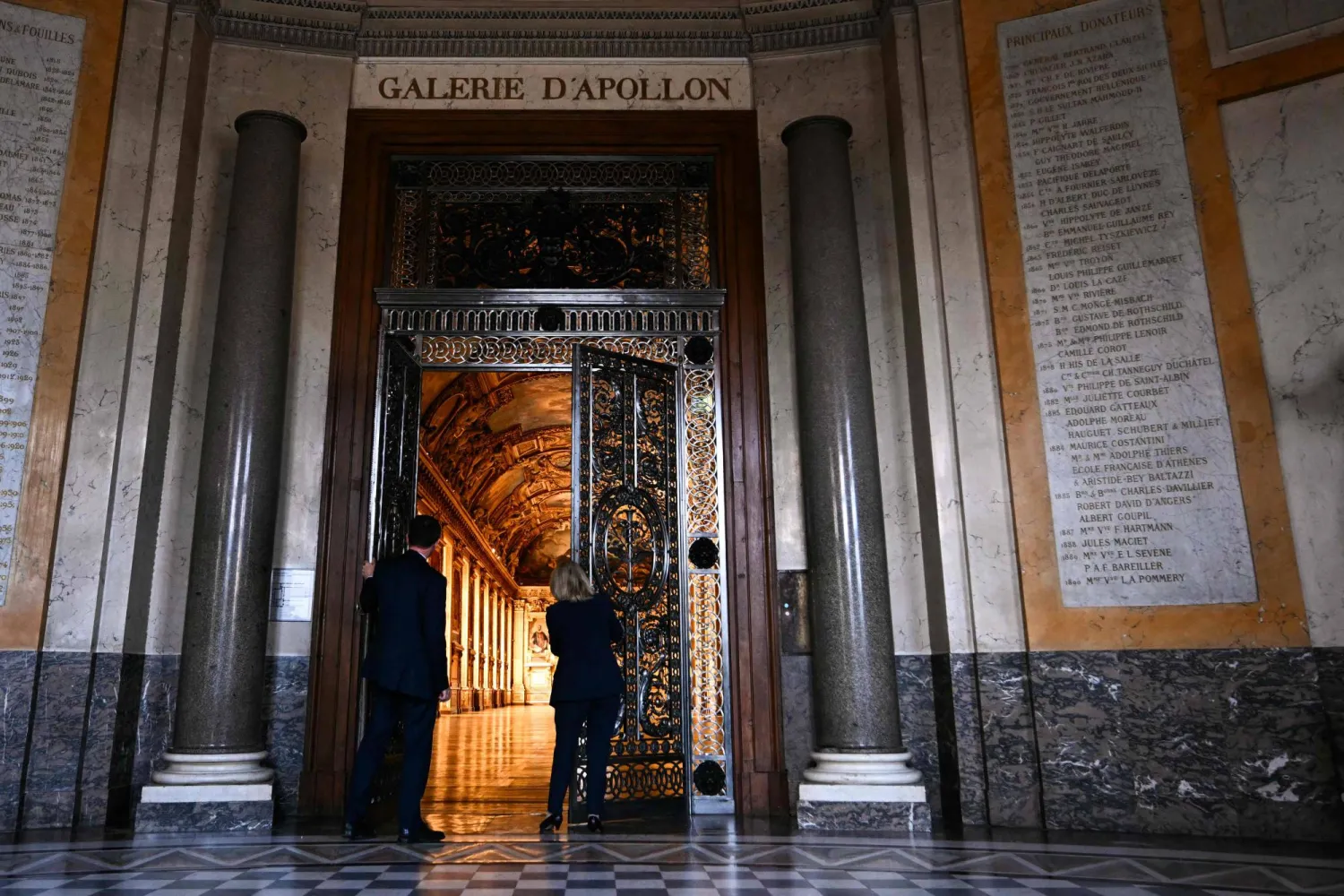
Louvre's President Christophe Leribault and France's Culture Minister Catherine Pegard open the door of the gallery during the reopening to the public of the Apollo Gallery, where French crown jewels worth 88 million euros were stolen in 2025 in a brazen heist, at the Musee du Louvre in Paris on July 22, 2026. (AFP)
TT
TT
Louvre Reopens Apollo Gallery After a Brazen Heist, but No Jewels on Display
Louvre's President Christophe Leribault and France's Culture Minister Catherine Pegard open the door of the gallery during the reopening to the public of the Apollo Gallery, where French crown jewels worth 88 million euros were stolen in 2025 in a brazen heist, at the Musee du Louvre in Paris on July 22, 2026. (AFP)
The Louvre's Apollo gallery on Wednesday reopened to the public for the first time since last year's crown jewels heist.
The collections and precious jewels that it once displayed have been removed, as the museum said the gallery is returning to its 17th-century original ceremonial purpose.
Security at the Paris museum has been boosted with the addition of new surveillance cameras and anti-intrusion systems.
On the day of the heist, thieves took less than eight minutes to force their way through a window into the Apollo Gallery and steal crown jewels valued at 88 million euros ($102 million) from the Louvre, in a weekend operation that stunned visitors and exposed glaring security vulnerabilities.
Security improvement is a priority of the decade-long “Louvre New Renaissance” plan launched last year, with an estimated cost of up to 800 million euros ($933 million) to modernize infrastructure, ease crowding and give the Mona Lisa a dedicated gallery by 2031.
Ghassan Salame to Asharq Al-Awsat: Lebanon’s War-Damaged Heritage Could Take a Generation to Restorehttps://english.aawsat.com/culture/5331415-ghassan-salame-asharq-al-awsat-lebanon%E2%80%99s-war-damaged-heritage-could-take-generation
Ghassan Salame to Asharq Al-Awsat: Lebanon’s War-Damaged Heritage Could Take a Generation to Restore
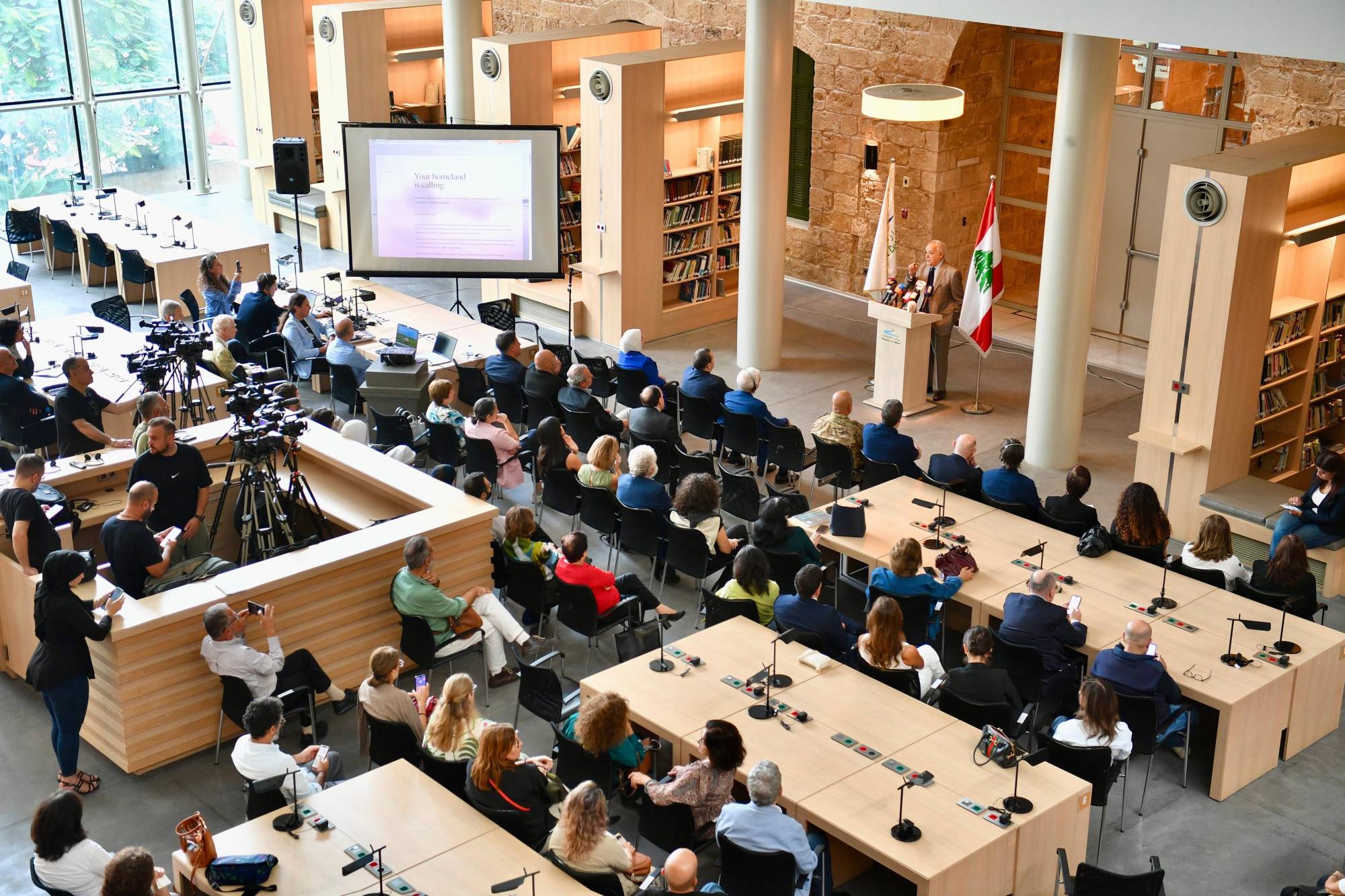
The platform was launched at the Lebanese National Library in Beirut. (Ministry of Culture)
Family photographs, home videos, letters, interviews and old songs are finding a new home in a digital archive created by Lebanon’s Culture Ministry to preserve personal memories as part of the country’s collective history.
Presented at the National Library, the “Archiving Lebanon’s Heritage” platform aims to build a global digital archive of Lebanon’s tangible and intangible heritage, including its natural and personal heritage, for future generations.
Developed by the ministry in partnership with the Heritage International Institute (HII) and other international organizations, the platform invites contributions from Lebanese at home and abroad, as well as anyone with accounts or records of the country’s past.
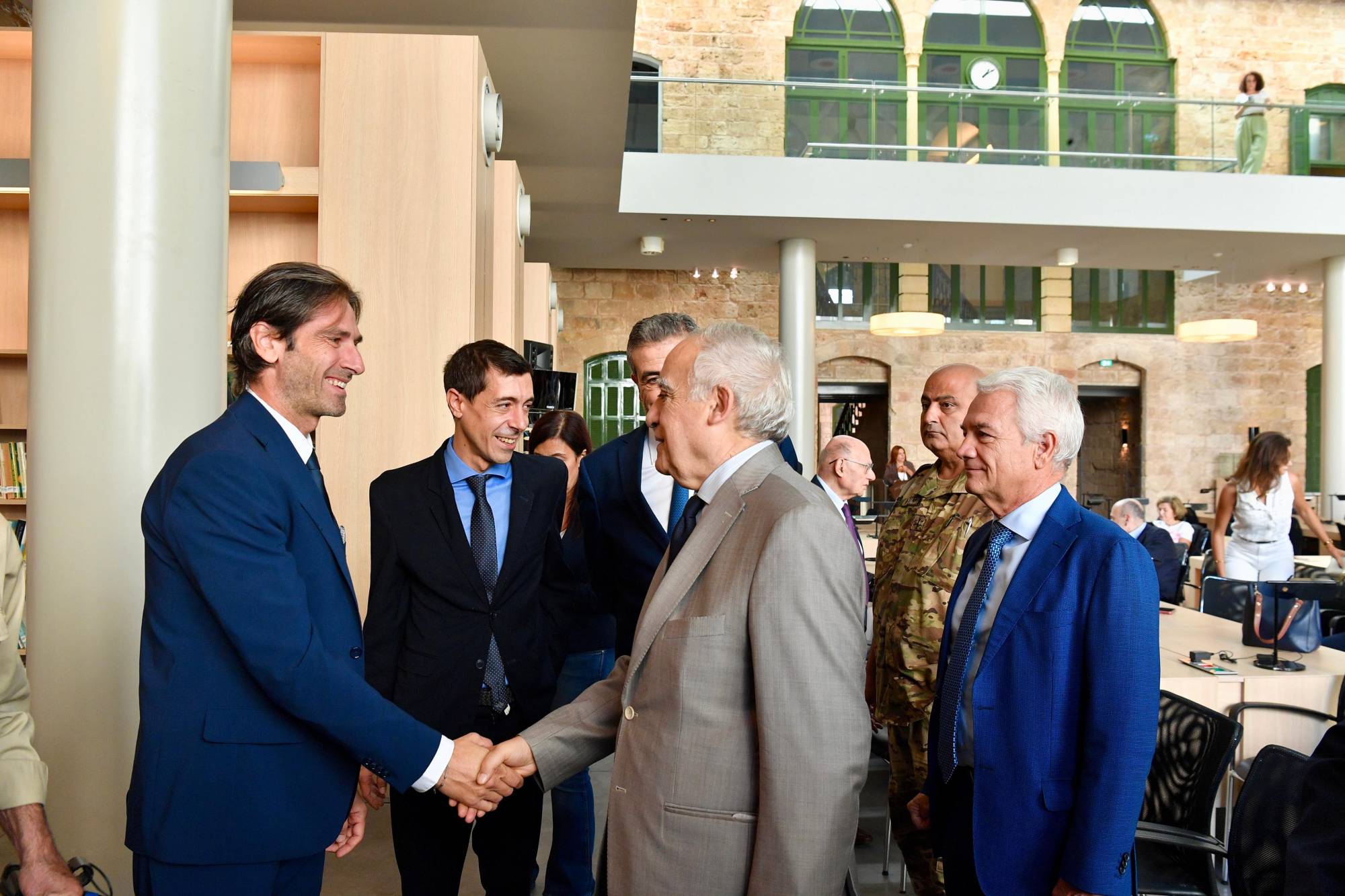
The initiative was unveiled in the presence of Culture Minister Ghassan Salame, Italian Ambassador Fabrizio Marcelli, HII President Sergio Iovino and Lebanon’s Director General of Antiquities Sarkis Khoury.
Salame with Italian Ambassador Fabrizio Marcelliat the launch ceremony. (Ministry of Culture)
Treasures hidden in Lebanese homes
Speaking to Asharq Al-Awsat, Salame explained that the latest war had damaged archaeological sites, historic markets and Lebanon’s tangible and intangible cultural heritage.
“I cannot put a precise figure on these losses. They certainly exceed millions of dollars, and restoring what was damaged could take an entire generation,” he noted.
The minister stressed that the war had affected all Lebanese in one way or another, describing its impact as “the theft of our intimate history, a history that is priceless.”
He stressed the importance of preserving existing heritage through modern technologies that can extend the lifespan of photographs, documents and other historical records.
Salame pointed out that private collections may contain materials more significant than those held by some public institutions.
While preparing the exhibition “Between the Lines of the Constitution” to mark the centenary of Lebanon’s Constitution, organizers discovered valuable documents preserved by families because a relative had held a particular position or worked in a field connected to them.
“These are treasures hidden in homes and within families,” Salame observed, stressing that the scale of these private collections should not be underestimated.
The platform accepts digital copies rather than originals. Contributors wishing to donate original documents can deposit them with the National Library for safekeeping. A written agreement protects contributors’ intellectual property rights, which remain exclusively theirs. They may also withdraw their materials from the platform at any time.
Lebanese Culture Minister Ghassan Salame delivers remarks at the event. (Ministry of Culture)
Contributors control access
Donors can decide how widely their submissions are shared, from keeping them in a completely private, protected archive to authorizing their publication.
Iovino described the initiative as providing the foundations for a “digital fortress” open to millions of Lebanese expatriates, as well as friends of Lebanon and people around the world.
Contributors, he stressed, retain full ownership of their memories and control over their accessibility.
Khoury urged Lebanese not to be discouraged by the heritage lost to war.
“Our story does not end with these losses or with the damage to our tangible and intangible heritage,” he told Asharq Al-Awsat. “We are the ones who create our heritage, as we have throughout history. Our memories help save what remains.”
Italy pledges continued support
Marcelli reaffirmed Italy’s commitment to preserving Lebanon’s cultural heritage, citing its involvement in restoring the Beirut National Museum and other museums damaged by the port explosion.
He also highlighted recent restoration work at the historic Mar Mikhael railway station, carried out in cooperation with UNESCO and the UN refugee agency.
Although these projects differ, they share a common goal: preserving historical evidence and making it accessible to the public. The new initiative, however, shifts the focus from monuments and institutions to the lives of individuals, families and communities.
Marcelli underscored the value of microhistory, which examines everyday experiences rather than focusing exclusively on major political events, wars, institutions and prominent figures.
The basic idea is that studying a seemingly marginal event, an ordinary person or a small community can reveal important insights into how an entire society functions, he said.
King Khalid Cultural Center in Buraidah Fosters Cultural Activity in Qassimhttps://english.aawsat.com/culture/5331144-king-khalid-cultural-center-buraidah-fosters-cultural-activity-qassim
The center holds significant cultural and social value, featuring facilities, halls, and theaters that host diverse events, festivals, exhibitions, and forums - SPA
King Khalid Cultural Center in Buraidah Fosters Cultural Activity in Qassim
The center holds significant cultural and social value, featuring facilities, halls, and theaters that host diverse events, festivals, exhibitions, and forums - SPA
The King Khalid Cultural Center in Buraidah is a prominent cultural landmark in Qassim Region. It holds significant cultural and social value, featuring facilities, halls, and theaters that host diverse events, festivals, exhibitions, and forums.
Official spokesperson for the Qassim Region Municipality Nayef Al-Nufai stated that the center serves as a vibrant space for activities and programs that bring together various segments of society, providing an ideal environment for specialized events and professional gatherings, SPA reported.
He added that the municipality is committed to maximizing the utility of such cultural facilities, ensuring they serve the community effectively, align with residents' aspirations, invigorate cultural and tourism activity, and elevate Buraidah's urban landscape.
Northern Borders Region’s Heritage Preserves Cultural Identityhttps://english.aawsat.com/culture/5331142-northern-borders-region%E2%80%99s-heritage-preserves-cultural-identity
Folk arts are another integral part of the region’s social fabric, characterized by rhythmic performances and communal chants that express courage, enthusiasm, and social cohesion - SPA
Northern Borders Region’s Heritage Preserves Cultural Identity
Folk arts are another integral part of the region’s social fabric, characterized by rhythmic performances and communal chants that express courage, enthusiasm, and social cohesion - SPA
Northern Borders Region preserves a diverse intangible cultural heritage, including social customs, folk arts, and knowledge rooted in desert life that remain deeply embedded in the local community's consciousness and daily practices.
The region evokes its collective memory and cultural heritage through social practices passed down through generations, including generosity, hospitality, and traditional gathering spaces where community members meet to exchange news and ideas, SPA reported.
Saudi coffee is also central, along with the etiquette and traditions surrounding its preparation and service, which embody the values of welcoming others and fostering social connection.
Folk arts are another integral part of the region’s social fabric, characterized by rhythmic performances and communal chants that express courage, enthusiasm, and social cohesion.
The region’s traditional way of life is reflected in various crafts and manual practices developed to meet the needs of desert life. This includes specialized knowledge of camels and traditional methods for traveling and living in the desert, as well as the expertise gained from navigating its challenging climatic conditions.
لم تشترك بعد
انشئ حساباً خاصاً بك لتحصل على أخبار مخصصة لك ولتتمتع بخاصية حفظ المقالات وتتلقى نشراتنا البريدية المتنوعة