


Saudi-US Nuclear Cooperation Anchors Kingdom’s Economic, Industrial Transformation

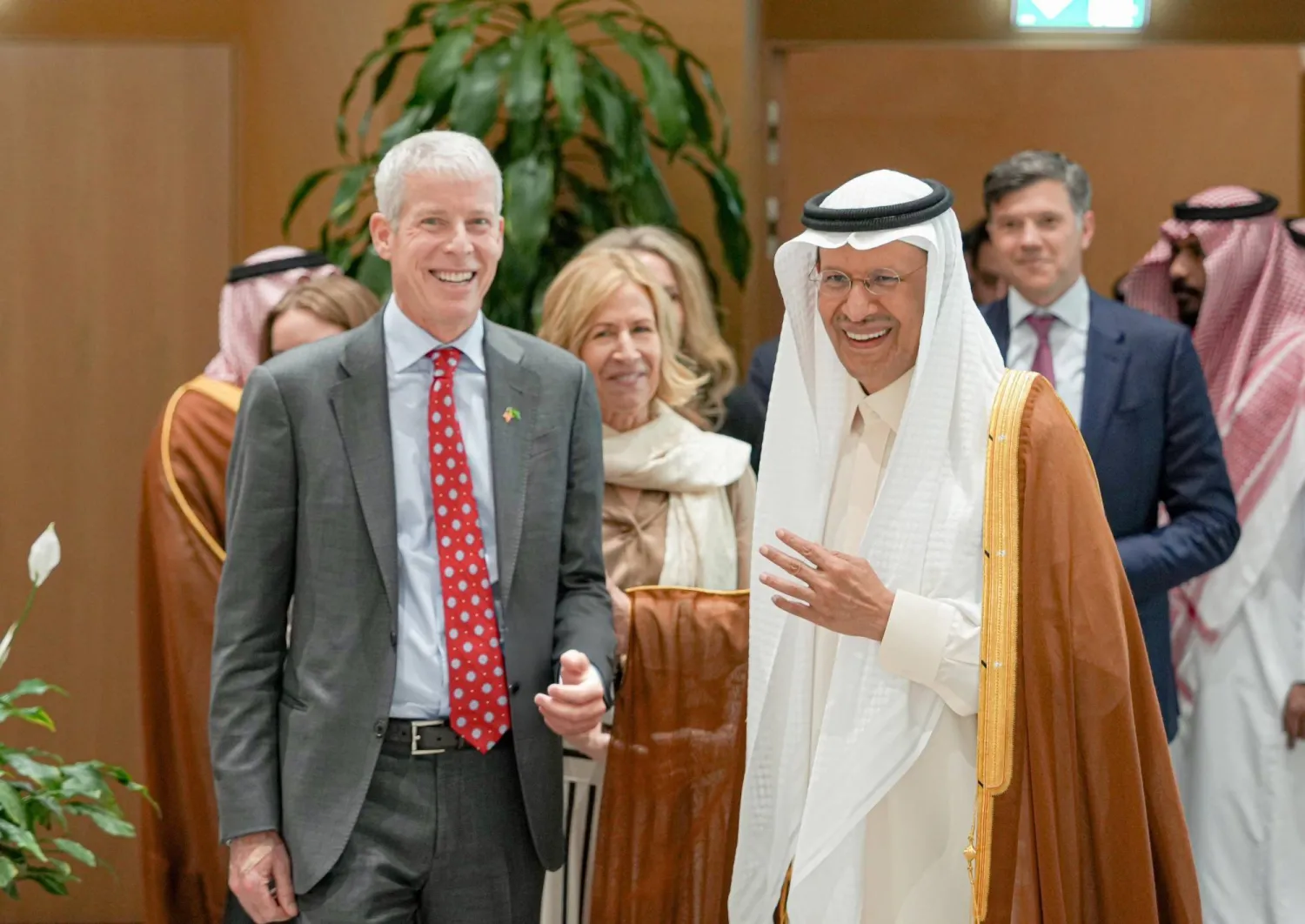
Prince Abdulaziz bin Salman and Chris Wright at KAPSARC (Saudi Energy Ministry)
TT

Saudi-US Nuclear Cooperation Anchors Kingdom’s Economic, Industrial Transformation

Prince Abdulaziz bin Salman and Chris Wright at KAPSARC (Saudi Energy Ministry)

Saudi-US relations have entered a new phase of strategic cooperation with the signing of a peaceful nuclear energy agreement, known as a 123 Agreement, and a bilateral safeguards accord.

Together, the agreements establish the legal foundation for a partnership expected to last decades, as Saudi Arabia seeks to diversify its energy mix and strengthen energy security under the highest standards of nuclear safety and security.

Prince Abdulaziz bin Salman, Saudi minister of energy and minister of industry and mineral resources, signed the agreements with US Energy Secretary Chris Wright.

The signing follows an announcement made during Saudi Crown Prince and Prime Minister Mohammed bin Salman’s visit to the United States in November that negotiations on peaceful nuclear cooperation had been completed.

Saudi Arabia’s Energy Ministry said the deal would deepen bilateral cooperation and support the exchange of expertise, knowledge and technology, helping advance the peaceful use of nuclear energy in line with the highest international standards on nuclear safety, security and non-proliferation.

The agreement builds on long-standing energy ties between the two countries and reflects a shared ambition to expand cooperation in energy, future technologies and sustainable development.

The US Energy Department said the deal creates the legal framework for a decades-long partnership worth billions of dollars and would help meet Saudi Arabia’s energy needs.

It said the agreement would advance the two countries’ shared interests by expanding cooperation in civilian nuclear technology and strengthening their strategic partnership.

Wright praised Prince Abdulaziz as one of the leading thinkers in global energy markets, describing him as an independent-minded figure whose positions are shaped by what he believes is right rather than by political pressure.

He said their relationship had grown from professional admiration into friendship and mutual trust.

Wright also credited Prince Abdulaziz’s principled leadership with helping build a Saudi energy system defined by efficiency and innovation.

He praised the prince’s role in empowering women in the energy sector, saying the Energy Ministry’s achievements reflected strong leadership that combined determination, generosity and teamwork.

Years in the making

The agreement is not simply the product of recent negotiations.

Civilian nuclear talks between Saudi Arabia and the United States date back to 2008, when the two countries signed a memorandum of understanding on cooperation in peaceful nuclear energy.

Consultations continued in the years that followed.

Between 2017 and 2019, Saudi Arabia held talks with US companies interested in taking part in its nuclear program.

In November 2025, the two countries signed a joint declaration to complete the cooperation framework, paving the way for the 123 Agreement and the bilateral safeguards accord that now establish the legal basis for civilian nuclear cooperation.

Wright had discussed the issue in an exclusive interview with Asharq Al-Awsat during a visit to Saudi Arabia in 2025.

Prince Abdulaziz had also said the kingdom was moving toward the use of nuclear energy and radiation applications for peaceful purposes.

He said Saudi Arabia was continuing to implement all components of its national nuclear energy project, including plans to build the country’s first nuclear power plant.

The latest agreement reinforces the path Saudi Arabia has set out in recent years to develop a peaceful nuclear program.

Addressing the 69th General Conference of the International Atomic Energy Agency in Vienna in 2025, Prince Abdulaziz said the project to build the kingdom’s first nuclear power plant, in cooperation with the agency, would help diversify the energy mix, expand clean energy supplies and support sustainable development.

He said Saudi Arabia aimed to become a model for the peaceful use of nuclear energy under the highest standards of nuclear safety and security.

What is a 123 Agreement?

The agreement is named after Section 123 of the US Atomic Energy Act, which governs civilian nuclear cooperation between the United States and other countries.

Washington does not allow the export of nuclear reactors, fuel or technology to countries that have not signed this type of agreement.

A 123 Agreement sets the legal terms of cooperation, establishes oversight mechanisms and lays out requirements to ensure that nuclear materials and technology are used only for peaceful purposes.

Under the agreement, US companies would be able to help design, build and operate Saudi nuclear reactors.

They could also supply equipment, fuel and technical services.

All activities would be subject to nuclear non-proliferation commitments, IAEA safeguards and the bilateral safeguards agreement signed by the two countries.

Economic and strategic weight

The deal marks a major step in the transformation of Saudi Arabia’s energy sector.

It supports efforts to diversify the kingdom’s energy mix and strengthen security of supply by adding peaceful nuclear power alongside natural gas and renewable energy.

Nuclear energy could support electricity generation and water desalination while reducing domestic dependence on oil and gas.

That, in turn, could free up more hydrocarbons for export, increase revenue, improve the use of natural resources and support sustainable long-term growth.

The agreement also supports the goals of Saudi Arabia’s Vision 2030 economic transformation plan, including diversifying energy sources and reducing carbon emissions as demand for electricity and water continues to rise.

It would also strengthen supply security by providing a stable source of electricity that is less exposed to fuel market swings.

On the industrial front, the agreement opens the door for US companies to take part in developing Saudi Arabia’s nuclear infrastructure.

That could include reactor design, construction and operation, as well as the development of supply chains.

The agreement could also support the transfer of advanced technology and expertise, increase local content, train Saudi professionals and strengthen research and development.

Together, those steps could help establish a sustainable Saudi nuclear industry.

The nuclear fuel cycle

The agreement carries added significance because of its connection to the future of Saudi Arabia’s nuclear fuel cycle.

The kingdom is seeking to develop its uranium resources and build a domestic nuclear value chain.

Saudi Arabia has announced plans to produce yellowcake, an early stage in the nuclear fuel cycle, as part of efforts to generate economic value from its uranium resources and establish an integrated peaceful nuclear sector.

Prince Abdulaziz has said the kingdom aims to develop the full nuclear fuel cycle for peaceful purposes.

That includes using domestic uranium deposits under international safeguards and obligations.

A program built over two decades

The agreement with the United States does not mark the beginning of Saudi Arabia’s nuclear program.

It is the culmination of more than two decades of planning, institution-building and regulatory development.

Saudi interest in nuclear energy dates to 2006, when Gulf Cooperation Council states commissioned a joint study on peaceful nuclear applications.

In 2007, Saudi Arabia, working with the IAEA, led feasibility studies for the proposed regional project.

King Abdullah City for Atomic and Renewable Energy was established in 2010 to lead the development of the nuclear program, establish regulatory frameworks and oversee international agreements.

Technical studies later examined potential reactor sites in Jubail, Tabuk and Jizan.

With the launch of the National Atomic Energy Project between 2017 and 2023, Saudi Arabia moved into a more advanced phase.

The program focused on large nuclear reactors, small modular reactors, the nuclear fuel cycle, and a regulatory and oversight system.

In 2018, the Saudi Cabinet approved the National Policy for the Atomic Energy Program.

The policy states that all nuclear activities in the kingdom are dedicated to peaceful purposes.

It also stresses transparency, nuclear safety, independent regulation, local-content development and the building of national capabilities.

As part of efforts to strengthen compliance with international standards, Saudi Arabia announced in 2023 that it would move to implement a comprehensive safeguards agreement with the IAEA following the termination of the Small Quantities Protocol.

The decision took effect at the end of 2024.

What comes next?

The agreement goes far beyond cooperation on building nuclear power plants.

It lays the groundwork for a long-term partnership in advanced technology and gives Saudi Arabia new tools to strengthen energy security, diversify its economy and develop high-tech industries.

It could also help build a new generation of specialized Saudi professionals and reinforce the kingdom’s position as a major regional center for energy and advanced industry.

More broadly, the agreement places the peaceful nuclear program firmly within the economic transformation being driven by Vision 2030.



Lebanon is Handing over an Assad-era General after War Crimes Questioning

(FILES) Syria's President Bashar al-Assad speaks during a press conference with Iraq's Prime Minister in Damascus on July 16, 2023. (Photo by LOUAI BESHARA / AFP)
TT

Lebanon is Handing over an Assad-era General after War Crimes Questioning

(FILES) Syria's President Bashar al-Assad speaks during a press conference with Iraq's Prime Minister in Damascus on July 16, 2023. (Photo by LOUAI BESHARA / AFP)

Lebanon’s judicial authorities have decided to hand over a former senior Syrian military officer under ousted President Bashar Assad to Damascus after questioning him over crimes he allegedly committed during the country’s conflict, officials said Tuesday.

Maj. Gen. Adel Issa will be the first military officer to be handed over by Lebanon since Assad’s fall in late 2024. He is expected to stand trial in his home country. There were no immediate details on the alleged crimes.

The decision comes days after a vote in parliament that made Lebanon the first Arab country to abolish the death penalty, a step that will become formal once it is published in the Lebanese Official Gazette.

The judicial officials said Issa is being handed over to Syria in accordance with a 1951 agreement between the countries that calls for handing over suspected criminals.

On Tuesday afternoon, Issa was taken by members of Lebanon’s General Security Directorate, who will drive him to a border crossing and hand him over to Syrian authorities, two judicial and two security officials said. The officials spoke on condition of anonymity in line with regulations.

After Syrian fighters opposed to Assad marched into Damascus to end the Assad family's five-decade rule in December 2024, a number of military and security officers fled to Lebanon, where some remain.

Dozens of other former members of his security agencies accused of atrocities have been arrested and put on trial in Syria.

Last week, a Syrian court sentenced Assad and his younger brother Maher to death in absentia while their maternal cousin, Brig. Gen. Atef Najib, became the most senior security official to be sentenced to death while in custody. The Assad brothers fled to Russia during the ouster.

Issa was questioned last week by judge Ahmad Rami Hajj, Lebanon’s public prosecutor at the Court of Cassation, over alleged crimes he had committed in Syria’s eastern province of Deir el-Zour and the northern province of Raqqa during Syria’s conflict that broke out in 2011.

The judicial officials told The Associated Press that Issa denied all the charges against him, saying he was a military officer carrying out orders.

The Syrian embassy in Beirut sent Issa’s charge sheet to Lebanese judicial authorities earlier this month, the officials said.

Issa was detained on Aug. 8 when he went to the Syrian embassy in Beirut for some paperwork. Embassy officials contacted Lebanon’s prosecutor’s office to tell them that Issa is wanted in Syria. He has been held at Beirut’s Palace of Justice detention center.

Issa had fled to Lebanon by crossing illegally after Assad’s fall, the officials said.

The Britain-based Syrian Observatory for Human Rights, a war monitor, said after commanding the Syrian army’s 17th Division, Issa was moved in 2015 to command ground forces in Deir el-Zour that borders Iraq, and that he retired in late 2016.

Syria’s conflict, which began with anti-government protests in March 2011 before turning into a civil war, left half a million people dead and over 1 million wounded.


Aramco, Maaden Sign Joint Venture Agreement on Mineral Exploration, Hard-Rock Mining in Saudi Arabia

File photo of the Saudi flag - SPA
TT

Aramco, Maaden Sign Joint Venture Agreement on Mineral Exploration, Hard-Rock Mining in Saudi Arabia

File photo of the Saudi flag - SPA

Aramco and Maaden announced the signing of a shareholders’ agreement to form a Joint Venture (JV) to unlock new opportunities in mineral exploration and hard-rock mining in the Kingdom of Saudi Arabia.

Combining the strengths of two leaders in their respective fields, the JV would focus on copper and other minerals critical to the energy transition. The JV plans were first disclosed in January 2025.

The JV is expected to be owned 51% by Maaden and 49% by Aramco, and focus on exploration across Zone-4, also known as the Transition Zone, within the Arabian Platform. It represents a major new opportunity for mineral discovery in the Kingdom.

Spanning approximately 182,000 square kilometers, nearly 10% of Saudi Arabia’s total land area, the expected exploration area stretches along a 100-kilometer-wide zone running parallel to the Arabian Shield.

Aramco Vice President of Transition Minerals Saleh M. Al Saleh said: "Over 90 years, Aramco has accumulated and analyzed the largest amount of geological and geophysical data ever acquired in a single basin for the Kingdom. This partnership intends to leverage this legacy information to find minerals in the JV area within the basin. Maaden’s expertise, our people, high-performance computing, and AI are expected to play a pivotal role in accelerating the discovery of key transition minerals at low cost."

Maaden Executive Vice President for Exploration Darryl Clark said: “Maaden has been advancing one of the world’s largest single jurisdiction exploration programs across the Arabian Shield to help unlock the Kingdom’s mineral potential. This joint venture would take that ambition into a new area. By combining Maaden’s exploration and development expertise with Aramco’s extraordinary knowledge of the Arabian Platform, we would have an opportunity to move faster, explore smarter, and create new opportunities to discover the minerals that will power the energy transition.”

Copper, which is increasingly significant for electric vehicles, power networks, energy storage, and renewable energy systems, would be a main focus of the JV. Copper is a major metal making up over 20% of the $1.2 trillion mined metals market. The copper market is currently valued at approximately $250 billion and is projected to grow to over $400 billion by 2035. The JV would also explore for other energy transition minerals including zinc, lead, and rare earth elements that are expected to be crucial to industries of the future.

Leveraging advanced computational algorithms, AI, and high-performance computing, the JV intends to target areas most likely to contain copper and valuable minerals, accelerating the path from regional screening to target definition and discovery. This is expected to support long-term sector development, reinforce the Kingdom’s role in the global minerals value chain, and help meet rising demand for transition minerals.

The effectiveness of the shareholders’ agreement and the incorporation of the JV is conditional upon the fulfillment of certain condition precedents, including, but not limited to, obtaining all the required corporate and regulatory approvals and antitrust clearance.


Gold Slips on Firmer Treasury Yields, Oil Prices; Fed Minutes in Focus

An employee displays a gold necklace at a jewelry store in Varanasi, India (AFP)
TT

Gold Slips on Firmer Treasury Yields, Oil Prices; Fed Minutes in Focus

An employee displays a gold necklace at a jewelry store in Varanasi, India (AFP)

Gold fell on Tuesday, pressured by higher Treasury yields and oil prices, while traders awaited minutes of the US Federal Reserve's July policy meeting for clues on the outlook for interest rates.

Spot gold was down 0.4% to $4,397.42 per ounce, as of 0624 GMT, while US gold futures for December delivery dropped 0.5% to $4,452.90. Yields ‌on the benchmark ‌10-year US Treasury note extended gains, raising ‌the ⁠opportunity cost of holding ⁠non-yielding bullion.

Oil prices edged higher after Iran said it would shift to a "fully offensive" military posture following a breakdown in efforts to negotiate a permanent end to the war with the United States, while Washington ruled out extending a temporary ceasefire agreement.

Oil prices will remain one ⁠of the key factors keeping gold under ‌pressure as the situation in ‌the Middle East continues to look uncertain, ANZ analyst Soni ‌Kumari said.

Traders' expectations around Fed policy rates are ‌going to be important for gold, with a focus on technical levels, Kumari added.

Elevated energy prices tend to raise inflationary fears and bolster expectations of higher interest rates. While gold is typically seen ‌as a hedge against inflation, higher interest rates tend to diminish bullion's appeal.

However, market ⁠pricing for ⁠a September quarter-point hike flipped to a nearly 65% chance of a "hold" after unexpected job losses in July, lower-than-expected consumer price inflation and weaker retail sales.

Investors are also awaiting minutes of the Fed's most recent policy meeting, with the release scheduled for Wednesday.

Spot gold may test support at $4,381, a break below which could open the way towards the $4,320 to $4,351 range, according to Reuters technical analyst Wang Tao. Among other metals, spot silver slipped 0.7% to $65.32 per ounce, platinum lost 0.6% to $1,759.63 and palladium dipped 0.6% to $1,325.47.