



Physical Oil Prices Jump with Some Nearing $110 as Iran, Ukraine Wars Hit Supply

A man refuels his motorbike at the petrol station in Kuala Lumpur, Malaysia, 24 July 2026. (EPA)
TT

Physical Oil Prices Jump with Some Nearing $110 as Iran, Ukraine Wars Hit Supply

A man refuels his motorbike at the petrol station in Kuala Lumpur, Malaysia, 24 July 2026. (EPA)

The price of physical crude oil cargoes in the Middle East, Europe and Africa jumped this week to two-month highs with some nearing $110 a barrel, as supply disruptions linked to the Iran and Ukraine wars left buyers scrambling to secure prompt supply from other sources.

Global oil price benchmark dated Brent, used to price over 60% of the world's physical crude cargoes, hit $105.70 per barrel on Thursday, according to LSEG data, its highest since late May and breaching $100 for the first time since early June. That pushed the price of North Sea Forties crude, priced against Brent, to $108.77 on Friday.

Yemen's Iran-aligned Houthis attacked tankers in the Red Sea this week, triggering a rerouting ‌via a route that circles Africa. This followed the collapse of a preliminary US-Iran ‌peace ⁠deal and increased ⁠disruption to exports through the Strait of Hormuz.

"Supply considerations are once again at the forefront of thinking," said Tamas Varga, an oil broker at PVM.

Adding to the Middle East disruption, Kazakhstan said on Thursday it had reduced oil production after suspected Ukrainian drone attacks forced its main export terminal for CPC Blend crude on the Black Sea to close. Kazakh crude production has halved to around 406,000 barrels per day, one source said.

MIDDLE EASTERN GRADES REBOUND

Spot premiums for Middle East benchmark Dubai to swaps doubled on Thursday to $12.74 a barrel, while Oman's premium climbed to $12.62, Reuters data showed. Both premiums are the highest since the end of ⁠May. CRU/M

Middle Eastern grades had traded at wide discounts earlier this month during the ‌short-lived truce between the United States and Iran which was agreed in mid-June.

The ‌premium for Abu Dhabi's flagship Murban crude surged to $19.04, the highest since April 7, on tight supply for light-sour crude as ‌ship attacks in the Black Sea compounded the supply problems in the Middle East.

The front-month Dubai contract itself touched $99.66 ‌on Thursday, also a high since late May.

The rising security threat has already forced several oil tankers to change course in the Red Sea to head north towards the Suez Canal even as two Chinese supertankers exited on Thursday from Bab el-Mandeb into the Gulf of Aden.

Several Asian refiners are looking for cargoes and vessels loading from the Egyptian port, two traders said, which would mean almost a one-month diversion around Africa compared to ⁠the usual route through Bab el-Mandeb.

South ⁠Korea's largest refiner SK Energy has chartered a very large crude carrier (VLCC) to load 2 million barrels of crude from Sidi Kerir to Ulsan, South Korea, on August 18-20 at a lump-sum freight rate of $18.5 million, shipping sources said. The Korean refiner did not immediately respond to a request for comment.

"Buyers are now scrambling to secure supplies, with Japanese and South Korean refiners rushing into the market to buy cargoes," said one of the traders with a refiner, adding that the North Asia refiners are seeking Atlantic Basin crude.

ATLANTIC BASIN CRUDE GRADES ALSO RALLY

North Sea crudes jumped on Thursday, with Ekofisk's premium to dated Brent hitting a one-month high of $4.30 and that of Forties bid up to dated plus $3.60, its firmest premium since May.

The drop in Kazakh exports could boost demand from Mediterranean refiners for North Sea and West African grades, Kpler analysts wrote this week.

Short-term Brent swaps called contracts for differences, which help establish the dated Brent price, also surged on Thursday, with the contract for next week doubling to a $11.10 premium.

Sellers of West African crude have started to hike offers, traders told Reuters this week, but the market remains largely in wait-and-see mode according to one trader on Thursday.

AI Borrowing Binge Rattles US Markets

Tech giants are raising debt to finance the construction of data centers that power AI. Brandon Bell / GETTY IMAGES NORTH AMERICA/AFP
TT

AI Borrowing Binge Rattles US Markets

Tech giants are raising debt to finance the construction of data centers that power AI. Brandon Bell / GETTY IMAGES NORTH AMERICA/AFP

The world's richest companies can no longer rely on their massive cash piles alone to stay in the artificial intelligence race and have suddenly started borrowing massively in a shift that is sending repercussions across the world.

Rising US interest rates, including on the Treasury bonds that anchor the global economy, are sending tremors through the financial world, and some analysts point to the AI borrowing bonanza as one of the culprits, said AFP.

From next to nothing in 2024, tech sector borrowing has reached around $500 billion in the nine months since January, as Google, Meta, Amazon, Microsoft and others raise debt hand over fist to finance the chips, servers and data centers that power AI.

Goldman Sachs expects a further ramp-up in 2027, to $1.2 trillion.

"This is not something that we've seen before," said Chris Della Fave, senior vice president at fundraising advisory firm Post Oak Group, who estimates that AI now accounts for 25 percent of all corporate bond issuance, up from 4 percent two years ago.

In inflation-adjusted terms, the AI sector is expected to borrow more this year than US cable operators did to build out the entire internet, or than railroad companies did during the 19th-century US rail boom.

So far, investors have eagerly snapped up the chance to lend to the tech giants, but they have demanded returns that would have been unthinkable for such blue-chip companies not long ago.

Even Meta has had to offer more than 7 percent a year, while riskier cloud data center specialists have gone above 9 percent.

The impact reaches well beyond the companies building AI -- their debt is even starting to crowd out demand for the US government bonds that anchor the financial system.

An investor who might otherwise buy a US Treasury bond "might decide to buy Microsoft" instead, said Mark Malek, chief investment officer at Siebert Financial, referring to the tech giant's bonds.

That shift pushes up the rates Washington pays to borrow, he explained.

This adds to the other force driving up US borrowing costs: inflation, fueled by the war against Iran and high energy prices.

The interest rate on 10-year US government bonds -- Wall Street's benchmark and widely seen as the most important number in global finance, setting the tone for everything from mortgages to car loans -- is now above 5.30 percent, its highest level since 2002.

- 'Sharper correction' -

Adding to the volatility, hedge funds had piled into US government bonds like never before, holding 7 percent of all those in circulation at the end of 2025, though that share has since fallen.

Hedge funds, which place big bets on markets, move their money far faster than more cautious investors such as insurers and pension funds.

Even if the war and the oil situation stabilized, Della Fave said, "I wouldn't expect the yields to dramatically reduce, to be honest, because of this influence of the AI debt situation."

Beyond the rising cost of borrowing, some are questioning the risks of betting on an AI boom that could hit a wall, as the dot-com bubble did in 2000.

Even a moderate slowdown in the frenzied pace of construction, delays on certain projects or weaker-than-expected revenue growth could trigger a shock in financial markets, Malek warned.

In late September, the Bank of England's Financial Policy Committee warned that "the risk of a sharper correction persists," particularly if concerns about the pace of AI development or adoption hit earnings expectations.

In July, amid some second-guessing about the AI boom, the tech-heavy Nasdaq index fell nearly 7 percent.

Against this backdrop, cloud specialist Oracle is sometimes seen as a bellwether.

With massive debt ($125 billion), cash reserves that shrink every quarter and a possible delay on a huge data center project in New Mexico, several warning lights are flashing for Larry Ellison's group.

"Let's say Oracle has a problem... They can't pay for something," Malek said. Trouble with its debt "could trigger contagion" across AI finance as a whole, he added.


Gold Inches Lower as Firmer Dollar, Higher Yields Weigh

A woman passes in front of a gold shop in Hong Kong (AFP)
TT

Gold Inches Lower as Firmer Dollar, Higher Yields Weigh

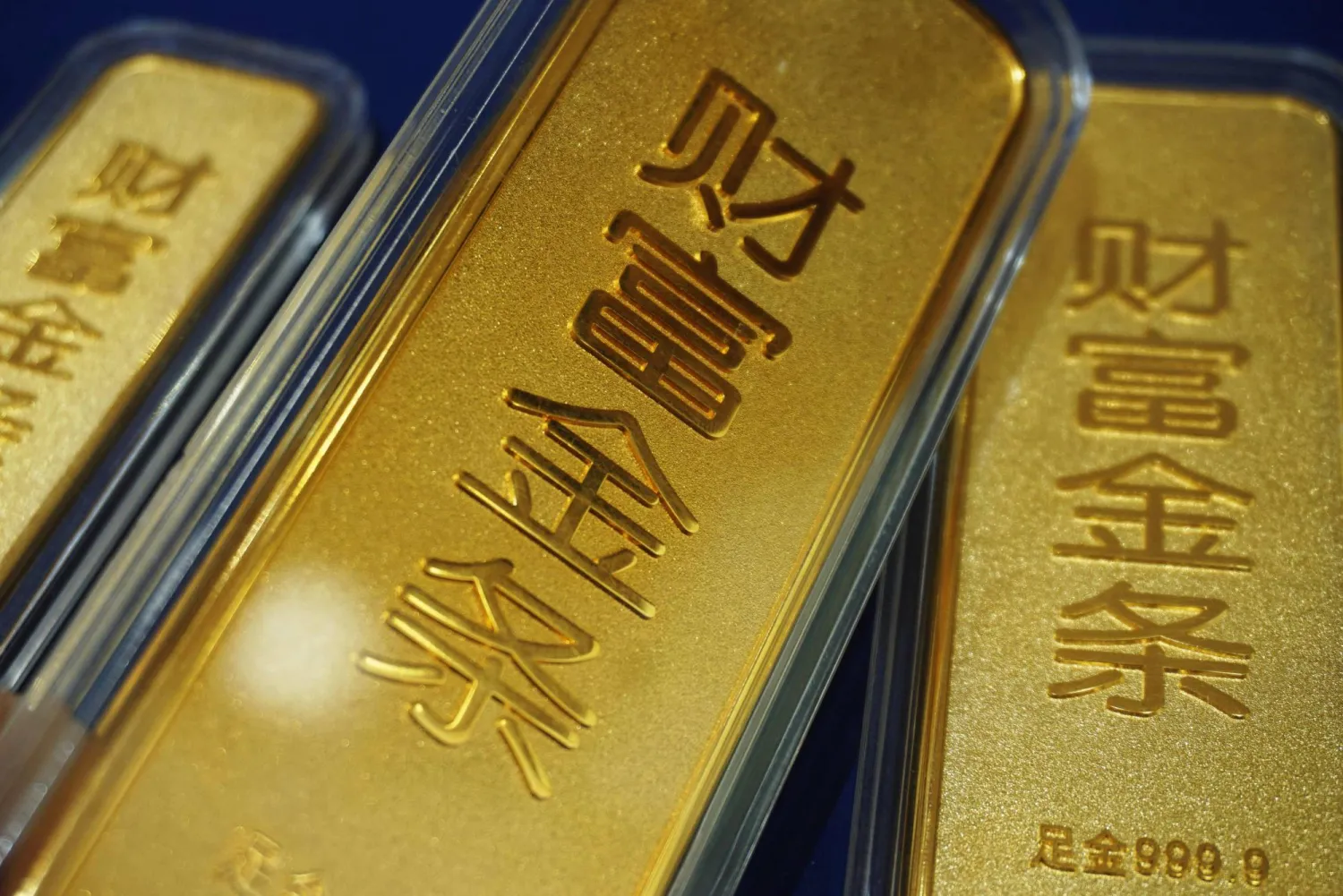
A woman passes in front of a gold shop in Hong Kong (AFP)

Gold eased on Tuesday, pressured by a firmer US dollar and rising Treasury yields, though losses were limited by easing expectations of a Federal Reserve interest rate hike this month.

Spot gold slipped 0.3% to $4,128.69 per ounce by 0155 GMT. US gold futures were little changed at $4,156.00.

The dollar held firm, making greenback-denominated commodities more expensive for holders of other ‌currencies, Reuters said.

The 10- ‌and 30-year Treasury yields hit 24-year ‌highs ⁠on Monday as persistent ⁠bond market weakness weighed on sentiment.

"Fundamentals remain supportive of gold in the long term. The next big catalyst is likely to stem from geopolitical risk in the Middle East," said Kyle Rodda, senior financial market analyst at Capital.com.

"Alternatively, a significant change in US rate expectations could provide an ⁠impetus for the next break-out, so every ‌piece of price data will ‌be important."

Expectations of a US rate hike in October eased ‌after data on Friday showed US job growth slowed ‌more than expected in September and nonfarm payrolls for the prior two months were revised lower.

Traders are still pricing an 87% probability of an increase in December, according to CME's FedWatch Tool.

Higher ‌interest rates increase the opportunity cost of holding non-yielding gold.

Data showed US services sector activity ⁠slowed ⁠in September, while strong domestic demand stretched supply chains and pushed a measure of prices paid by businesses for inputs to its highest level in more than four years, suggesting inflation could remain elevated into 2027.

Elsewhere, Yemeni government forces staged a lightning advance to retake the coast around the Bab el-Mandeb Strait up to the city of Mocha, the government said, pushing the Iran-backed Houthis out of most of the areas they seized last month.

Among other metals, spot silver fell 0.6% to $60.67, platinum lost 0.7% to $1,710.08 and palladium eased 0.2% to $1,170.15.


Oil Stocks in US Strategic Petroleum Reserve Fall to Lowest Level since 1982

Crude oil, gasoline, and diesel storage tanks at Kinder Morgan's facility in Los Angeles (Reuters)
TT

Oil Stocks in US Strategic Petroleum Reserve Fall to Lowest Level since 1982

Crude oil, gasoline, and diesel storage tanks at Kinder Morgan's facility in Los Angeles (Reuters)

Stocks of crude oil in the US Strategic Petroleum Reserve fell to 283 million barrels last week, the lowest level since October 1982, according to data from the Department of Energy, Reuters reported.

The drawdowns are part of a US agreement to release 172 million barrels from the facility.

Additionally, the Trump administration last week said it is offering to loan energy companies 40 million barrels of oil from the Strategic Petroleum Reserve.