



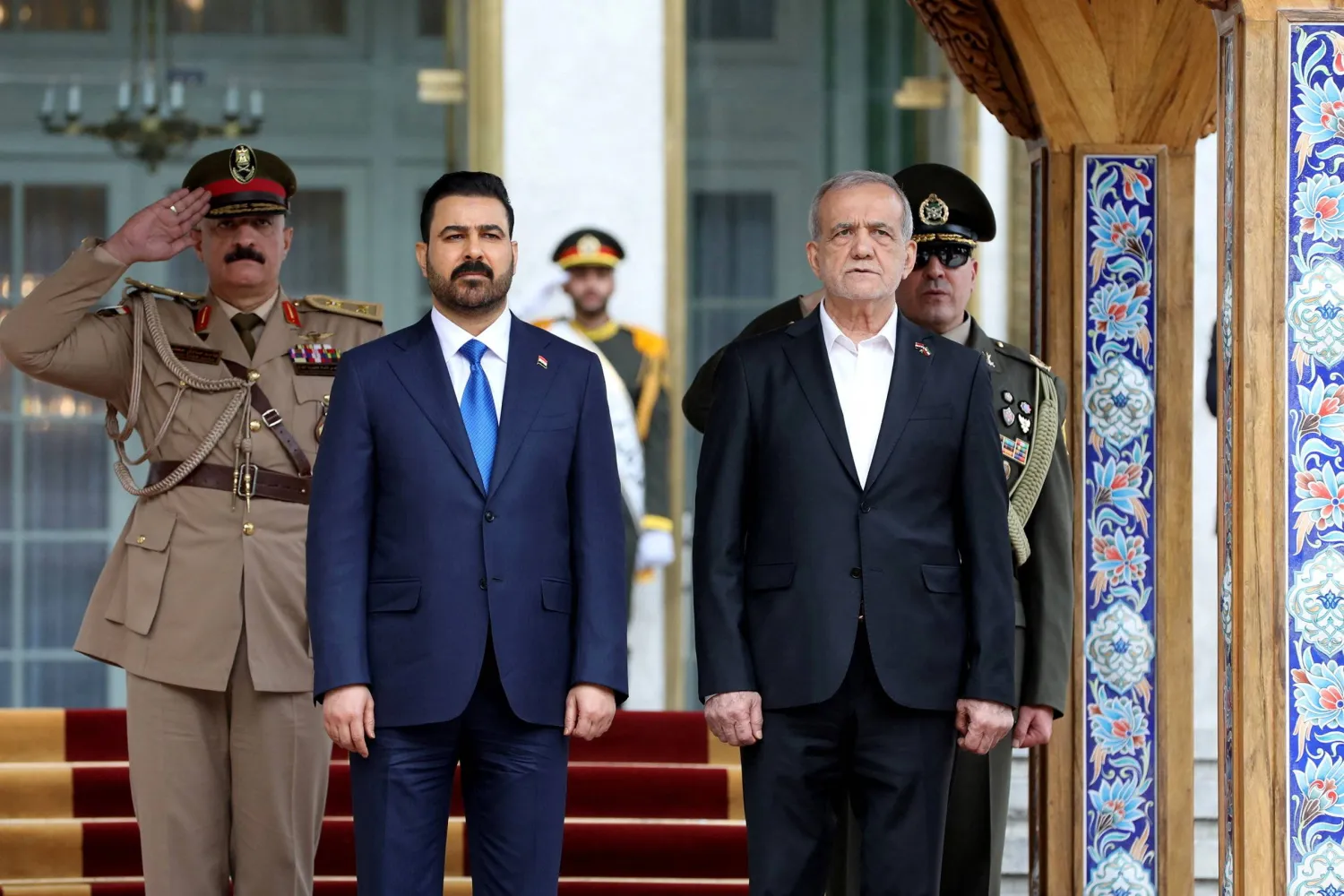

An Iraqi government spokesperson said that the Iraqi delegation visiting Tehran on Thursday discussed bilateral relations and regional developments related to the economic interests of regional countries, denying that the talks included "any carried message."
The spokesperson's comments followed a New York Times report stating that Iraqi Prime Minister Ali al-Zaidi had conveyed an American ceasefire proposal to Iran.
Government spokesperson Haider al-Aboudi told Asharq Al-Awsat: "The Iraqi delegation that visited Tehran on Thursday discussed bilateral relations and regional developments related to the economic interests of the region's countries, and the talks did not include any offer or carried message."
The Iraqi government's media office denied on Friday that al-Zaidi had conveyed a ceasefire proposal from US President Donald Trump to Tehran.
In a statement, al-Zaidi's office said that the New York Times report represents "groundless allegations that have no basis in reality."
The report contained incorrect information, it added, calling on the media to "ensure accuracy, rely on official sources, and avoid circulating unverified information or info attributed to anonymous sources."
The New York Times had reported, citing unnamed Iranian and Iraqi officials, that Iran rejected a ceasefire proposal presented by Trump, which al-Zaidi had conveyed during his Tehran visit.
It added, citing Iranian officials, that Tehran sees no utility in a temporary agreement that leaves the issue of control over the Strait of Hormuz unresolved.
It also quoted Iranian Foreign Minister Abbas Araghchi as saying that al-Zaidi presented his "views and impressions" following his visit to Washington, adding that Iran and the US already have a sufficient number of mediators.
The Iraqi denial came at a time when NYT highlighted escalating tensions between the US and Iran, amid the exchange of attacks and threats between both sides. It quoted Iranian officials as saying that Tehran is preparing for the possibility of a widening confrontation if Washington carries out its threats to target Iranian infrastructure.


