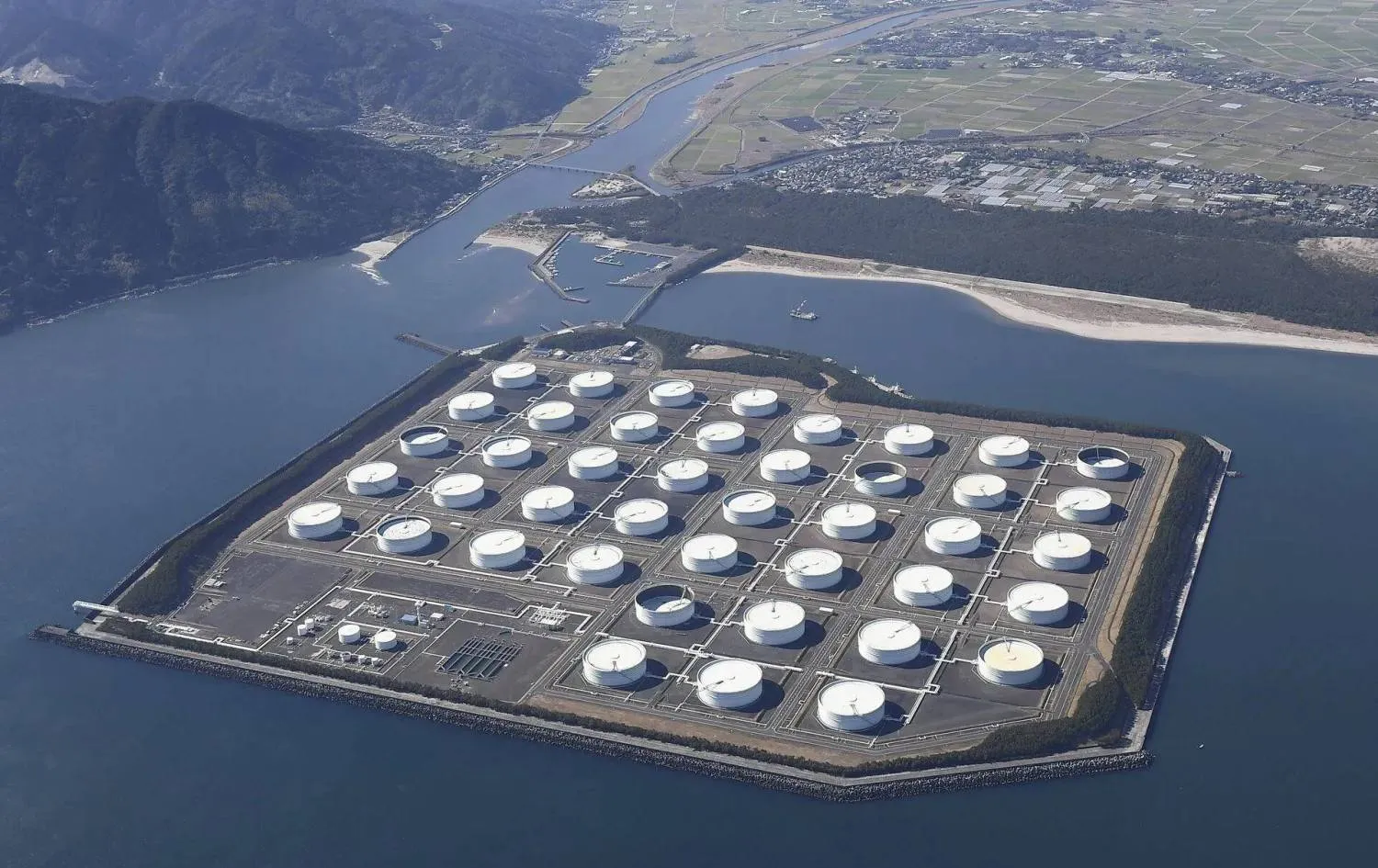

Japan’s Prime Minister Sanae Takaichi on Saturday reiterated that enough crude oil supplies have been secured in the country for the time being.
In response to a renewed deterioration in the situation in the Middle East, the prime minister said in a post on X that the necessary amount of crude oil for this month is expected to be procured and that the government will not release its oil stockpiles, according to The Japan Times.
She explained that procurement for next month is also on track, expressing her determination to continue efforts to secure the amount necessary for Japan as a whole.
A temporary truce between the US and Iran collapsed earlier this month after the two sides traded strikes, reflecting on global oil prices, which hovered around $100 a barrel Friday.
Earlier this month, Takaichi said Japan has secured stable oil supplies through the end of March 2028 despite the Iran war through a combination of alternative crude imports and stockpile releases.
Japan has no plans to release additional oil reserves this month, she told a cabinet meeting.
Crude Oil Stocks
Japan’s strategic crude oil stockpiles fell by the equivalent of four days of consumption in June, following drops of five days in May and 27 days in April.
As of July 3, combined reserves, including public, private and jointly held stocks with oil producing-countries, had recovered to the equivalent of 200 days of domestic consumption and are unlikely to decline significantly in July, Narumi Hosokawa, deputy director-general for immediate crisis management at the METI, told reporters.
Iran has begun talks with Japanese companies under a US sanctions waiver allowing it to resume oil sales, though prospective buyers are seeking a longer waiver and reassurances about ship safety, three Iranian and Western sources said.
Oil and Yen
The yen on Friday poised for its largest weekly percentage decline in more than two months as the currency languishes at 40-year lows despite Japan's pledges to buttress the currency.
Verbal efforts to support the yen have seen muted results.
The yen’s decline is driven by surging oil prices. Also, the yen is a low-yielding currency facing a terms-of-trade shock with higher oil prices.
Japan's Finance Minister Satsuki Katayama once again reiterated on Friday the government's readiness to take action in the foreign exchange market.
Some analysts see another intervention by Japanese officials as likely to have only a short-lived effect, similar to recent interventions in the currency, without coordinated steps such as a more aggressive path of rate hikes by the Bank of Japan (BOJ).
The US Treasury Department on Thursday joined calls for rate hikes by the BOJ, warning that excessive currency volatility was undesirable.
Markets have completely priced out any chance of a rate hike from the BOJ at its policy meeting next week, according to LSEG data.