
Oil Slips 4% After US, Iran Pause Fighting Over Weekend

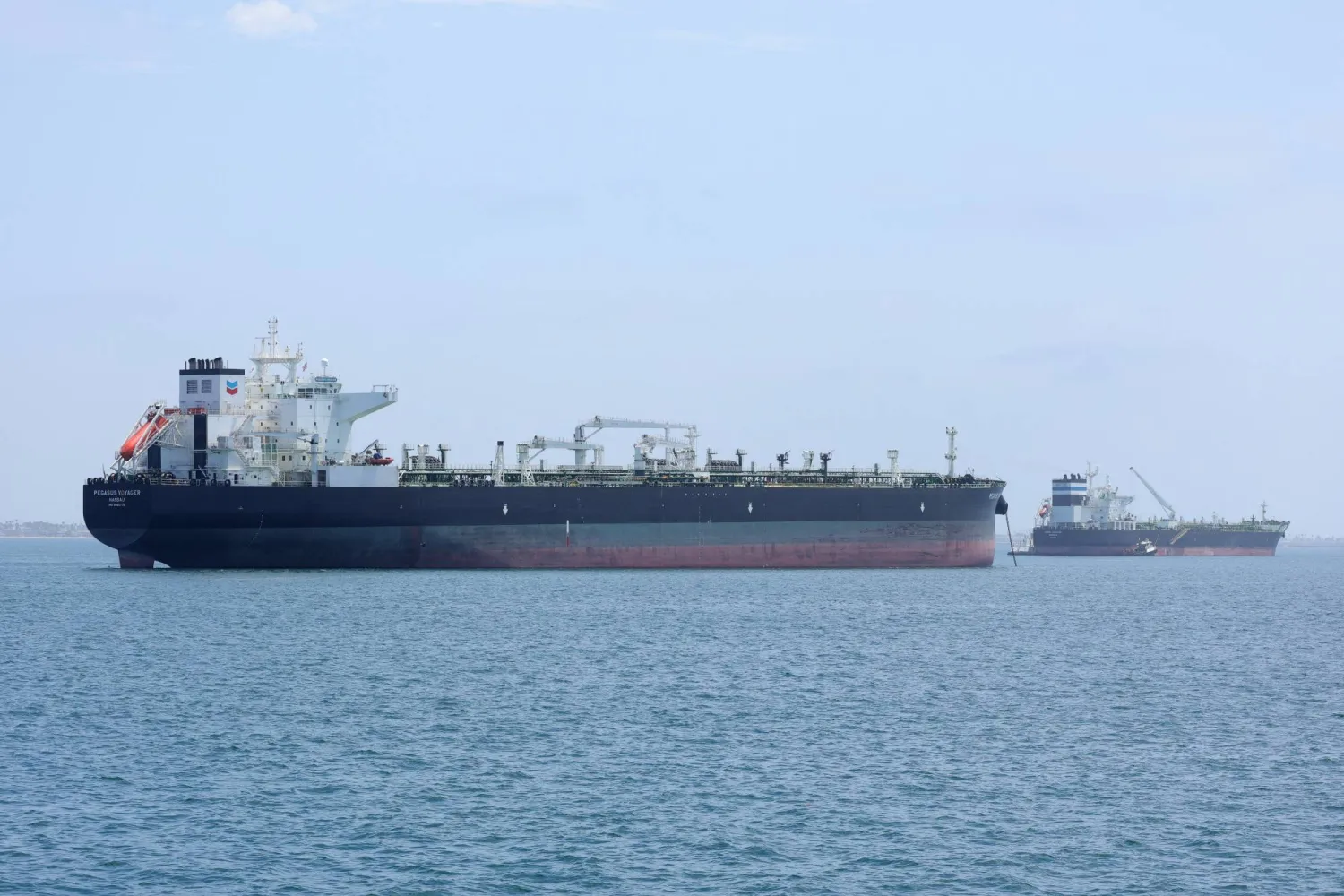
 Oil tankers outside the Port of Long Beach, California, US July 17, 2026. (Reuters)
Oil tankers outside the Port of Long Beach, California, US July 17, 2026. (Reuters)
TT

Oil Slips 4% After US, Iran Pause Fighting Over Weekend

 Oil tankers outside the Port of Long Beach, California, US July 17, 2026. (Reuters)
Oil tankers outside the Port of Long Beach, California, US July 17, 2026. (Reuters)

Oil prices tumbled 4% on Monday after the US and Iran paused strikes over the weekend after two weeks of attacks, raising hopes of a diplomatic solution that would de-escalate the conflict and allow shipping to resume in the Strait of Hormuz.

Brent crude futures fell $3.96, or 4.1%, to $92.82 by 0329 GMT after briefly slipping under the key support level of $90 earlier in the session. US West Texas Intermediate crude ‌was at $85.29 a barrel, ‌down $4.02, or 4.5%.

Both contracts are trading at their ‌lowest ⁠levels in nearly a ⁠week after rising for the past three weeks.

Brent had reached $100 per barrel as the conflict, which reduced oil shipments via the Strait of Hormuz, spilled over to the Red Sea, hindering exports via the Bab el-Mandeb strait to Asia.

The US ambassador to the United Nations, Mike Waltz, told "Fox News Sunday" and other US media that President Donald Trump had ⁠decided to pause US attacks to allow more time ‌for diplomacy.

"Oil prices fell sharply in early ‌trading as the US and Iran refrained from further military action, offering the first tangible signs ‌of a potential de-escalation in tensions," said ING analysts in a client ‌note. "The price action in oil this morning clearly reflects the market's desperation for positive news."

Despite the pause in attacks, fewer than 10 commodity vessels passed through the Strait of Hormuz daily during the weekend, shipping data from Kpler showed.

"Any rebound in flows through ‌the Strait of Hormuz is likely to prove slow and partial, as many shippers remain wary and will want ⁠greater confidence in ⁠their safety before they bring more empty ships into the Strait," MST Marquee analyst Saul Kavonic said.

Some analysts are still expecting markets to be supported if crude supplies stay affected by ongoing shipping risks in the Middle East and the Russia-Ukraine war.

"As the Middle East conflict widened to the Red Sea and Ukrainian drones struck Russian ships and refineries...Sustained (supply) disruption would likely keep oil prices elevated and continue to pose upside risks to global inflation," said UOB analysts in a note.

Ukraine said it hit several Russian oil sites over the weekend.


Maersk Raises Emergency Fuel Surcharge Due to Middle East Conflict

FILE PHOTO: A truck transports a Maersk container at APM Terminals at the Port of Los Angeles, California, US, March 4, 2026.   REUTERS/Mike Blake/File Photo
FILE PHOTO: A truck transports a Maersk container at APM Terminals at the Port of Los Angeles, California, US, March 4, 2026. REUTERS/Mike Blake/File Photo
TT

Maersk Raises Emergency Fuel Surcharge Due to Middle East Conflict

FILE PHOTO: A truck transports a Maersk container at APM Terminals at the Port of Los Angeles, California, US, March 4, 2026.   REUTERS/Mike Blake/File Photo
FILE PHOTO: A truck transports a Maersk container at APM Terminals at the Port of Los Angeles, California, US, March 4, 2026. REUTERS/Mike Blake/File Photo

Danish shipping group Maersk said on Thursday it was increasing its emergency fuel surcharge (EFS) on all export collections and import deliveries due to ⁠the ongoing conflict ⁠in the Middle East.

Oil prices rose on Thursday on worries about supply from ⁠the Middle East region amid an increase in attacks on shipping in the Gulf and the Strait of Hormuz, while the US cut output as a hurricane menaced offshore production.

Maersk ⁠said ⁠in a statement it was increasing its EFS to 20% as of October 12, and that it would continue to review the surcharge regularly.


IMF Reaches Staff Deal with Pakistan, Potentially Unlocking $1.2 Bn

FILE - The logo of the International Monetary Fund is visible on its building, April 5, 2021, in Washington. (AP Photo/Andrew Harnik, File)
TT

IMF Reaches Staff Deal with Pakistan, Potentially Unlocking $1.2 Bn

FILE - The logo of the International Monetary Fund is visible on its building, April 5, 2021, in Washington. (AP Photo/Andrew Harnik, File)

The International Monetary Fund has reached a staff-level agreement with Pakistan on reviews of some of its lending programs, potentially unlocking about $1.21 billion in financing pending board approval, the fund said on Wednesday.

If the board approves the deal, Pakistan could access about $1 billion under the ⁠Extended Fund Facility ⁠and $210 million under the climate-focused Resilience and Sustainability Facility, bringing total disbursements under the two programs to around $5.7 billion.

Pakistan remains reliant on external financing to bolster foreign ⁠exchange reserves and meet debt repayments.

"Supported by the EFF, the authorities have successfully navigated the impact of the Middle East conflict, and strong policies have helped preserve macroeconomic stability," Reuters quoted the fund as saying.

Risks remain elevated, however, due to geopolitical tensions, volatile energy prices, tighter global financial conditions ⁠and ⁠trade disruptions, the IMF said.

Pakistan is the most vulnerable major Asia-Pacific economy to a prolonged Middle East conflict, given its dependence on Gulf energy imports, remittances and financing support from the region, Ahmad Mobeen, principal economist at S&P Global Market Intelligence, said earlier this year.


Gold Pauses Decline after Two-month Low as Traders Weigh US Fed Move

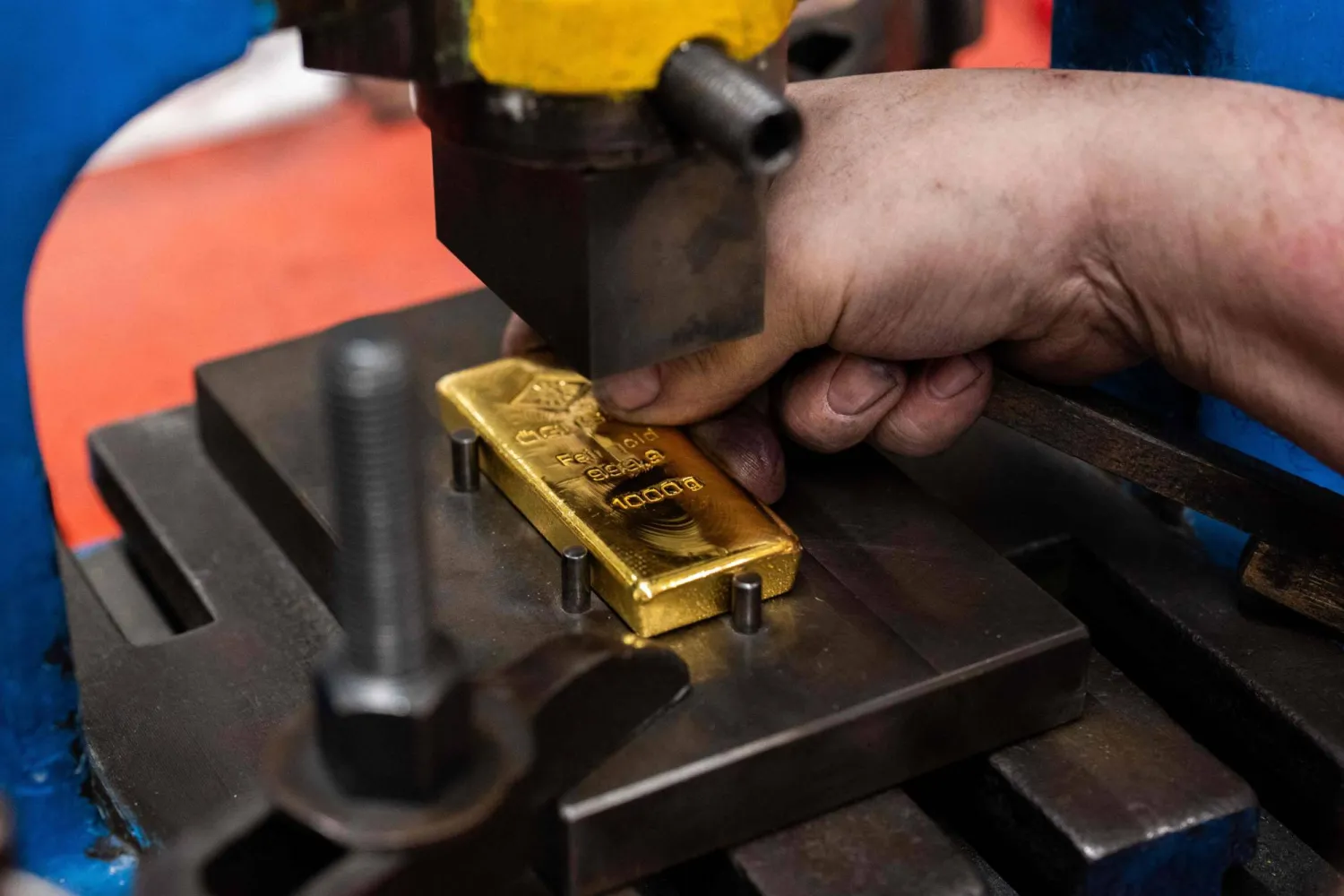
A 1000-gram gold bar at a gold and silver refinery in Vienna (AFP)
TT

Gold Pauses Decline after Two-month Low as Traders Weigh US Fed Move

A 1000-gram gold bar at a gold and silver refinery in Vienna (AFP)

Gold prices steadied on Thursday after sliding to a two-month low in the previous session, as investors assessed the likelihood of another US Federal Reserve interest rate hike before year-end.

Spot gold was little changed at $4,116.67 per ounce by 0625 GMT. On Wednesday, bullion prices touched their lowest level since August 5 as a ‌firmer dollar and ‌higher US Treasury yields weighed on the ‌market.

US ⁠gold futures were ⁠flat at $4,140.70.

"The short-term investment case for gold remains challenged... We would need to see a break above $4,275 to become more constructive on the near-term upside," said Chris Weston, head of research, Pepperstone.

"If markets begin treating rising long-end yields as a reflection of sovereign credit and fiscal risk rather than stronger economic fundamentals, gold ⁠could start to diverge positively from bond yields ‌and the debasement trade could return ‌with greater force."

Fed policymakers were divided last month over the rationale for ‌raising interest rates, with "some participants" seeing a hike as needed ‌to keep the impact of energy and other price shocks at bay, but a more hawkish core viewing it as necessary to guard against emerging demand-driven inflation, minutes showed.

Traders see only a 19% chance ‌of a rate hike later this month, but are pricing in an 86% likelihood of ⁠an increase ⁠in December, according to CME's FedWatch tool.

Higher rates diminish the appeal of non-yielding gold.

The global economy is under threat from persistently high energy prices, record public debt and risks from the AI investment boom, International Monetary Fund Managing Director Kristalina Georgieva warned, urging governments to implement protective fiscal and monetary policy measures.

Among other metals, spot silver fell 1.9% at $59.01, platinum added 1.6% to $1,657.18 and palladium climbed 1.1% to $1,136.80.

"We see silver on a downward trajectory given the deteriorating chart patterns and expect a test of the 2026 lows in the mid to high $50s," Marex analyst Edward Meir said in a note.