


Egyptian Oil Surge Boosts Energy Security Amid Regional Turmoil

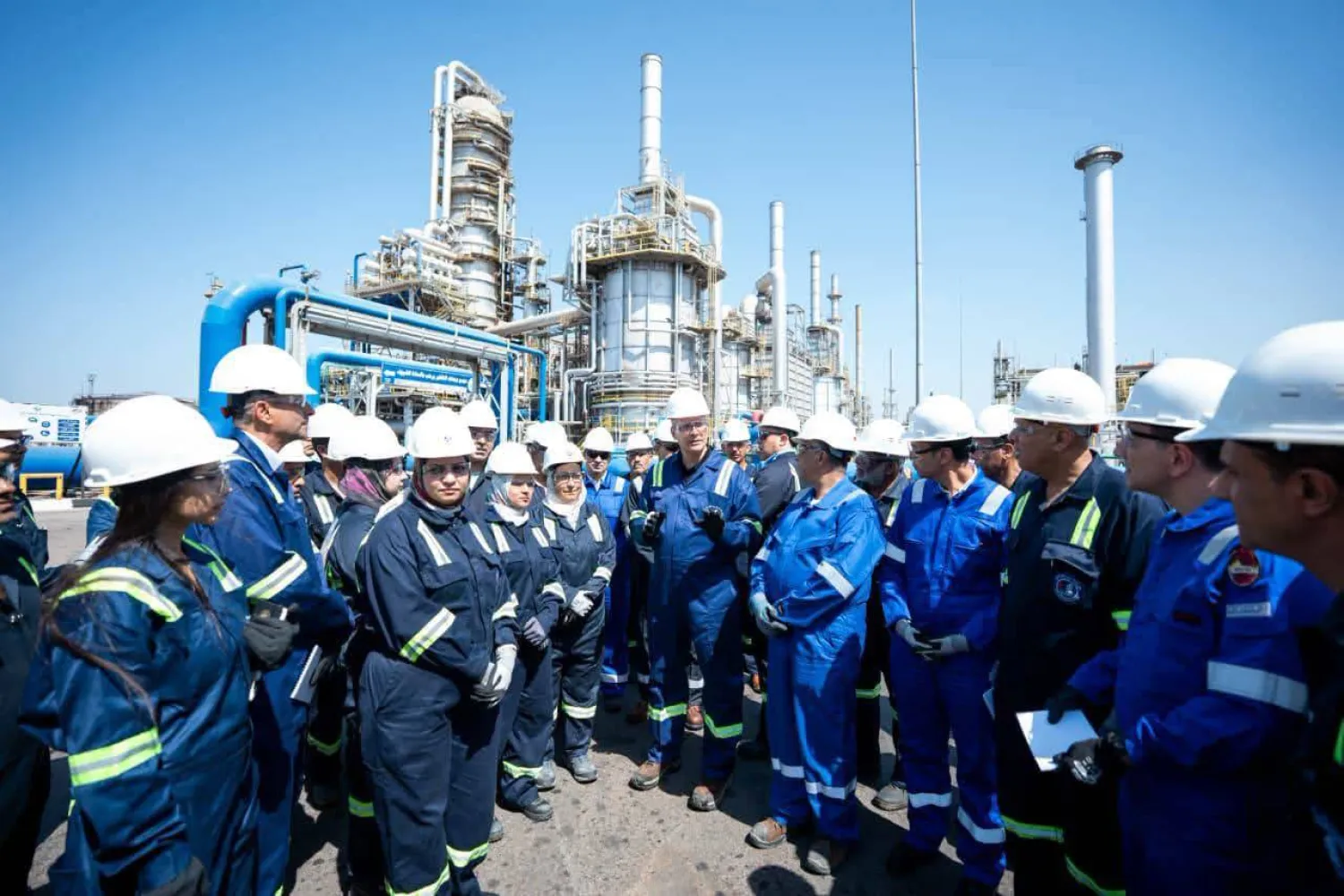
Badawi inspects Alexandria Petroleum Company refinery projects (Egypt cabinet Facebook page)
TT

Egyptian Oil Surge Boosts Energy Security Amid Regional Turmoil

Badawi inspects Alexandria Petroleum Company refinery projects (Egypt cabinet Facebook page)

As oil prices fluctuate due to ongoing regional instability since February, Egypt has managed to achieve a nearly 20 percent increase in crude oil production, reaching its highest level in almost two years.

Despite global disruptions, this surge is attributed to the government's settlement of outstanding payments owed to foreign investment partners, which encouraged them to make new investments and increase exploration, development, and production, according to Salah Hafez, former Deputy Chairman of the Egyptian General Petroleum Corporation, in remarks to Asharq Al-Awsat.

On Saturday, Egypt's Minister of Petroleum announced that the country's crude oil production had reached its highest level in nearly two years, stressing that this reflects the success of the ministry's strategy to stimulate investment and boost domestic output. The strategy has focused on paying dues owed to investment partners, encouraging them to commit new capital and expand exploration, development, and production efforts.

In a statement issued Saturday, the Ministry of Petroleum added that operating rates at Egypt's refineries rose to around 80 percent this year, helping meet local demand for petroleum products and reducing the need for imports.

The improved performance of the refineries has also boosted exports of petroleum products, which exceeded 2.3 million tons during the first half of 2026 - equivalent to Egypt's total petroleum product exports for all of 2025, according to Minister Karim Badawi. He noted that Egypt aims to increase petroleum product exports to approximately 2.5 million tons during the second half of this year.

Mahmoud Nagy, spokesperson for the Ministry of Petroleum, stated on Saturday that crude oil production had risen by about 20 percent compared with previous levels. He said Egypt currently produces between 520,000 and 550,000 barrels of crude oil per day, as a result of increased development and exploration in oil fields. These efforts support the government's goal of growing domestic production and reducing reliance on imports.
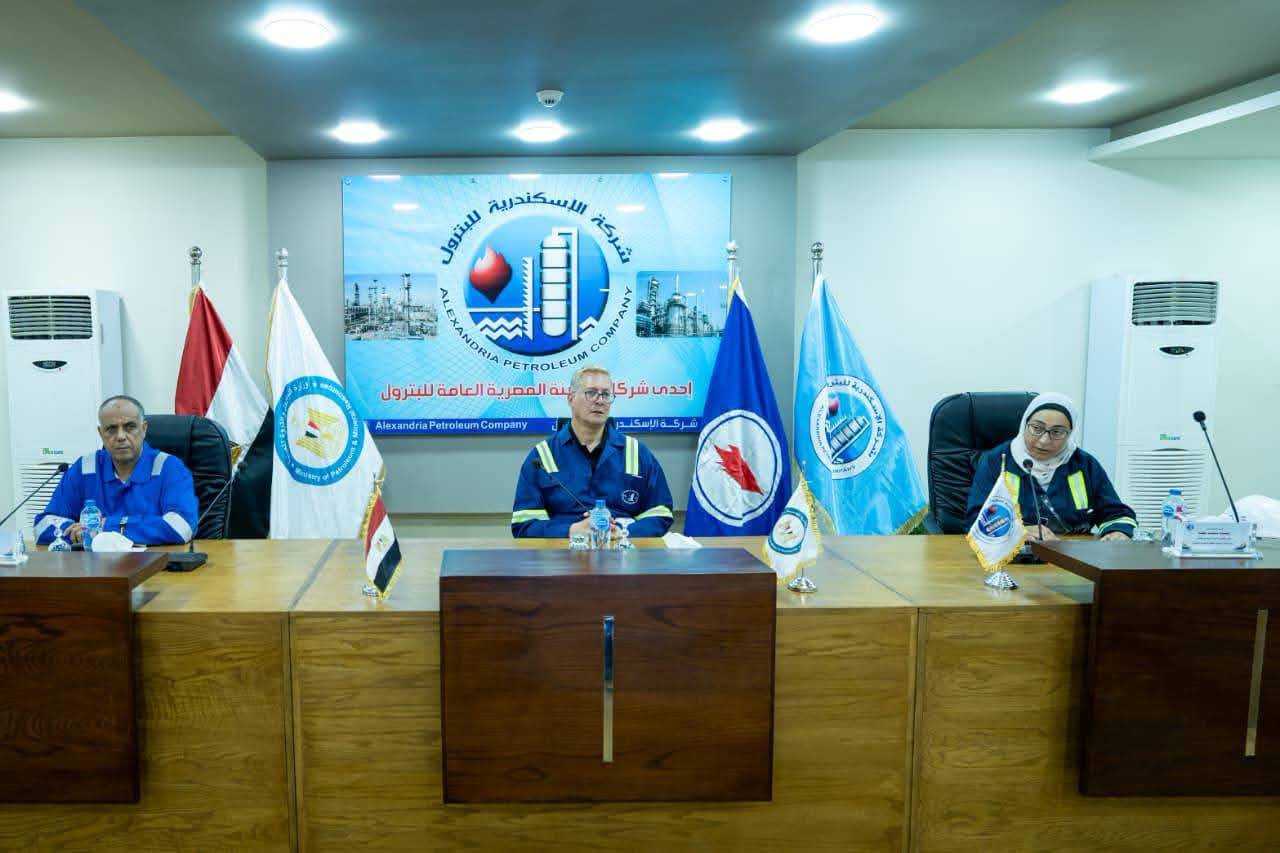
Badawi inspects Alexandria Petroleum Company refinery projects (Egypt cabinet Facebook page)


Nagy explained that the state's commitment to paying foreign partners their outstanding dues served as a strong incentive for those companies to expand investments, deploy additional drilling rigs, and increase their budgets for operations in Egypt.

The former deputy chairman of the Egyptian General Petroleum Corporation noted that billions of dollars in overdue payments had been settled over the past few months.

He also pointed out that the current increase in production is a direct result of investments in already-drilled wells. Maintenance work was carried out on these wells to enhance productivity after they had previously become inactive due to a lack of financial resources available to operating companies.

Oil is not the only source supporting stability in Egypt's energy supplies. Natural gas is also playing a key role. On Sunday, the Minister of Petroleum announced that Egypt had successfully secured all domestic natural gas needs during the recent period of peak consumption, which coincided with a significant rise in temperatures.

Regarding Egypt's ambition to become a regional energy hub, Hafez said that higher production levels support this objective.

As for the sustainability of the current production increase, he noted that maintaining it will require replacing extracted reserves with new discoveries. He added that there are promising indicators and prospects in Egypt's western regions and the western Mediterranean, although these areas remain in the exploration stage and have not yet reached the phase of confirmed commercial production.



Iraq Raises Oil Export Capacity to More Than 3 Million Barrels Per Day

FILE PHOTO: The Zubair Oil Field in Basra, Iraq, April 6, 2026. REUTERS/Mohammed Aty/File Photo
TT

Iraq Raises Oil Export Capacity to More Than 3 Million Barrels Per Day

FILE PHOTO: The Zubair Oil Field in Basra, Iraq, April 6, 2026. REUTERS/Mohammed Aty/File Photo

Iraq has raised its oil export capacity to more than 3 million barrels per day, Iraq's oil minister said, according to state media on Saturday.

Iraq has been able to export 3 ⁠million bpd since ⁠the beginning of September, state media said.

Oil Minister Basim Mohammed said the government plans to increase capacity ⁠to 5 million bpd after the completion of strategic pipelines and export outlets through the Strait of Hormuz, according to state media.

Iraq's oil exports rose to around 2.34 million bpd in August, according ⁠to ⁠officials.

Industry sources and shipping data had indicated that September shipments were set to climb, as big profits and Iranian approval for its tankers to pass through the Strait of Hormuz have encouraged buyers.


China to Pump $47 Bln Into State Banks, Insurers in Capital-boosting Push

Construction cranes rise above a newly built residential district before sunrise, in Beijing, China, September 3, 2026. REUTERS/Maxim Shemetov
TT

China to Pump $47 Bln Into State Banks, Insurers in Capital-boosting Push

Construction cranes rise above a newly built residential district before sunrise, in Beijing, China, September 3, 2026. REUTERS/Maxim Shemetov

China's finance ministry will inject 57 billion yuan ($8 billion) into three state-owned insurers, the companies said on Sunday, in a coordinated push by Beijing to shore up capital across its financial system.

China Life Insurance (Group) Co, the country's largest life insurer, will receive 35 billion yuan, while China Taiping Insurance Group will get 7 billion yuan, the two groups said in statements, according to Reuters.

People's ⁠Insurance Company (Group) of China ⁠said it planned to raise up to 15 billion yuan through a private placement of A-shares to the Ministry of Finance, with the proceeds to be used to replenish its capital.

"The injection is an important ⁠step by the country to enhance the financial sector's ability to serve the real economy and promote the high-quality development of the financial and insurance industries," China Life said in its statement, adding that it would strengthen the group's ability to withstand risks.

Taiping said the funds would bolster its solvency and other key indicators.

Separately, Agricultural Bank of China and Industrial and ⁠Commercial ⁠Bank of China said they planned to raise up to 160 billion yuan and 100 billion yuan respectively through private A-share placements to the finance ministry, China National Tobacco Corp and its subsidiaries.

Both lenders said the proceeds would be used entirely to replenish core tier 1 capital, in a move to help sustain credit expansion as Beijing leans on state banks to support growth.


Türkiye Sees GDP Growth at 5% in 2029 in Medium-term Program

People shop at an open market in Istanbul, Türkiye, December 5, 2022. REUTERS/Dilara Senkaya/File Photo
TT

Türkiye Sees GDP Growth at 5% in 2029 in Medium-term Program

People shop at an open market in Istanbul, Türkiye, December 5, 2022. REUTERS/Dilara Senkaya/File Photo

Türkiye's government projects gross domestic product growth accelerating to 5% by 2029, up from 3.3% forecast for this year, Vice President Cevdet Yilmaz said on Sunday while presenting ⁠the country's medium-term economic ⁠program.

Here are some details:

Inflation is forecast at 21% in 2027 and 13.5% in ⁠2028 before reaching 9% in 2029.

GDP growth seen at 4.2% in 2027, 4.6% in 2028 and 5% in 2029.

Budget deficit-to-GDP ratio projected at 3.5% in ⁠2027, falling ⁠to 3.1% in 2028, and 2.8% in 2029.

Unemployment seen at 8.1% in 2026, easing gradually to 7.6% by 2029.
