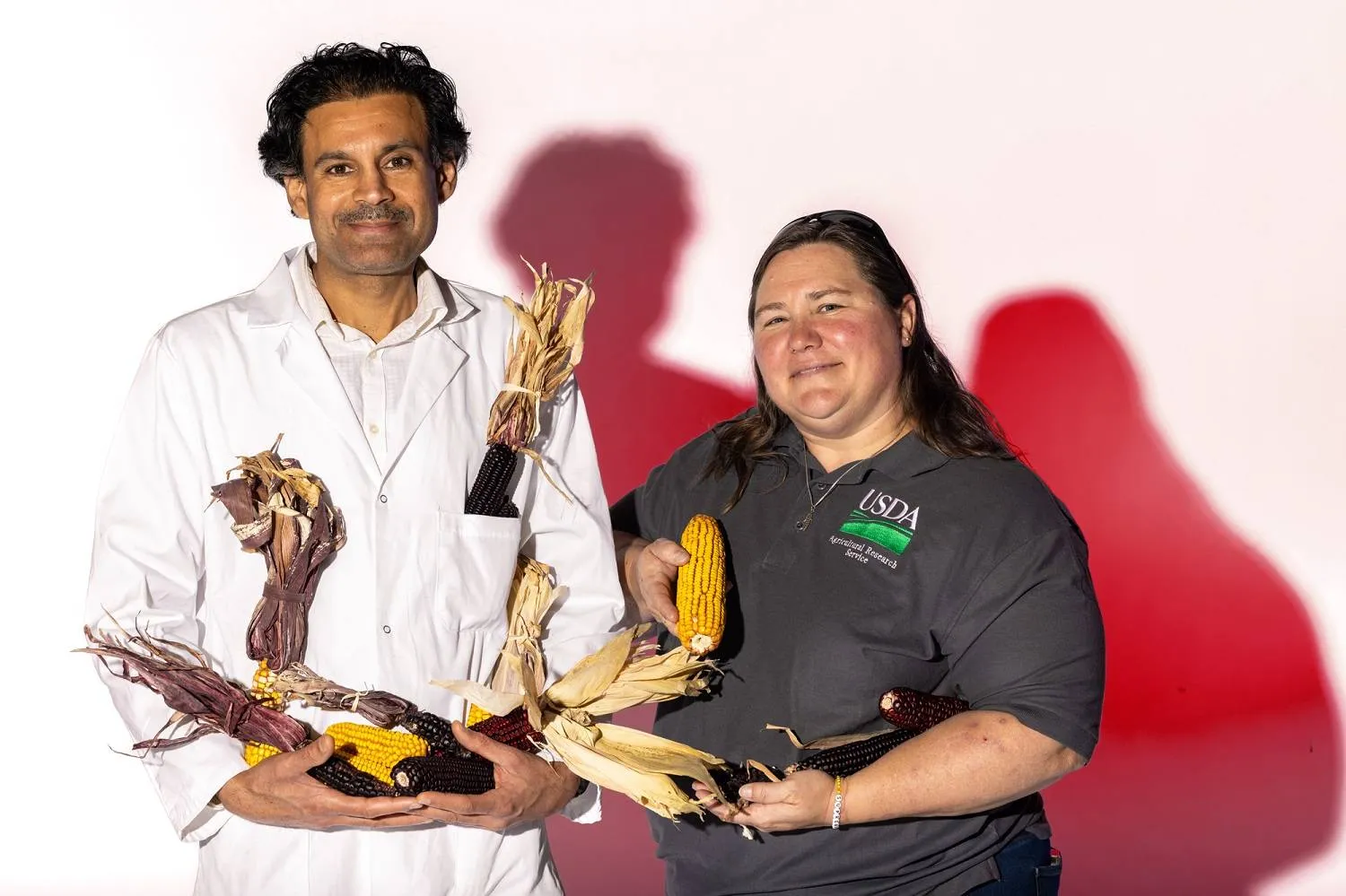

Researchers at the University of Missouri have found that purple corn could provide an effective natural alternative to artificial food dyes after its pigments demonstrated remarkable stability under the high temperatures and extended storage conditions common in food manufacturing.
The researchers said the findings could help food manufacturers replace petroleum-based synthetic colorants with natural alternatives. The study was published Tuesday in the journal npj Science of Food.
Artificial food colorants are chemically produced dyes, most of them derived from petroleum compounds. They are added to foods and beverages to improve appearance and make products more visually appealing without providing any nutritional value.
Their relatively low cost and excellent resistance to heat, light and storage conditions have made them widely used in confectionery, beverages, snack foods and processed foods.
However, growing concerns over the potential health effects of some synthetic dyes, coupled with tighter regulations in several countries, have prompted food manufacturers and researchers to search for natural alternatives that offer both safety and stability.
Purple Corn
The researchers explained that purple corn, traditionally grown in South America, gets its vibrant color from anthocyanins, natural pigments that give blueberries, red cabbage and grapes their colors. Beyond their coloring properties, anthocyanins also possess antioxidant properties that may help reduce inflammation and support heart health.
The team noted that these pigments are concentrated in the pericarp, the thin outer layer of the kernel.
"It's the layer that often gets stuck in your teeth," said Pavel Somavat, who holds joint appointments in the University of Missouri's College of Agriculture, Food and Natural Resources and College of Engineering. "In purple corn, that's where our most valuable components are."
Replacing artificial food dyes remains a major challenge because most natural colorants are unstable.
"Most natural colors are fragile," Somavat said. "They tend to break down when exposed to heat, light or oxygen."
To address that challenge, the researchers tested purple corn extracts under food processing temperatures of up to 121°C (250°F).
The results showed that about 75 percent of the key color compounds remained intact after one hour of heating, demonstrating strong thermal stability for food processing applications.
To further improve stability, the team encapsulated the pigments in food-grade materials, increasing retention of some color compounds to nearly 97 percent. The approach also enabled the production of shelf-stable powders that are easier to store and transport, an important advantage for commercial applications.
The researchers also evaluated the pigments in beverages, one of the most challenging applications for natural colorants because of acidity, light exposure and prolonged storage.
Tests showed that purple corn pigments remained stable under both acidic and alkaline conditions, making them promising candidates for fruit juices, flavored water and sports drinks. Even after seven weeks of refrigerated storage, color loss remained minimal.
The team added that the combination of high stability and potential health benefits makes purple corn colorants a practical option for producing foods with clean labels based on natural ingredients while maintaining product quality and performance, offering a safer alternative to artificial food dyes.