



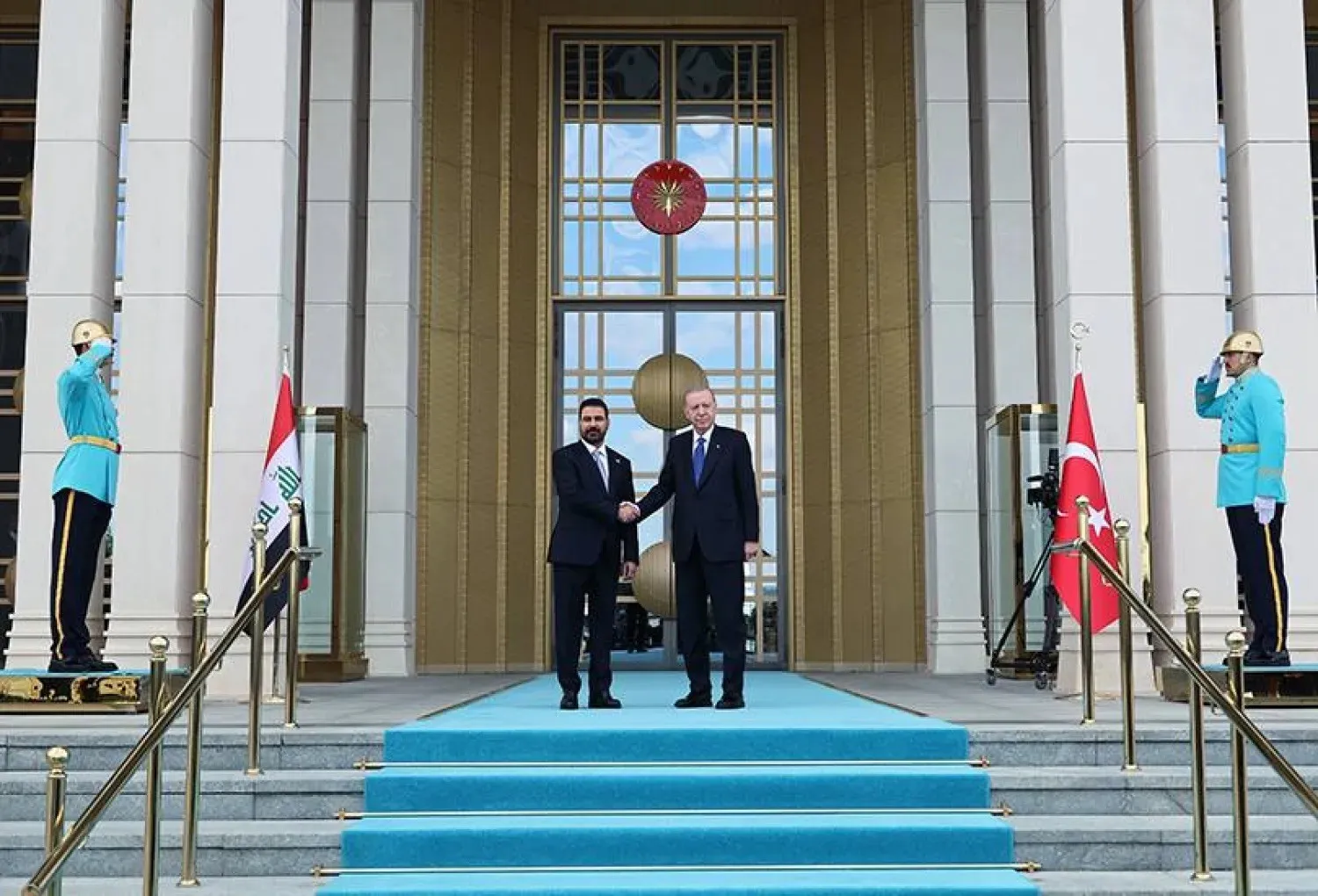

Counterterrorism, energy, water, trade, and the Development Road project topped talks between Turkish President Recep Tayyip Erdogan and Iraqi Prime Minister Ali al-Zaidi, who visited Ankara on Tuesday.
Discussions also focused on geopolitical developments and regional issues, notably the repercussions of the Iran war, as well as international matters of mutual concern.
Hours before arriving in Ankara, al-Zaidi wrote on X that Iraq and Türkiye are bound by “historic, geographic, and civilizational ties,” as well as diverse shared interests. He said the talks would cover investment, water resources, the Development Road project, efforts to boost regional stability, and a range of economic and security issues.
Rapidly expanding ties
According to a joint statement, Erdogan and al-Zaidi agreed to begin implementing the “Strategic Development Road” project and to continue holding regular meetings of the joint permanent committee overseeing water issues.
Ankara has sought to deepen ties with Baghdad, whose relations with Türkiye have expanded markedly across multiple sectors and reached the level of a strategic partnership during the tenure of al-Zaid's predecessor former PM Mohammed Shia al-Sudani.
Washington followed the trip closely given the regional significance of al-Zaidi’s visit amid developments in the Iran war, the situation in Syria, and discussions surrounding energy and transport.
On the eve of the visit, Tom Barrack, US President Donald Trump’s special envoy for Syria and Iraq and the US ambassador to Türkiye, met Turkish Foreign Minister Hakan Fidan.
Diplomatic sources said their talks touched on al-Zaidi’s visit, which coincided with continued US-Iran strikes and restrictions on transit through the Strait of Hormuz, adding further strategic significance to the trip.
For Iraq, one of the countries most affected by the Iran war that began on February 28, the visit reflected Baghdad’s broader diplomatic message that restoring regional stability as quickly as possible remains a priority.
The visit followed months of intensive preparations through reciprocal meetings focused on security, energy, water, trade, and progress on the Development Road project. These included Turkish intelligence chief İbrahim Kalin’s visits to Baghdad, Erbil, and Sulaymaniyah last month; Turkish Energy and Natural Resources Minister Alparslan Bayraktar’s subsequent visit, following talks by Iraqi Energy and Foreign Ministry officials on extending the Kirkuk-Ceyhan oil pipeline agreement; and Turkish Transport Minister Abdulkadir Uraloglu’s trip to Baghdad last week to review progress on the Development Road.
Expanding trade and security cooperation
On the sidelines of al-Zaidi’s visit, Türkiye and Iraq held a joint roundtable bringing together ministers and business leaders to discuss strengthening economic and commercial ties, expanding cooperation, and improving the investment climate.
Following the meeting, Turkish Trade Minister Omer Bolat wrote on X that officials and business representatives reviewed trade and investment relations, opportunities created by the Development Road project, joint energy and transport projects, measures to facilitate bilateral trade, customs reforms, and practical steps to resolve challenges facing companies.
He said he believed the meeting would move the two countries closer to achieving their goal of $30 billion in bilateral trade.
Between 2022 and 2026, Türkiye and Iraq signed agreements across numerous sectors, particularly security. Under security agreements concluded in 2024 and 2025, Iraq expanded cooperation with Türkiye, designated the Kurdistan Workers’ Party (PKK) a banned organization, and signed the 2024 memorandum of understanding on military, security, and counterterrorism cooperation, widely regarded as a turning point in bilateral security relations. The two countries also established a joint security coordination center in Baghdad.
Those steps supported Ankara’s “Terror-Free Türkiye” initiative, referred to by the Kurdish side as the “Peace and Democratic Society Process”, which resulted in the PKK’s dissolution and the start of its disarmament, alongside efforts to integrate the Syrian Democratic Forces (SDF) into Syrian state institutions.
Erdogan and al-Zaidi reviewed the latest developments in the initiative, which aims to rid Türkiye and the wider region of terrorism.
Ankara is preparing framework legislation to regulate the return of former PKK members from northern Iraq after disarmament and their reintegration into Turkish society.
Development road, energy, and water
The Development Road project featured prominently in Erdogan and al-Zaidi’s talks. Baghdad views Türkiye as one of the project’s principal partners, particularly as tensions in the Strait of Hormuz have heightened its strategic importance.
Days before al-Zaidi’s visit, Uraloglu led a delegation that met the Iraqi prime minister in Baghdad on July 21. Afterward, he said the project was essentially complete, with only minor details remaining, and that Erdogan and al-Zaidi would make the final decision on financing. Construction is expected to begin before the end of the year.
Energy was another key topic. Ahead of the meeting, the two countries agreed to extend for one year the 1973 agreement governing Iraqi oil exports through the Kirkuk-Ceyhan pipeline, which expired on July 27.
A new agreement is expected to include extending the pipeline south to Basra and constructing a natural gas pipeline to carry gas from Qatar and other Gulf countries.
Türkiye has revived plans to transport Iraqi oil and Qatari natural gas, currently shipped through the Strait of Hormuz, to global markets through new pipelines.
It also seeks to move Turkmen natural gas to Europe as part of its strategy to become the region’s leading energy corridor linking the Middle East with eastern and southern Europe.
The long-running dispute over sharing the waters of the Tigris and Euphrates rivers also figured prominently in the Ankara talks.
In November 2025, the two sides signed a key document detailing the implementation of the 2024 water cooperation agreement. Iraq’s parliament approved it on July 25, setting September 1 as the implementation date.
Under the agreement, Türkiye and Iraq will jointly develop water management projects and invest in infrastructure. Iraq will finance the initiative by depositing part of its oil export revenues from sales to Türkiye into a dedicated fund, while Turkish companies will participate in projects ranging from upgrading existing infrastructure to constructing new dams.
New vision for bilateral relations
Coinciding with his visit, Türkiye’s state-run Anadolu Agency published an article by al-Zaidi in which he said that relations between the two countries have long been viewed through the lens of issues requiring management - security, water, trade, and border movement - but that the region now has an opportunity to adopt a more ambitious outlook.
“The question is no longer how we manage our shared challenges, but how we transform them into opportunities that create prosperity for our two peoples,” he wrote.
Al-Zaidi said Iraq has chosen a path of stability, reform, and development, reorganizing its priorities around building a strong economy, an effective state, and balanced foreign relations that make regional cooperation a pillar of growth rather than merely a political option.
The same applies to Türkiye with its advanced industrial base, strategic location, and extensive expertise in infrastructure, energy, and transportation, he remarked.
He added that Iraq believes the security of both countries depends on close cooperation based on mutual respect for sovereignty and joint efforts to combat terrorism and organized crime, because development can flourish only in a secure environment.
The Middle East needs new success stories, and Iraq and Türkiye are capable of providing one if they move beyond traditional cooperation toward genuine integration, he stressed.


