Japan Coral Protectors Race to Save Reefs from Heat ‘Bomb’

This underwater picture taken on July 9, 2026, shows coral in a shallow area of the sea near Onna village, Okinawa Prefecture. (AFP)
TT

Japan Coral Protectors Race to Save Reefs from Heat ‘Bomb’

This underwater picture taken on July 9, 2026, shows coral in a shallow area of the sea near Onna village, Okinawa Prefecture. (AFP)

From "heatwave simulators" to ecological bootcamps, scientists and conservationists are trying ways to revive and reinforce the famous coral reefs off Japan's Okinawa, decimated by climate-driven bleaching two summers ago.

The subtropical southern Japanese region boasts some of the world's most biodiverse hubs of normally multicolored coral, but a 2024 marine heatwave created "graveyards" of ghostly pale or sickly brown organisms.

With the world's oceans the hottest on record in June, and a major El Nino predicted this year, experts fear that 2026 could be even worse for the colonies of polyps and the rich variety of marine life that calls them home.

On land, Japan is experiencing a severe heatwave with thousands of people needing hospital treatment over a week.

In recent weeks though the ocean around Okinawa has been mercifully cooled by typhoons scooping up deep-sea water as they tear across the Pacific.

But Timothy Ravasi, a local marine scientist, warned against complacency.

If not this year, "it's almost 100 percent that soon in Okinawa, all around the world, we will have another mass bleaching event," the Okinawa Institute of Science and Technology Graduate University professor told AFP.

"Just like a bomb, it will explode."

That makes his lab's ongoing work with its "heatwave simulator" -- which he says is one of the world's only two such systems -- a race against time.

There, rows of whirring white tanks filled with seawater host creatures like coral, giant clams and clownfish in what are meticulously controlled to resemble natural marine environments.

By manipulating each tank's temperature and pH levels, scientists can simulate future heatwaves and induce coral bleaching to see how fish and other organisms adapt.

"If we don't understand what climate change, ocean warming or acidification does to coral ecosystems, there is a chance we're going to lose them," Ravasi said.

- Pushed to the limit -

The Okinawa region, a popular resort destination of many islands with turquoise seas, relies on tourism for over 80 percent of its economy.

But hotel construction, combined with overfishing and pollution, is compounding threats already posed by climate to coral.

For Ravasi, the biggest challenge lies in "just convincing the stakeholders, government and politicians that climate change is happening, and we need to stop it immediately".

He suggests they potentially downsize tourism or urbanization to protect coral -- a "difficult political question" for those who want to keep Okinawa's economy thriving.

But "we have enough evidence", he said, "that climate change is already pushing this ecosystem to limits".

Despite covering only 0.1 percent of the Earth's surface, coral reefs are home to roughly a quarter of the world's marine fish species.

The coastal village of Onna -- home to the Okinawa science institute -- has been spearheading efforts since 1999 to breed corals and transplant them into the sea.

Sceptics initially saw the cloning as "taboo" disruptions of nature, Shoichi Ikeno, head of local diving company Lagoon, told AFP.

DNA analysis, however, later detected minimal ecological impacts.

- 'Miracle coral' -

The pushback against human involvement similarly dogged Koji Kinjo's 2009 opening of an "artificial sea" that he built from scratch in the village of Yomitan.

At this rainforest-like indoor farm, where creatures such as coral, tropical fish and sea cucumbers inhabit different aquariums, Kinjo bred "miracle coral" with extra resistance to warmer water.

The feat followed trial and error that initially saw him mollycoddle corals in stress-free environments, but those easily perished in the ocean once transplanted.

He eventually succeeded by exposing corals to strong UV rays and other stressors to create extremely resilient organisms that even survived the 2024 bleaching unscathed.

"I can say with absolute certainty that to raise creatures able to survive nature's harshness, they must be toughened up while growing up," Kinjo, 56, told AFP.

The artificiality of all this, however, has pitted him against traditionalists who believe in the ocean's ability to self-heal.

These detractors, he said, "have no idea how hopelessly serious the crisis has become" for Okinawa's coral.

Kinjo says that reefs flanking his seaside farm consist entirely of corals he cultivated, with their natural peers "no longer able to keep up with a tremendous increase in stress" in the anthropogenically polluted ocean.

Sooner or later, he believes "corals will die out without intervention".

"There is no restoring the sea to what it used to be," he said.

"That's why my approach is to create a biodiverse place that can adapt to the coming era."


UN: Greenhouse Gas Levels Hit New Record Highs in 2025

FILE PHOTO: The rotor of a wind turbine turns round at a wind power plant on top of a mountain in Pyeongchang, about 210 km east of Seoul, May 4, 2007. REUTERS/Lee Jae-Won (SOUTH KOREA)/File Photo
TT

UN: Greenhouse Gas Levels Hit New Record Highs in 2025

FILE PHOTO: The rotor of a wind turbine turns round at a wind power plant on top of a mountain in Pyeongchang, about 210 km east of Seoul, May 4, 2007. REUTERS/Lee Jae-Won (SOUTH KOREA)/File Photo

Greenhouse gas concentrations in the atmosphere rose to new record highs in 2025, locking in climate impacts that will persist for centuries to come, the United Nations said Tuesday.

Levels of the three main greenhouse gases -- the climate-warming carbon dioxide, methane and nitrous oxide -- all rose to unprecedented figures in 2025, the UN's weather and climate agency said.

The World Meteorological Organization said the rise would lead to more long-term temperature increases for the planet.

The WMO's 22nd annual Greenhouse Gas Bulletin comes ahead of the COP31 UN climate summit in Antalya, Türkiye, running from November 9 to 20.

"Another year, another new record," said WMO deputy secretary-general Ko Barrett.

"Greenhouse gases are trapping an unprecedented amount of heat in the atmosphere, providing energy for more extreme weather and associated risks to our economies and societies.

"The past 11 years have been the warmest on record and this trend is set to continue. Carbon dioxide (CO2) has a very long life-time and so will affect the global climate not just for years but for decades and even centuries."

The bulletin looks at greenhouse gas concentrations -- the amount of those gases in the atmosphere -- rather than new annual emissions amounts as the world burns more coal, oil and gas.

In 2025, carbon dioxide concentrations were at 426.8 parts per million (ppm); methane at 1,948 parts per billion, and nitrous oxide at 339.1 parts per billion.

That takes them respectively to 153 percent, 267 percent and 126 percent of the pre-industrial levels witnessed before 1750.

Of the three major greenhouse gases, CO2 accounts for about 66 percent of the warming effect on the climate.

Around half of the total CO2 emitted each year remains in the atmosphere; the rest is absorbed by the land and oceans.

From 2024 to 2025, the global average concentration of CO2 rose by 2.8 ppm -- smaller than the record surge from 2023 to 2024 of 3.6 ppm.

WMO senior scientific officer Oksana Tarasova said this reflected the "recovery of the land carbon sinks and reduced fire carbon emissions in 2025 after the strong 2023/2024 El Nino", the naturally-occurring, climate-warming weather phenomenon.

"However, a 2.8 ppm annual increase is still a substantial addition of carbon to the atmosphere from fossil fuel burning."

It is also above the average growth rate for the past decade of 2.6 ppm -- a figure that stood at 0.8 ppm in the 1960s.

"We can expect to see a further increase in concentrations in 2026 because of fossil fuel burning and the development of a powerful El Nino which will impact land carbon sinks, as it did in 2023/2024," Tarasova warned.

Methane accounts for about 16 percent of the warming effect on our climate by long-lived greenhouse gases, though it has a much shorter lifetime than CO2.

Around a third of methane emitted into the atmosphere comes from natural sources like wetlands, with the rest from anthropogenic sources such as cattle, rice farming, landfills and biomass burning.

According to AFP, the bulletin said that as countries shift their energy systems towards decarbonization, more attention should be paid to two potent but less abundant trace gases closely related to electricity production and distribution: molecular hydrogen (H2) and sulfur hexafluoride (SF6).

Primarily as a spark suppressant in electricity distribution, SF6 has been rising steadily over the past three decades.

Why H2 levels have increased over the past decade is unknown but it has begun to be used as an energy storage medium.


Indonesia Sends Oxygen Bus to Aid Residents Choking on Forest Fire Haze

FILE PHOTO: A resident receives oxygen from a free mobile oxygen bus deployed by the city government amid haze from wildfires in Palangka Raya, Central Kalimantan province, Indonesia, October 23, 2026. REUTERS/Arief Rahman Septian Prathama/File Photo
TT

Indonesia Sends Oxygen Bus to Aid Residents Choking on Forest Fire Haze

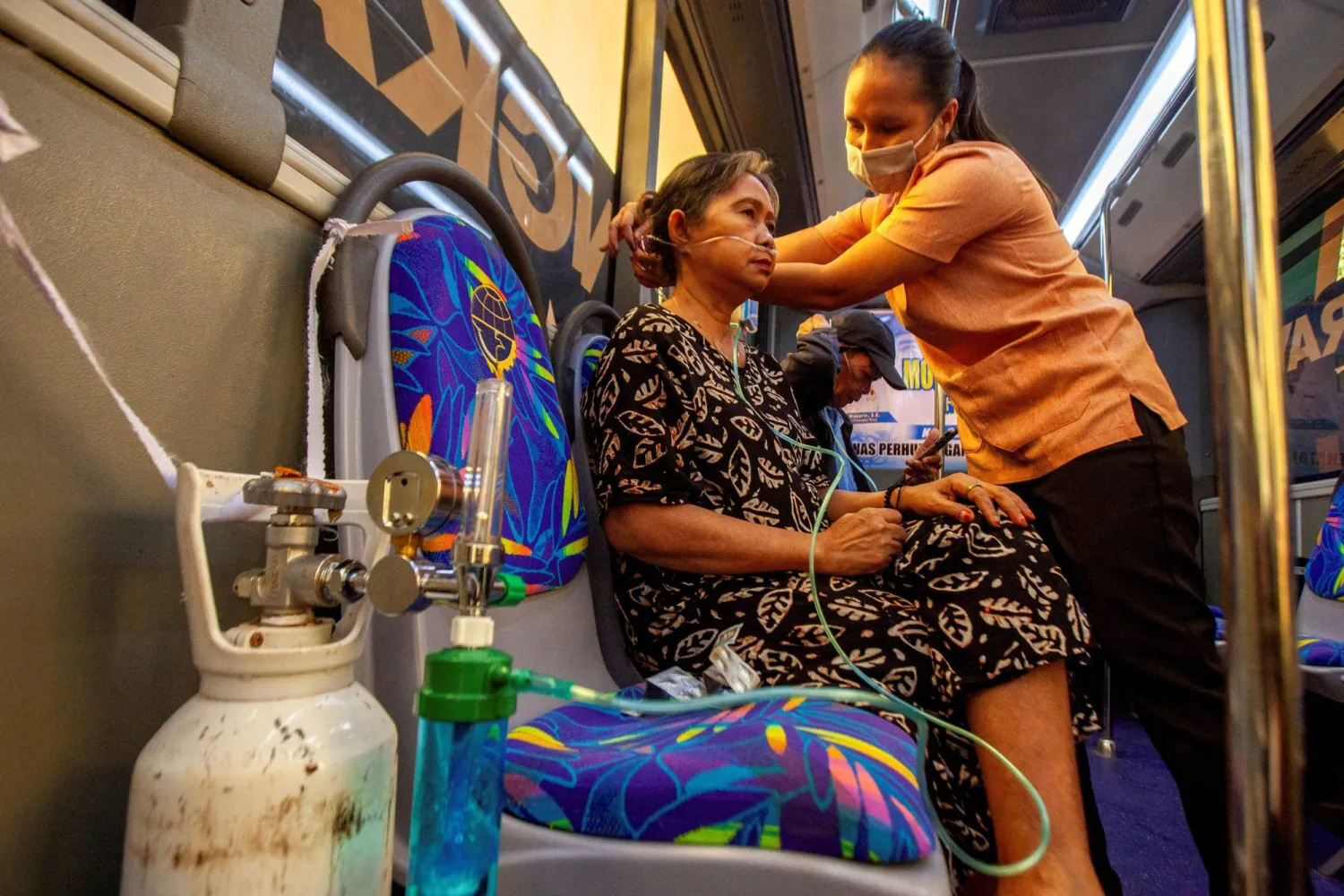
FILE PHOTO: A resident receives oxygen from a free mobile oxygen bus deployed by the city government amid haze from wildfires in Palangka Raya, Central Kalimantan province, Indonesia, October 23, 2026. REUTERS/Arief Rahman Septian Prathama/File Photo

A bus fitted out with oxygen tanks is providing a sanctuary in a city on Indonesia's Borneo island where people are choking from forest-fire-induced haze and the blazes show no sign of letting up.

Indonesia regularly battles seasonal forest fires, predominantly on Sumatra and Borneo islands, but this year the infernos are the most intense in more than a decade. An intense El Niño weather phenomenon has driven up temperatures, leaving the country's vast forests and peatlands more vulnerable to fires that have turned skies orange across Indonesia, Malaysia and Singapore.

As respiratory illnesses increased in the Central Kalimantan city of ⁠Palangka Raya, the ⁠local government provided an 'oxygen bus' replete with oxygen tanks and medical professionals who offer residents a chance to be hooked up to a small oxygen tube around their nose for 5 to 10 minutes at a time.

"The service is intended to help people access oxygen, particularly those experiencing respiratory problems or who need oxygen ⁠support amid unhealthy air quality conditions," the Central Kalimantan provincial health department said on Instagram this week.

Indonesia's air pollution index has shown some areas of Borneo and Sumatra registering pollution levels of over 1,000, with readings of 300 or more already categorized as hazardous.

Respiratory illnesses linked to the fires have risen, with about 350,000 cases from August to October 25, the health ministry said. Central Kalimantan reported about 31,000 cases as of October 25.

"This is a disaster from nature and there is not much we can do," ⁠Oktawina, 44, ⁠who like many Indonesians goes by one name, said with an oxygen tube hooked to her nose.

Medical staff on the white-and-blue bus recorded patients' details and administered oxygen to residents reporting breathing difficulties. One of them, Yuda, said most residents who came to the bus coughing or had trouble breathing.

Purnasari, 31, another patient on the bus, said: "If I've been out of the house lately I feel tightness and coughing ... because this morning the thick yellowish smoke so my breathing feels tight."

Hundreds of students protested at the office of the provincial governor last week demanding a greater response to the fires, local news website Kompas reported.


World’s Highest Bridge Becomes Tourist Hot Spot in China

Huajiang Grand Canyon Bridge is the world’s highest, according to Guinness World Records (Shutterstock) 
TT

World’s Highest Bridge Becomes Tourist Hot Spot in China

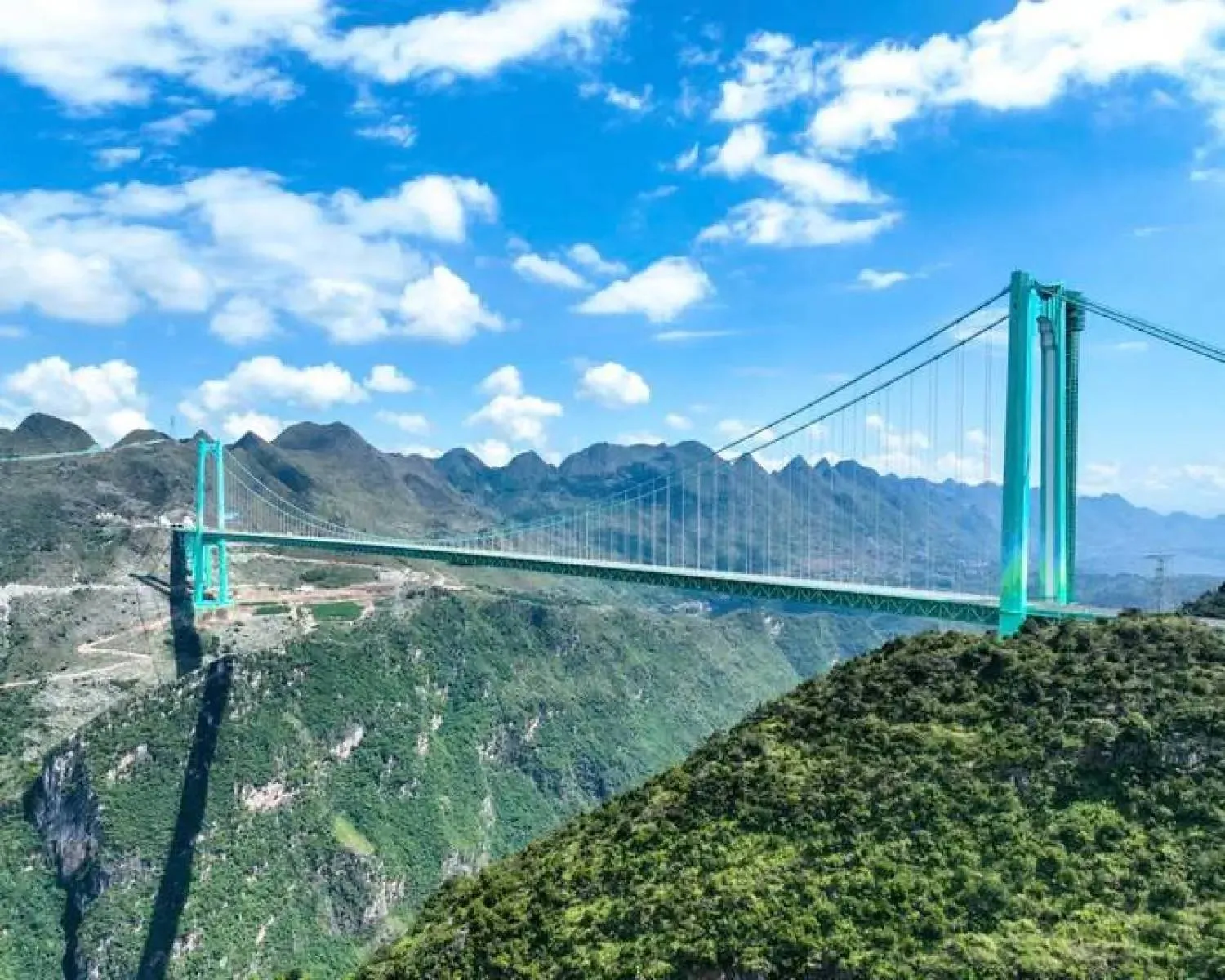
Huajiang Grand Canyon Bridge is the world’s highest, according to Guinness World Records (Shutterstock) 

Against the towering mountains of southwestern China, a crowd gathered as a young man prepared to bungee jump off the world’s highest bridge.

He stood above a vast canyon, the bridge’s roadway soaring nearly nine times higher above the water than San Francisco’s Golden Gate Bridge. Beyond him, the ancient peaks of Guizhou rolled toward the horizon. Around him, spectators edged closer, phones raised, eager to capture the moment.

First came the safety checks. Strapped into a harness, he stood on a platform beneath the roadway as staff inspected his equipment.

Then he stepped into the air.

For seven seconds, he plunged toward the canyon floor, hundreds of meters below.

Then the huge bungee cord bounced him back. Next came the applause.

It was an extraordinary spectacle, not least because of where it was happening: a towering suspension bridge in one of China’s most mountainous provinces, where an engineering marvel is now an unlikely playground for tourists and thrill-seekers, according to CNN.

Opened in September 2025, the Huajiang Grand Canyon Bridge towers 625 meters above southwestern China’s Beipan River, making it the world’s highest, according to Guinness World Records.

Built to slash a once-arduous journey across the canyon from roughly two hours to just two minutes, the span connects rural mountain communities to China’s wider road network.

From its opening through August 2026, the bridge attracted approximately 3.3 million visitors, according to figures provided to CNN by local officials.

For decades, China has built bridges to conquer its difficult terrain. Huajiang raises a different question: What happens when the bridge itself becomes the vacation spot?

The Huajiang Grand Canyon Bridge stretches nearly 2.9 kilometers across the landscape, its two enormous teal towers rising above a gorge that seems to disappear into the mountains.

But the span’s most unusual feature may be what happens beneath its traffic.

Visitors can enter the structure itself, stepping onto glass observation platforms offering stomach-churning views of the canyon below.

For those seeking something more adventurous, there’s the bungee jump, along with an exposed walkway beneath the road.

For Lin Guoquan, the bridge opened possibilities he could scarcely have imagined for his family’s village.

After years working as a chef in Yunnan, Zhejiang and Guangdong provinces, Lin returned to Guizhou and began converting old houses, including his grandparents’ home, into guest accommodations. He was betting that the new bridge would bring visitors to a place few outsiders had reason to visit before.

The gamble appears to have paid off.

“When we first opened, we only had nine rooms. Now we have expanded to 52, and we still don’t have enough rooms for all our guests,” Lin told CNN.

His business has grown alongside an extraordinary surge in tourism. During the nine-day Chinese New Year holiday in February 2026, more than 300,000 visits were recorded at the bridge’s service area — greater than the population of Buffalo, New York.

For entrepreneurs like Lin, attracting visitors now depends on more than the roads leading into the canyon. It also depends on being able to reach potential guests online.

Mobile coverage in the area was once limited. State-owned telecom operator China Mobile, working with technology giant Huawei, has since expanded the network, adding base stations to handle growing numbers of visitors.

“What people see is this mighty physical bridge,” said Zhou Jianguo, a member of Huawei’s China strategy and business development division. “Yet a bridge in the digital world is equally necessary, and that is our communications network.”

Near the top of the canyon, tourists post from a perch at the other end of the hospitality spectrum.

Unlike Lin’s converted village homes, the 83-room luxury Onaemont Hotel was conceived as part of the larger development project to build a tourism industry around the new bridge.

For Cao Luyao, the hotel’s marketing communications manager, the bigger change isn’t simply how many people are visiting this remote corner of Guizhou—it’s how long they’re staying.

“Tourists no longer just come to see the bridge, they can stay overnight beside it,” Cao said. “This upgrades bridge-centered tourism from quick pass-through visits to immersive overnight stays.”