
An Egyptian government source has denied reports that Egypt has signed a new natural gas deal with Israel, telling Asharq Al-Awsat that recent claims of a potential $20 billion agreement are “incorrect.”
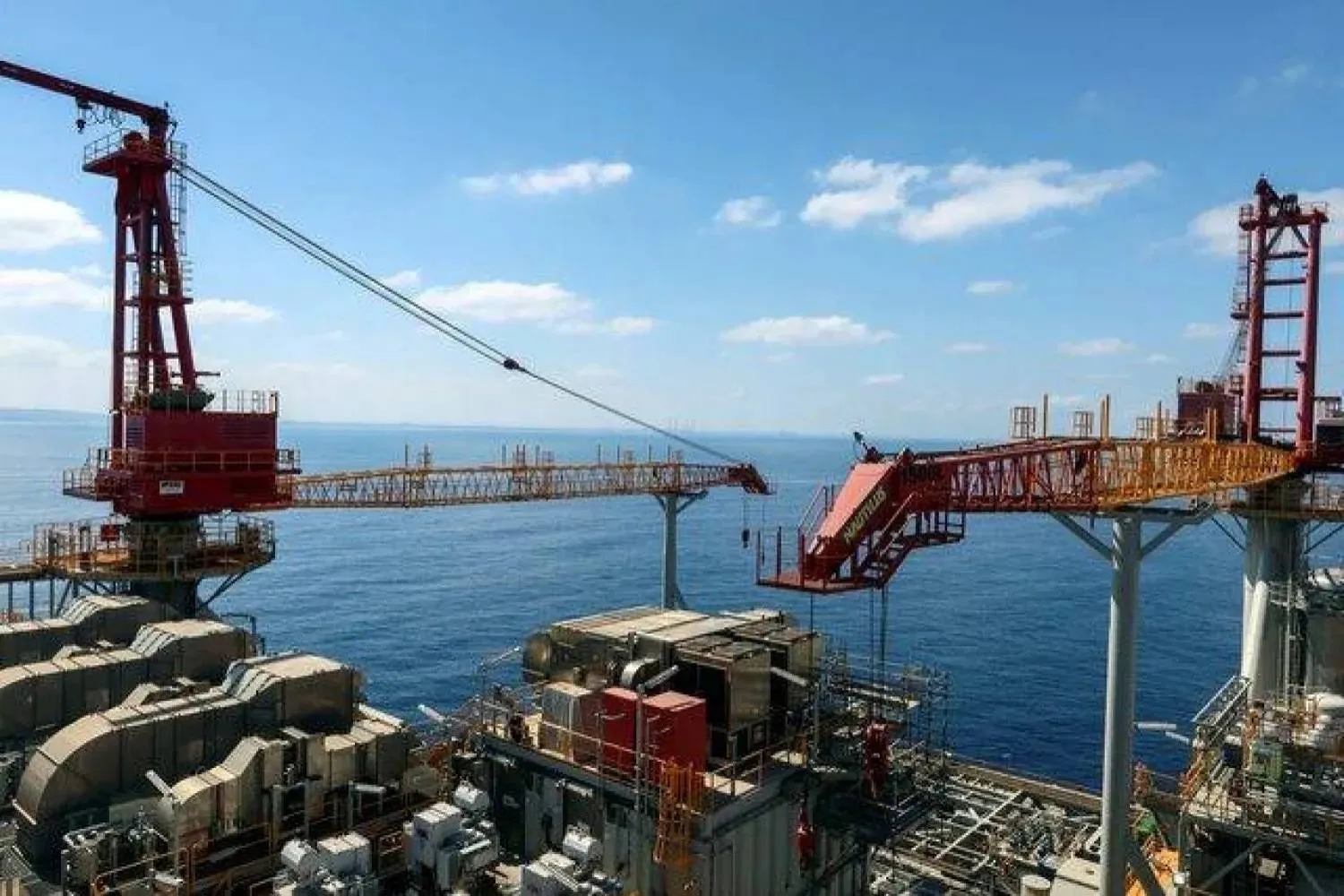
The denial follows a report published on July 24 by the energy industry newsletter Middle East Economic Survey (MEES), which said that Israel’s Isramco and the UAE’s Mubadala Energy had signed a non-binding memorandum of understanding (MoU) with an Egyptian importer to export natural gas from Israel’s Tamar field.
According to the report, the proposed agreement could cover exports of up to 80 billion cubic meters of gas from the Tamar field, with an estimated value of $20 billion. It also said Chevron, the US operator of the field, is expected to join the agreement alongside other Israeli companies.
The Egyptian official, who spoke to Asharq Al-Awsat on condition of anonymity, said the Ministry of Petroleum and Mineral Resources would issue a detailed statement clarifying reports circulated by Arab and local media about the alleged deal.
MEES said the MoU would initially cover the period 2031–2038, with an automatic extension through 2043 if the Tamar production license is renewed, a step the publication described as largely procedural.
The newsletter added that the memorandum remains non-binding and would require a final agreement, approval from the Israeli government, and export licenses issued under Israeli law before it could take effect.
Egypt and Israel signed their first agreement for the supply of Israeli natural gas in February 2018, covering 32 billion cubic meters valued at an estimated $7.5 billion. The deal was amended in October 2019, reducing the volume to 25.3 billion cubic meters over 14 and a half years, with deliveries beginning in the second half of 2020.
In December last year, Israel concluded its largest-ever gas agreement with Egypt, worth up to $35 billion, to export natural gas over a 15-year period. Under the deal, 130 billion cubic meters of gas will be supplied from the Leviathan field, whose reserves are estimated at around 600 billion cubic meters.
Egypt and Israel have maintained gas cooperation for years. Egypt first agreed to export gas to Israel through the Arish-Ashkelon pipeline in 2005, but supplies were suspended in 2012 after repeated attacks on the pipeline in Sinai. Gas flows between the two countries resumed in 2020.
The two countries’ shared border and geographic proximity have given their gas partnership a competitive advantage. In September last year, Egyptian Petroleum Minister Karim Badawi said Israeli gas was “cheaper than gas imported from other regions.”
Despite tensions since the outbreak of the Gaza war in October 2023, Egyptian Prime Minister Mostafa Madbouly said last August that commercial gas agreements with Israel would not affect Egypt’s position on the Palestinian issue.
Egypt’s imports of Israeli gas rose 30.5 percent year on year in May 2026, reaching their highest level in more than a year, according to data published by the Energy Research Unit.
Egypt imported about 1.1 billion cubic feet per day - equivalent to a monthly total of 933 million cubic meters -compared with 843 million cubic feet per day (740 million cubic meters) in May 2025.
Israeli gas flows to Egypt gradually returned to normal beginning in April, following the sharp decline recorded in March as a result of regional tensions stemming from the Iran war.