Houthi Ties with Iraqi Factions Deepen into Operational Alliance

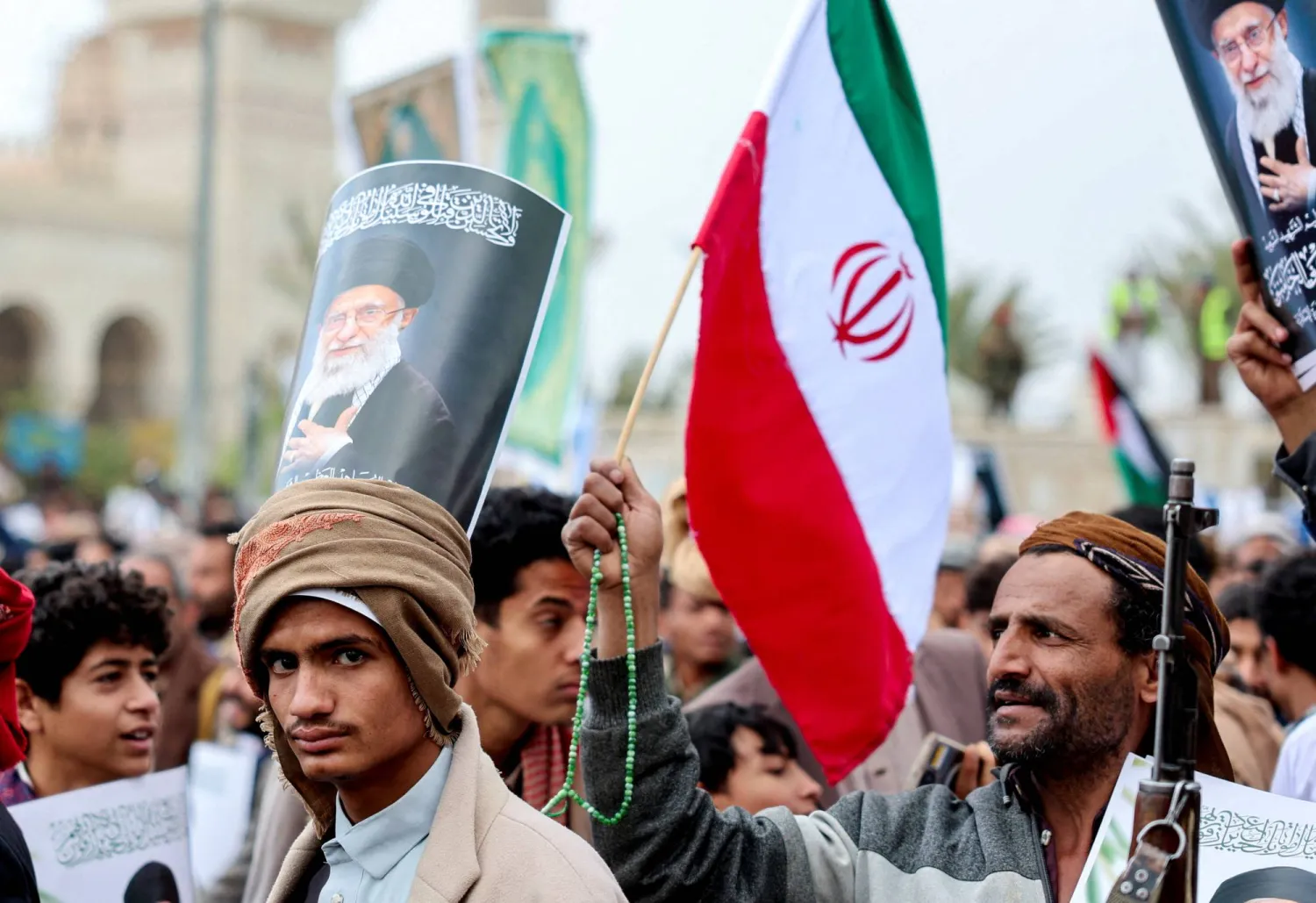
A protester with a poster featuring a picture of slain Iranian Supreme Leader Ali Khamenei on his head joins a demonstration with Houthi supporters in solidarity with Iran and Lebanon, amid the US-Israeli conflict with Iran, in Sanaa, Yemen March 6, 2026. (Reuters)
TT

Houthi Ties with Iraqi Factions Deepen into Operational Alliance

A protester with a poster featuring a picture of slain Iranian Supreme Leader Ali Khamenei on his head joins a demonstration with Houthi supporters in solidarity with Iran and Lebanon, amid the US-Israeli conflict with Iran, in Sanaa, Yemen March 6, 2026. (Reuters)

Ties between Yemen’s Houthi militia and Iran-aligned Iraqi armed factions have steadily deepened in recent years, evolving from political and media coordination into an operational partnership spanning military, logistical, and intelligence activities. The cooperation forms part of the Iran-led “Axis of Resistance”.

Observers said the shift has allowed the Houthis to expand their military network and tap the expertise and capabilities of Iraqi factions. Iraq, meanwhile, has become a key arena for coordination among members of the Iranian alliance on missiles, drones, and logistical support.

Security information indicates that Houthi activity in Iraq is no longer confined to political or media representation. It now includes coordination centers and field operations conducted in coordination with influential Iraqi factions, indicating a more advanced level of integration.

Field reports show that the Houthi mission has reorganized its presence in Iraq in recent years, leaving its public offices in Baghdad and relocating to more secure areas, particularly the Babil province, which is now a main hub for their activities.

Informed sources said the Houthi group operates from Jurf al-Sakhar in northwestern Babil, one of the most prominent strongholds of Iran-aligned armed factions. The area offers a favorable setting for logistical and training activities and lies close to major supply routes.

Houthi personnel move under the protection of powerful Iraqi factions, the sources said, using their security capabilities and logistical networks to transfer personnel and equipment between provinces.

That support gives the group greater freedom to manage its activities in Iraq.

The cooperation includes shared facilities, exchanges of field intelligence, transportation and operational support, strengthening the Houthis’ ability to operate beyond Yemen.
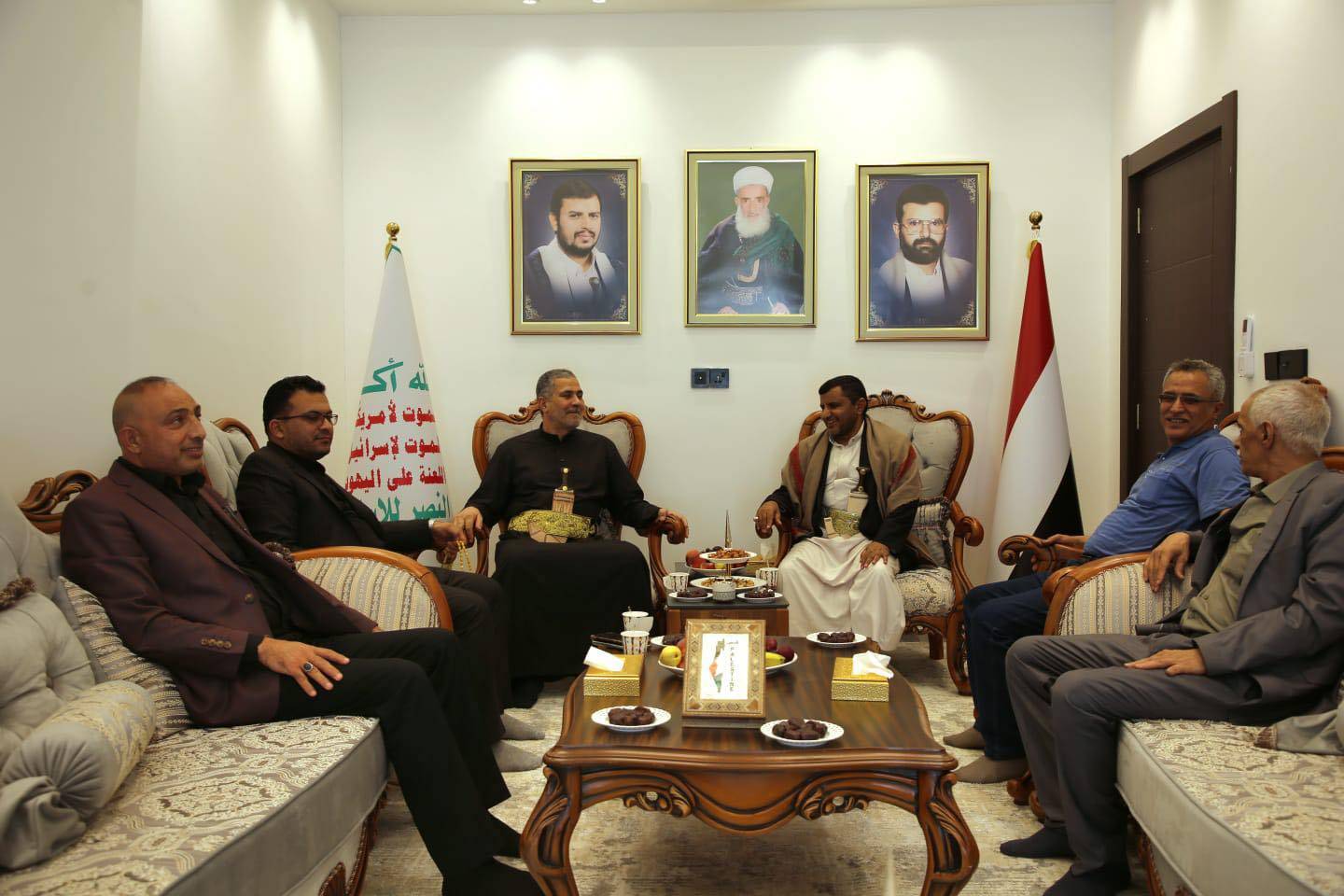
Houthi and Iraqi militia leaders during a meeting. (X)

A multi-role leadership structure

Yemeni and Iraqi sources said the Houthis run their activities in Iraq through a structured network with clearly divided roles covering relations with armed factions and military, financial and ideological affairs.

Abu Idris al-Sharafi heads the Houthi mission in Iraq. He manages relations with Iraqi faction leaders, coordinates with the Popular Mobilization Forces and oversees the group’s broader activities in the country.

Abu Ali al-Ezzi is among the group’s most prominent military experts. He has been tasked with developing and managing drone programs, overseeing training and the transfer of technical expertise, and helping coordinate drone-related operations.

Fadl al-Sharafi manages the mission’s finances and oversees fundraising through charitable fronts, according to the sources. These include the Al-Muwatin Charitable Foundation in Najaf.

Abdulmalik Murtada, also known as Abu Talib, previously represented the group to the Syrian regime. He now manages supply routes and coordinates logistics between different arenas.

The sources also identified a security official known as Abu Hiba, who handles intelligence and security files. His identity and movements remain tightly guarded.

Observers said the division of responsibilities shows how the Houthi presence in Iraq has evolved from a limited operation into a more cohesive structure.

Its political, military, financial and security roles are clearly defined, making it easier to coordinate with Iraqi armed factions and expand cooperation.

Iraqi sources also said figures linked to the Houthis have for years been involved in suspicious financial and commercial activities widely believed to serve as fronts for money laundering and financing the group’s operations in Yemen and the wider region.

The businesses include restaurants, currency exchange offices, transport companies and shipping firms, according to the sources.
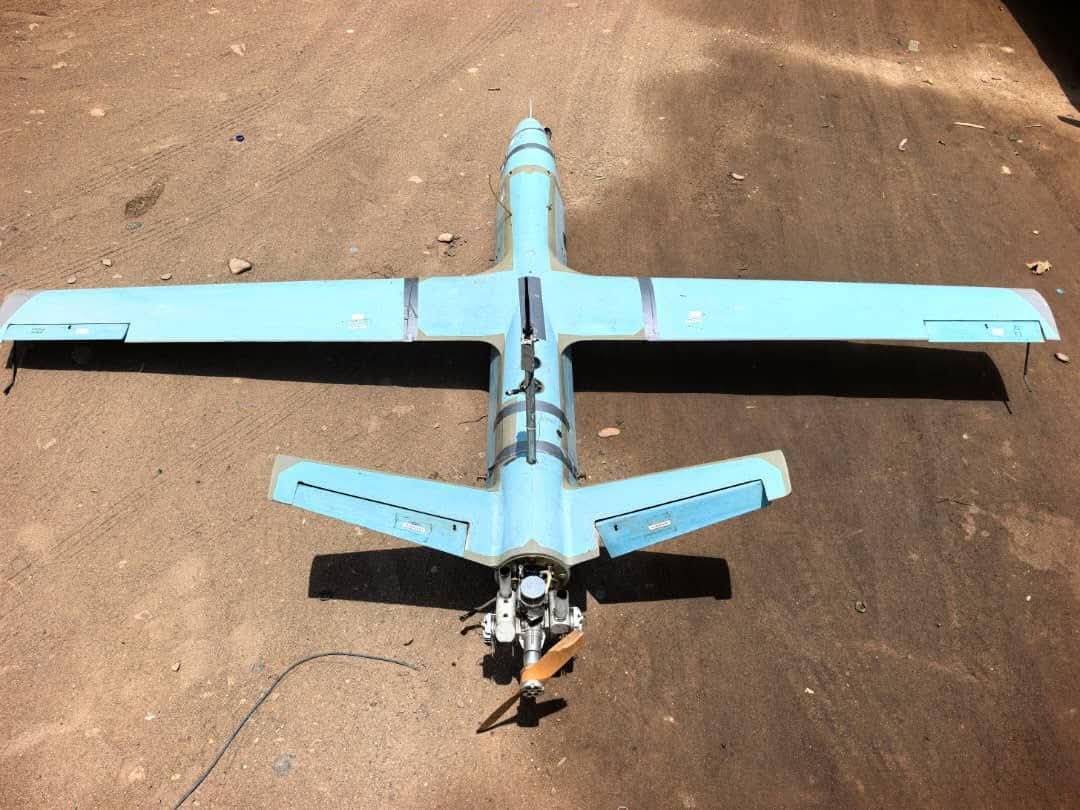
A Houthi drone that was downed by Yemeni government forces on the western coast. (Military media)

Military expertise moves both ways

Experts said the exchange of military expertise is one of the most important pillars of cooperation between the Houthis and Iraqi factions, particularly in drones and long-range missiles, now key weapons in regional conflicts.

Years of war in Yemen have given the Houthis extensive experience in operating drones and refining how they are used.

The Iraqi factions, in turn, provide logistical infrastructure, deployment bases, weapons depots and support networks that help sustain and expand such activity.

Assessments also indicate continued coordination in training and operational planning, enabling both sides to exchange technical expertise and develop attack tactics.

That cooperation has strengthened coordination among alliance members across several arenas.

Observers noted that the military integration is one of the clearest signs of the alliance between the Houthis and Iraqi factions.

Their relationship has moved beyond mutual support towards an operational system built around shared objectives, they added.

The widening cooperation between the Houthis and Iraqi armed militias has raised growing concern among regional countries, particularly amid repeated accusations that Iraqi territory is being used for activities linked to regional conflicts.

The relationship poses a difficult challenge for the government of Iraqi Prime Minister Ali al-Zaidi as it seeks to bring weapons under state control and prevent Iraq from being drawn into foreign conflicts.

Iraq Braces for Possible US-Iran War with Emergency Military, Civilian Plans

A rocket is launched by an Iraqi faction. (Popular Mobilization Forces)
TT

Iraq Braces for Possible US-Iran War with Emergency Military, Civilian Plans

A rocket is launched by an Iraqi faction. (Popular Mobilization Forces)

Iraq has drawn up sweeping contingency plans for a possible military conflict between Washington and Tehran, deploying troops to border cities and giving commanders authority to respond to armed violations without seeking approval from the commander-in-chief, officials said on Friday.

The preparations also include possible shifts to remote learning and measures to accommodate people fleeing conflict zones.

Signs of imminent US strikes on Iran have mounted this week, fueling fears in Baghdad that Shiite armed factions could join the fighting on Tehran's side after updating their list of potential targets.

Borders under watch

A senior security official told Asharq Al-Awsat that Iraq had tightened surveillance of border cities on orders from the commander-in-chief, stepping up field monitoring and round-the-clock assessments of unusual movements.

The measures cover the Iranian border from Sulaymaniyah in Iraqi Kurdistan in the north to Basra in the south, near Kuwait and Iran, as well as army deployments along the Syrian border, said the official, who requested anonymity because he was not authorized to speak publicly.

Military commanders are paying particular attention to Basra amid fears that armed factions could operate in strategically sensitive locations with regional significance, the official said.

Another official, who attended a high-level meeting on the potential fallout from war last week, said Prime Minister Ali al-Zaidi had granted army commanders exceptional powers to confront armed violations by outlaw groups immediately, without referring decisions to him.

The commanders now have "exceptional powers to deter armed groups," the official said.

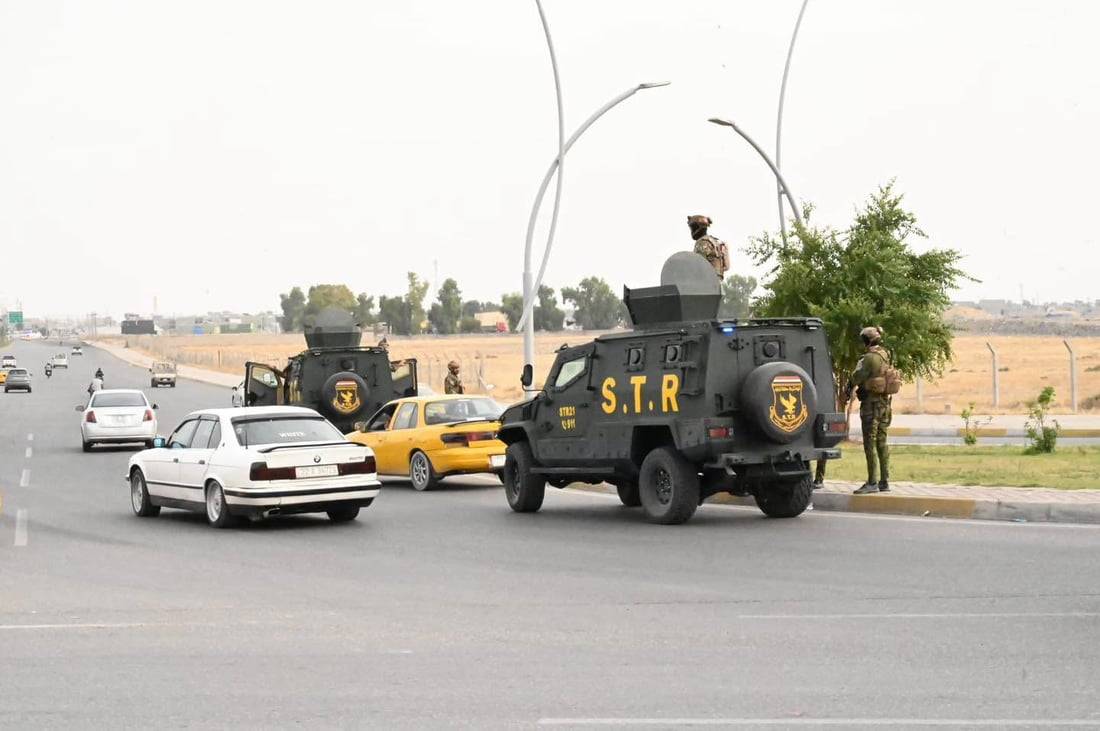
A military patrol in Kirkuk city on Friday. (Iraqi police)

Remote learning

Beyond military precautions, Iraq's Ministerial Council for National Security has discussed emergency measures that could see schools switch to remote learning, sensitive public-sector records moved and digitally preserved, and preparations made for an influx of people fleeing the fighting, a civilian official familiar with the discussions said.

The council, chaired by al-Zaidi as commander-in-chief, includes the national security adviser and the ministers of interior, defense, foreign affairs, finance and planning.

A government source, however, told Asharq Al-Awsat it was too early to decide on changes to schooling or government working arrangements.

The government first drew up emergency plans in March, when the war erupted following the killing of Iranian Supreme Leader Ali Khamenei, and has updated them regularly as circumstances changed, the source said.

Revolutionary Guards update target lists

But political officials speaking to Asharq Al-Awsat this week described an "unprecedented" level of alarm over reports that armed factions had updated their lists of targets on orders from Iran's Revolutionary Guards Corps.

On Wednesday, Iran's Tasnim news agency quoted Esmail Qaani, commander of the IRGC’s Quds Force, as saying resistance leaders had received a message from Supreme Leader Mojtaba Khamenei urging them to "confront the enemy without limits."

They had begun turning that message into action by issuing a written declaration of full allegiance, Qaani said.

One Iraqi official warned that al-Zaidi "could find himself heading the government of a country hostile to the United States if the factions enter the war this time."

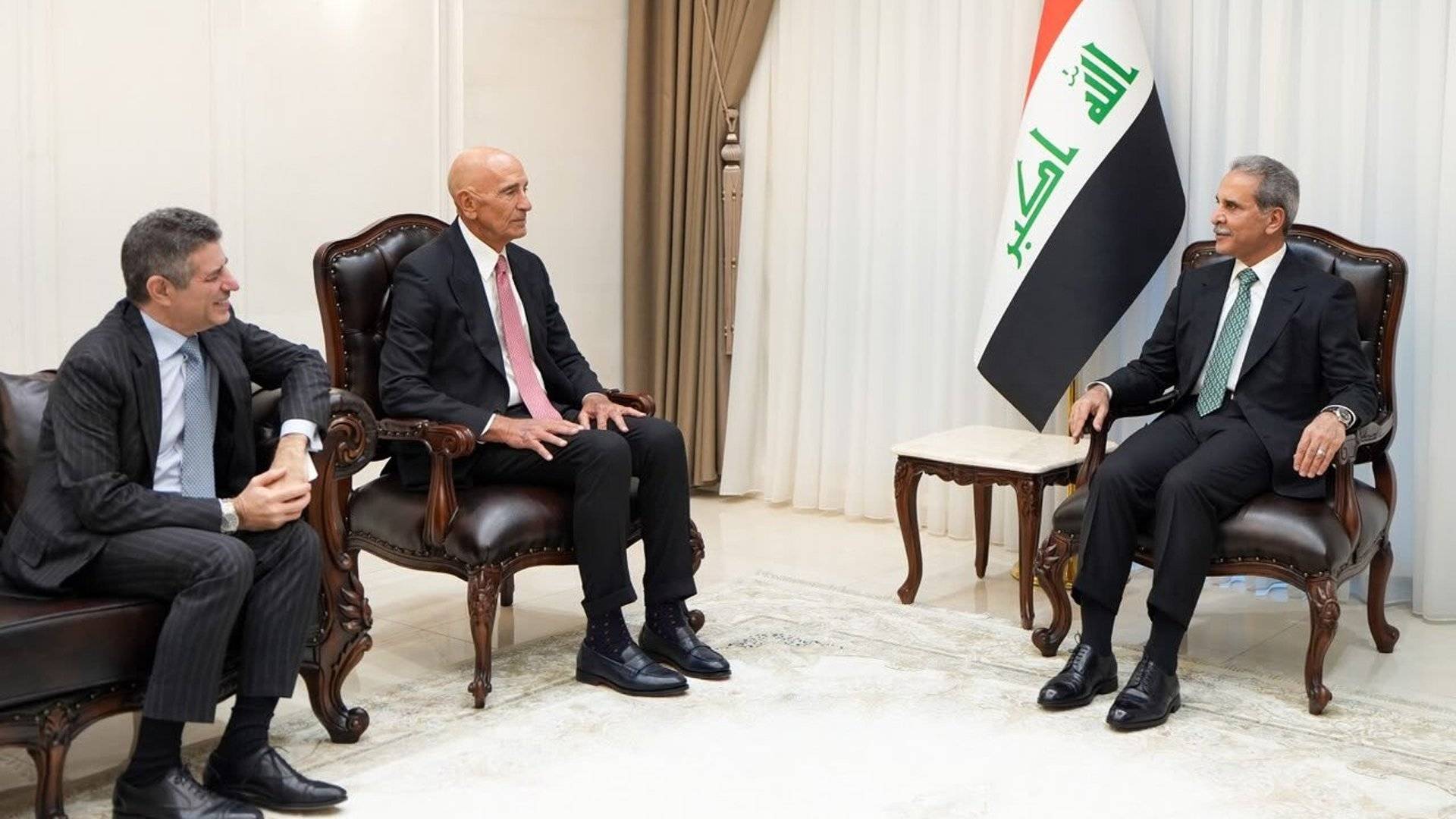
US presidential envoy to Iraq Tom Barrack, in a statement after meeting al-Zaidi on Thursday evening, said the prime minister faced the toughest task of all: containing crises before they escalated.

Al-Zaidi, meanwhile, reaffirmed after a phone call with US President Donald Trump the same day that Iraq would not allow its territory to be used to attack neighboring countries.

Kurdish sources told Asharq Al-Awsat that Barrack was expected to brief officials in Erbil and Sulaymaniyah on Friday evening on the latest developments in the Iran crisis and the prospect of renewed military confrontation.

Head of Iraq's Supreme Judicial Council Judge Faiq Zidan meets with US envoy Tom Brack in Baghdad on Thursday. (Government media)

Ruling alliance fears fallout

Al-Zaidi has also briefed Iraq's ruling alliance on his preparations for possible US strikes.

A political source familiar with the discussions said the prime minister warned the Coordination Framework, which includes the country's leading Shiite political forces, that a US military operation against Iran could be imminent.

He also raised concerns that Iran-aligned factions with ties to parties in the alliance could launch deterrent operations on Tehran's orders.

Al-Zaidi hopes the ruling parties can restrain those groups, the source said, although some within the alliance fear an Iranian defeat could threaten their own political survival.

Kataib Hezbollah faces scrutiny over business interests

The war preparations come amid a stream of reports about the business activities of armed factions, as Baghdad faces mounting pressure to stop the groups from attacking neighboring countries.

Activists known to be close to the factions have circulated details of business networks and companies run by, or linked to, faction leaders and their relatives.

The reports, which are difficult to verify and focus particularly on Kataib Hezbollah, have stirred debate over whether influential actors are trying to undermine the factions' legitimacy by exposing their financial ambitions.

The scrutiny comes as the factions, which have long presented themselves as champions of resistance in Iraq, appear poised to join a military confrontation alongside Iran.


Houthi Ballistic Missile Attack Leaves Civilian Casualties in Taiz

Yemeni fighters sit on a pick-up truck mounted with a heavy machine-gun as they hold a position during clashes with Iran-backed Houthis in Yemen's northwestern Al-Jawf province on November 2, 2026. (AFP)
TT

Houthi Ballistic Missile Attack Leaves Civilian Casualties in Taiz

Yemeni fighters sit on a pick-up truck mounted with a heavy machine-gun as they hold a position during clashes with Iran-backed Houthis in Yemen's northwestern Al-Jawf province on November 2, 2026. (AFP)

Operation Dawn of Yemen has entered its second month, backed by presidential assurances that offensives will persist until state institutions are fully restored.

Meanwhile, a Houthi ballistic missile strike caused multiple deaths and injuries in Taiz, drawing immediate condemnation from the Yemeni government, which labeled the attack a "war crime."

The broader military confrontation has shifted into a volatile new phase of escalation as heavy fighting expands between government forces and the Houthis across the Taiz, Lahj, Marib, and Al-Jawf governorates. The widening conflict has heightened international concern for civilian safety and the security of vital shipping lanes in the Red Sea.

Chairman of Presidential Leadership Council Dr. Rashad Al-Alimi stressed in a council statement on Thursday that military operations will continue until their declared objectives are achieved, chief among them ending the Houthi coup, restoring state institutions, and extending state authority over the entirety of Yemeni territory.

The council said that since October 5, the armed forces have conducted more than 40,000 military targeting operations across various fronts. According to its tally, these operations resulted in neutralizing around 20,000 of the Houthi leaders and members, as well as destroying and disabling more than 5,000 military vehicles and pieces of equipment.

These figures reflect the vast scale of military operations conducted during the first month, while fighting continues across multiple axes, it added.

Several battles

On the ground, government forces recaptured key military positions in the Al-Sarari area and the Sanamat area of Al-Misrakh district in southwest Taiz governorate.

The field advances were achieved during offensive operations launched with the support of the Popular Resistance. The ground maneuvers coincided with a series of airstrikes and drone strikes targeting Houthi positions, troop gatherings, and combat vehicles.

Local sources said warplanes carried out a wave of airstrikes at dawn on Friday, hitting Houthi concentrations, fortifications, and hardware across the Hayfan district and the vicinity of Al-Turbah city. An official casualty and equipment damage toll from the aerial strikes has not yet been disclosed.

Numerous areas across Lahj governorate witnessed fierce fighting, which were concentrated on the frontlines of the Al-Zuraiqah region.

Military sources revealed that the Houthis executed a flanking attack targeting five positions, before defending forces, supported by the resistance, managed to recapture two of them.

Meanwhile, fighting continued in the Al-Madaribah district and the Kahboub mountains overlooking the Bab al-Mandeb Strait.

The fighting in Al-Zuraiqah resulted in the killing of 11 personnel from the joint forces and the injury of 23 others, according to an initial field toll. Casualty figures among the Houthis remained unknown, while fighting continued along with the arrival of military reinforcements from both sides.

The escalation expanded to the Marib and Al-Jawf governorates, where government forces announced advances across the Al-Dahidha heights and the Huwayshan mountains in eastern Al-Jawf.

Troops seized control of several positions, fortifications, and weapons during operations aimed at clearing the route toward the city of Al-Hazm.

Another massacre in Al-Waziyah

On the west coast, the Yemeni government's announcement that the Houthis used a United Nations building in the Al-Mokha district as a military operations center and a missile launchpad has triggered fresh concerns regarding the safety of humanitarian facilities and UN personnel.

The Ministry of Planning and International Cooperation warned that the group is exploiting the legal immunity of UN headquarters to cover its military activities, demanding that the UN investigate these accusations and work to evacuate gunmen and weapons from the building. The allegations could not be independently verified.

In another development, several people were killed and injured following an attack targeting the Al-Hadara popular market in the Al-Waziyah district in western Taiz, on Friday.

The health ministry of the unrecognized Houthi administration reported that at least 20 people were killed and 15 others wounded, while local authorities in Taiz blamed the militia for the attack.

Officials denied the incident was the result of coalition airstrikes, citing operations room reports confirming no military flights took place in the Al-Waziyah district that day.

Yemeni military spokesperson Majid Al-Nuzaili said the Houthis targeted the market with a ballistic missile, resulting in dozens of casualties.

He described the assault as a war crime reflecting the militia’s targeting of civilians following field losses or failed missile launches.


Al-Zaidi Targets 'Intermediary Companies' in Defense Industry Contracts

PM Ali Al-Zaidi during his visit to the Defense Industries Commission. (INA)
TT

Al-Zaidi Targets 'Intermediary Companies' in Defense Industry Contracts

PM Ali Al-Zaidi during his visit to the Defense Industries Commission. (INA)

Iraqi Prime Minister Ali Al-Zaidi has ordered the Defense Industries Commission to bypass intermediary firms and contract directly with manufacturing companies, aiming to curb funding channels linked to armed factions.

The directive seeks to tighten oversight on government procurement by eliminating middlemen networks, which informed sources state serve as vital economic pipelines for various armed groups.

The policy shift arrives amid mounting tension between the government and certain factions, driven by Al-Zaidi’s broader push to restructure the relationship between state institutions and armed formations, including their commercial ventures. Sources familiar with the matter noted that the restriction has sparked significant concern among stakeholders who rely on intermediary networks tied to lucrative state contracts.

During a visit to the Defense Industries Commission on Thursday, Al-Zaidi stressed the "necessity of dealing directly with parent manufacturing companies, and absolutely not dealing with intermediary companies."

According to a statement from his media office, the directive is designed to ensure contract transparency while eliminating intermediary loops and vulnerabilities to corruption.

Al-Zaidi affirmed that Iraq possesses the capability to manufacture its weapons and equipment needs through national expertise, stating that building an advanced defense industry represents a fundamental pillar of national sovereignty. He stressed the importance of research and development, as well as keeping pace with technological advancements in military industries.

The Defense Industries Commission, which replaced the Military Industrialization Commission established by the former regime during the Iran-Iraq War, is one of the state institutions responsible for producing and developing military equipment.

Shadow companies

The government directive has renewed focus on the network of intermediary companies active in state contracting. Sources said that these firms are linked to the economic interests of factions and exploit political and administrative influence to expand their operations inside state institutions.

Some of these companies operate within a network linked to Al-Muhandis Company - one of the formations of the Popular Mobilization Forces (PMF) - or its front companies. Sources said that these entities are used to secure government contracts and provide financial resources to armed groups.

An informed source told Asharq Al-Awsat that these companies serve as "part of a financing mechanism for armed factions operating through two tracks: first, generating revenue from contracting and state procurement, and second, laundering funds to legitimize income derived from illicit activities, including oil and drug smuggling."

The source added that the operations of these firms are not confined to a specific authority or ministry. Instead, they extend across various state institutions, leveraging political and administrative clout to secure government contracts that provide their commercial transactions with official cover.

In the political context, disputes have begun to escalate between certain armed factions and parties within the Coordination Framework. Amid these tensions, factions are accusing political and government forces of cooperating with Al-Zaidi to reduce their economic and security influence in response to external pressures.

A recent wave of reports has emerged highlighting the commercial activities of figures and leaders within armed factions, including Kataib Hezbollah, though the accuracy of these accounts could not be independently verified.

Public debate is intensifying over the shifting role of these factions from their self-proclaimed status as "resistance forces" to entities managing economic interests and commercial influence networks.

This evolution raises questions regarding the exact nature of these commercial ventures, their relationship to the groups' weapons, and the strategic cost Iraq might ultimately incur should these factions decide to drag the country into a broader regional conflict.

Hussein Allawi, an expert in political affairs, said Al-Zaidi's visit to the Defense Industries Commission carried a message regarding the need to protect public funds and developing Iraqi defense capabilities through direct engagement with international companies.

Allawi told Asharq Al-Awsat that the PM is seeking to "strengthen the defense industry file," describing it as one of the sensitive areas that demand transparency and governance to ensure the quality of weapons and equipment used in Iraq.

He added that adopting direct contracts with international corporations, in accordance with applicable commercial laws and regulations, would curb the additional costs borne by the state due to multiple intermediary loops.

Security affairs researcher Mukhlad Hazem said Al-Zaidi's decision is a major step in confronting corporate networks that exploit the influence of political or armed factions to secure government contracts.

Hazem told Asharq Al-Awsat that these networks are not a new phenomenon, but rather have extended their activities over several years.

He revealed that certain groups monopolize massive state contracts to finance their economic entities, without necessarily delivering a corresponding return in terms of product quality or adherence to execution terms.