

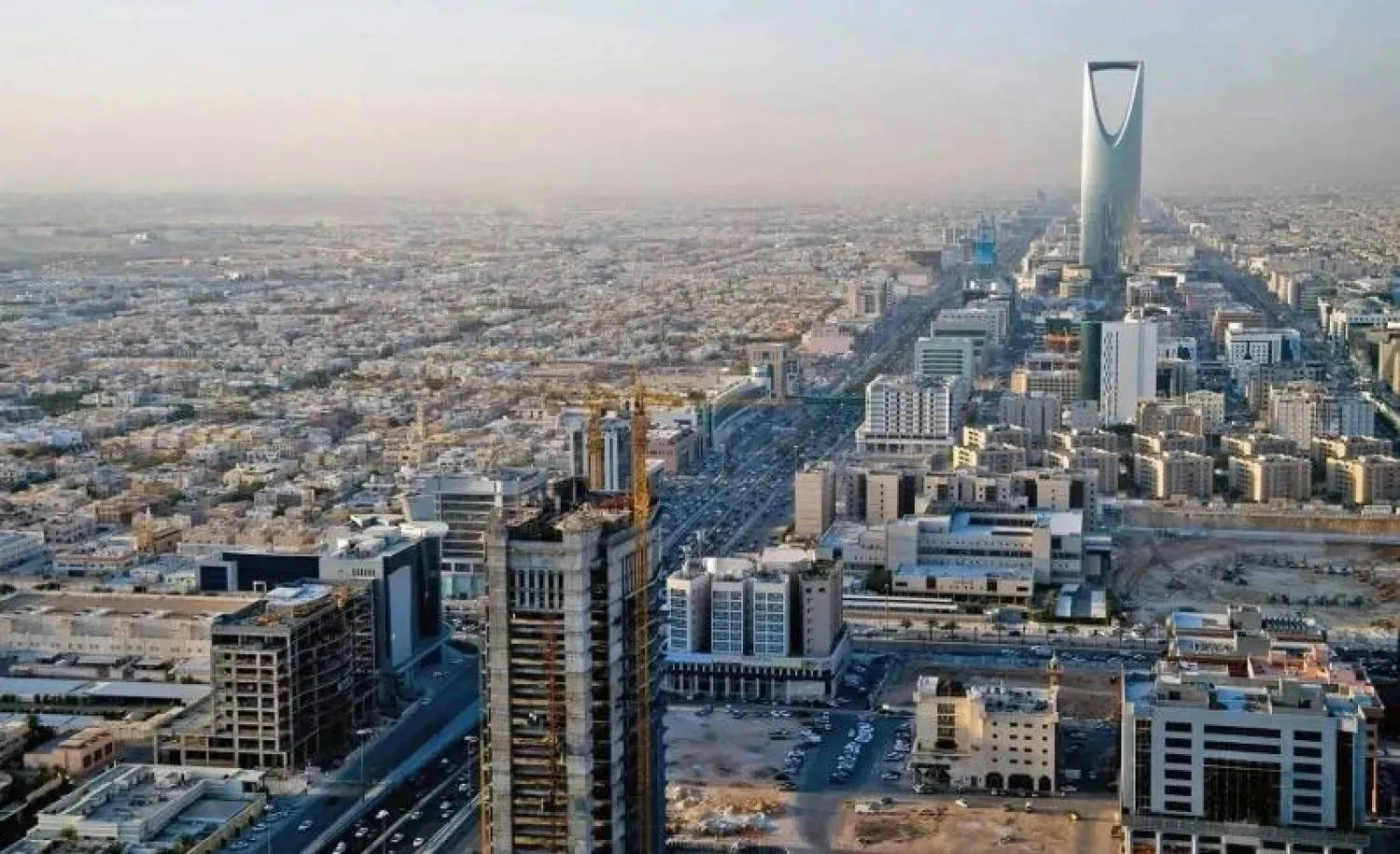

Asharq Al-Awsat Survey: Iran-Backed Iraqi Militias Targeted Six Regional Countries with Drones

Riyadh said it reserved the right to respond at a time and place of its choosing (SPA). 
TT

Asharq Al-Awsat Survey: Iran-Backed Iraqi Militias Targeted Six Regional Countries with Drones

Riyadh said it reserved the right to respond at a time and place of its choosing (SPA). 

Saudi Arabia’s announcement on Wednesday that it had carried out precision strikes against militia targets inside Iraq linked to attacks on the Kingdom’s oil facilities, in coordination with US Central Command (CENTCOM), has refocused attention on the drone campaign waged by Iran-backed Iraqi militias against Saudi Arabia and other Gulf states since the outbreak of the regional war in late February.

An Asharq Al-Awsat survey shows that Gulf states initially sought to address the issue through diplomatic channels with Baghdad before publicly accusing Iraq-based groups of launching attacks from Iraqi territory.

After the first week of the war, Kuwait informed the Iraqi government on March 9, through its ambassador in Baghdad, that some attacks on its territory had originated from Iraq, urging Baghdad to intervene to halt them in order to preserve the fraternal ties between the two countries.

Gulf accusations of attacks launched from Iraq

On April 24, Kuwait’s military announced that two drones launched from Iraq had struck two northern border posts, causing material damage but no casualties.

On May 17, Saudi air defenses intercepted and destroyed three drones that entered the Kingdom’s airspace from Iraq. Riyadh said it reserved the right to respond at a time and place of its choosing.

Later the same day, the UAE Ministry of Defense announced that its air defenses had intercepted two of three drones that entered the country’s airspace from its western border. The third struck an electricity generator outside the inner security perimeter of the Barakah Nuclear Energy Plant, without causing any damage inside the facility. Abu Dhabi called on the Iraqi government to immediately and unconditionally prevent all hostile acts originating from Iraqi territory.

On July 23, Kuwait’s Defense Ministry spokesman, Col. Saud Al-Otaibi, said hostile drones had attacked the Abdali border crossing with Iraq, causing material damage but no casualties.

Two attacks on Saudi Arabia within 24 hours

On Monday, Saudi Defense Ministry spokesman Maj. Gen. Turki Al-Maliki said the Kingdom’s air defenses had intercepted and destroyed several drones that attempted to target oil facilities in the Eastern Province and the Riyadh region. He added that the “terrorist attacks originated from Iraqi territory and were carried out by Iran-backed terrorist militias.”

On Tuesday, Al-Maliki announced that additional drones targeting oil facilities in the Eastern Province had again been intercepted and destroyed. He reiterated that they had been launched from Iraqi territory by Iran-backed terrorist militias and stressed Saudi Arabia’s inherent right to defend itself and its critical infrastructure, while reserving the right to respond at the appropriate time and place.

Jordan and coordinated Arab positions

In Jordan, Royal Jordanian Air Force fighter jets intercepted two drones targeting the country’s territory. Sources told Asharq Al-Awsat that Iran-aligned Iraqi militias were likely behind the launches. Earlier during the 40-day war, Amman had carried out airstrikes inside Iraq against military movements it said threatened Jordan’s national security.

Saudi Arabia, Kuwait, the UAE, Bahrain, Qatar, and Jordan repeatedly called on Baghdad to take immediate action to stop armed factions, militias, and other groups from using Iraqi territory to launch attacks against neighboring countries. In a joint statement issued on March 25, during the early weeks of the war, the six countries said such action was necessary to preserve fraternal relations and prevent further escalation.

GCC condemnations and diplomatic protests

The Gulf Cooperation Council (GCC) issued more than seven statements condemning attacks against Gulf states, including strikes targeting Gulf consulates in Iraq, while reaffirming the bloc’s unity and solidarity.

Separately, Iraqi armed factions claimed responsibility in official statements for attacks on sites inside Gulf countries, explicitly describing them as part of the ongoing war.

Diplomatically, Kuwait, Bahrain, Saudi Arabia, and the UAE summoned Iraq’s ambassadors to protest attacks launched from Iraqi territory. Kuwait repeatedly summoned the Iraqi ambassador during the conflict, while Gulf governments said they had presented documentary evidence and aerial imagery confirming that the attacks had originated inside Iraq.

Saudi strikes followed Iraqi pledge

The developments culminated in the joint Saudi-US airstrikes early Wednesday, which Riyadh said were carried out in exercise of the right to self-defense under Article 51 of the UN Charter. The operation came just days after Iraq, during talks in Riyadh, reaffirmed its commitment not to allow its territory or airspace to be used as a launch pad for attacks against Saudi Arabia, the Gulf Cooperation Council states, or other countries in the region.



Saudi Crown Prince, Pakistani PM Discuss Regional De-escalation, Islamabad Slams Houthi Attacks

Prince Mohammed bin Salman bin Abdulaziz Al Saud, Saudi Crown Prince and Prime Minister, Pakistan’s Prime Minister Muhammad Shehbaz Sharif. (SPA)
TT

Saudi Crown Prince, Pakistani PM Discuss Regional De-escalation, Islamabad Slams Houthi Attacks

Prince Mohammed bin Salman bin Abdulaziz Al Saud, Saudi Crown Prince and Prime Minister, Pakistan’s Prime Minister Muhammad Shehbaz Sharif. (SPA)

Prince Mohammed bin Salman bin Abdulaziz Al Saud, Saudi Crown Prince and Prime Minister, received on Sunday a phone call from Pakistan’s Prime Minister Muhammad Shehbaz Sharif, with whom he discussed regional developments and diplomatic efforts to de-escalate tensions.

Sharif condemned the Houthi militia's attacks targeting Saudi Arabia, slamming the flagrant violations of Saudi sovereignty and territorial integrity, and reiterating Pakistan's full solidarity with the Kingdom.

He also condemned attacks on Saudi Arabia's vital oil infrastructure. He praised the Kingdom's restraint and its support for Iraqi government efforts to prevent the use of its territory to launch attacks against the Kingdom and neighboring countries.


Saudi Arabia: Houthi Projectile Falls in Jazan’s Al-Tuwal, Injures Two, Damages Mosque

A mosque in Al-Tuwal, Jazan, was damaged in the attack. (Asharq Al-Awsat)
TT

Saudi Arabia: Houthi Projectile Falls in Jazan’s Al-Tuwal, Injures Two, Damages Mosque

A mosque in Al-Tuwal, Jazan, was damaged in the attack. (Asharq Al-Awsat)

Saudi Arabia's General Directorate of Civil Defense said on Saturday civil defense teams in the Al-Tuwal Governorate in the Jazan Region “responded to an incident involving a projectile launched by the terrorist Houthi militia, resulting in two injuries and material damage to a mosque, several buildings, and vehicles.”

The directorate stressed that the “targeting of civilian objects is a flagrant violation of international humanitarian law”, adding that the established procedures for such incidents were carried out.

The attack “is a reflection of the criminal terrorist extremist militia that rejects all peace efforts and is a threat to regional and international security and stability.”

Damaged is sustained to a building following the Houthi attack. (SPA)

Iraqi militias struck the East-West pipeline on Thursday, reflecting the terrorist groups’ reckless practices.

Attacks on places of worship reflect the nature of terrorist groups that disregard the sanctity of places of worship and international laws that protect civilian areas.

Saudi Arabia has stressed its right to take all necessary measures to defend its sovereignty and national gains, and security of its citizens and residents in line with international law.

The Yemeni government reiterated on Saturday its strong condemnation of the repeated Houthi attacks on Saudi Arabia.

Two people were injured in the attack. (Asharq Al-Awsat)

It said launching those attacks from Yemen is a violation against the interests of the Yemeni people and exposes the foreign agenda followed by the Iran-backed Houthis.

It expressed its appreciation for Saudi Arabia’s sincere stances and political, economic, humanitarian and military support it offers Yemen and its legitimate leadership.


Several Countries, Regional Organizations Condemn Attacks on Saudi Arabia’s East-West Oil Pipeline

File photo of the Saudi flag/AAWSAT
TT

Several Countries, Regional Organizations Condemn Attacks on Saudi Arabia’s East-West Oil Pipeline

File photo of the Saudi flag/AAWSAT

Several countries and regional organizations have condemned attacks targeting Saudi Arabia’s East-West oil pipeline, voicing solidarity with the Kingdom and rejecting attacks on critical energy infrastructure.

Türkiye, the Yemeni Cabinet strongly condemned the drone attacks launched from Iraqi territory targeting the East-West oil pipeline in Riyadh and Madinah regions of Saudi Arabia, the Saudi Press Agency reported on Saturday.

In a statement, the Turkish ministry of foreign affairs affirmed Türkiye's support for Saudi Arabia's sovereignty and territorial integrity, commending the Kingdom's restraint and its efforts to avoid escalating tensions in the region.

The ministry renewed its call for an immediate end to such attacks, which threaten regional security and stability, and urged all parties to refrain from any steps that could further escalate tensions.

The Yemeni Cabinet reiterated the government's strong condemnation of the renewed Houthi attacks on Saudi Arabia, affirming Yemen's full solidarity with the Kingdom and its legitimate right to safeguard its security, citizens, and national resources.

During a meeting held Sunday in Aden and chaired by Prime Minister Dr. Shaya Al-Zindani, the cabinet stressed that the use of Yemeni territory as a platform for attacks against Saudi Arabia constitutes an assault on the interests of the Yemeni people before posing a threat to neighboring countries and reflects the nature of the foreign agenda under which the Houthi militia operates.

The Yemeni Cabinet also expressed the government's appreciation for Saudi Arabia's steadfast positions and for the political, economic, military, and humanitarian support the Kingdom provides to Yemen and its legitimate leadership.

Also, Sudan, Palestine, The Arab League issued statements condemning the attacks.
