




Oil prices gained Wednesday and Asian shares were mostly trading lower as South Korea’s Kospi extended its losses after falling more than 16% over the past two days led by artificial intelligence-related stocks.
Crude prices remain volatile after the US said early Thursday it had conducted a “heavy wave” of strikes against Iran, responding to an attack on a US base, The Associated Press said.
US futures edged higher after losses on Wall Street.
In South Korea, recent drops in its benchmark Kospi, a big beneficiary of the global boom in AI, have been seen by some analysts as a reflection of broader doubts about massive investments by technology giants in expanding AI capacity.
The Kospi was swinging on Thursday and ended 1.2% lower at 5,593.56, after falling 10.8% on Tuesday and nearly 6% on Wednesday. The benchmark has fallen more than 38% from its all-time closing high of more than 9,100 in June, though it's still up nearly 30% so far this year.
Samsung Electronics fell 0.7%, even after the South Korean technology giant reported a record operating profit for the latest quarter, largely in line with estimates.
Chipmaker SK Hynix lost 5.6% after sinking more than 9% on Wednesday, when it also reported a record quarterly operating profit, which ballooned nearly sixfold. That was still lower than what analysts had expected, and disappointed investors dumped its shares.
In Tokyo, the Nikkei 225 gained 0.7% to 61,867.43, recovering some of its losses after falling 1.5% a day earlier. Open-AI investor SoftBank Group fell 2.5%. But computer chip equipment maker Tokyo Electron climbed 4.5%. Memory chipmaker Kioxia Holdings added 2.9%.
Taiwan’s Taiex, which was also lifted by the AI boom, closed 0.3% lower. Its leading chipmaker TSMC edged up 0.2%.
AI stocks including in South Korea, Taiwan and Japan have faced volatility over doubts about tech firms' massive spendings on AI infrastructure and if that can generate sustainable returns, said Chi Lo, senior market strategist of Asia-Pacific at BNP Paribas Asset Management, in a commentary Thursday.
The recent realization “of China’s AI as a serious competitor to the current AI market leaders has triggered (and) aggravated these concerns again,” he said.
Hong Kong’s Hang Seng edged up 0.2% to 25,857.11. The Shanghai Composite index lost 0.7% to 3,801.67.
In Australia, the S&P/ASX 200 slipped 0.8% to 8,967.70.
India’s Sensex was less than 0.1% higher.
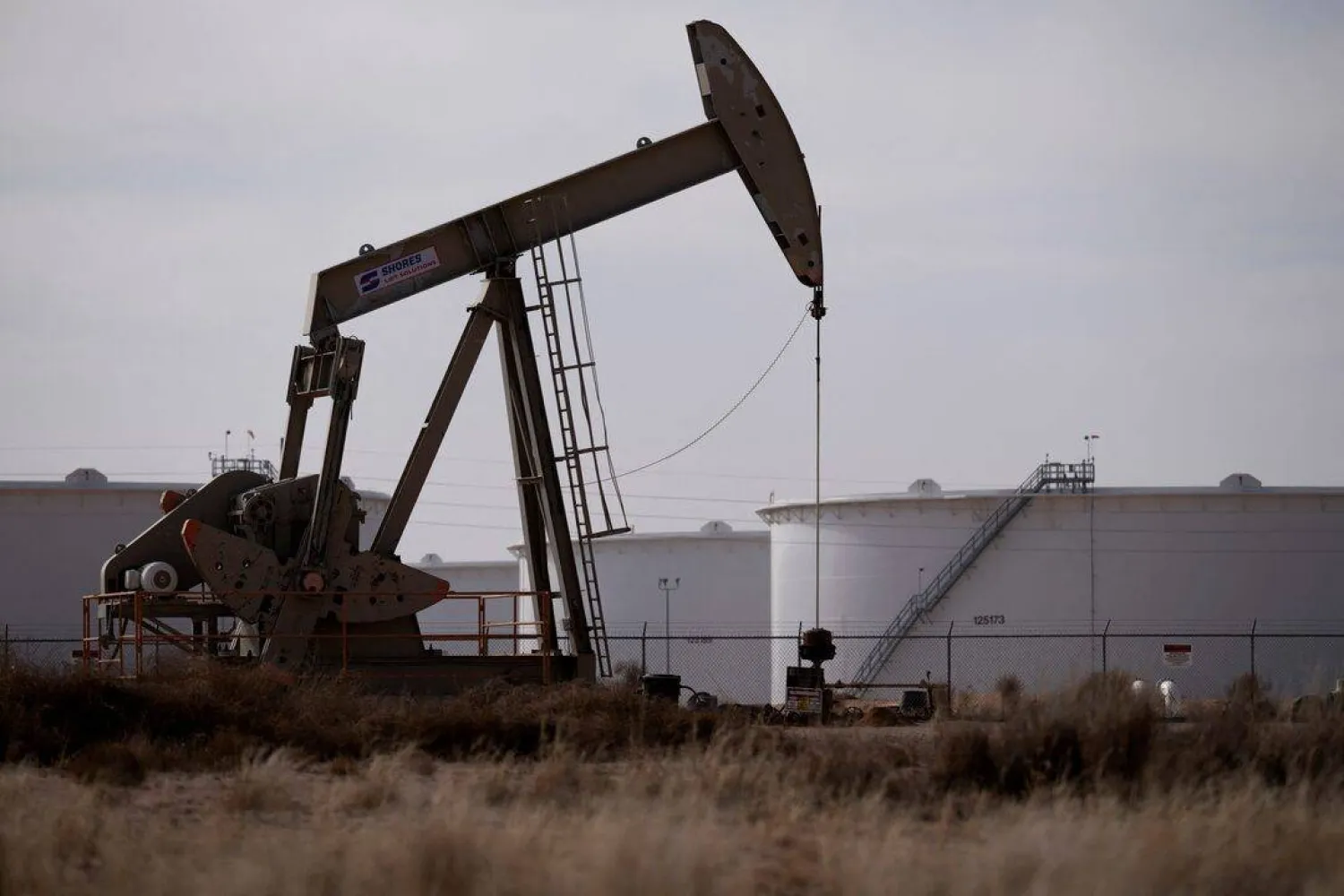
Oil prices were higher after falling earlier Thursday as the US and Iran resumed exchanging attacks. US President Donald Trump said the US would hit Iran “very hard,” after it targeted a US base in Jordan. Maritime traffic in the Strait of Hormuz, a crucial waterway for oil transport, remains limited, putting pressure on global supplies.
Brent crude, the international standard, rose 0.6% to $88.60 per barrel. It was trading around $72 a barrel in late February, before the war began.
Benchmark US crude was 0.3% higher at $84.70 per barrel.
In the US on Wednesday, the benchmark S&P 500 dropped 1.5% to 7,316.15. The Dow Jones Industrial Average fell 2.2% to 51.594.14, and the technology-heavy Nasdaq composite lost 1.7% to 24,442.94.
Several chipmaking big names fell. Nvidia lost 3.6% and AMD, or Advanced Micro Devices, shed 5.5%. Broadcom declined 2.8%.
The US stocks traded lower also after the Federal Reserve decided to hold interest rates steady even as some members on the policymaking committee wanted to raise rates.
The Fed’s chairman, Kevin Warsh, reiterated his commitment to get inflation back to 2% following years of faster-than-hoped increases in prices, but he also stuck to his plan of giving financial markets fewer clues about what the Fed may do with interest rates in the near future.
With less guidance from the Fed, financial markets may be set for more volatile trading amid the uncertainty.
“Did the Fed take an explicit change in its policy rate today?” Warsh asked rhetorically in a news conference following the Fed’s decision. “No, but I think that’s the beginning of the story.”
In the bond market, the yield of the US 10-year Treasury was at 4.68%, up from 4.61% late Tuesday.
In other dealings early Thursday, the US dollar rose to 163.60 Japanese yen from 163.41 yen. The euro was trading at $1.1443, down from $1.1467.


