


Gulf Economies Cushion Impact of Steady US Rates with Oil, Strong Public Finances

Gulf economies absorb the impact of elevated US interest rates, supported by strong public finances and higher oil prices (Internet)
TT

Gulf Economies Cushion Impact of Steady US Rates with Oil, Strong Public Finances

Gulf economies absorb the impact of elevated US interest rates, supported by strong public finances and higher oil prices (Internet)

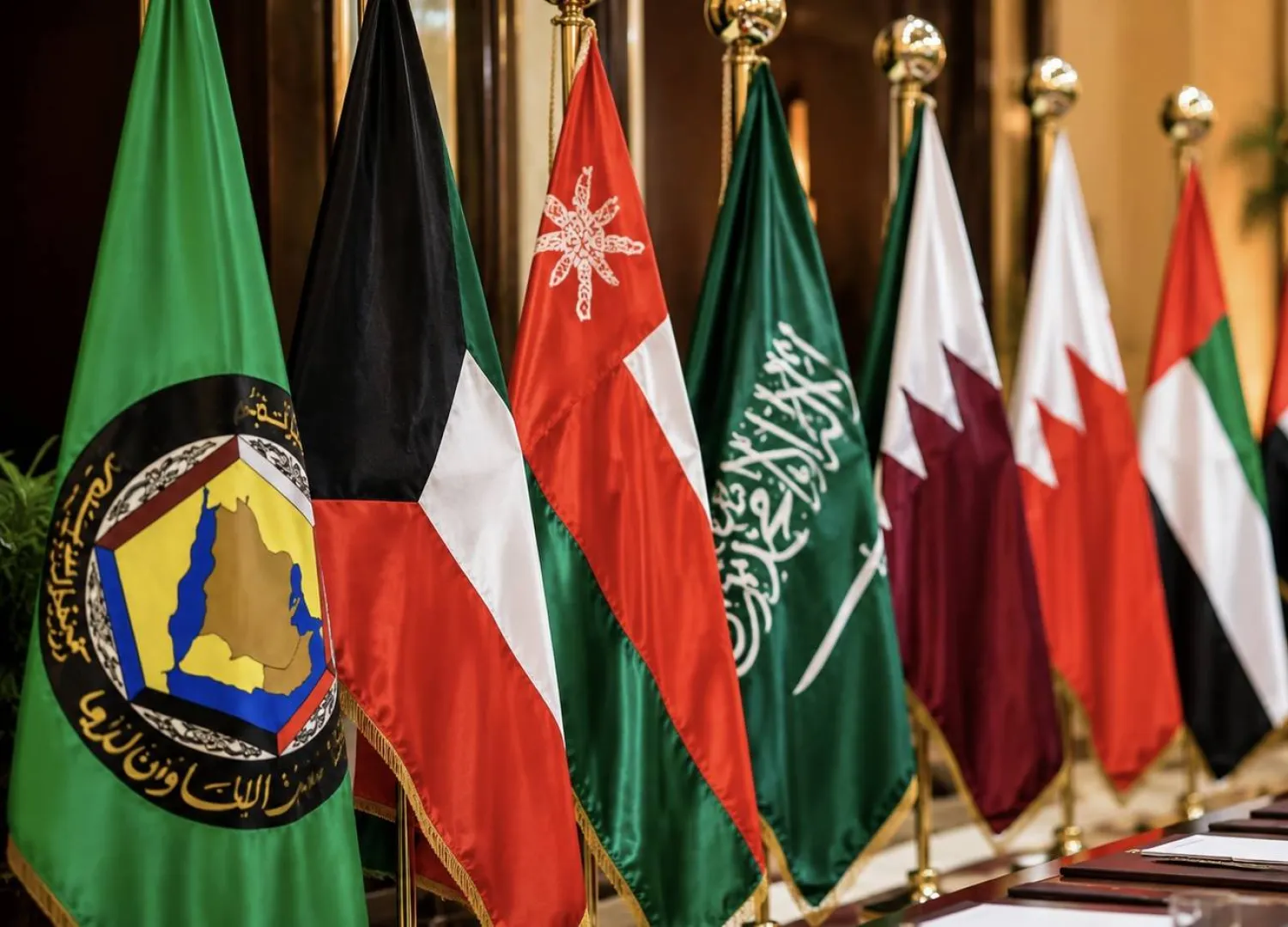
The Gulf economies are well positioned to absorb the impact of the US Federal Reserve's decision to keep interest rates at elevated levels, supported by strong government finances, higher oil prices, and continued momentum in economic diversification programs and infrastructure investment.

While the peg of most Gulf currencies to the US dollar requires monetary policy in the region to move broadly in line with Washington, strong oil revenues and sustained investment spending provide room to contain the pressure of elevated financing costs.

Experts who spoke to Asharq Al-Awsat said the Federal Reserve's decision to keep interest rates unchanged at 3.50% to 3.75% provides Gulf economies with greater stability and clarity regarding financing costs, despite continued pressure on the sectors most sensitive to interest rates, particularly real estate, construction, and retail. At the same time, higher oil prices support public finances, while banks and depositors benefit from higher returns, strengthening the region's ability to cope with the continuation of tight US monetary policy.

Monetary Stability

Hamza Dweik, Head of Trading for the Middle East and North Africa at Saxo Bank, said the Federal Reserve's decision to leave interest rates unchanged at 3.50% to 3.75% provides a degree of stability for Gulf economies, particularly given that most Gulf currencies are pegged to the US dollar.

Accordingly, Dweik expects Gulf central banks to maintain their current monetary policy stance to preserve alignment with US policy.

Although elevated financing costs continue to weigh on credit growth and interest rate sensitive sectors such as real estate and discretionary spending, Dweik believes Gulf economies remain in a relatively strong position, supported by solid government balance sheets, continued momentum in economic diversification programs, and ongoing infrastructure investment.

In the banking sector, he expects regional banks to continue benefiting from relatively high net interest margins as long as interest rates remain elevated.

High Financing Costs

Madhur Kakar, Founder and CEO of Elevate Financial Services, said the Federal Reserve's decision directly affects Gulf monetary policy through the region's currency pegs to the US dollar.

He noted that the Central Bank of the UAE kept its base rate unchanged at 3.65%, while the central banks of Qatar and Bahrain followed the same approach. Saudi Arabia also maintained its repo rate at 4.25%.

Kakar said the real significance of the decision lies not in holding rates steady itself, but in the underlying balance of risks. Three members of the Federal Open Market Committee voted in favor of raising interest rates, reflecting a division within the Fed that leans toward tighter monetary policy, while futures markets have priced in a higher probability of additional tightening before the end of the year.

"For the Gulf, this means the era of waiting for cheap money is over for 2026," he said, adding that financing costs will remain elevated for interest rate sensitive sectors such as real estate, construction, and retail.

However, Kakar also pointed to a positive factor, noting that Brent crude prices rose by more than 20% during July, making current interest rate levels beneficial in containing imported inflation while preserving the attractiveness of returns on Gulf deposits and sukuk.

Neutral Impact

Vijay Valecha, Chief Investment Officer at Century Financial, believes the Federal Reserve's decision has an overall balanced, or largely neutral, effect on Gulf economies, with a slight positive bias in the near term.

He said markets had been pricing in the possibility of one to three rate cuts, meaning the decision to leave rates unchanged effectively removed concerns about an immediate increase in borrowing costs for regional borrowers, an especially important factor for small and medium-sized enterprises as well as mid-sized companies.

He added that certainty regarding the direction of financing costs plays a greater role in guiding capital expenditure, working capital, and capital raising decisions than the absolute level of interest rates.

Because the Saudi riyal, UAE dirham, Bahraini dinar, and Qatari riyal are pegged to the US dollar, Gulf central banks moved in parallel. Valecha noted that the Central Bank of the UAE kept its benchmark rate at 3.65%, while the Saudi Central Bank (SAMA) maintained its repo rate at 4.25%.

He added that benchmark interbank rates such as EIBOR and SAIBOR have remained at levels borrowers have already adapted to over five consecutive policy meetings, limiting the marginal impact of the latest decision.

On the fiscal side, Valecha said higher oil prices, combined with geopolitical tensions in the Middle East, the same factors prompting the Federal Reserve to remain cautious, continue to support Gulf budgets and hydrocarbon revenues.

According to Valecha, banks benefit from wider net interest margins, while corporate treasury departments and retail depositors continue to earn attractive returns on dirham- and riyal-denominated deposits.

Potential drawbacks, however, are emerging for sovereign borrowers and major corporations. Yields on 30-year US Treasury bonds have climbed above 5.2%, increasing the cost of pricing US dollar-denominated sukuk and bond issuances for major regional issuers. With the September meeting still leaving open the possibility of another rate increase, Valecha said the current period of stability should not be viewed as permanent.

Oil and the Dollar

Looking ahead, Dweik said geopolitical developments and supply conditions will remain the primary drivers of Brent crude rather than any direct effect from the Federal Reserve's decision.

He noted that the US central bank itself identified energy supply shocks and geopolitical tensions in the Middle East as factors fueling inflation, underscoring the importance of crude prices in shaping the global economic outlook. For Gulf economies, stable and resilient oil markets remain a key safeguard for fiscal stability and government spending plans.

Kakar agreed that geopolitical factors will continue to be the main driver of oil markets, with tensions between the United States and Iran and developments surrounding the Strait of Hormuz shaping market dynamics. The impact of higher interest rates for longer, he said, will mainly be to limit gains by weakening demand expectations.

Valecha likewise expects oil prices to remain positive in the short term, driven more by geopolitical developments than monetary policy. He noted that Brent and West Texas Intermediate crude both jumped more than 7% following the latest escalation in the Middle East, highlighting that supply disruption concerns continue to outweigh worries about demand.

He added that higher energy prices could keep global inflation elevated, reducing the likelihood of near-term US interest rate cuts.

Gold and Metals

In currency markets, the experts expect steady interest rates to support the strength and stability of the US dollar as expectations for monetary easing decline, reinforcing the stability of Gulf currencies pegged to it. The impact is expected to be more pronounced in financing costs and market sentiment than in exchange rate movements. Persistently high US yields may also continue attracting capital flows into dollar-denominated assets.

Gold faces mixed forces. Higher interest rates and a stronger dollar weigh on the non-yielding metal, while geopolitical tensions, inflation concerns, and central bank purchases continue to support safe haven demand.

The experts expect gold to remain highly sensitive to inflation data and developments in the Middle East, with the potential for additional pressure if expectations for tighter monetary policy increase.

For industrial metals, copper and aluminum are expected to remain tied to global growth prospects. Continued economic activity supports demand, but elevated interest rates raise financing costs and weigh on cyclical industrial sectors. At the same time, the medium-term outlook remains supported by structural demand driven by electrification projects, renewable energy, and artificial intelligence infrastructure.



World Bank: $12 Billion Needed Annually to Turn Food Security into an Economic Opportunity

TT

World Bank: $12 Billion Needed Annually to Turn Food Security into an Economic Opportunity

Ousmane Dione, World Bank Vice President for the Middle East, North Africa, Afghanistan and Pakistan region, speaks to Asharq Al-Awsat. (Turky Al-Agili)

Food security in the Middle East, North Africa, Afghanistan, and Pakistan is no longer merely a question of how much food is available on people’s tables. It has become a broad test of the region’s ability to manage scarce resources, diversify trade, attract investment, create jobs, and withstand geopolitical and climate-related shocks.
In a region where more than 142 million people face food insecurity and 42 percent of the population cannot afford a healthy diet, the challenge becomes increasingly complex: How can more food be produced in one of the world’s most water-scarce regions without exhausting its natural resources?
With food demand expected to rise by about 67 percent by 2050, the World Bank says meeting this demand will require a fundamental shift in how the region manages its resources, particularly water, as well as increased investment in irrigation efficiency and agricultural innovation. The Bank estimates that the region needs approximately $12 billion annually for more efficient irrigation systems and agricultural innovation.
In an interview with Asharq Al-Awsat, Ousmane Dione, World Bank Vice President for the Middle East, North Africa, Afghanistan and Pakistan region said these challenges could be transformed into major economic opportunities if they are addressed as part of an integrated system encompassing agriculture, water, trade, logistics, manufacturing, technology, and the private sector.

Water at the Heart of the Food Equation
According to Dione, any discussion about the future of food in the region must begin with water. Agriculture consumes approximately 87 percent of the region’s water resources, while many countries already face severe water scarcity, with per capita water availability in some cases falling below 500 cubic meters per year, a threshold that reflects acute water stress.
For this reason, the World Bank does not see the solution as merely finding additional water sources. Instead, it calls for rethinking how water is used.
Dione highlights the need to move toward what is known as “closing the loop,” a concept that treats water as part of an integrated economic cycle. Rather than using water once and discarding it, wastewater is collected, treated, and reused in agriculture, industry, and other appropriate sectors, while efforts are made to reduce losses and improve the efficiency of water and irrigation networks.
In this way, water ceases to be a consumable resource and becomes one that can be recycled and reused multiple times, effectively increasing the amount of water available to the economy without increasing natural supplies.
Dione said the region has made significant progress in desalination, but that alone is not enough. Water must be managed as a strategic economic resource rather than merely an agricultural input.
“Every drop of water” in the region, he said, should be used multiple times in pursuit of a closed-loop approach.
Efficient water use also extends beyond food production to preserving food that has already been produced. Every unit of food that is lost or wasted represents wasted water, energy, land, and other resources used in its production, transport, and storage.

A water desalination plant in Iraq. (X)

Producing More with Less Water
Dione believes technology will play a central role in reshaping the food-water nexus, from adopting drip irrigation and reducing leakage and waste to using artificial intelligence and data analytics for more precise agricultural resource management.
Modern technologies can help determine crop water requirements, measure consumption rates, identify crops best suited to specific climatic and geographic conditions, and optimize production cycles for maximum returns with minimum water use.
The World Bank therefore views technology not merely as a productivity-enhancing tool but as a means of redesigning the region’s agricultural map: What should be grown, where it should be grown, how much water should be allocated, and which technologies should be used.
This issue is particularly important in a region where agricultural production cannot simply be increased by extracting more groundwater, as that would place additional pressure on one of its scarcest resources.
The goal, therefore, is not to maximize production at any cost, but to produce more food from every drop of water and generate greater economic and nutritional value from available resources.
“Virtual Water”: Trade as a Tool for Food Security
Dione also introduces an important concept in food security management: Importing food is not necessarily a sign of weak food security.
Imported agricultural products effectively carry with them the water used to produce them in their country of origin, a concept known as “virtual water.”
As a result, it may be more economically and environmentally efficient for a country to import water-intensive crops rather than deplete its own limited water resources producing them domestically.
The challenge arises when dependence on imports becomes excessive and concentrated among a limited number of countries or trade routes.
This is where water security intersects with trade resilience. Countries that rely on imports for part of their food supply must diversify sources and transport routes and ensure their trade systems can withstand external shocks.
The disruptions to global grain trade following the war in Ukraine demonstrated how trade shocks can quickly translate into higher food prices and increased pressure on vulnerable populations.
Consequently, the World Bank argues that the correct approach is not choosing between local production and imports, but creating a more resilient mix: Producing crops that can be grown efficiently in terms of water and resources, importing products that are more water-intensive to grow domestically, diversifying suppliers, and strengthening storage capacity, logistics, and strategic reserves.

Container terminals at Hamad Port in Qatar. (QNA)

Food Waste: Resources Lost Before Reaching the Table
The region faces another major challenge in the form of food loss and waste.
The World Bank estimates that around one-third of food is lost or wasted at various stages of the supply chain, from production and storage to transportation, processing, distribution, and consumption.
These losses are particularly significant in water-scarce regions because wasted food also means wasted water, energy, and land resources.
Reducing waste, therefore, becomes a form of water conservation. Saving food from being lost means extracting greater value from the resources used to produce it without placing additional pressure on those resources.
Efforts to reduce waste begin long before food reaches consumers. They include improving storage facilities, cold-chain infrastructure, transport systems, silos, packaging, and food processing, all of which also represent potential investment opportunities.
Hormuz and the Test of Food Resilience
This issue becomes even more critical given disruptions to regional trade, especially risks related to the Strait of Hormuz.
Dione said disruptions to trade routes threaten not only food availability but also increase food costs, making diversified import sources, transportation routes, and strategic reserves essential components of food security.
Countries therefore need resilient systems capable of withstanding trade disruptions through diversified suppliers, improved ports, warehouses, silos, cold storage facilities, transport networks, and strategic stockpiles that provide time to adapt when supply chains are interrupted.
$12 Billion Annually... Where Will the Investments Go?
But building this system requires substantial capital.
Dione notes that the region needs about $12 billion in additional investment every year, a figure that cannot be achieved through government spending alone. He believes that attracting private-sector participation begins with improving the regulatory and legislative environment, then directing investment toward areas that generate the highest added value.
The issue is not limited to agriculture itself, but to what happens after products leave the farm: storage, processing, packaging, transportation, services, and distribution.
According to Dione, building this integrated value chain is what can make agricultural investment more attractive and generate economic spillover effects across other sectors.

People queue at a bakery in Cairo. (AFP)

From Food to Jobs
The importance of these investments goes beyond food provision and extends to the labor market. The region has a young population, but Dione warns that this “demographic window” will not remain open indefinitely, especially as some countries begin to face population aging.
As a result, developing the food system can create jobs that extend beyond direct agricultural work, including food processing, storage, transport, logistics, services, trade, and technology.
The World Bank estimates that approximately 63 million jobs in the region are currently linked to agrifood systems, with the potential to create an additional 5 million jobs by 2050 through further development of these systems.
Dione argues that agriculture can become a source of income and wealth, rather than merely an activity for producing food, if it is effectively connected to finance, technology, markets, and value chains.
Smallholder Farmers... Into Value Chains
Another challenge, Dione says, concerns smallholder farmers. Large farms generally have greater access to financing and technology, while smallholders often struggle with access to finance, markets, storage facilities, mechanization, and infrastructure.
This is where the World Bank’s AgriConnect initiative comes in. The program aims to help hundreds of millions of smallholder farmers worldwide transition from subsistence farming to more organized, productive, and profitable agricultural production.
Dione explains that organizing farmers into cooperatives can strengthen their ability to obtain financing, purchase inputs, adopt technology, and access markets. However, he emphasizes that the success of this process also requires improving the supporting infrastructure around them, particularly storage, cold-chain facilities, transportation, and processing capabilities.

Vehicles travel along a highway on the outskirts of Kuwait City. (AFP)

Morocco and Jordan... Lessons from Experience
Dione points to examples within the region to demonstrate that increasing agricultural production while reducing water consumption is not merely a theoretical goal.
He cites Morocco, where cooperation with the World Bank has helped develop agricultural areas that rely on modern irrigation technologies and stronger market linkages, while improving water-use efficiency.
He also highlights Jordan, one of the most water-scarce countries in the world, where World Bank-supported projects use advanced water-management and drip-irrigation technologies while achieving high levels of productivity.
The lesson, according to Dione, is that water scarcity does not necessarily mean a scarcity of opportunities when sound policies are combined with technology and investment.
Saudi Arabia... An Opportunity to Build a Regional Hub
At the center of these transformations, Dione believes Saudi Arabia possesses unique advantages that position it to play a regional role in the food system.
He points to the Kingdom’s strategic location, bordered by the Red Sea to the west and the Gulf to the east, giving it a pivotal position in regional trade and logistics connectivity.
In his view, Saudi Arabia’s role need not be limited to importing food for its domestic market. It could expand into processing, packaging, storage, distribution, and re-export activities.
Dione says the Kingdom has the potential to become a regional hub where food products are processed, manufactured, packaged, and then distributed across regional markets. He sees this role as closely aligned with several pillars of Vision 2030, including investments in artificial intelligence, technology, desalination, energy, infrastructure, and logistics.
He adds that Saudi Arabia’s abundant energy resources could provide a strong foundation for developing manufacturing and processing industries, while its geographic location offers significant opportunities for logistics services linked to food flows.
Dione notes that manufacturing, logistics, and distribution could become major sources of job creation, highlighting Saudi Arabia’s opportunity to strengthen its regional leadership in these sectors.
In this context, enhancing food security does not necessarily require producing every type of food domestically. A more efficient approach may be to combine local production where it is economically and water-efficient with diversified imports, strategic food reserves, food processing, and robust logistics infrastructure.

A Saudi farmer harvests wheat on his farm in the southern Asir region. (Asharq Al-Awsat)

Regional Cooperation... Integrating Resources and Markets
Dione believes that some of these challenges cannot be addressed by individual countries acting alone.
Greater regional integration, he argues, would allow for a more efficient allocation of resources: Some countries possess agricultural potential, others have energy resources, advanced infrastructure, ports, logistics capabilities, or large consumer markets.
Improving trade connectivity, strengthening logistics links, making better use of existing infrastructure, and promoting the exchange of knowledge and technology could make the region as a whole more resilient to food and water shocks.
Here, the connection between water, food, and trade again comes to the forefront. A country that lacks sufficient water resources to produce all of its food needs can compensate through trade, provided it diversifies its import sources, maintains flexible transport routes, and holds adequate strategic reserves.
Conversely, countries with abundant water resources, energy supplies, or advanced technologies can focus those assets on higher value-added activities rather than depleting resources to produce goods that can be imported more efficiently.

Pakistani fishermen prepare their nets at the Port of Karachi in Pakistan. (EPA)

From Managing Scarcity to Creating Opportunity
Ultimately, Dione argues that the real challenge facing the region is not only how to feed its population by 2050, but how to build a food, water, and trade system capable of functioning in an increasingly uncertain world.
Limited water resources demand greater efficiency; conflicts require more resilient trade networks; population growth increases demand; and a young population creates pressure to generate jobs. At the same time, technological innovation opens the door to more efficient production models.
In this equation, investments in water, agriculture, storage, processing, logistics, and technology become investments in economic resilience itself.
For Saudi Arabia, the opportunity lies not only in securing its own food supplies but also in leveraging its strategic location, energy resources, infrastructure, and technological capabilities to become a central player in the region’s food system.
Through a combination of technology, desalination, water reuse, smart importing strategies, advanced processing industries, and logistics development, the Kingdom can build a model focused not on producing everything domestically, but on securing food efficiently, adding value, and linking regional markets together.
In this framework, food security becomes more than a consumer concern; it evolves into an economic and investment opportunity, while water security becomes an essential prerequisite for sustaining that opportunity.
In other words, the region’s food-security challenge will not be won solely in the fields. It will also be determined in water networks, ports, warehouses, factories, laboratories, and supply chains.


Altman Says OpenAI Will Not Go Public in 2026

OpenAI CEO Sam Altman speaks to a reporter in the Hart Senate Office Building on Capitol Hill in Washington, DC, US, July 29, 2026. (Reuters)
TT

Altman Says OpenAI Will Not Go Public in 2026

OpenAI CEO Sam Altman speaks to a reporter in the Hart Senate Office Building on Capitol Hill in Washington, DC, US, July 29, 2026. (Reuters)

OpenAI will not go public this year, the company's chief executive Sam Altman said in an interview released on Saturday, citing safety concerns over artificial intelligence. 

"Given everything happening with safety, right now would be an ill-advised moment to go public, and we don't feel pressure on that," Altman told Fortune business magazine on Friday. 

"I would say not 2026, yeah. We got a lot of stuff to do," he said when asked if an initial public offering (IPO) was off the table for this year. 

The company had not announced an official date for its IPO. 

OpenAI, the maker of ChatGPT, and its rival Anthropic have been racing to become public companies. 

Both companies have filed confidential IPO documents with US regulators and are targeting public listings at valuations approaching $1 trillion. 

In June, the New York Times reported that OpenAI was leaning toward delaying its IPO until next year. 

Anthropic's chief executive Dario Amodei called on Saturday for AI companies to slow down the development of the powerful technology. 

"We must slow the pace at which we improve the capabilities of AI models," Amodei wrote in a post on his personal website. 

"Progress will still seem fast, and we must make wise use of the time we gain." 

Altman and Elon Musk, who owns xAI, both agreed with Amodei's assessment. 

The comments came days after AI researcher Jacob Coxon, who left OpenAI to join Anthropic, quit the industry over safety concerns. 

"The people building AI earnestly believe that it could kill us all by the end of the decade," Coxon wrote on X. 

When asked by Fortune about the risk of human extinction, Altman said: "We all have a tremendous amount of responsibility, and cannot let egos or incentives for profit or anything else get in the way." 

OpenAI revealed in July that its models broke out of their confined environment during testing, connected to the internet and infiltrated Hugging Face, a site developers use to store and share code. 

The incident triggered a petition signed by more than 1,000 employees at cutting-edge AI companies calling on the US government to help slow the release of the most advanced AI models. 

The US government put in place a voluntary security review process last month for advanced AI models before their release, but the parameters of that program remain unclear. 


Hyundai Motor to Roll Out In-House Driver-Assist System in 2029

The logo of Hyundai Motor India Limited is seen outside a car showroom, in Ahmedabad, India, October 7, 2024. (Reuters)
TT

Hyundai Motor to Roll Out In-House Driver-Assist System in 2029

The logo of Hyundai Motor India Limited is seen outside a car showroom, in Ahmedabad, India, October 7, 2024. (Reuters)

Hyundai Motor Group ‌will launch vehicles equipped with its proprietary driver-assistance software in late 2029, two years later than planned, turning to Nvidia in the interim to accelerate deployment.

The South Korean automaker will partner with the US chipmaker to roll out advanced driver-assistance systems (ADAS), known as Level 2+ and Level 2++, in 2028, a Hyundai executive said.

The shift underscores the challenges Hyundai faces in developing automated driving software in-house, a project originally slated for a late-2027 debut, while raising concerns over its deepening reliance on Nvidia.

The delay has fuelled worries that the automaker could ‌fall further behind Tesla ‌and Chinese rivals in the race to commercialise ‌vehicle ⁠autonomy.

"Our partnership with ⁠Nvidia is not about leaving our destiny entirely in their hands," Park Min-woo, a president at Hyundai Motor Group, told a media briefing.

Park said Hyundai will co-design the technology with Nvidia and use the data from the system to train and refine its own software platform, dubbed Atria.

Park, a former Nvidia executive who joined Hyundai in January, ⁠has spearheaded the automaker's deepening ties with the chipmaker. ‌His strategy marks a shift ‌from that of his predecessor, Song Chang-hyeon, who focused heavily on internal software development ‌before his abrupt departure in December.

Hyundai vehicles powered by ‌Nvidia's Hyperion 10 platform will initially bypass expensive lidar sensors in favour of cameras, ultrasonic sensors and a radar, Park said.

However, Hyundai is considering lidar for its Level 3 automated systems, which allow hands-off driving under specific conditions.

"To ‌truly ensure safety, we believe sensor redundancy is critical: if one sensor fails, others must be able ⁠to maintain safe ⁠operation," Park said, without providing a timeline for Level 3 commercialisation.

Hyundai and affiliate Kia Corp, which together rank as the world's third-largest automaker with annual sales exceeding 7 million vehicles, plan to use their global fleet scale to harvest data to train their autonomous driving technology, Park said. Hyundai said it expects to surpass competitors in accumulated driving data by 2033.

Hyundai Motor Group is deepening collaboration with Nvidia spanning autonomous driving, artificial intelligence data centers and humanoid robots developed by Hyundai-owned Boston Dynamics.

"Level 2+" generally refers to more capable driver-assistance systems that work on highways, while "Level 2++" systems can handle more complex urban driving, similar to Tesla's Full Self-Driving system. Both still require driver supervision.