


BP Puts UK North Sea Oil and Gas Assets Up for Sale as CEO Pushes Overhaul

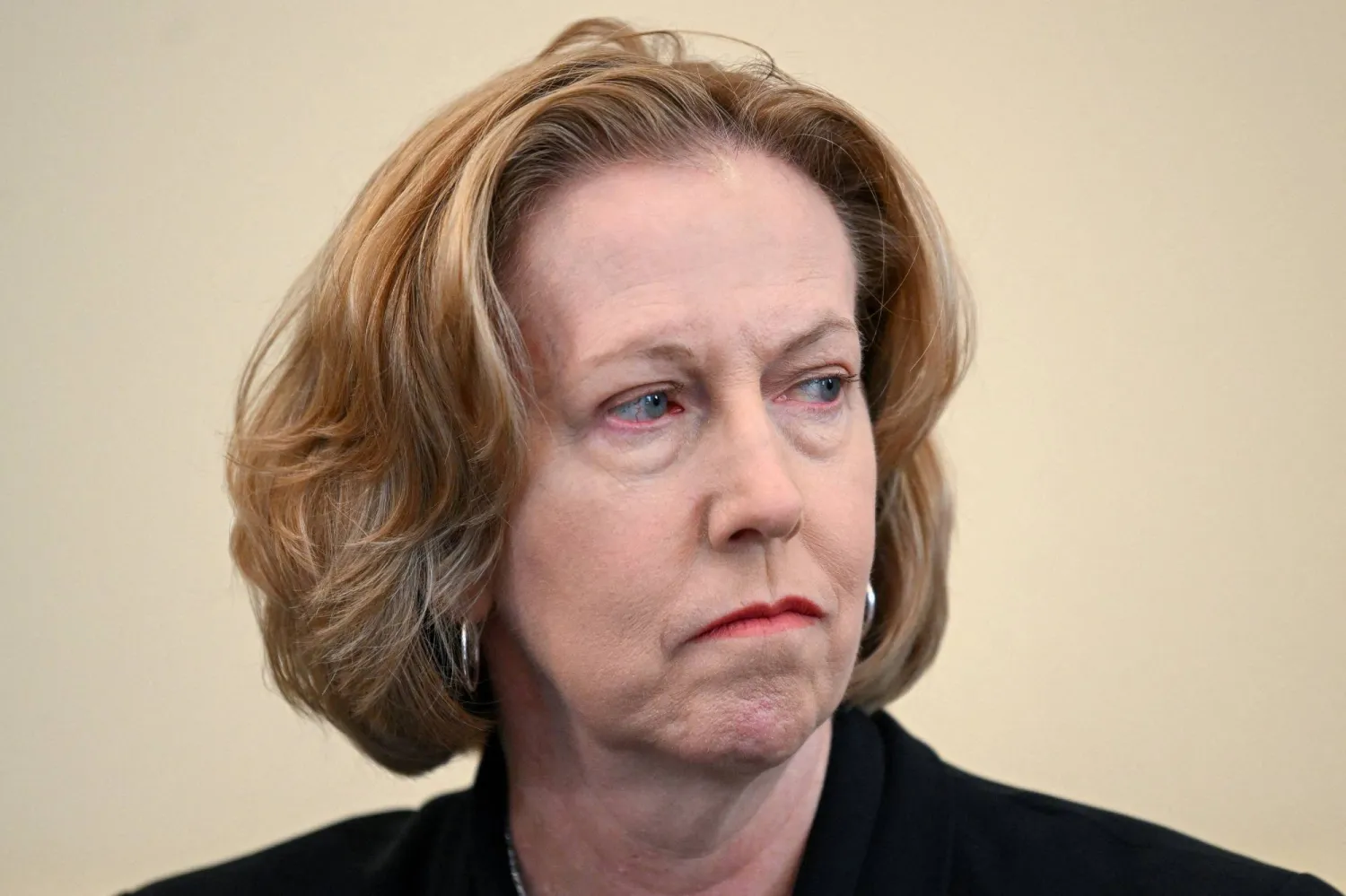
FILE PHOTO: BP CEO appointee Meg O'Neill attends a meeting, hosted by Britain's Prime Minister Keir Starmer, to discuss the US-Israeli conflict with Iran and the impact on the Strait of Hormuz, in London, Britain, March 30, 2026. REUTERS/Jaimi Joy/Pool/File Photo
TT

BP Puts UK North Sea Oil and Gas Assets Up for Sale as CEO Pushes Overhaul

FILE PHOTO: BP CEO appointee Meg O'Neill attends a meeting, hosted by Britain's Prime Minister Keir Starmer, to discuss the US-Israeli conflict with Iran and the impact on the Strait of Hormuz, in London, Britain, March 30, 2026. REUTERS/Jaimi Joy/Pool/File Photo

BP wants to sell its British oil and gas fields in the North Sea which could fetch more than $2 billion, according to estimates, as new Chief Executive Officer Meg O'Neill accelerates a sweeping portfolio overhaul aimed at improving profitability.

A day earlier British Prime Minister Andy Burnham said he planned to take a "pragmatic" approach to developing and using oil and gas resources in the North Sea, setting out his position after US President Donald Trump said the basin would be opened up.

"As we focus our portfolio and direct capital to our highest-value opportunities, we believe our North Sea business will be better positioned as part of another company," Reuters quoted O'Neill as saying in a statement.

ExxonMobil, Chevron, ConocoPhillips, Shell, TotalEnergies and Eni have all sold, merged, spun off or otherwise reduced their operations in the ageing basin in recent years as production there falls and other locations offer more profitable projects.

Rystad Energy estimates BP's UK upstream portfolio is ⁠worth about $2.6 billion on ⁠a risked basis, with the most likely bidders including current North Sea producers.

That could include NEO NEXT+, a joint venture that includes Total; Adura, a joint venture involving Shell and Equinor ; or Ithaca Energy.

Two industry sources said the portfolio might fetch around $2 billion, adding that decommissioning liabilities are likely to add complexity to discussions.

BP, formerly known as British Petroleum, has worked in the North Sea for more than six decades and operates five major production hubs in the region, including the Clair oilfield, the largest on the UK continental shelf.

BP, which is expanding in regions such as the United States and Brazil, generated about 5% of its oil and ⁠gas output from the British North Sea last year, around 117,000 barrels out of a total of 2.3 million barrels of oil equivalent per day.

BP has since agreed to sell its stake in the Culzean field which reduces its UK output by around 25,000 boed.

BP will retain its UK aviation fuel distribution business, retail sites and its huge trading desk alongside its London headquarters, it said.

BP shares were up 1.36% at 1451 GMT versus a broader index of European energy companies up 1.1%.

As opposed to the other major North Sea oil and gas producer Norway, Britain's tax regime on the industry in recent years has been marked by successive changes, decried by oil and gas companies for deterring investment.

"This decision is another stark reminder that confidence in the UK Continental Shelf has been badly shaken after years of policy uncertainty, punitive taxation and mixed messages about the future of the industry," said Russell Borthwick, chief of the Aberdeen & Grampian Chamber of Commerce, which comprises many UK oil and gas producers.

Burnham's Labour Party has already softened its ⁠election pledge to stop handing out ⁠new oil and gas licenses and Energy Minister Miatta Fahnbulleh said she was in close contact with BP over its sale plan.

Operating costs in the UK North Sea are expected to average $25.20 per barrel of oil equivalent in 2026, Rystad estimates showed, compared with a global average of $10.60 per barrel of oil equivalent.

BP employs 1,100 workers in its North Sea business out of a total of around 14,000 employees in Britain, it said.

Overall output in the ageing oil and gas basin has plummeted to around 1 million boed last year from 4.5 million boed at the turn of the millennium.

BP has stepped up its efforts to reduce debt and refocus on its oil and gas businesses after scaling back its investment in renewable energy.

Currently it is a "seller's market" for oil assets, Shell CEO Wael Sawan said on Thursday in a call with analysts to discuss the company's earnings.

Stronger commodity prices typically favor sellers of assets, and the US-Iran war has pushed oil and gas prices to multi-year highs.

Since O'Neill took over in April, BP has reorganized into two business segments — upstream and downstream — from three, a change that took effect this month.

An internal email seen by Reuters on Thursday also disclosed BP's plans to reduce its workforce by 700.



World Bank Projects Lebanon Economy to Contract by 6.4% Due to War

People inspect a damaged building after an Israeli airstrike on the village of Ansar, southern Lebanon, 15 August 2026. (EPA)
TT

World Bank Projects Lebanon Economy to Contract by 6.4% Due to War

People inspect a damaged building after an Israeli airstrike on the village of Ansar, southern Lebanon, 15 August 2026. (EPA)

The World Bank on Friday projected that Lebanon's economy would contract by 6.4 percent this year, as the latest Israel-Hezbollah war derailed the country's efforts at recovery.

Lebanon has been dealing with an unprecedented financial crisis since 2019 and was still reeling from the 2024 Israel-Hezbollah war when the Iran-backed group drew it into the Middle East conflict by attacking Israel in March.

Israel responded with a heavy air campaign and ground invasion that Lebanese authorities say have killed more than 4,300 people.

Due to the war, "real GDP is projected to contract by 6.4 percent in 2026, reflecting the collapse in tourism, weaker consumption, disrupted supply chains, heightened insecurity, and prolonged displacement," the World Bank said in a report.

Inflation is also expected to rise to 17.5 percent this year, according to the report.

The World Bank said Lebanon's economy had strengthened before the latest conflict, with an estimated real GDP growth of 4.2 percent in 2025, "the fastest since the onset of the 2019 financial crisis".

"Advancing reforms -- particularly on banking sector restructuring and fiscal management -- will be critical to restoring confidence, protecting stability, and mobilizing the financing needed for reconstruction and recovery," Dahlia Khalifa, the World Bank's Middle East director, said.

The international community has been demanding that Lebanese authorities enact financial reforms in order to secure much-needed economic aid.

Last week, parliament passed amendments to a bank resolution law aimed at restructuring troubled banks and addressing the country's banking crisis.

The International Monetary Fund welcomed the law, describing it as "a very good step that reflects Lebanon's commitment to aligning its legislation with the best international practices".

Lebanon has been in discussions with the IMF, which said it would resume its meetings in Beirut next month.


Tunisia Olive Oil Exports Surge 55%, Bringing in $1.6 billion

Tunisian olive oil producer, Mustapha Mtiraoui, displays olives to be pressed at his oil mill in Kairouan, Tunisia February 24, 2024. REUTERS/Jihed Abidellaoui
TT

Tunisia Olive Oil Exports Surge 55%, Bringing in $1.6 billion

Tunisian olive oil producer, Mustapha Mtiraoui, displays olives to be pressed at his oil mill in Kairouan, Tunisia February 24, 2024. REUTERS/Jihed Abidellaoui

Tunisia's olive oil exports surged 55.3% to a record 368,000 metric tons in the first nine months of the 2025/26 season, bringing in $1.6 billion in export revenue, up 44.4% from a year earlier, official data showed on Friday.

The surge in olive oil shipments, a vital source of foreign currency and Tunisia's top agricultural export, will provide a much-needed boost to the country's finances as the government grapples with persistent economic and fiscal pressure.

The jump in exports was driven by strong global demand during the first nine months of the season, which began in November.

Extra virgin olive oil accounted for 83.6% of total shipments, the National Observatory of Agriculture said, Reuters reported.

The European Union remained the biggest destination, taking 57.1% of Tunisian olive oil exports, while North America accounted for 24%. More than 70 countries imported Tunisian oil during the period.

Exports to other markets included Saudi Arabia, which took 4.6%, Jordan with 3.1% and African markets at 3.8%, with Egypt accounting for 3.3%.

Bottled olive oil exports rose 50.8% to 51,500 tons, but bulk oil still accounted for the vast majority of shipments, underscoring Tunisia's challenge in capturing more value from one of its most important export products.


South African Rand Hits Strongest Level since Start of Iran War

South African Rand coins are seen in this illustration picture taken October 28, 2020. REUTERS/Mike Hutchings/Illustration
TT

South African Rand Hits Strongest Level since Start of Iran War

South African Rand coins are seen in this illustration picture taken October 28, 2020. REUTERS/Mike Hutchings/Illustration

The South African rand strengthened on Friday to its strongest level since the United States and Israel launched attacks on Iran on February 28, as rising gold prices and a weaker dollar boosted the commodity-linked currency.

At 1229 GMT, the rand traded at 15.9925 against the dollar , about 0.8% stronger from its previous close.

Gold, one of South Africa's main exports, rose to a more than three-month high on Friday and was on track for a third straight weekly gain.

The precious metal was supported by a weaker dollar and the US Treasury's announcement that it would increase buybacks of longer-dated securities, Reuters reported.

US Treasury Secretary Scott Bessent said he may further increase the government's repurchases of Treasuries. That came after the Treasury said it would double the size of buybacks on longer-dated securities over the next quarter.

The US dollar was set to end a bumpy week lower, making greenback-priced bullion more affordable for buyers overseas.

Like other emerging market currencies, the rand has been at the mercy of global market sentiment, particularly since the start of the Iran war.

On the Johannesburg Stock Exchange, the Top-40 index was last up 2.2%.

South Africa's benchmark 2035 government bond was also firmer in early deals, as the yield fell 0.5 basis points to 8.56%.