



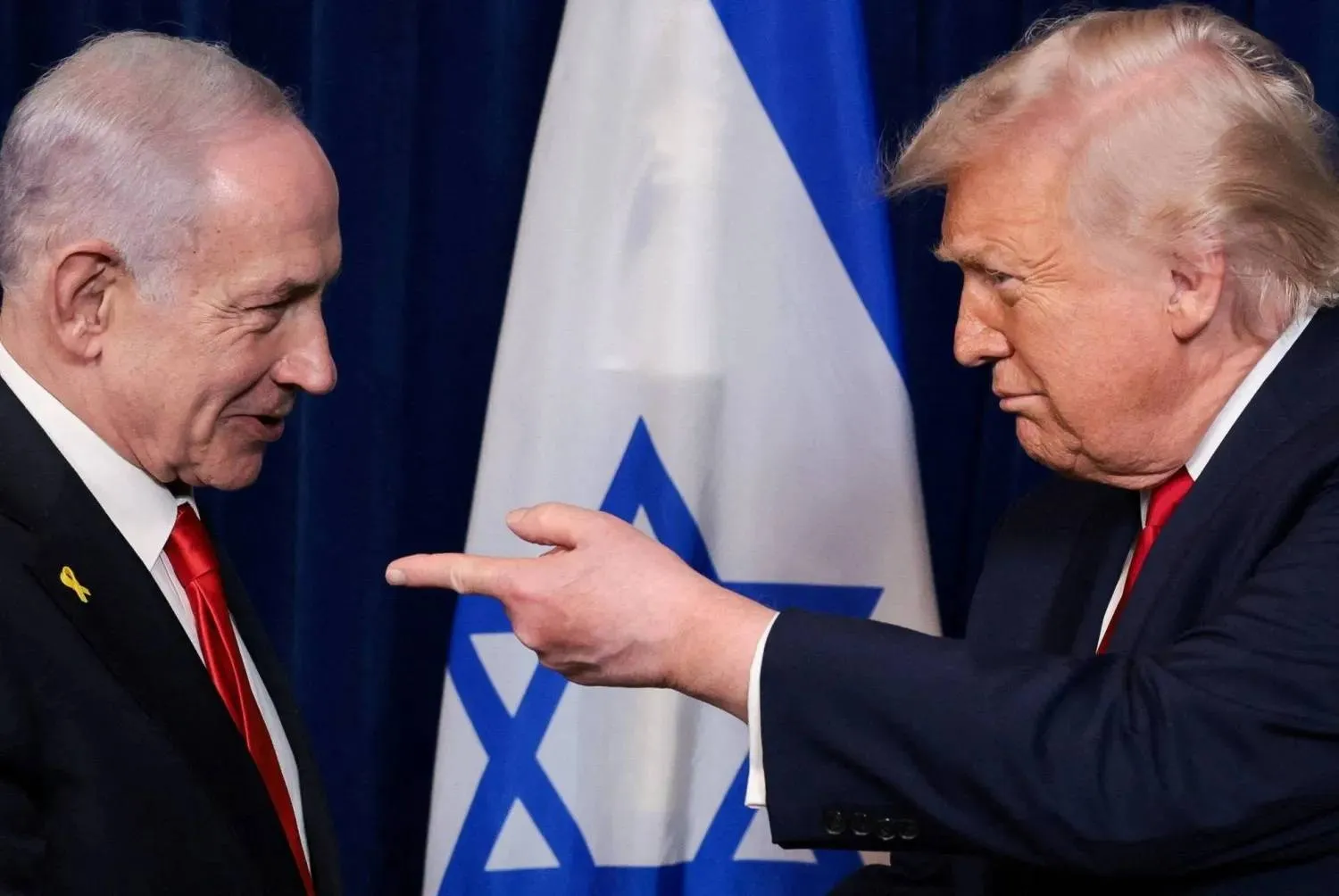

Despite Israel's official silence and its refusal to comment on the understandings reached by mediators and Hamas in Cairo on advancing to the second phase of the ceasefire agreement, media leaks and developments on the ground indicate that it opposes the deal. However, unwilling to upset US President Donald Trump, who announced the agreement with considerable fanfare, Israel has refrained from commenting publicly.
The only official to state his position publicly was National Security Minister Itamar Ben-Gvir, a staunch opponent of any agreement.
“Nazis should only be spoken to through the barrels of guns,” he said, calling on the government to occupy the rest of the Gaza Strip.
Opposition Yisrael Beiteinu leader Avigdor Lieberman said any agreement with Hamas would represent “a return to the doctrine that led to the Oct. 7 attack.”
Government sources, however, circulated a uniform statement to Hebrew-language media outlining Israel’s objections.
“Hamas’ agreement to give up its heavy weapons is meaningless,” the statement said.
“If it means rockets, we have destroyed 80% of them. But the main problem now is light weapons — machine guns, pistols, and rifles. They are widely available and held by around 30,000 operatives.
“Israel will not accept weapons remaining in Palestinian hands. Talk of a gradual Israeli withdrawal is unrealistic. Israel will not withdraw from the Yellow Line area — which initially covered 53% of the Gaza Strip and has expanded to more than 60% — before disarmament takes place.”
Asked whether Trump could have announced an agreement only two days after meeting Prime Minister Benjamin Netanyahu, one government official said Gaza had not been discussed at all during the meeting at the White House.
A US official quickly contradicted that account in comments to Israel’s Channel 12, saying Gaza had been discussed at the Washington meeting.
The official said US envoy Steve Witkoff had briefed Trump and Netanyahu on progress in negotiations with Hamas over disarmament in Gaza.
“Everything concerning the agreement reached with Hamas is fully coordinated with Tel Aviv, and Israel is fully aware of all the details,” the official said.
“This is a good deal for Israel because it resolves the Gaza problem. If Hamas plays games, everything will stop, and Israel will make no concessions.”
Israel is also imposing a reality on the ground in Gaza that indicates its refusal to advance Trump’s plan for the territory.
It is building a massive wall of sand mixed with reinforced concrete through the center of the Gaza Strip, stretching from north to south.
In Tel Aviv, it is known as “Bar-Lev Line 2” because, from a distance, it resembles the defensive line Israel built along the Suez Canal after the 1967 war.
The Gaza line, however, appears much larger, with a road built along its top for military vehicles.
Israel also continues to use Palestinian armed militias affiliated with it, carry out strikes and assassinations, keep the Rafah crossing closed and block the entry of the Palestinian national committee formed to administer the territory in place of the Hamas government.
All of this runs counter to the spirit of the agreement and de-escalation.
Some Israeli experts believe Israel does not genuinely intend to end Hamas rule and is doing everything it can to preserve it and prevent any alternative from emerging.
Channel 12 reported that Israeli officials not only doubt Hamas’ intention to disarm, arguing that the group is carrying out a tactical maneuver to ease pressure on it, but also distrust two of the three mediators — Türkiye and Qatar.
Israeli officials say the two countries are helping Hamas maneuver to preserve its political survival.


