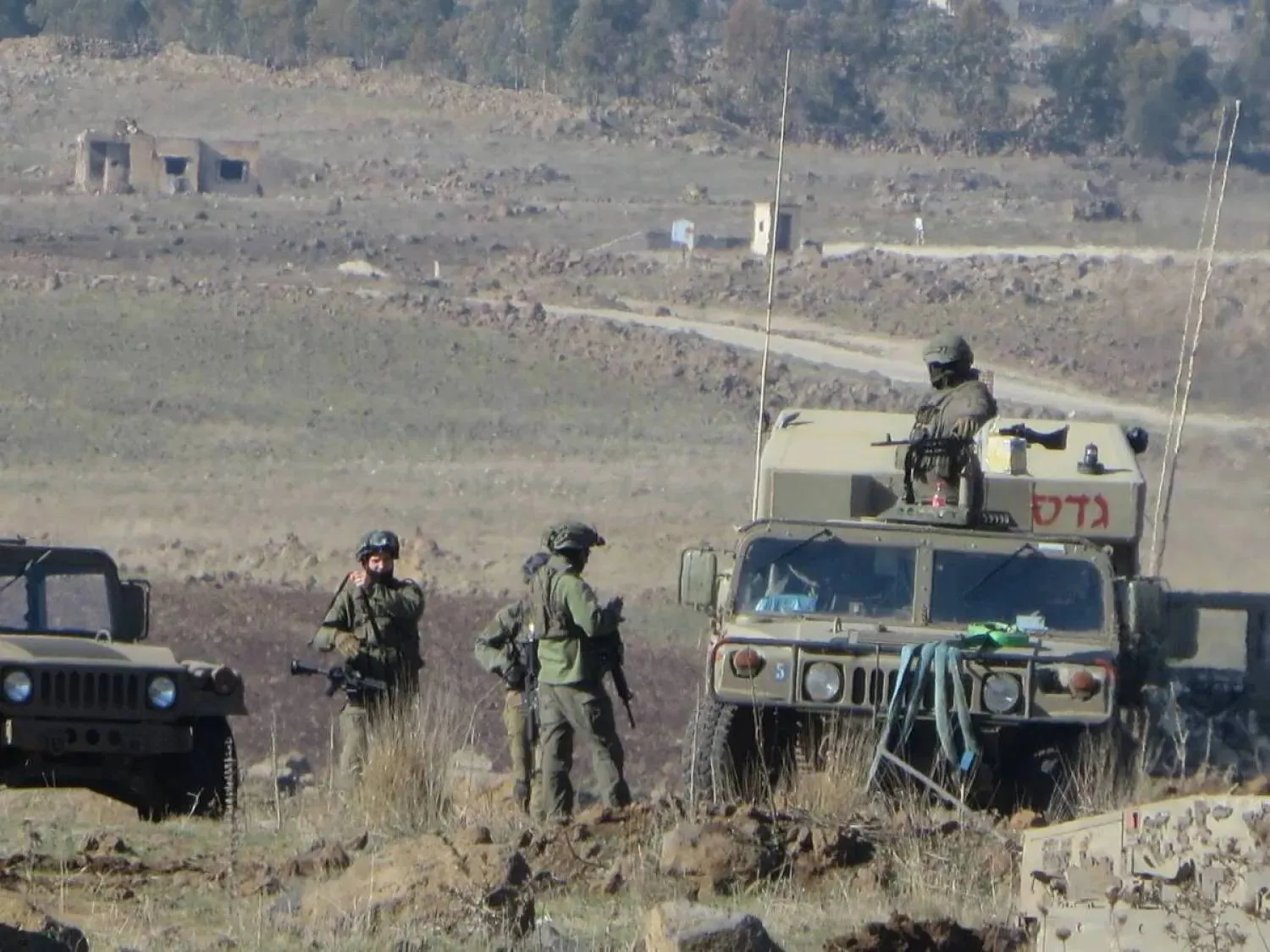

Israel’s intensifying incursions into southern Syria are unfolding alongside a deepening rift with Türkiye.
The tensions were laid bare in June, when Turkish President Recep Tayyip Erdogan said his country’s security “does not begin in Hatay province, but in Aleppo, Damascus and Beirut.”
Türkiye, he said, would not tolerate fantasies of a “Promised Land,” warning that Israeli attacks on Syria and Lebanon had reached a point where they also threatened his country.
Israeli officials have responded with tougher rhetoric.
On July 29, Israeli Energy Minister Eli Cohen raised the prospect of establishing military bases inside Syria if Ankara moved ahead with plans to build bases there.
The escalating war of words raises a key question: Could Israel widen the incursions it has carried out in Syria since the fall of Bashar al-Assad’s government in late 2024?
Syrian politician and lawyer Mohammed Sabra said the incursions were driven by three factors.
The first, he told Asharq Al-Awsat, was Israel’s effort to keep southern Syria insecure and disrupt regional trade and energy supply routes passing through the country.
“Netanyahu’s government is supporting separatists in Sweida and keeping Daraa and Quneitra under constant security pressure and tension,” Sabra said.
Any regional project linking Gulf energy sources and logistics hubs to Syria, and from there to Türkiye or Europe by sea, would have to pass through southern Syria, he said.
“As long as the region remains insecure, these projects will stay on hold and cannot begin.”
The Trans-Arabian Pipeline, or Tapline, is a clear example of how security conditions can shape energy routes. It originally crossed the Syrian Golan Heights but was halted after Israel occupied the plateau.
The second factor, Sabra said, was Israel’s legislative elections in October.
The right-wing coalition is determined to win and has placed security at the heart of the campaign by claiming that threats to Israel are emerging from Syria, he said.
The third factor was Israel’s attempt to “keep separatist ambitions alive among some local religious leaders in Sweida,” undermining the Syrian government’s efforts to extend its authority across the country.
Türkiye, meanwhile, is seeking a stronger role in the international division of labor and wants to become a logistics hub for energy and trade linking the Gulf to Europe and Asia to the European continent.
That ambition adds another layer to the dispute.
“Turkish-Israeli competition — a more accurate term than conflict — is not about Syria,” Sabra said.
“It is about the two countries’ competing visions for reshaping the region geopolitically and the roles they seek in supply-chain networks.”
Sabra said the rivalry was unlikely to spill into armed confrontation.
Türkiye is a NATO member bound by the alliance’s charter, while Israel has an agreement with NATO that places it among the alliance’s strategic partners outside the bloc, he said.
The actions of both countries are therefore constrained by their ties and commitments to NATO.
“This is competition over role and status, not conflict in the traditional sense,” Sabra said.
“Neither side is seeking to defeat the other. A Turkish-Israeli military clash in Syria is therefore highly unlikely.”
For Syria, he said, the priority should be to address the urgent challenges facing the country during a period of regional uncertainty.
That means preserving national sovereignty, refusing to surrender Syrian rights to any party, maintaining internal security and strengthening coordination with Syria’s Arab strategic depth.
“The region must develop its own strategic vision,” Sabra said.
“It must move from being an arena where rivals compete to becoming an active force in shaping the major strategies that will determine our future.”
Elections
Wael Alwan, executive director of the Jusoor Center for Studies, said Israeli incursions into southern Syria were likely to continue at their current pace until Israel’s elections in October.
“Netanyahu’s government always needs political escalation more than security or military escalation,” Alwan told Asharq Al-Awsat.
“It also needs to create a headline in Gaza, southern Lebanon or Syria.”
The current escalation, he said, was part of Israel’s effort to send messages at home and abroad through its established political narrative.
Political and media tensions with Türkiye fit that pattern, he said, helping Tel Aviv promote the image of an external threat for domestic political purposes.
Alwan said the United States was pressing Israel to keep the situation under control.
“These are not merely statements,” he said. “There are incursions, escalation, provocations and attacks.”
Israel, he added, was seeking to send messages to Türkiye by undermining stability in Syria.
Neither Türkiye nor Israel appeared to be trying to defuse the tensions, Alwan said.
But he expected the confrontation to remain within the political and media boundaries seen so far.
Israeli incursions in southern Syria could nevertheless intensify, he said, not to pressure Türkiye but to push Washington to intervene in Netanyahu’s favor ahead of the elections.
“There is American pressure on Netanyahu’s government,” Alwan said.
“But it is not enough to end the incursions, attacks, escalation and provocations.”