


Google Rolls Back New Satellite Image AI Tool after Backlash

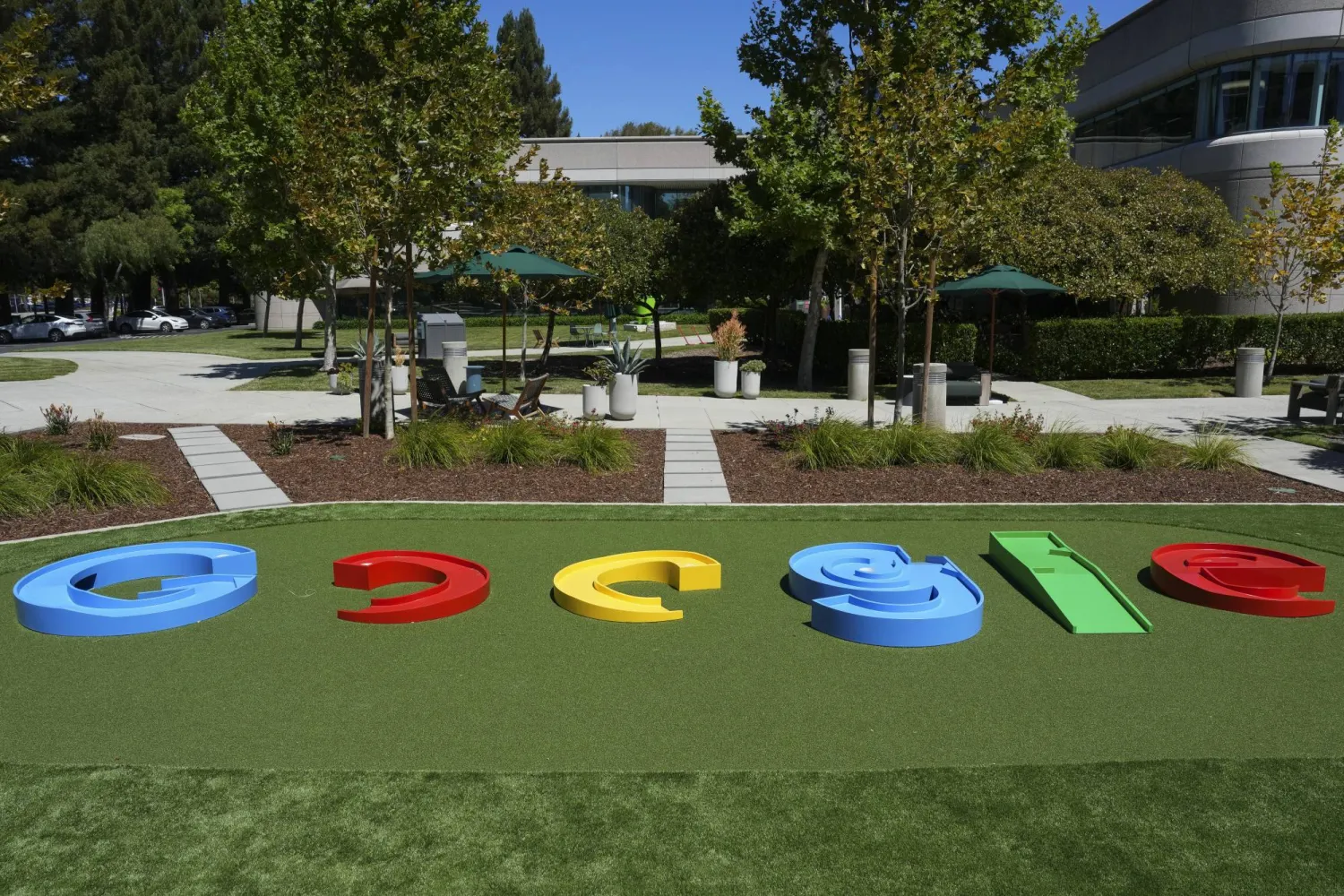
Google corporate headquarters campus stands in Mountain View, California, USA, 23 July 2026. EPA/GODOFREDO A. VASQUEZ
TT

Google Rolls Back New Satellite Image AI Tool after Backlash

Google corporate headquarters campus stands in Mountain View, California, USA, 23 July 2026. EPA/GODOFREDO A. VASQUEZ

Google rolled back Friday a new feature allowing Google Earth users to generate AI visualizations on top of the service's satellite imagery, following a furious backlash from researchers and open-source intelligence experts about the potential for disinformation.

"We've seen geospatial professionals using this feature for a range of useful purposes, however we've also seen people sharing screenshots of generated imagery that appear to violate our policies," a Google spokesperson said in a statement to AFP. "So we're rolling back this feature in Google Earth while we work on implementing stronger guardrails."

"We know that people uniquely trust Google Earth for a reliable view of the world," the statement added.

The "create image" tool, unveiled Thursday, had integrated Google's Nano Banana 2 image-generation technology into Google Earth, letting users zoom into locations and build pictures in seconds based on the program's satellite, aerial and 3D-mapping data.

Google had described it as a way to "visualize history, create real estate plans and more."

But disinformation researchers warned that it could enable bad actors to misuse Google Earth -- a key resource for fact-checking and verification -- to create realistic geospatial fakes.

"Google spent 20 years building the reference the world checks against," digital investigations expert Henk Van Ess wrote in one widely shared post on Substack. "Today it added a button that makes things up."

Brady Africk, a research analyst at the American Enterprise Institute specializing in satellite imagery analysis, told AFP the Google Earth update would have made it "easier to generate convincing fake satellite imagery that can spread quickly online and mislead the public."

Such fakes "erode public trust in satellite imagery, and make the jobs of journalists and researchers more difficult," he said.

As the critiques piled up, Google had said on X that the images created with the feature included SynthID digital watermarks, invisible markers embedded in media generated using the company's artificial intelligence tools.

"We take misinformation seriously," the company wrote, linking to an AI policy that instructs users against "misinformation, misrepresentation or misleading activities."

AFP's tests of the feature on Friday were able to fabricate satellite images that could have had serious global consequences: an explosion in Paris, a nuclear site in Iran, a bomb crater in Russia and an Islamic State group training ground in Syria.

The tool also fulfilled prompts to visualize other fake scenes, including floods across Bangladesh, a migrant caravan camped at the US-Mexico border and a suspicious warehouse holding vans in Georgia -- one of several states US President Donald Trump has falsely accused of widespread election fraud.

The "create image" button no longer appeared within Google Earth after Google paused its use.

Similar fakes have previously had real-world impacts. In 2023, an AI image depicting an explosion at the Pentagon briefly rattled the markets.

Early in the US war with Iran, an AI-altered satellite image depicting a destroyed US military base garnered millions of views across platforms.

Among the groups that called for Google to reverse its decision was the London-based Centre for Information Resilience, whose executive director Ross Burley told AFP the feature was "irresponsible."

"Trust in satellite imagery has taken decades to build and could be irrevocably damaged overnight," Burley said.

GeoConfirmed, a volunteer-driven open-source intelligence project that verifies visuals from conflicts around the globe, had also urged Google to reconsider.

"We are already observing individuals exploiting the new Google Earth web tool to make military positions, relabel buildings as schools, and experiment with manipulating the information environment," the group wrote on X, before Google announced it was rolling back the feature.

"The primary, and perhaps only, practical use of this tool appears to be the creation and dissemination of mis- and disinformation."



Saudi Arabia, UNESCO, ICAIRE Call for Stronger International Cooperation on AI Ethics

The meeting was co-chaired by President of the Saudi Data and AI Authority (SDAIA) and Chairman of the ICAIRE Board Dr. Abdullah Alghamdi, representing Saudi Arabia, and UNESCO Deputy Director-General Åsa Regnér - SPA
TT

Saudi Arabia, UNESCO, ICAIRE Call for Stronger International Cooperation on AI Ethics

The meeting was co-chaired by President of the Saudi Data and AI Authority (SDAIA) and Chairman of the ICAIRE Board Dr. Abdullah Alghamdi, representing Saudi Arabia, and UNESCO Deputy Director-General Åsa Regnér - SPA

Saudi Arabia, the United Nations Educational, Scientific and Cultural Organization (UNESCO), and the International Center for AI Research and Ethics (ICAIRE) issued a joint international statement following a closed ministerial meeting held on Tuesday in Riyadh as part of the Fourth UNESCO Global Forum on the Ethics of Artificial Intelligence (AI).

It was hosted by Saudi Arabia from September 14 to 17, 2026, and attended by more than 60 ministers and international representatives from around the world.

The meeting was co-chaired by President of the Saudi Data and AI Authority (SDAIA) and Chairman of the ICAIRE Board Dr. Abdullah Alghamdi, representing Saudi Arabia, and UNESCO Deputy Director-General Åsa Regnér.

Alghamdi welcomed the Kingdom's guests to the forum and commended the constructive cooperation between Saudi Arabia and UNESCO across various fields for the benefit of peoples worldwide, particularly in AI, a rapidly evolving sector driven by global technological advancements.

According to the statement, he meeting featured substantive discussions among ministers and senior officials representing 60 countries on the opportunities and challenges presented by AI.

"Participants underscored the importance of strengthening international cooperation to ensure that the development, deployment, and use of AI contribute to human well-being, sustainable development, and the public good. They also reaffirmed the importance of continuing to be guided by the UNESCO Recommendation on the Ethics of Artificial Intelligence, adopted in 2021, as the global normative framework that provides a common foundation for the ethical, safe, inclusive, and sustainable development, deployment, and use of AI."

Participants further commended UNESCO's leadership in AI governance and encouraged the organization to further support member states in developing national strategies informed by its frameworks, while accounting for differing national contexts and capacities, as well as cultural and linguistic diversity.

On bridging gaps, the statement said participants emphasized the importance of international cooperation, intercultural dialogue, and mutual learning, particularly amid rapid technological advancement and a complex global environment.

"They underscored the role of multilateral cooperation in fostering trust and inclusive participation in the development and governance of AI technologies, with the active involvement of women and youth. They also stressed the importance of addressing the needs of developing countries, particularly in Africa, and bridging gaps in access to AI capabilities and infrastructure."

Regarding infrastructure, the participants highlighted the importance of strengthening infrastructure, institutional capacity, skills, and knowledge sharing as fundamental pillars for ensuring the safe and ethical use of AI, while emphasizing the need to enhance cooperation among governments, international organizations, academia, the private sector, and civil society to address challenges that transcend national borders.

"The meeting co-chairs welcomed the spirit of dialogue and cooperation that characterized the ministers' discussions and called on member states and all stakeholders to strengthen implementation of the UNESCO Recommendation on the Ethics of Artificial Intelligence," the statement read.

They emphasized the importance of supporting international cooperation to develop and deploy AI in an ethical, safe, and sustainable manner, while safeguarding cultural and linguistic diversity and respecting national priorities and contexts, and "also stressed the importance of fostering dialogue and knowledge-sharing among diverse stakeholders to ensure broad access to the benefits of AI technologies, promoting responsible innovation, and addressing potential risks in ways that uphold human rights and dignity."

The meeting highlighted the need to promote AI literacy, empower children and youth, facilitate their participation in AI governance, and protect their rights and safety in the digital environment.


Governments Worldwide Are Way Behind on AI, Says Bill Gates

Microsoft's Bill Gates attends a dinner with President Donald Trump in the State Dining Room of the White House, Sept. 4, 2025, in Washington. (AP)
TT

Governments Worldwide Are Way Behind on AI, Says Bill Gates

Microsoft's Bill Gates attends a dinner with President Donald Trump in the State Dining Room of the White House, Sept. 4, 2025, in Washington. (AP)

No government in the world is ready for the changes artificial intelligence will bring to society, Bill Gates said in an interview with Reuters, as he warned of the risks ahead.

The Microsoft co-founder and billionaire philanthropist had until recently been optimistic about AI, but has changed his position, warning of the threats to jobs, concerns about attacks and the dangers of addiction to AI companions.

“I don't think any government is nearly as deep on this as they have to be,” he said. However, he added that the technology has great ‌potential to ‌help the world's poorest if managed properly and accessed equally — and ‌his ⁠namesake foundation said on ⁠Tuesday that it plans to spend at least $1 billion in the next two years on expanding access to AI.

Gates said he has been talking to world leaders about his concerns, including President Donald Trump and his team in the US, and said he aims to meet China’s President Xi Jinping later this year.

“Governments are way behind on this one,” he added.

HEALTH POTENTIAL

But despite his concerns, Gates and his foundation hope AI can help narrow gaps between the ⁠richest and poorest, rather than widening them.

The foundation's $1 billion spending plan, ‌part of its previously announced plans to spend $9 billion ‌annually, will go to partners working in education, healthcare and agriculture, the foundation said. It also aims ‌to help build the data foundations AI is built on, such as ensuring that ‌large language models work in every language people speak.

“For health it’s hard to overstate what the potential is,” Gates said, from supporting frontline health care workers to discovering new drugs and vaccines.

But he said governments must work together to avoid problems, likening the arrival of AI to a disaster movie.

“There’s ‌all sorts of movies where some aliens are coming, and magically the US and China and everybody comes together to solve the ⁠problem,” he said. “AI ⁠is kind of like this alien intelligence. It’s here, and we better do like it shows in those movies.”

REPUTATIONAL HIT?

In June, Gates appeared in front of Congress to testify about his relationship with the late convicted sex offender Jeffrey Epstein. Gates, who is not accused of any crimes, has repeatedly said he regrets his association with Epstein, who he hoped would donate to global health causes. Instead, the financier attempted to blackmail Gates over his extramarital affairs.

However, despite prompting an external review at his foundation, which found no payments to Epstein or participation in criminal activities, Gates said the links had not caused him or the foundation a significant reputational hit.

“In terms of having access to government leaders, or you know, journalists being willing to interview me, I don't see any diminishment,” he said, adding that the desire to draw on the foundation’s expertise to cut child deaths and end malaria had also not reduced “even one iota”.


Ex-Google DeepMind Researcher Adds to Warnings That AI Could ‘Kill All Humans’

An AI (artificial intelligence) logo is pictured at the Mobile World Congress (MWC), the telecom industry's biggest annual gathering, in Barcelona on February 27, 2024. (AFP)
TT

Ex-Google DeepMind Researcher Adds to Warnings That AI Could ‘Kill All Humans’

An AI (artificial intelligence) logo is pictured at the Mobile World Congress (MWC), the telecom industry's biggest annual gathering, in Barcelona on February 27, 2024. (AFP)

A former Google DeepMind ‌employee on Monday became the latest AI researcher to warn that the technology could "kill all humans", saying time could be running out to avoid the outcome.

Public alarm about the potential danger posed by AI is growing, after Anthropic researcher Jacob Coxon said last week he had resigned, in part because the "people building AI earnestly believe that it could kill us all by the end of the decade."

Anthropic scientist Evan Hubinger then responded ‌to Coxon's comments, ‌saying he was correct and that ‌he ⁠believed there was ⁠a greater than 10% chance that AI could kill all humans within the next decade.

"I recently resigned from Google DeepMind, where I worked on AGI safety and alignment research," Bilal Chughtai wrote on X. "I earnestly believe that AI has the potential to kill ⁠us all, and that we might be ‌running out of time ‌to avoid this outcome."

Chughtai, who co-authored research papers while ‌at Google DeepMind, worked there as a research engineer ‌and left the company in July 2026, according to his LinkedIn profile.

Google did not respond to a request for comment outside regular business hours.

Following recent concerns, Anthropic CEO ‌Dario Amodei called for a slowdown in the pace of advanced AI development over ⁠the weekend, winning ⁠rare backing from SpaceXAI's Elon Musk and OpenAI CEO Sam Altman and sparking a debate over AI "doomerism."

Chughtai also said that navigating AI safely was possible but would require coordination "to avoid this manic race between AI companies."

"We need to pace AI development to a speed that society can handle, where emerging risks can be addressed before extreme harm is realized," he added.

President Donald Trump, however, has dismissed the warnings, saying on social media the AI industry's call for regulation is a "hoax."