


‘Sopranos’ Actor Vincent Pastore, Known for Playing Mobsters and Tough Guys, Dead at 80

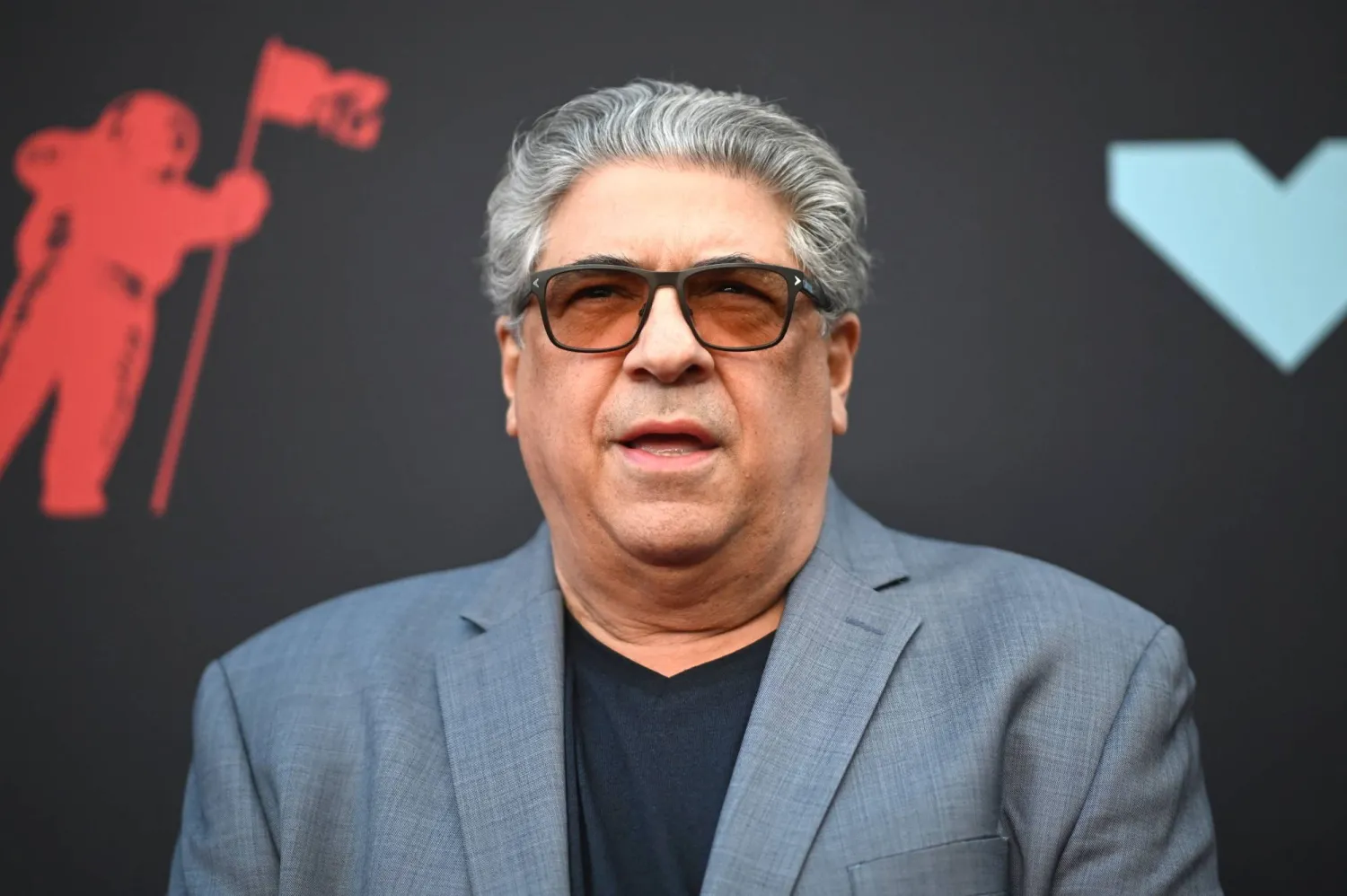
US actor Vincent Pastore arrives for the 2019 MTV Video Music Awards at the Prudential Center in Newark, New Jersey on August 26, 2019. (AFP)
TT

‘Sopranos’ Actor Vincent Pastore, Known for Playing Mobsters and Tough Guys, Dead at 80

US actor Vincent Pastore arrives for the 2019 MTV Video Music Awards at the Prudential Center in Newark, New Jersey on August 26, 2019. (AFP)

Vincent Pastore, a veteran actor who played mobsters and tough guys, and was best known for portraying Salvatore Bonpensiero on “The Sopranos,” has died. He was 80.

Bob McGowan, who managed Pastore since his run on “The Sopranos,” told The Associated Press that he learned of his death Saturday from another client and actor on the show, Vincent Curatola.

He said Pastore was found in his home on New York’s City Island after not being heard from for a few days.

McGowan said he had been trying to reach Pastore about a possible job.

“He was the most loyal client, and he always gave to charity,” McGowan said, “and he was the kind of guy who would help anybody, which is rare in my business.”

Robert Attermann represented Pastore for more than 30 years, before his time on “The Sopranos.” While Pastore will be remembered for that role, he was so much more, Attermann said in an email to the AP.

“Vinny was one of the kindest, most generous people I have ever known,” Attermann said. “He treated everyone with warmth and respect, never turning down a fan who wanted a photograph or an autograph. He genuinely appreciated the people who supported him and always made them feel valued.”

Attermann said Pastore loved being an actor and was passionate about his craft while always encouraging young actors, “taking the time to offer guidance and support whenever he could.”

Michael Imperioli, a longtime friend and collaborator, said on Instagram that it seemed as though he had known Pastore forever.

“We did lots of work together and traveled all over the USA as well as Italy and Australia. Lots of good times. Lots of laughs,” Imperioli said. “Vinny was a kind-hearted brother who cared deeply about his family and friends. I will miss him always.”

Pastore appeared in movies dating back to the 1980s, including roles in big films such as “Goodfellas” and “Awakenings,” both in 1990.

He often played gangsters. And it was one of those roles he is best known for: his 30-episode run as Bonpensiero, the friend of Tony Soprano who becomes an FBI informant.

Pastore was born in the Bronx and grew up in suburban New Rochelle, New York. He enlisted in the Navy during the Vietnam War and later attended Pace University, according to his biography on IMDb.




Australia’s Music Industry Bans AI-Generated Tracks from Official Charts

Madonna poses before the Saint Laurent Spring/Summer 2026 collection presented in Paris, on Sept. 29, 2025. (AP)
TT

Australia’s Music Industry Bans AI-Generated Tracks from Official Charts

Madonna poses before the Saint Laurent Spring/Summer 2026 collection presented in Paris, on Sept. 29, 2025. (AP)

Australia’s recorded music industry will bar tracks wholly generated by artificial intelligence from official charts as burgeoning generative technologies threaten artists’ livelihoods, a representative said on Tuesday.

The crackdown comes as a variation of Madonna’s pop hit “Like a Prayer” created by an Australian producer using AI-generated vocals and drums has spent 16 weeks in the Australian top 20, stoking debate about generative AI’s place in music. It peaked at number two on the Australian Record Industry Association’s top 20 Australian singles chart in May and remained in fourth place on Tuesday.

Wholly AI-generated tracks will be banned from the ARIA charts from Monday next week, but some AI-assisted music will remain eligible, an ARIA statement said.

Tracks can be eligible only if “humans wrote the song and performed the lead vocal and the primary instruments,” among other requirements, the statement said.

AI-generated music would also be ineligible for the Australian industry’s prestigious ARIA awards.

ARIA chief executive Annabelle Herd said: “These changes reflect our intent to remain dynamic and promote the human nature of artistry in what is — to say the least — a rapidly developing space.”

“The ARIA Charts will always remain a transparent measurement of the music Australia consumes, but a chart that rewards unlicensed AI output would undercut the very basis of the recorded music we exist to represent,” Herd added.

Eligible music must also be produced using legal AI services. Music was appearing on streaming services that had apparently been developed with AI tools trained on artists’ music without authorization.

The Australian rules are in step with new principles released in July by the London-based International Federation of the Phonographic Industry. The federation represents the recording industry worldwide.

The international guidelines state that to qualify for official music charts, a track must be “substantially human made.”

Sydney Conservatorium of Music composer and lecturer Alexis Weaver told Australian Broadcasting Corp. the debate around AI in music was “exceptionally fraught and very emotional for a lot of musicians and so everyone will have a different opinion.”

Weaver applauded ARIA’s move as a “wonderful step forward” that sent a message ARIA wanted to “prioritize and value human creativity.”

“It can be quite hard to avoid AI tools in the current landscape,” Weaver said. “There is a way to use it while you’re still steering the ship and making the main creative choices.”


Qiddiya Investment Company, Paris Sign MoU to Explore Development of Entertainment Destination in France

Qiddiya Investment Company, Paris Sign MoU to Explore Development of Entertainment Destination in France
TT

Qiddiya Investment Company, Paris Sign MoU to Explore Development of Entertainment Destination in France

Qiddiya Investment Company, Paris Sign MoU to Explore Development of Entertainment Destination in France

Qiddiya Investment Company signed on Monday a Memorandum of Understanding with the French government to explore the development of a new entertainment-led, mixed-use destination in France.

The MoU was among several agreements and memoranda signed on the sidelines of the official visit of Prince Mohammed bin Salman bin Abdulaziz Al Saud, Crown Prince and Prime Minister, to France.

The MoU marks the beginning of a phase of joint work to define the project’s scope, development model and contractual framework, in accordance with the applicable procedures and approvals in France.

The project will build on the capabilities, experience and partnerships that Qiddiya Investment Company is developing from Saudi Arabia. It reflects the Company’s evolution as a Saudi national brand contributing to the creation and development of entertainment experiences while expanding its global presence.

Qiddiya City remains the Company’s flagship project and the principal reference point for its model. The international project will provide a platform to introduce Qiddiya’s Power of Play philosophy, broaden the Company’s experience and partnerships, and strengthen the presence of the Saudi model in global markets.


Dutch Say Won’t Participate in ‘No Longer’ Neutral Eurovision

A logo of the Eurovision Song Contest is seen in front of the St. Jakobshalle in Basel, Switzerland, May 1, 2025. (Reuters)
TT

Dutch Say Won’t Participate in ‘No Longer’ Neutral Eurovision

A logo of the Eurovision Song Contest is seen in front of the St. Jakobshalle in Basel, Switzerland, May 1, 2025. (Reuters)

The Netherlands will not participate in next year's Eurovision Song Contest, its broadcaster said Monday, saying the event can "no longer be considered neutral" given divisions over the Gaza war. 

"It is undeniable that international conflicts are increasingly affecting the Contest, undermining its neutral character. The Eurovision Song Contest has therefore become a platform for division," said Taco Zimmerman, Director-General of AVROTROS in a statement from the broadcaster. 

The contest has recently been hit by a wave of boycotts over Israel's participation. 

Earlier this month, organizers announced they were excluding any country involved in an armed conflict from hosting the competition. 

"However, the recently announced changes... do not provide sufficient confidence that the independent and neutral character of the Eurovision Song Contest has been restored," said the AVROTROS statement. 

Israel came close to winning the competition in both 2025 and 2026, ultimately finishing second on each occasion. 

Next year's event, the world's biggest live televised music event, will take place on May 15 in Bulgaria's Black Sea city of Burgas. 

It will be the first time that the Balkan nation hosts the contest, coming after Bulgarian singer Darina Yotova, known as Dara, won this year's contest in the Austrian capital Vienna with the catchy floor-filler "Bangaranga". 

Since its launch in 1955, Eurovision has become the ultimate pop platform, catapulting Swedish icons ABBA to worldwide fame, as well as boosting the likes of Celine Dion, Cliff Richard and Olivia Newton-John. 

The 2026 competition was watched by 131 million viewers, down 35 million on the year before after five countries boycotted it over Israel's participation. 

The Netherlands, Iceland, Spain, Ireland and Slovenia all pulled out of the contest -- with the latter three refusing to broadcast the show at all. 

The Dutch took part in the very first Eurovision Song Contest back in 1956 and have won on five occasions. 

The most recent winner was Duncan Laurence whose song Arcade won the contest in 2019, going on to top charts globally. 

It became the first Eurovision entry to reach one billion streams on Spotify, according to the Eurovision website. 

The withdrawal is "painful as we would have very much liked to be part of the Contest again next year," said Zimmerman. 

"As a public broadcaster, we remain committed to our values. They guide us in everything we do, even when that means stepping away from an event that is very close to our hearts," he added.